
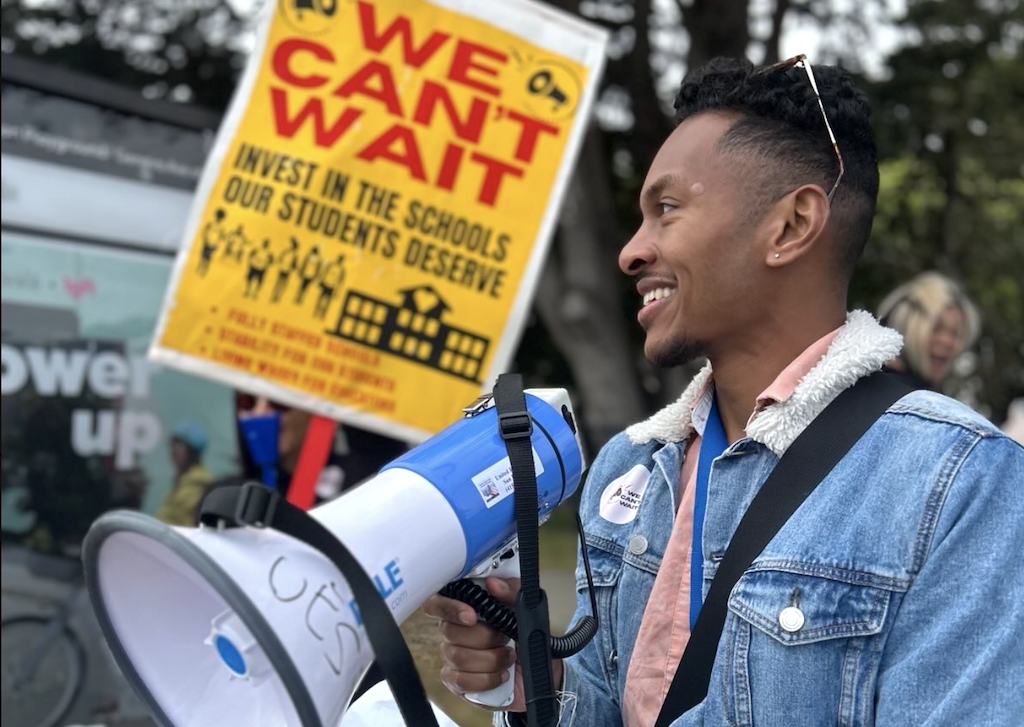
Interview byNick French
This winter has seen historic strikes hit the United States on both coasts. In New York City, 15,000 nurses across three of the city’s largest private sector hospital systems walked out on January 12 and stayed on the picket lines for about a month, making it the largest and longest nurses’ strike in the city’s history. Meanwhile, in California and Hawaii, 31,000 health care workers employed by Kaiser Permanente across the two states struck from January 26 to February 23 in what their union describes as the largest open-ended health care strike in US history.
But historic labor actions were not limited to the health care sector. In San Francisco, over 6,000 K-12 teachers and paraprofessionals in the San Francisco Unified School District (SFUSD) went on strike on February 9. The strike was the first for the district in almost fifty years; it ended with a tentative agreement between the district and the educators’ union, United Educators of San Francisco (UESF), on February 13.
UESF members voted to ratify the contract with a 92 percent “yes” vote at the end of the month. The union says the deal included major victories for workers on health care — getting the district to fully cover rapidly rising insurance costs — as well as pay increases, workload reductions for special education professionals, and the preservation and expansion of the school’s program to support unhoused students and their families. Jacobin’s Nick French recently sat down with three rank-and-file educator-leaders to talk about the strike and what they won.