
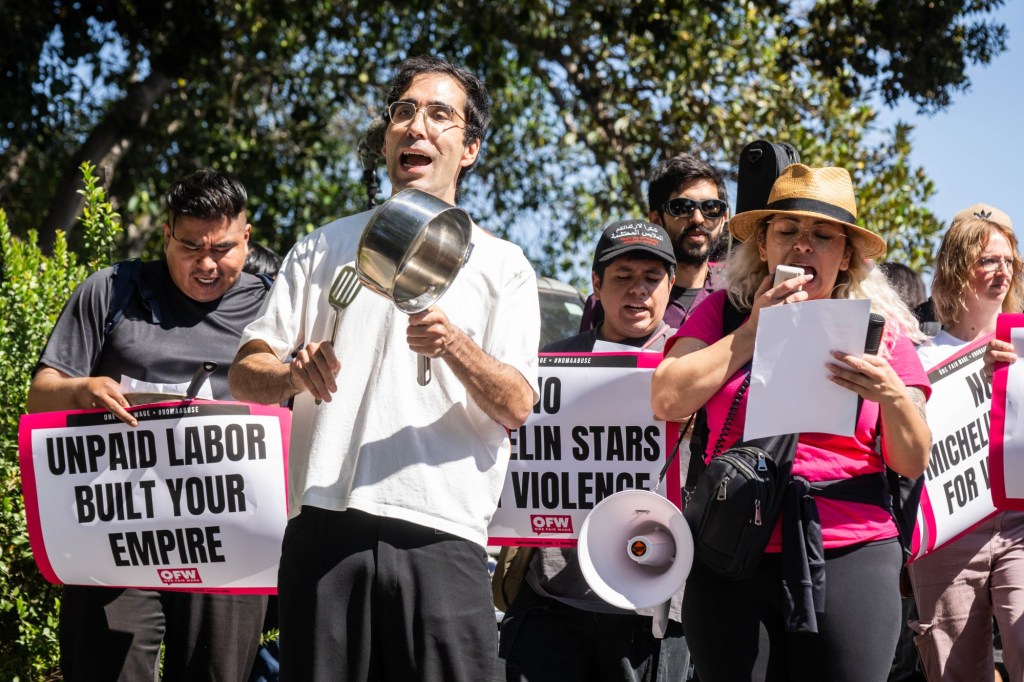
When the world’s most lauded restaurant landed in Los Angeles this week, its multicourse feast, breathless tasting notes and Instagram-ready shots of impossibly delicate dishes paled in comparison to an off-menu controversy unfolding outside its doors.
Instead, Noma’s opening day began with a protest, highlighting its biggest issue: allegations by former employees of rampant physical and emotional abuse, including instances of punching, ritual humiliation and stabbings.
And the day ended with the resignation of the restaurant’s chef René Redzepi, who released a statement on Instagram that read in part:
“The recent weeks have brought attention and important conversations about our restaurant, industry and my past leadership,” the statement read. “I have worked to be a better leader and Noma has taken big steps to transform the culture over many years. I recognize these changes do not repair the past. An apology is not enough; I take responsibility for my own actions.
“After more than two decades of building and leading this restaurant, I’ve decided to step away and allow our extraordinary leaders to now guide the restaurant into its next chapter.”
The chef’s resignation, which included stepping down from the nonprofit he founded, capped a day of turmoil on what was supposed to be a triumphant first day of its 16-week pop-up.
The day begins
Outside the restaurant’s anticipated Los Angeles residency, former employees and labor advocates demonstrated on Wednesday at its Silver Lake location, amplifying abuse allegations detailed in a March 7 New York Times investigation by Julia Moskin into the Copenhagen, Denmark, restaurant and its fêted chef, René Redzepi.
The moment highlights a still-growing tension in contemporary fine dining. While restaurants like Noma, which achieved three-star Michelin status, among other accolades, helped redefine global cuisine and turned chefs into icons, they also took part in an industry long criticized for unpaid labor, punishing hours and hierarchical kitchens where young cooks endure abuse in exchange for rarified knowledge and advancement in the restaurant world. As Noma stages one of the most expensive dining events that Southern California has ever seen, labor advocates say the allegations raised in The New York Times reflect a continuing reckoning across the dining world.
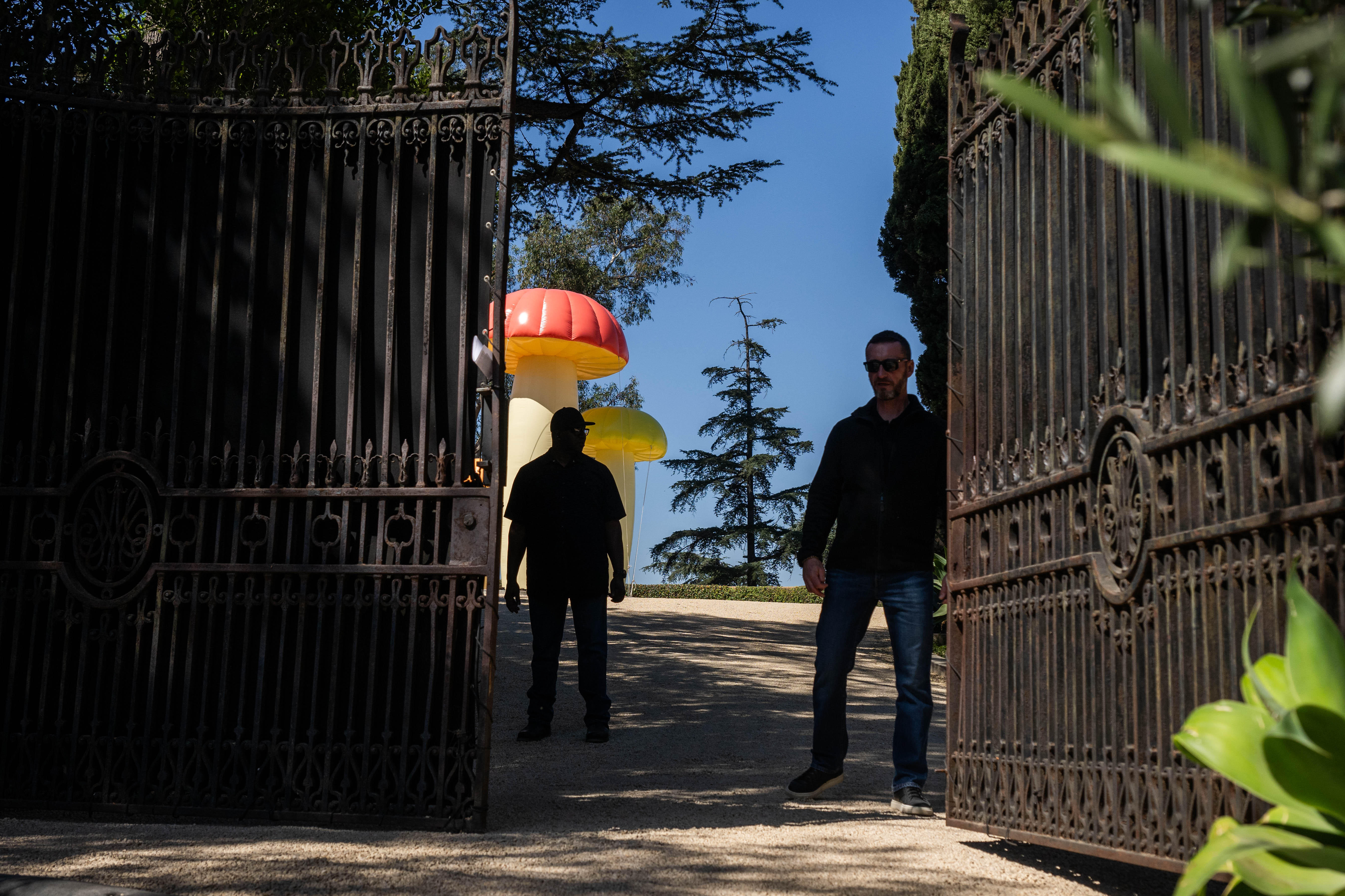
Security mans a gate at the Noma LA pop-up where $1,500 meals are being served at The Paramour Estate in Silver Lake on Wednesday, March 11, 2026. (Photo by Sarah Reingewirtz, Los Angeles Daily News/SCNG)
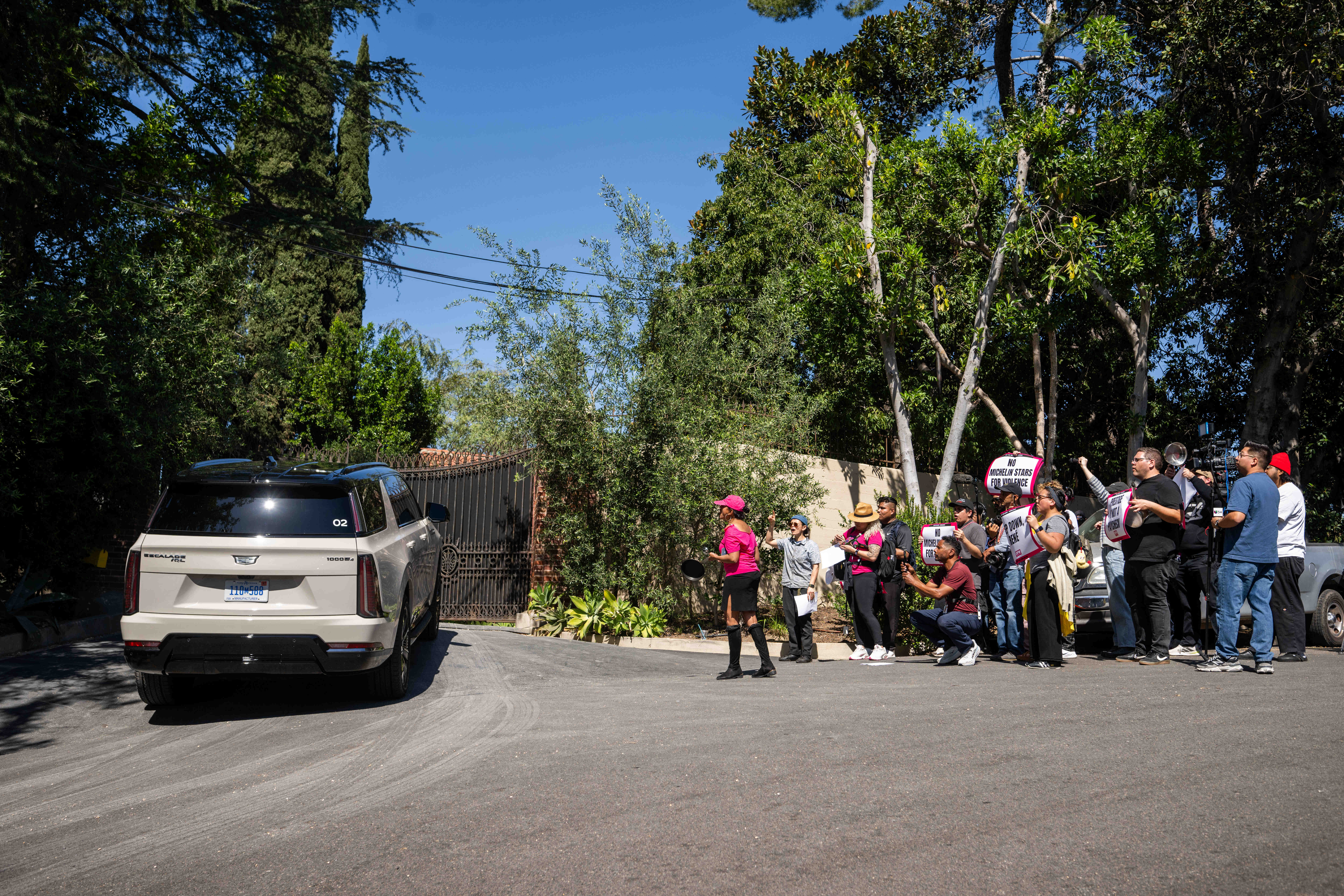
A driver brings guests into the Noma LA pop-up past protesters where $1,500 meals are being served at The Paramour Estate in Silver Lake on Wednesday, March 11, 2026. Protesters accuse chef and NOMA founder René Redzepi of abusing staff. (Photo by Sarah Reingewirtz, Los Angeles Daily News/SCNG)
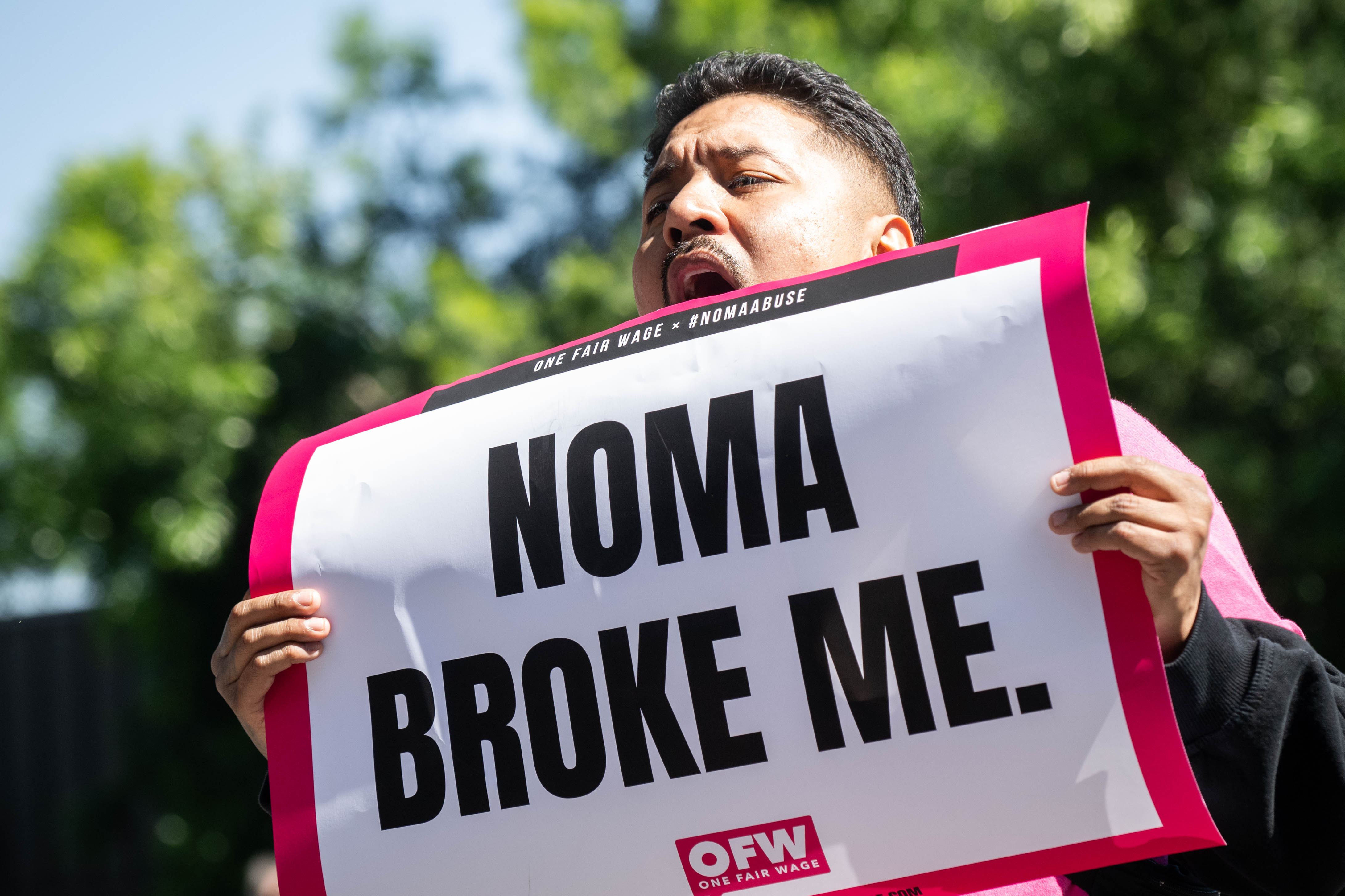
A protester chants outside the NOMA LA pop-up where $1,500 meals are being served at The Paramour Estate in Silver Lake on Wednesday, March 11, 2026. Protesters accuse chef and Noma founder René Redzepi of abusing staff. (Photo by Sarah Reingewirtz, Los Angeles Daily News/SCNG)

People walk dogs past a protest outside the Noma LA pop-up where $1,500 meals are being served at The Paramour Estate in Silver Lake on Wednesday, March 11, 2026. (Photo by Sarah Reingewirtz, Los Angeles Daily News/SCNG)
Show Caption
1 of 4
Security mans a gate at the Noma LA pop-up where $1,500 meals are being served at The Paramour Estate in Silver Lake on Wednesday, March 11, 2026. (Photo by Sarah Reingewirtz, Los Angeles Daily News/SCNG)
The protest was organized alongside One Fair Wage, a national advocacy group fighting for higher wages and workplace protections for restaurant employees. Jason Ignacio White, a former Noma chef and fermentation director, delivered a formal demand letter to Redzepi calling for industry reform, including fair wages, the end of unpaid labor and stronger protections against harassment and retaliation.
“For years, the culture surrounding Rene Redzepi and Noma has been celebrated without confronting the harm many workers experienced behind the scenes,” White said in a written statement distributed by organizers. “I witnessed intimidation, unpaid labor and a culture that pushed people beyond their limits while expecting silence in return.”
ALSO READ: Didn’t book a $1,500 dinner at Noma? Try these 7 OC restaurants instead
A ‘toxic’ culture
Advocates say the protest will also spotlight a larger effort in Los Angeles that aims to establish a higher wage for workers across the region: Los Angeles Living Wage for All is a campaign that aims to establish a $30 wage floor for workers.
“Behind the glamour of fine dining is an industry where too many workers experience intimidation, harassment and wage theft,” said Saru Jayaraman of One Fair Wage, in a written statement. “At the root of this toxic culture is poverty pay.”
The protest comes on the heels of the investigation in The New York Times detailing allegations of abusive behavior and exploitative labor practices inside Noma’s Copenhagen kitchen from 2009 to 2017. In the report, more than 35 former employees describe a workplace culture where intimidation, aggressive behavior and unpaid labor were the norm inside one of the world’s best restaurants.
Among the abuse allegations: Redzepi punishing all employees for one person’s mistake, punching them in the chest while screaming expletives in their faces; jabbing employees in the legs with cooking utensils “like a barbecue fork”; and slamming a former cook against the wall, punching him in the stomach. One female employee said that the noted chef punched her in the ribs after witnessing her use a phone to turn down the volume in the dining room.
‘Bad judgment’
Redzepi’s behavior and reputation had been an unkept secret in the industry prior to The New York Times report. Susan Park (@koreatownclass) has been amplifying said allegations on her Instagram since Jan. 14, as well as website noma-abuse.com. Bullying tactics have also been alleged against other members of Redzepi’s senior team.
ALSO READ: Where do Orange County’s top chefs eat? We asked them
In response to the article, Redzepi posted a missive to his 1 million-plus followers on Instagram, reading, in part: “Although I don’t recognize all details in these stories, I can see enough of my past behavior reflected in them to understand that my actions were harmful to people who worked with me. To those who have suffered under my leadership, my bad judgment or my anger, I am deeply sorry and I have worked to change.”
A statement on Noma’s Instagram noted, “Since that time, we have improved processes to address concerns. We are continuing to do so with an independent audit that ensures we keep our standards high and our workplace safe.”
Since The New York Times report went live, some sponsors have pulled out of Noma’s residency. Kristen Hawley first reported that American Express and Resy would end the partnership on Monday. Restaurant technology startup Blackbird and car purveyor Cadillac followed suit shortly after.
With reservations
The much-ballyhooed pop-up will run until June 26 at Paramour Estate, 1923 Micheltorena St., featuring Noma’s highly involved tasting menus that highlight California’s primo produce and ingredients.
As previously reported in The Orange County Register, the gastronomic experience comes with a price tag approaching $1,500 per guest, a stratospheric figure that sparked debate about the economics and exclusivity of fine dining in a city reeling from a rash of fatal wildfires and increasing economic disparity.
Since opening in Copenhagen in 2003, Noma has been credited with redefining global gastronomy through its seasonal cooking, fermentation techniques and focus on foraged ingredients. The restaurant, which closed for regular service in 2023, has also topped the World’s 50 Best Restaurants list several times. But the renewed scrutiny surrounding Noma’s workplace culture has affected its legacy as the restaurant makes its Los Angeles debut.
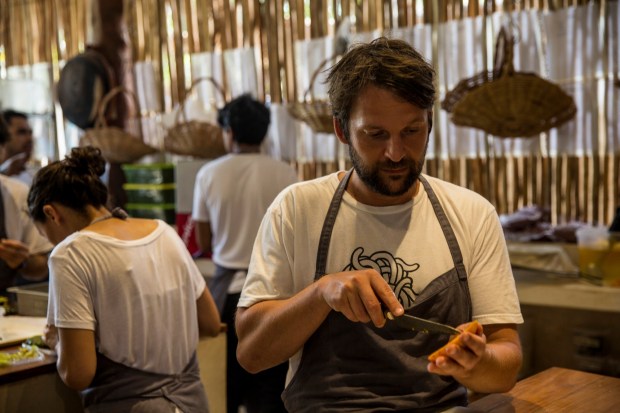 FILE — Chef René Redzepi cuts a mango at a Noma pop-up in Tulum, Mexico, April 19, 2017. Two major sponsors of a $1,500-per-night series of pop-up dinners in Los Angeles staged by the globally acclaimed Copenhagen restaurant Noma have pulled out in response to a New York Times report that its chef, René Redzepi, abused employees for years. (Adriana Zehbrauskas/The New York Times)
In a column published Tuesday in the Los Angeles Times, restaurant critic Jenn Harris said she will not review Noma’s pop-up. “I can’t review Noma right now,” she wrote, explaining that the conversation surrounding the eatery has shifted beyond the food. Instead, Harris argued that the moment calls for a deeper examination of power dynamics and labor structures inside elite restaurant kitchens.
The issue reflects continuing shifts across the culinary world. Over the last decade, several high-profile chefs and restaurants have faced scrutiny over workplace culture, leading some restaurants to reevaluate their practices like unpaid work, physical and sexual harassment and kitchen hierarchies. Names like Mario Batali and Gino D’Acampo, along with tertiary institutions like Bon Appétit and major media organizations, have tumbled from prominence due to allegations of toxic or bullying behavior.
Protest organizers say the action is not only about Noma, but about the broader restaurant industry as a whole and the conditions and personalities that have come to shape it.
“When wages are so low and workers depend on the goodwill of powerful chefs or employers to survive, people feel they have no recourse if they are mistreated,” Jayaraman of One Fair Wage explained in the same statement. “That is how misogyny, intimidation and servitude take hold in restaurant workplaces.”
Note: This story has been updated to include the chef’s statement and decision to step away.