
Preliminary plans have been submitted for the potential redevelopment of the Caltrain San Francisco Railyards at 4th and King Street in SoMa, San Francisco. The trove of documents filed earlier this week shows a few variants for transforming the 18.6-acre property into a high-density extension of the city’s urban environment, with the tallest tower potentially reaching 850 feet. The plan is a joint venture with Prologis and Caltrain.
According to Prologis, the firm expects to construct between 7 and 8 million square feet at full build-out, including approximately 4 million square feet of commercial office space and roughly 2,500 dwelling units. The tallest tower would rise at 4th and King Street, with the new Caltrain Station at its base. The first phase of construction is expected to see 2.5 million square feet on the blocks at 4th Street and 7th Street.
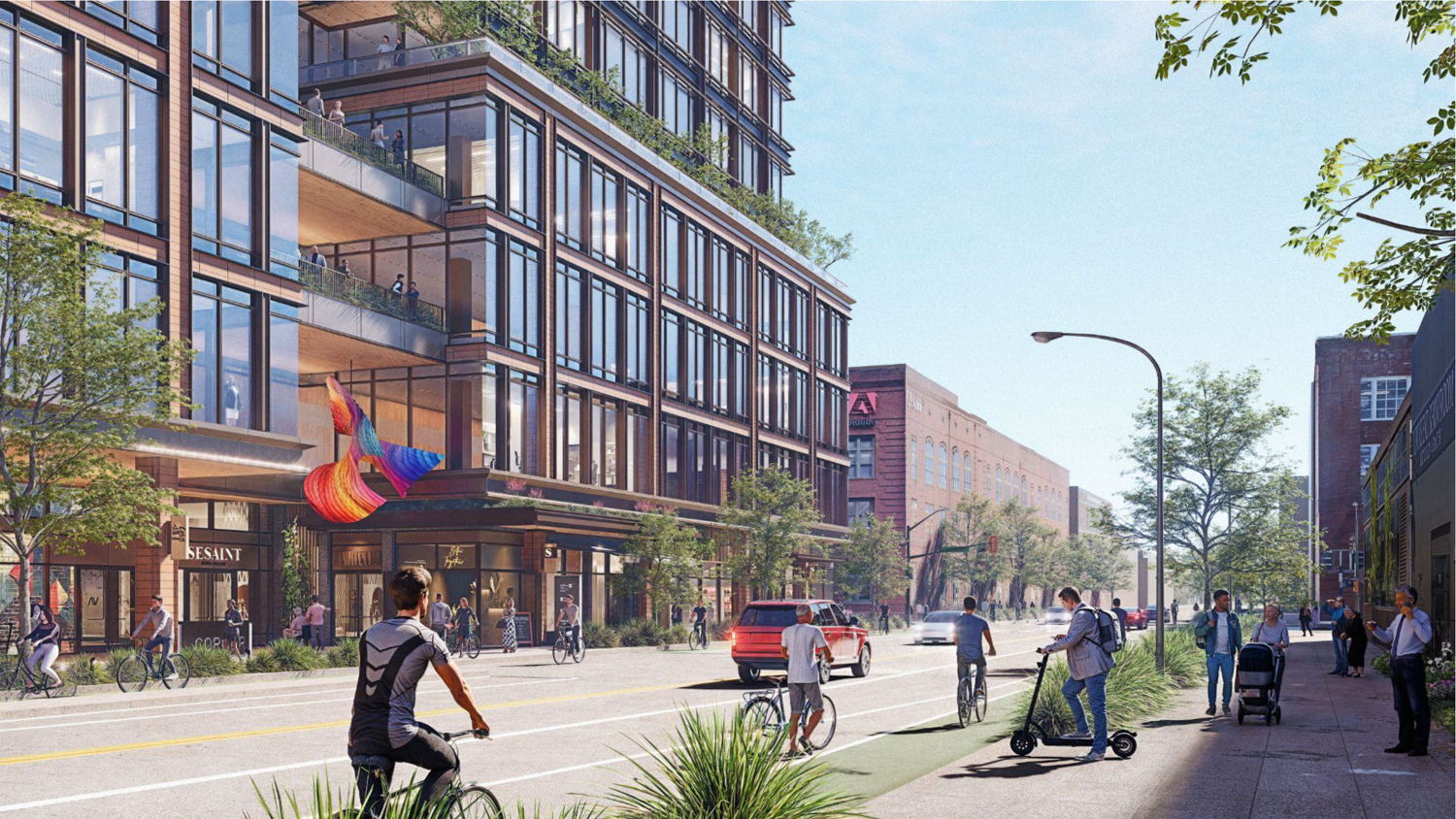
Caltrain San Francisco Railyards pedestrian view at 7th and Townsend, rendering by Prologis
Caltrain San Francisco Railyards internal view, rendering by Prologis
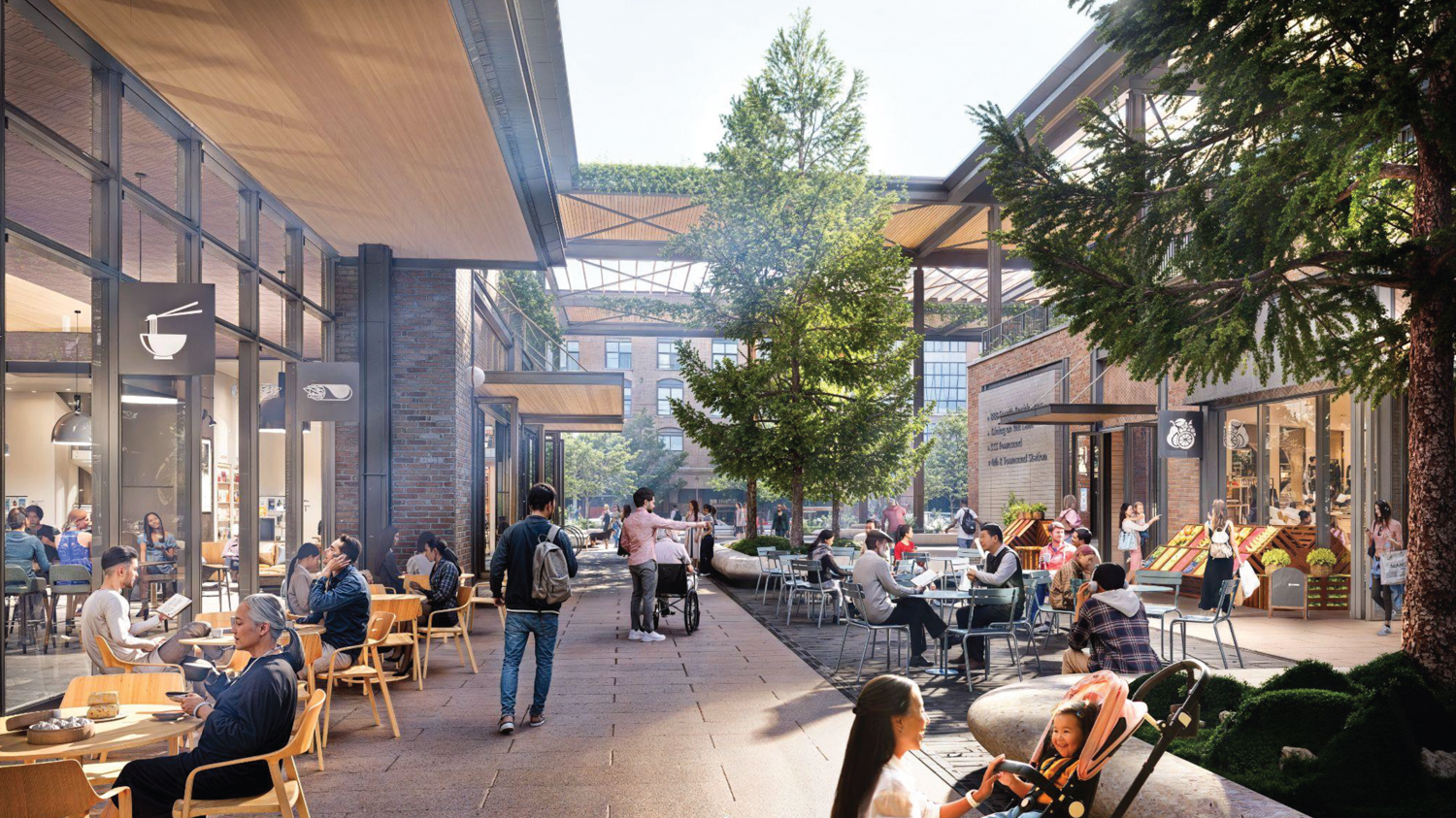
Caltrain San Francisco Railyards view of Station Lane, illustration by Prologis
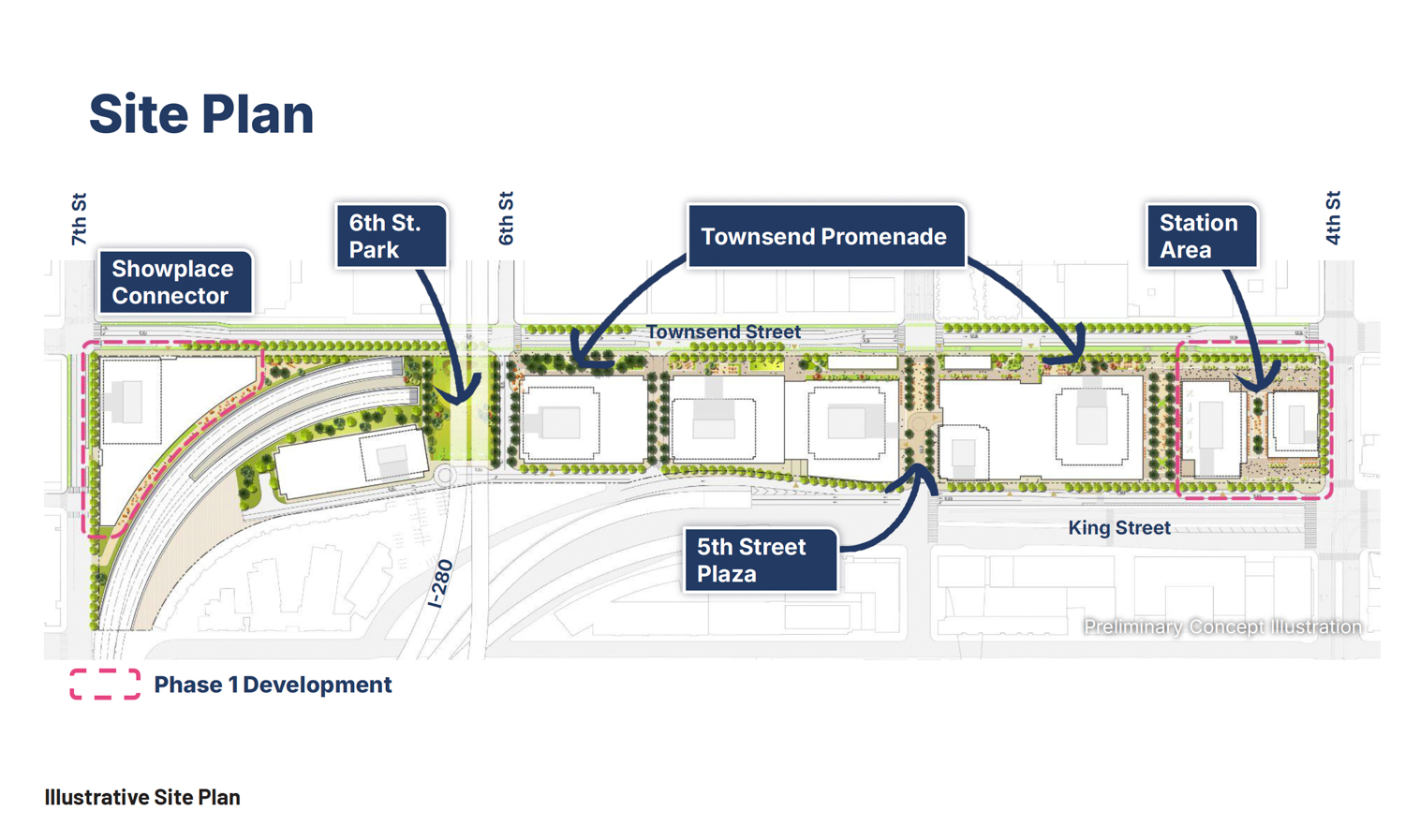
Caltrain San Francisco Railyards proposed site plan, illustration by Prologis
Prologis and Caltrain anticipate funding the project with a combination of private and institutional capital sources for vertical development and public sources for infrastructure and transit-oriented development. The ambitious project aims to construct a world-class destination transit below a high-density mixed-use development and over four acres of public open space spread across a grand urban promenade and parks.
Vice President for Prologis, Genevieve Cadwalader, shared in a press release, “We have engaged extensively with community organizations and neighbors to help shape the project we are advancing today- and that engagement will continue throughout the entitlement process.”
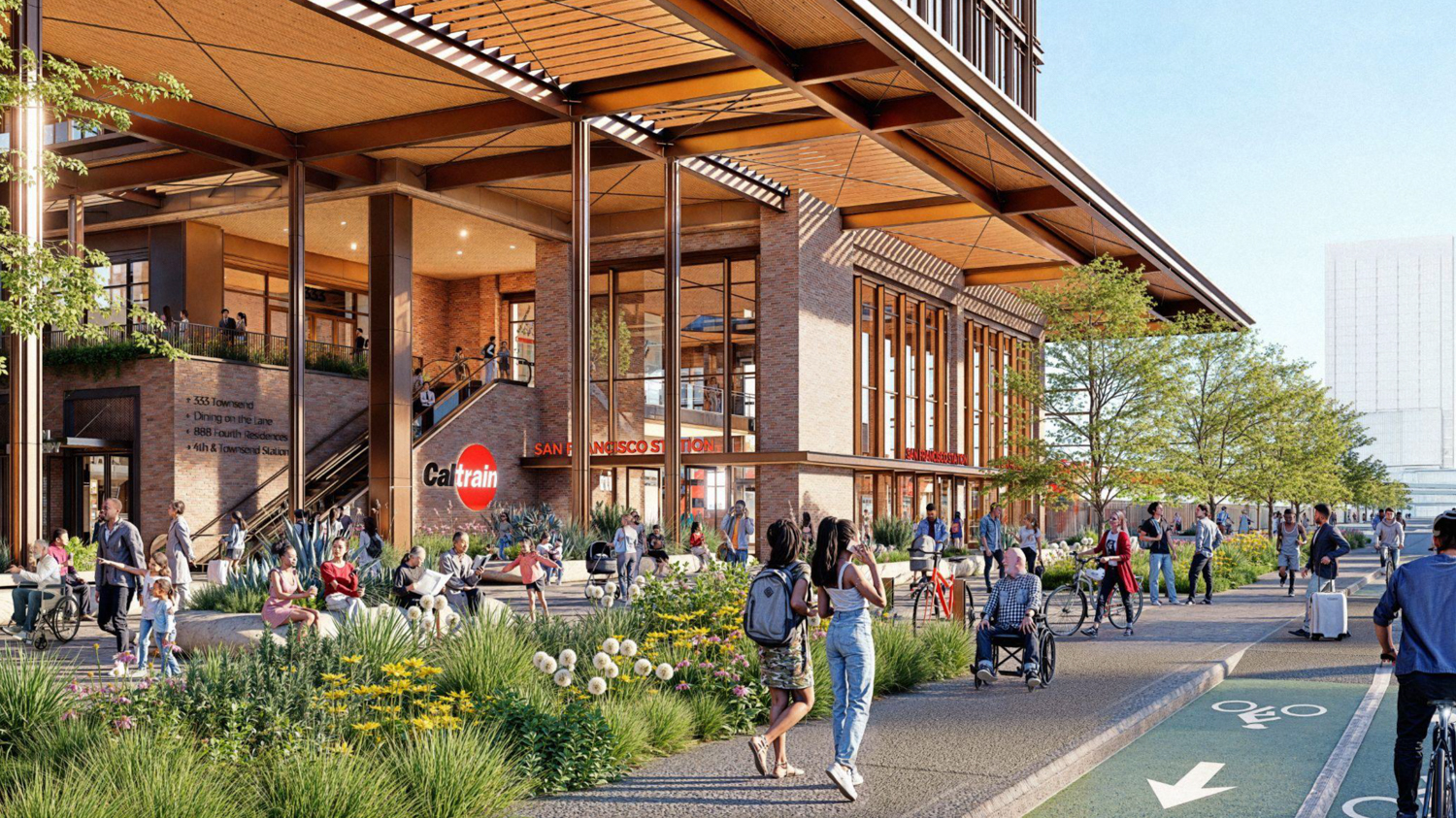
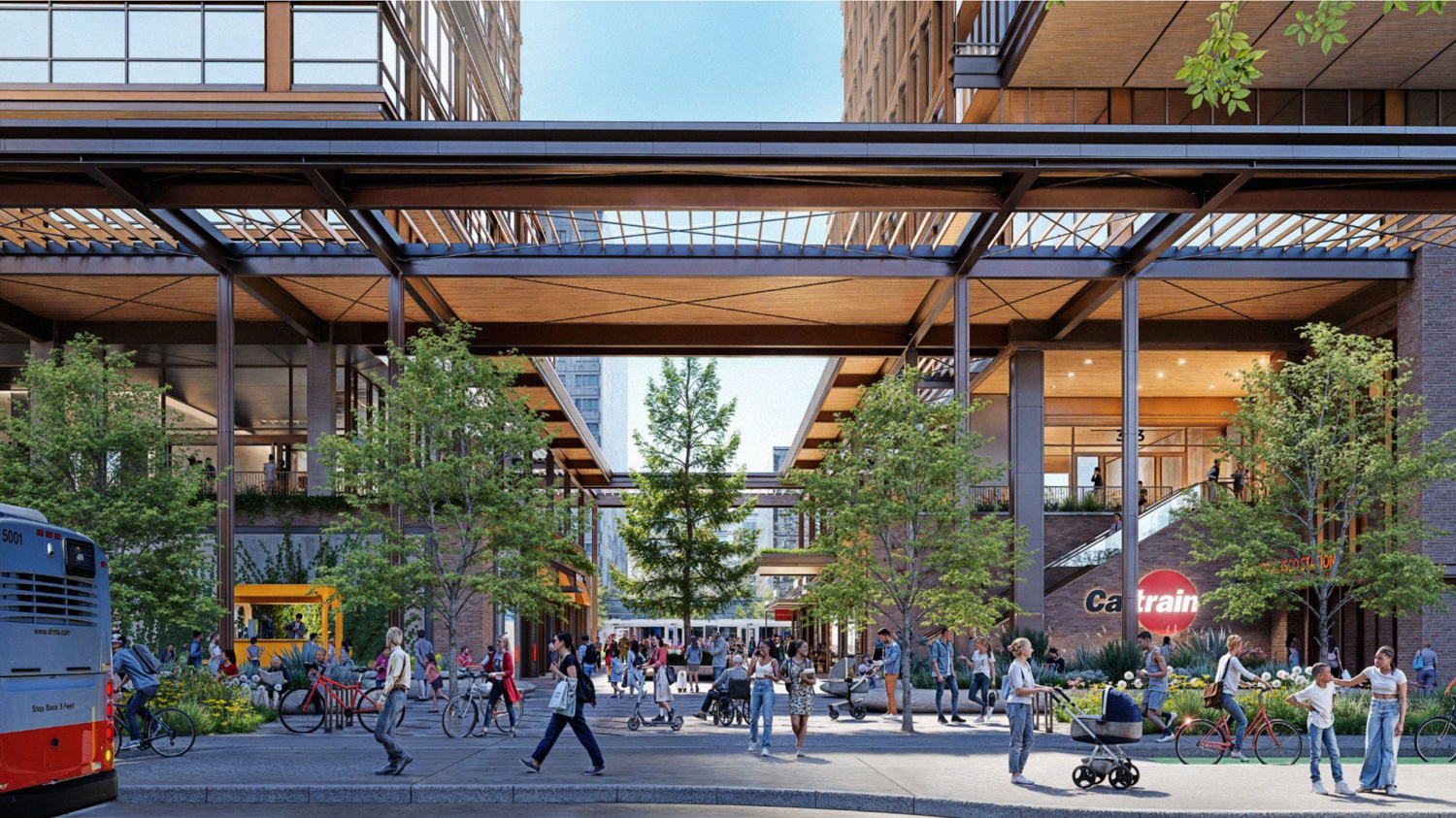
Caltrain San Francisco Railyards sidewalk view of the new Train Station, rendering by Prologis
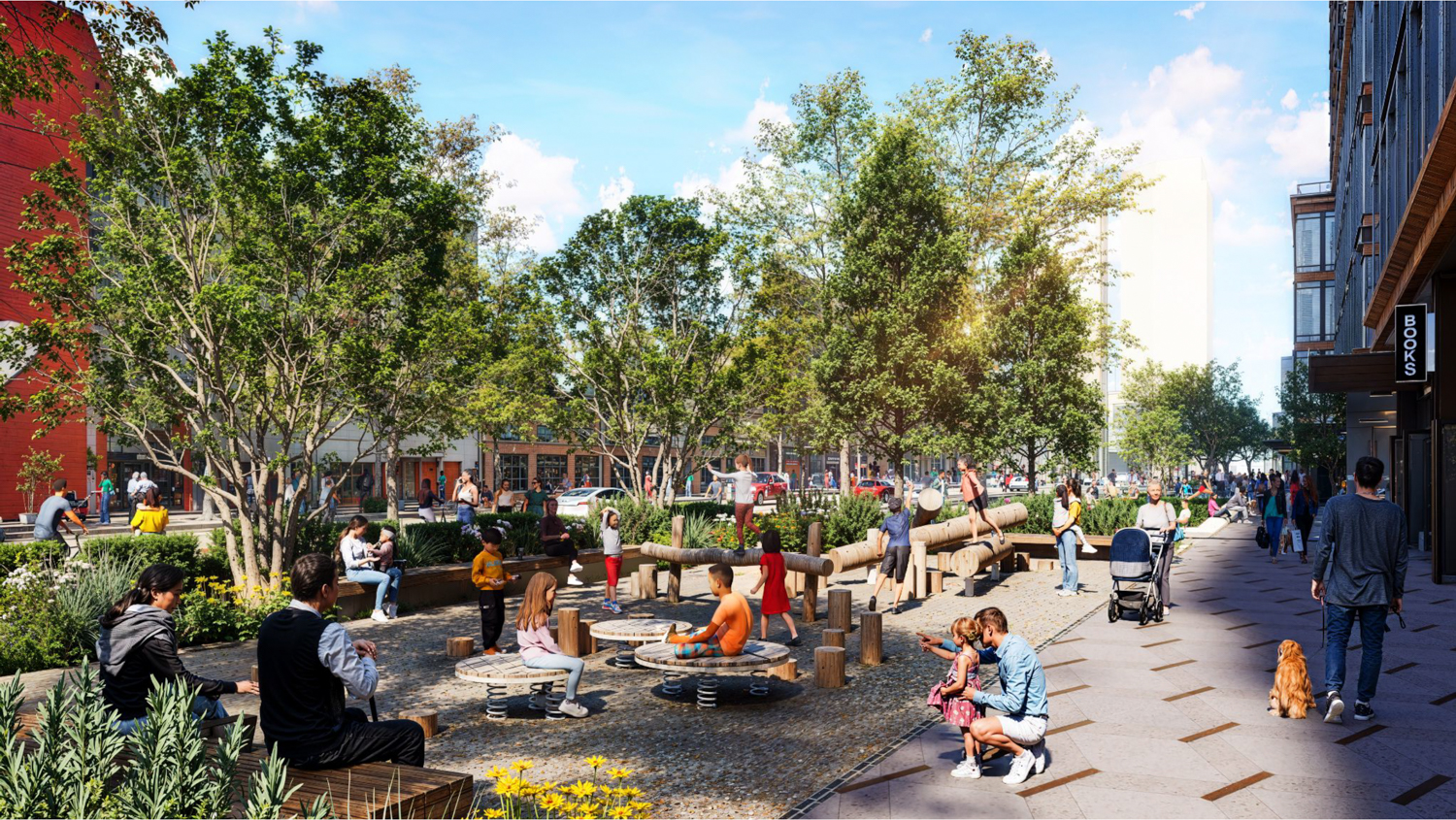
Caltrain San Francisco Railyards sidewalk view of a playground, rendering by Prologis
Michelle Bouchard, Executive Director of Caltrain, added that “Caltrain and our fellow transit agencies are navigating real near-term financial challenges — but this project points toward a different future. This visionary, multi-phased project is a bold bet on San Francisco and on the long-term value of connecting people, housing, and jobs through great transit.”
Anne Taupier, Executive Director of San Francisco’s Office of Economic and Workforce Development, said of the proposal, “this is exactly the kind of development San Francisco needs—one that helps knit together multiple neighborhoods with enhanced public access and new gathering places, brings housing and a high density mix of uses to a transit-oriented site, and helps deliver essential infrastructure improvements both for our regional rail system and the South of Market streetscape. Prologis and Caltrain have worked in close coordination with the City and neighborhood stakeholders in developing this vision, and we look forward to a continued partnership refining this one-of-a-kind project.”
The application writes that the “Proposed Project would modernize the Caltrain Station and Railyard, in coordination with the Transbay Joint Powers Authority’s construction of the Portal Project and the Pennsylvania Avenue extension.” The Portal is the proposed extension of Caltrain to the underground platform station below the Salesforce Transit Center, next to the Salesforce Tower.
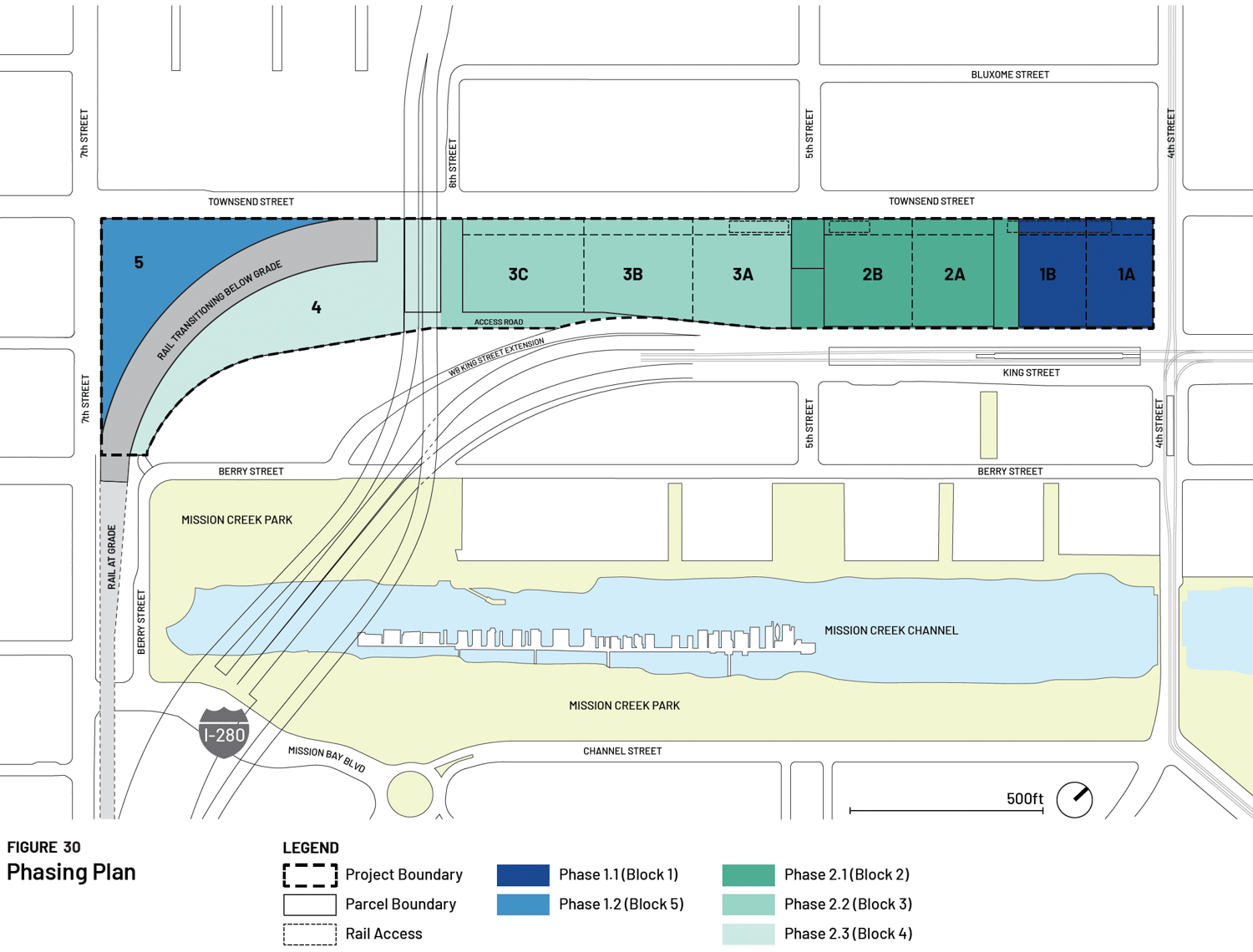
Caltrain San Francisco Railyards estimated construction phase map, illustration by Prologis
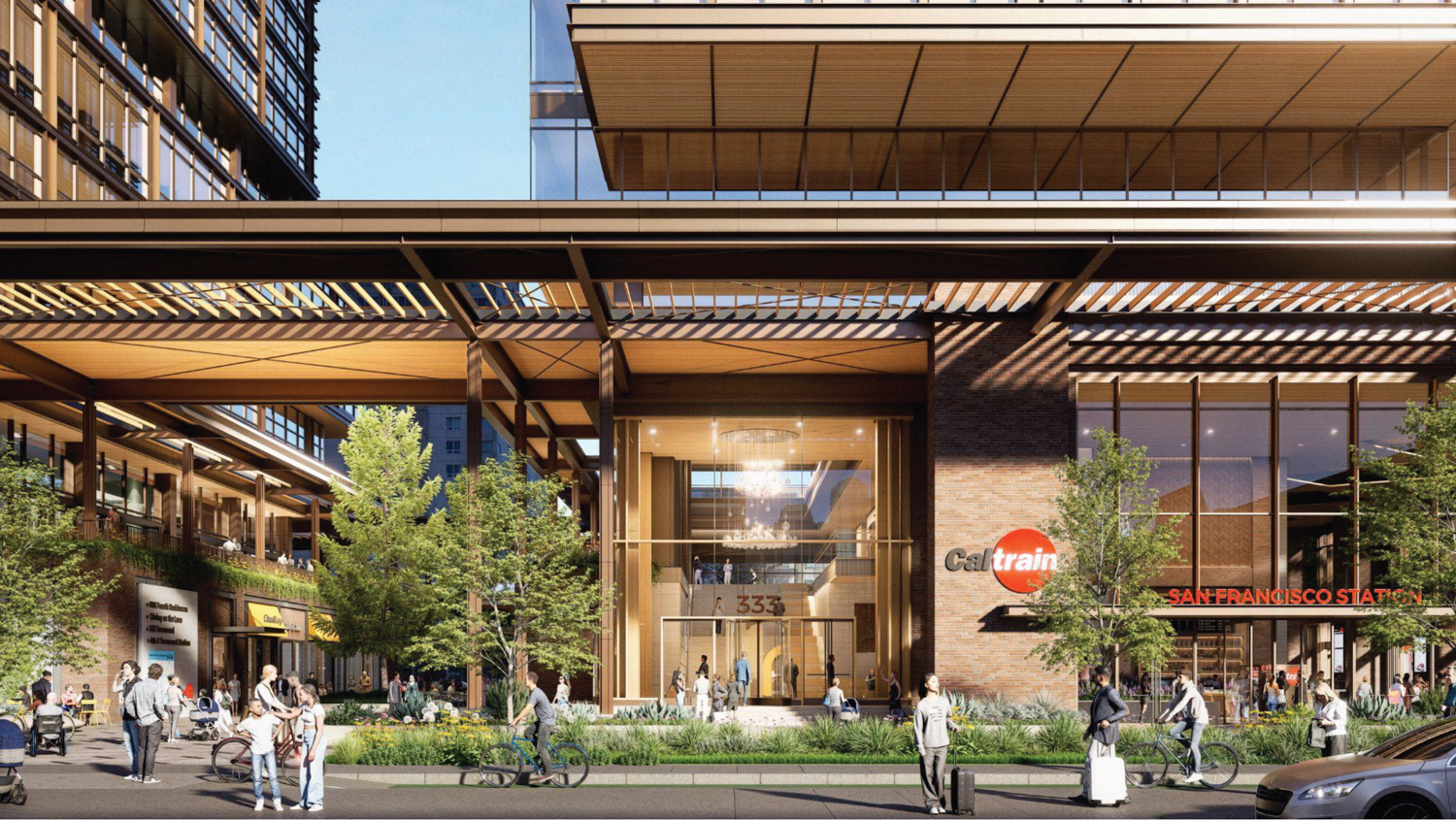
Caltrain San Francisco Railyards front view of the new station entrance, rendering by Prologis
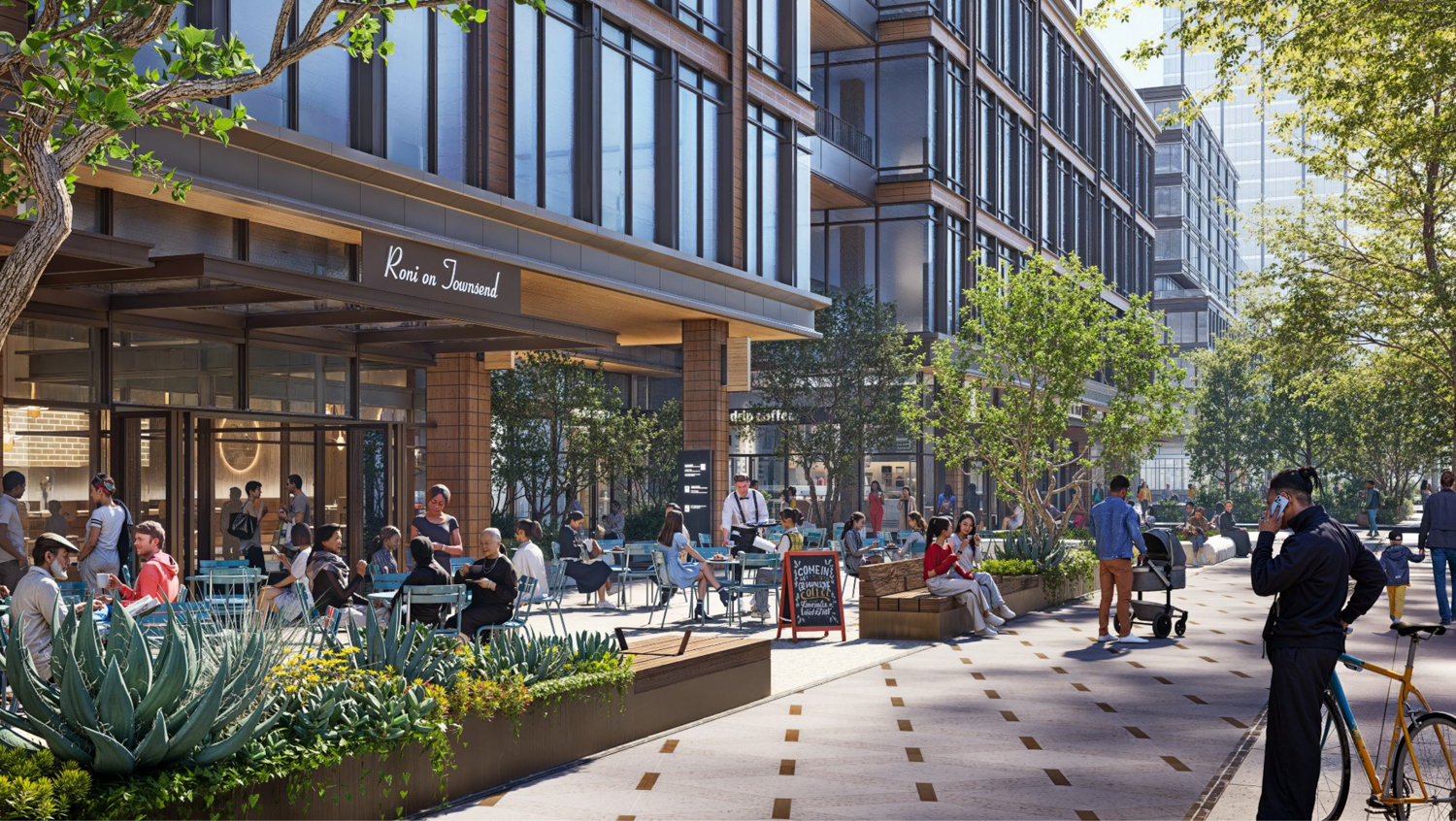
Caltrain San Francisco Railyards proposed retail-lined Townsend Promenade, rendering by Prologis
The Caltrain redevelopment is expected to start with phase one, which includes moving the existing railyard platform and tracks “away from 4th Street to the southwestern border of Block 1, to create space for the initial vertical development on Block 1,” according to the project description. Once the new temporary train station is finished, further construction will require the completion of The Portal and an off-site train storage and maintenance facility. Throughout the construction process, Prologis and Caltrain are expected to maintain the existing rail traffic volume.
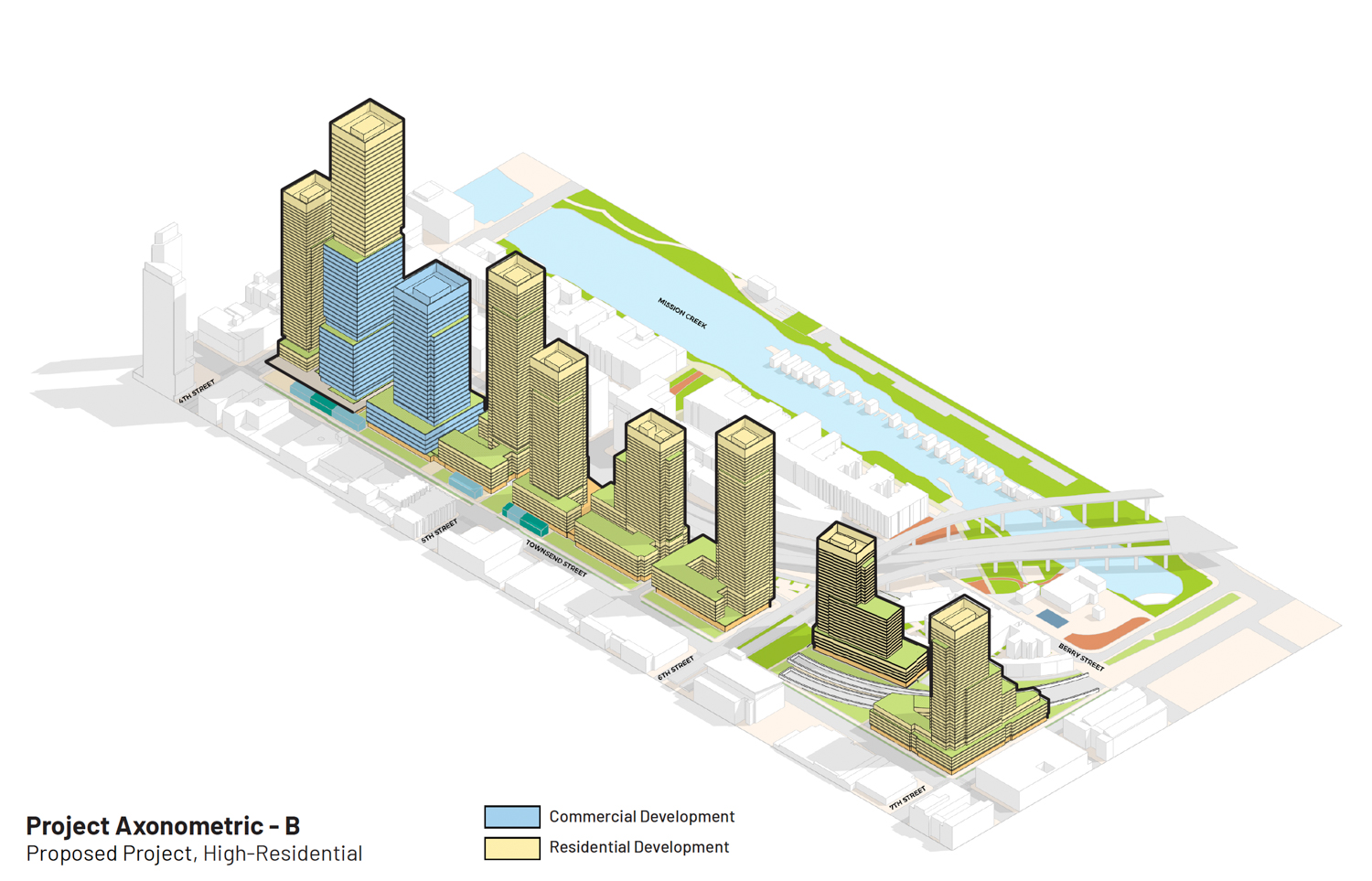
The preliminary application is intentionally vague, providing insight into the general scale of potential redevelopment at the start of the planning process for the city’s planning department and for the public. The first two variants are descriptively labeled the “Maximum Commercial Scenario” and the “Maximum Residential Scenario.” For both scenarios, the general height and structure count are similar. Most new buildings are expected to rise between 350 and 600 feet, with the tallest at 850 feet. Given the information provided by Prologis, the developers will pursue a more evenly mixed variant than the scenarios described in the application.
The project will involve four parcels spanning 18.63 acres bound by Townsend Street, 4th Street, King Street, and 7th Street. The site has been part of the city’s railway infrastructure since the late 19th century, with the Southern Pacific Railroad building the initial rail terminal and freight storage facility on Townsend Street between 3rd and 4th Streets in 1873. By 1914, the first temporary passenger station was built in preparation for the Panama-Pacific International Exposition. By 1975, the old depot was replaced by another temporary station, which still exists today.
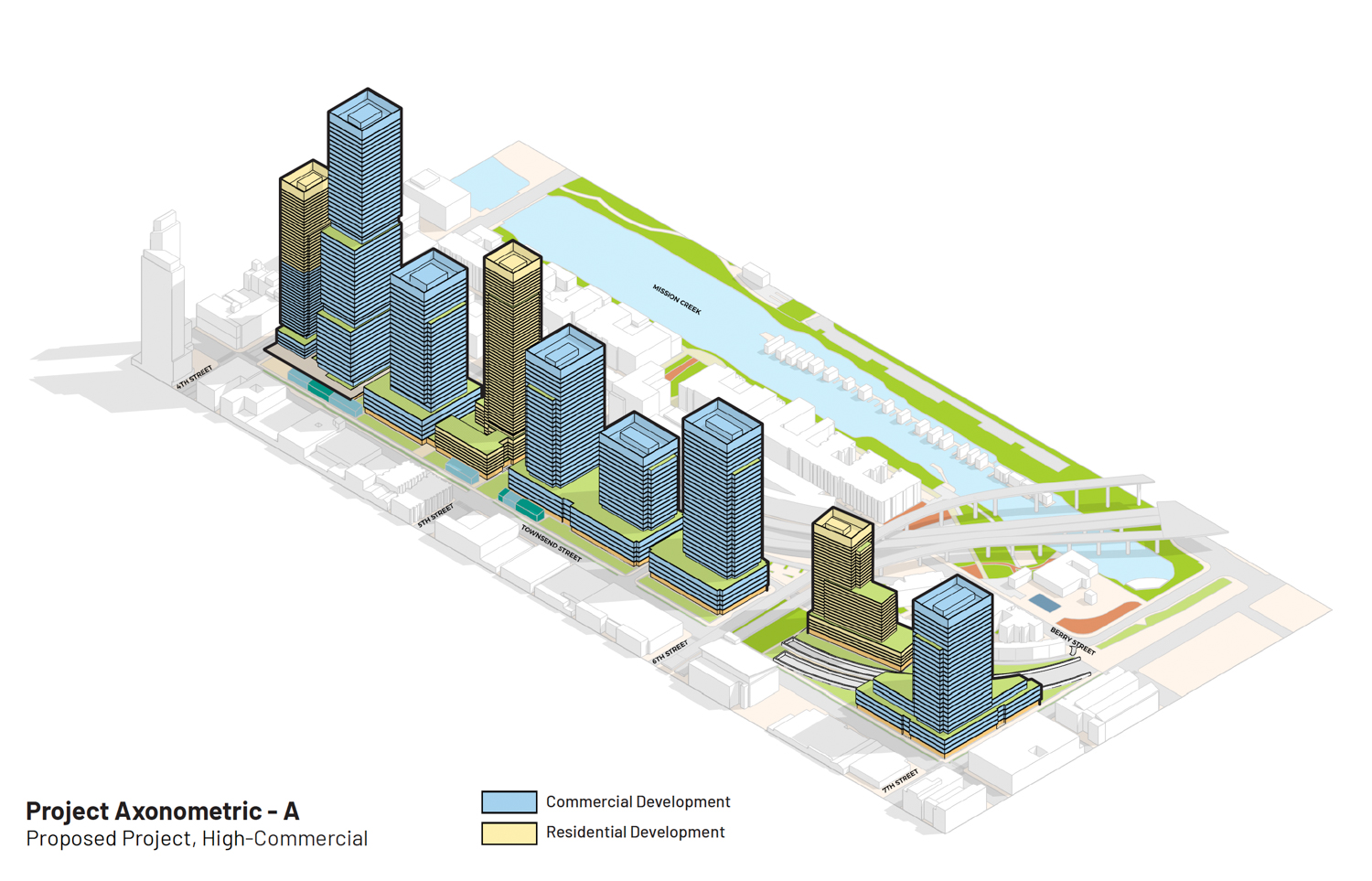
Caltrain San Francisco Railyards high-commercial variant, illustration by Prologis
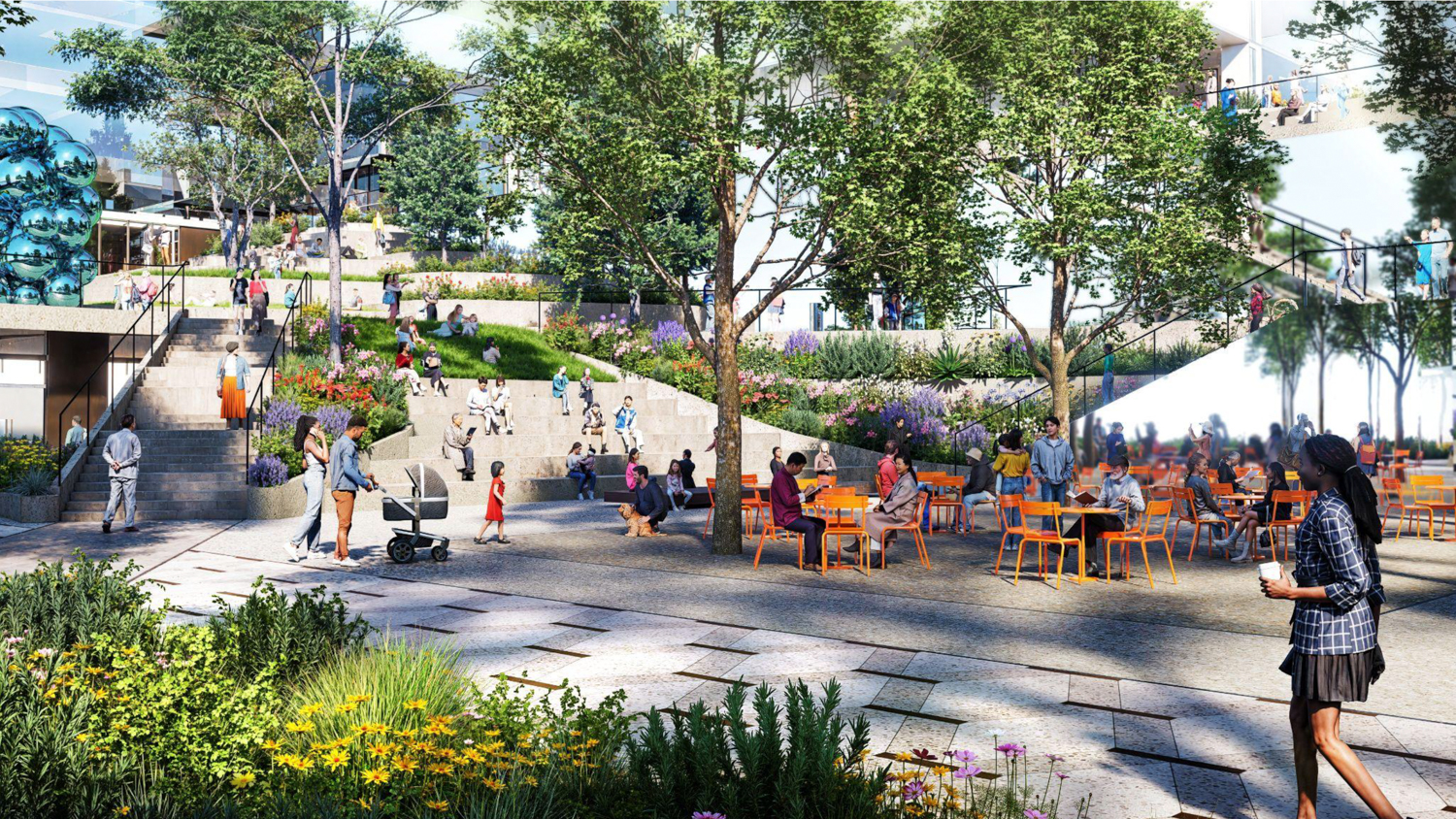
Caltrain San Francisco Railyards view of the 5th Street Park, illustration by Prologis
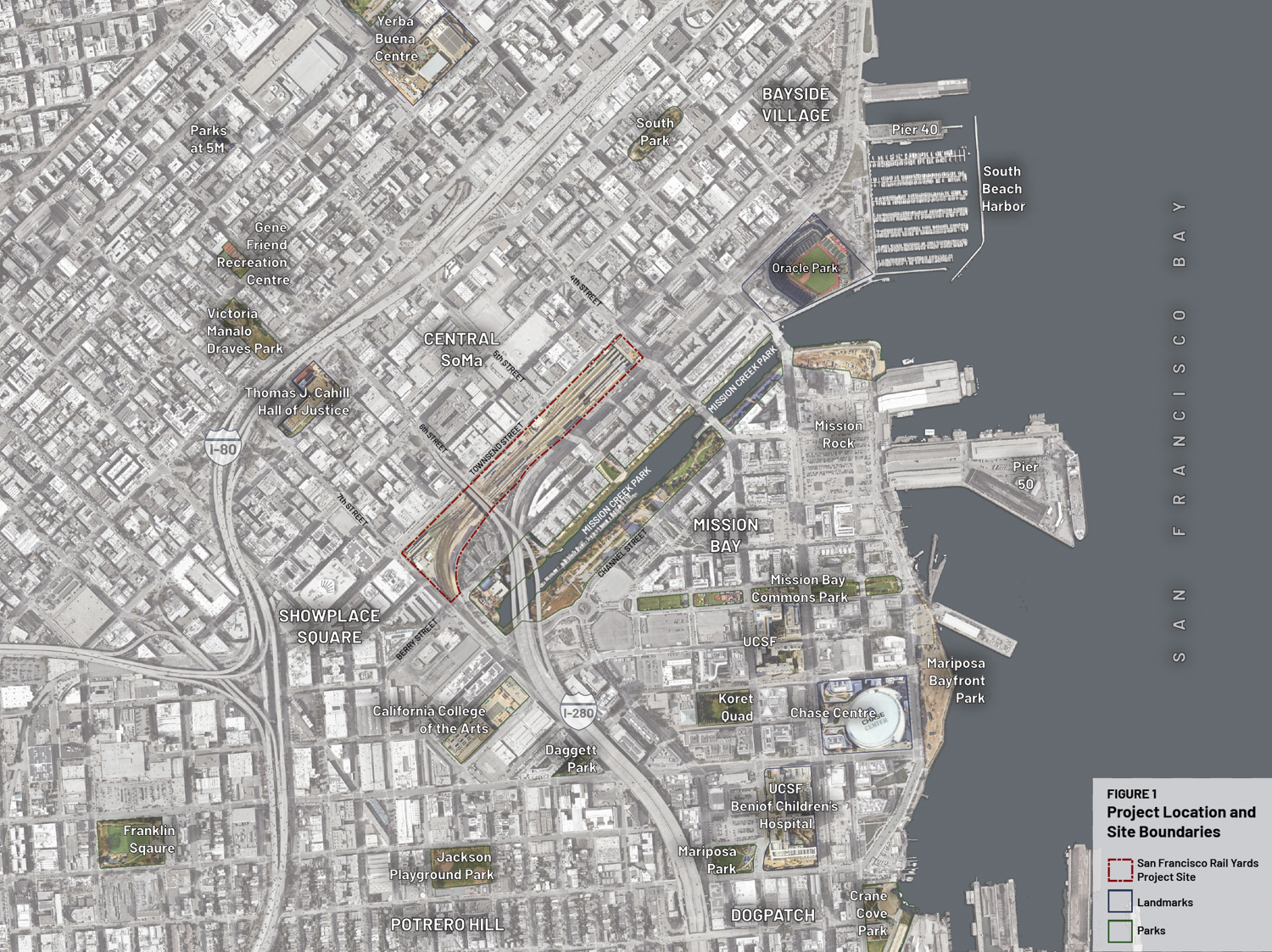
Caltrain San Francisco Railyards site area context, illustration by Prologis
Prologis is a real estate investment trust headquartered at Pier 1 in San Francisco. The firm is best recognized for its international footprint and expansive logistics facilities.
The team expects the phased construction to last 15 to 20 years, with a groundbreaking date yet to be set. Documents estimate that if construction can start by 2029, full build-out might occur as early as 2041 or 2042.
Subscribe to YIMBY’s daily e-mail
Follow YIMBYgram for real-time photo updates
Like YIMBY on Facebook
Follow YIMBY’s Twitter for the latest in YIMBYnews