

San Diego County braces for record-breaking temperatures, with the National Weather Service issuing a Heat Advisory. Stay safe by keeping cool and hydrated.
SAN DIEGO COUNTY, Calif. — San Diego County will experience a spike in temperatures at the end of the workweek, and county officials are warning residents to take precautions to avoid heat-related illnesses.
High temperatures will be 20 to 25 degrees above average west of the mountains on Thursday and Friday, according to the National Weather Service. In anticipation of possible record-breaking heat, the National Weather Service has issued a Heat Advisory for Thursday and Friday across the San Diego County coast and inland valleys. It will be in effect from 10:00 a.m. Thursday through 8:00 p.m. Friday.
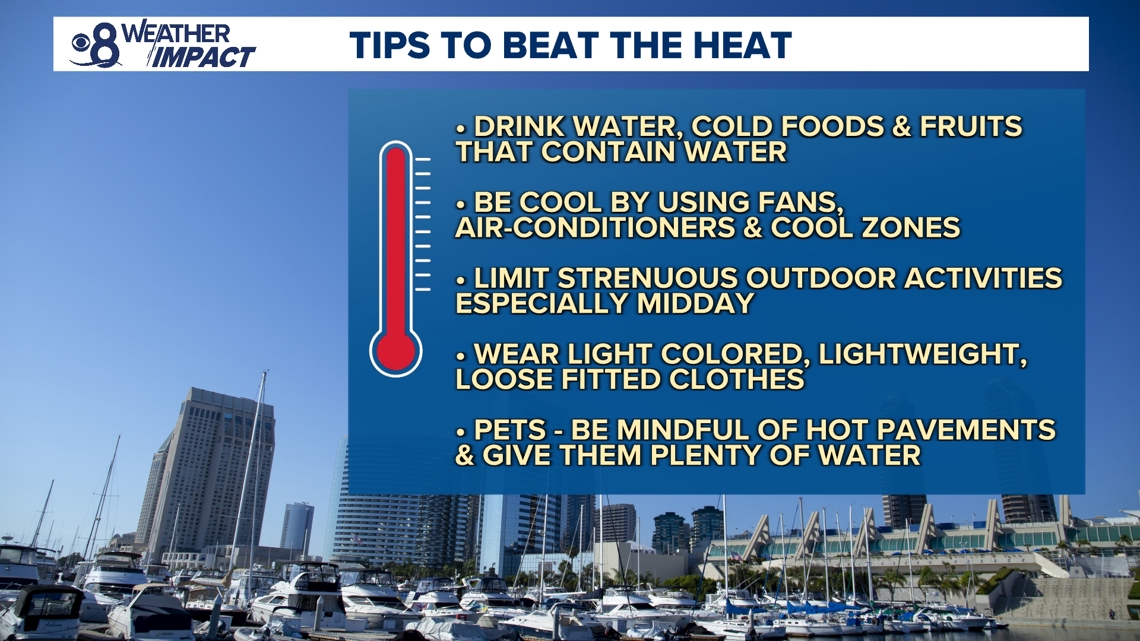
During extreme heat, the County recommends San Diegans stay hydrated and remain cool. Be sure to limit strenuous outdoor activities, especially midday, and wear lightweight, loose-fitting clothes.

Who’s most at risk during a heat wave?
During a heat wave, elderly people, children and infants, people with health concerns, and people who work or exercise outdoors are most at risk for heat-related illnesses. The CDC said other vulnerable groups include pregnant women, people experiencing homelessness, and people living in areas with limited air conditioning.
The American Red Cross said everyone should stay hydrated and make a plan to stay cool before extreme heat occurs.
What are the warning signs of heat-related illness?
Heat cramps are typically the first sign of heat-related illness and may lead to heat exhaustion or stroke, according to the National Weather Service. Symptoms include painful muscle cramps and spasms, usually in the legs and abdomen, as well as heavy sweating. The NWS said it’s important to seek immediate medical attention if cramps last longer than 1 hour.
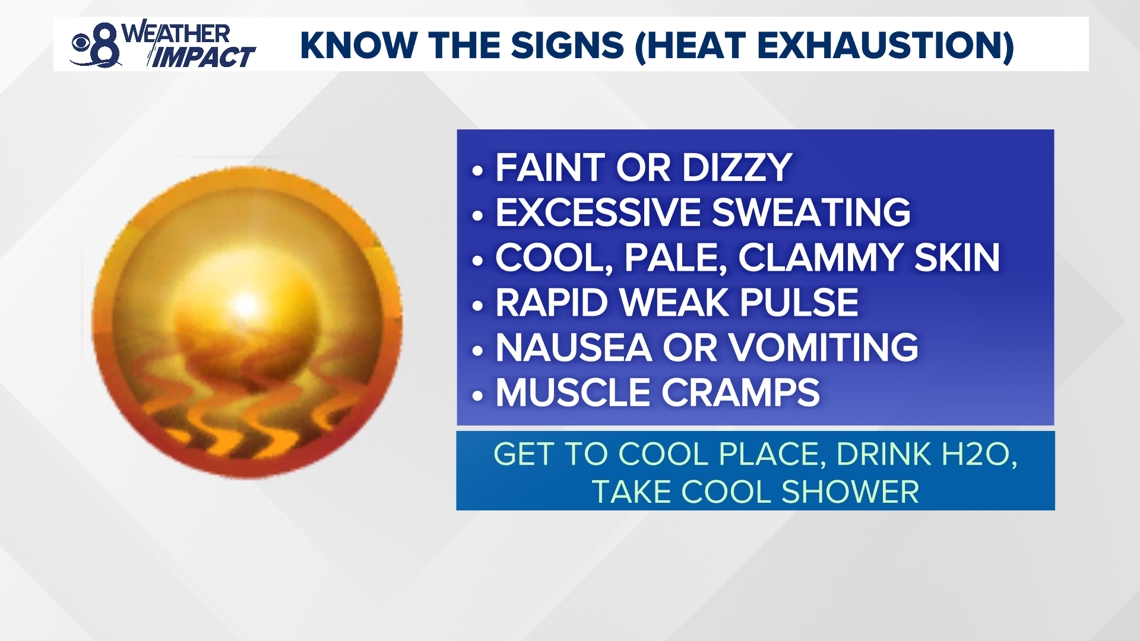
Symptoms of heat exhaustion include heavy sweating, weakness or tiredness, fast and weak pulse, muscle cramps, dizziness, nausea or vomiting, headaches, or fainting. Seek immediate medical attention if the person vomits, symptoms worsen, or last longer than 1 hour, according to the NWS.

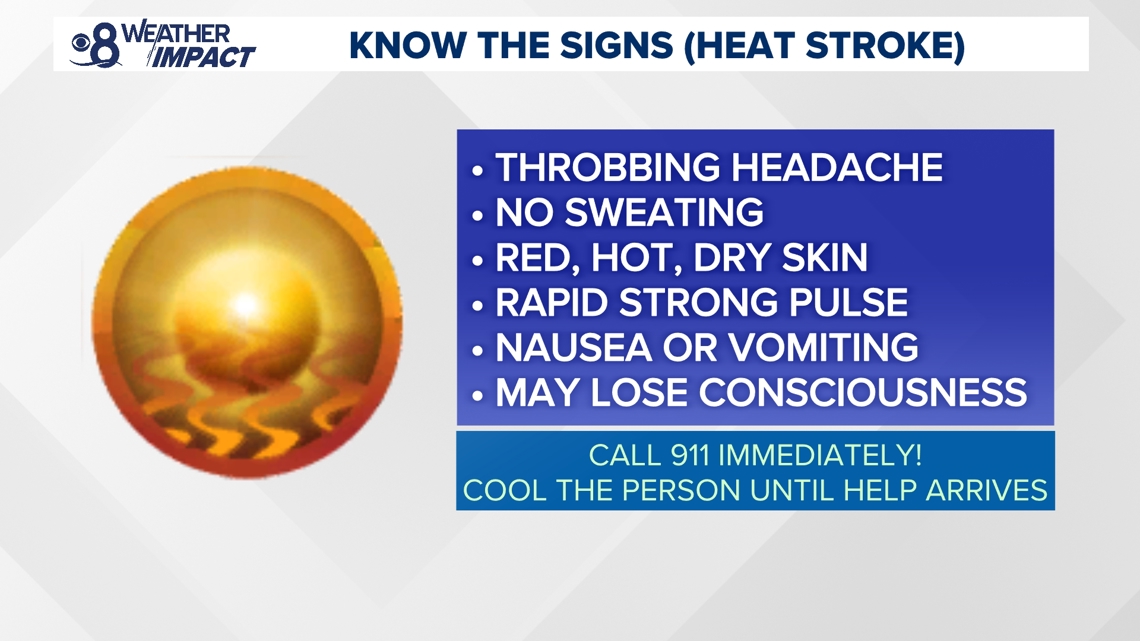
Symptoms of heat stroke include a throbbing headache, confusion, slurred speech, nausea, dizziness, body temperature above 103 degrees, rapid and strong pulse, fainting and loss of consciousness. The NWS said it’s important to call 911 or get someone to a hospital immediately if they are experiencing symptoms of a heat stroke.

Visit the CDC’s website for more information on heat-related illnesses and how to treat them.
How to prevent heat stroke while hiking
Cal Fire/San Diego County Fire Capt. Michael Cornette said hikers can avoid becoming ill or injured by avoiding hiking during the hottest parts of the day. Instead, people can try a coastal or shaded trail, head out early before it gets hot, or go later in the day, when it is starting to cool off.
Here are a few safety tips to help prepare for hiking in warm weather:
Choose hikes that are appropriate for your skills and physical condition. Go with the safest trail if heat may be an issue for part of the hike.Stay hydrated and drink water before, during, and after hiking. Park rangers recommend carrying one liter (about a quart) for every 2 to 3 miles. Hike with others, never alone.Let someone know where you will be and when you plan to return. Bring a backpack or bag with food and water, extra sunscreen to reapply and a flashlight, a first aid kit, a multipurpose tool or knife, and a whistle.Dress in layers of breathable, light-colored, loose-fitting clothes that you can take on and off, based on the temperature, and that can prevent sunburns.Print out a map of the trail to bring along to stay on track. Prolonged exposure to heat can cause disorientation or heat stroke.
How to protect your pet during a heat wave
When extreme heat is expected in San Diego County, County Animal Services said pet owners should take immediate steps to protect their animals. Hot weather can quickly lead to heat-related illness in pets. Signs of heat illness include excessive panting, heavy drooling, trouble breathing, and collapsing.
If your pet becomes overheated:
Move them to a shaded or cool area.Apply cool — not cold — water to lower their body temperature.Place cold, wet towels on the head, neck, and chest.Offer small amounts of cool water or ice cubes to lick.Take them to a vet as soon as possible.
Throughout the summer, county officials said it’s important to keep pets indoors when possible, especially during peak heat hours. Pets should have access to shade all day, as the sun shifts. Also, consider getting a misting system or a children’s pool to help pets cool off.
For additional pet safety tips, visit the County Animal Services website.