
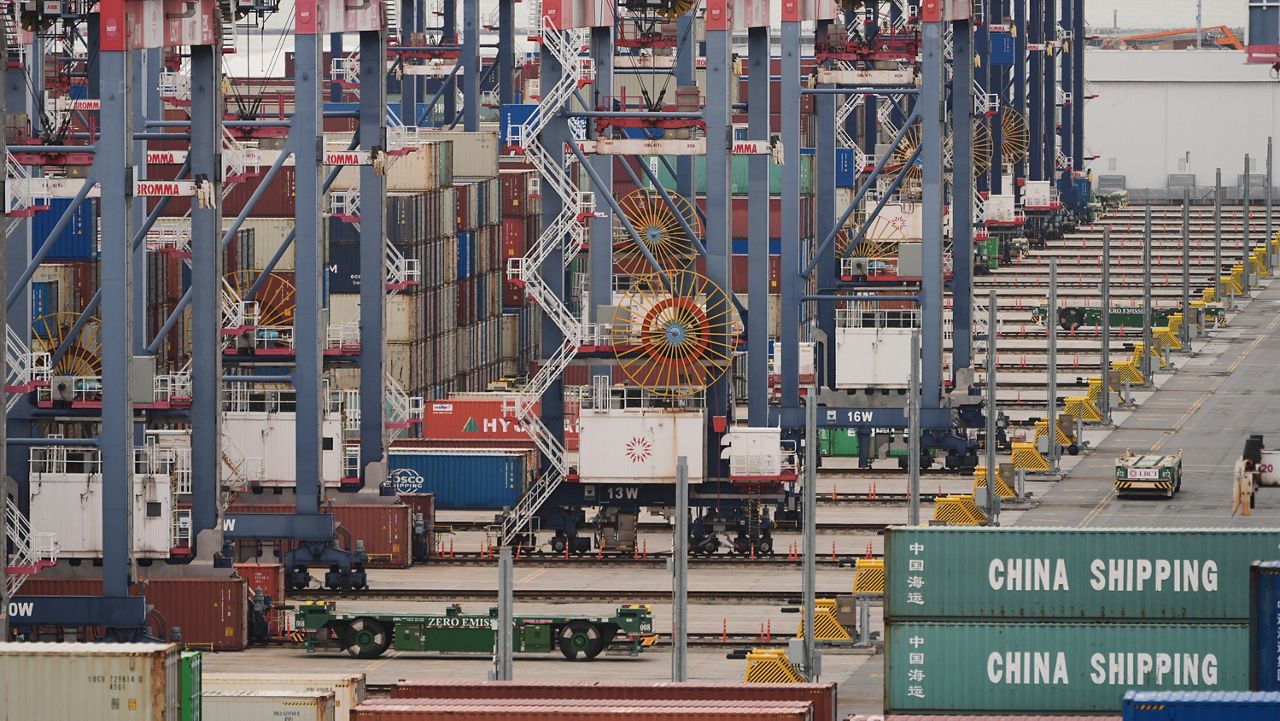
The U.S. is launching investigations into whether more than a dozen countries, as well as the European Union, are employing unfair practices in their trade with the U.S. — a precursor step to imposing tariffs.
What You Need To Know
The U.S. is launching investigations into whether more than a dozen countries as well as the European Union are employing unfair practices in their trade with the U.S. – a precursor step to imposing tariffs
The move comes just less than three weeks after the Supreme Court struck down other import duties President Donald Trump had imposed on most countries around the globe, which had brought in an estimated $175 billion since 2025.
U.S. Trade Representative Jamieson Greer announced the new probes Wednesday
The countries under investigation are China, Singapore, Switzerland, Norway, Indonesia, Malaysia, Cambodia, Thailand, Korea, Vietnam, Taiwan, Bangladesh, Mexico, Japan and India – in addition to the European Union
The move comes less than three weeks after the Supreme Court struck down other import duties President Donald Trump had imposed on most countries around the globe, which had brought in an estimated $175 billion since 2025.
In a news conference after that ruling, the president announced he would levy fresh duties through other statutes, including a 10% global tariff under Section 122 of the Trade Act of 1974. Trump later said he would up the rate to 15% — the maximum allowed under the law, which requires congressional approval to leave the tariff in place longer than 150 days. No timeline has been announced for when this increase might take place.
The president has also said his administration would seek to impose additional import taxes on specific goods through another existing law and initiate investigations into other countries under Section 301 of the Trade Act of 1974.
“It’s a little bit longer process,” Trump said of his plan for fresh import taxes, following the Supreme Court’s decision. “I thought I’d make things simple, but they didn’t let us do that.”
U.S. Trade Representative Jamieson Greer announced the new probes Wednesday. He has previously said Section 301 investigations would conclude within five months — significantly quicker than the maximum time allowed under the law of 12 or 18 months.
The countries under investigation are China, Singapore, Switzerland, Norway, Indonesia, Malaysia, Cambodia, Thailand, South Korea, Vietnam, Taiwan, Bangladesh, Mexico, Japan and India — in addition to the European Union.
Greer –– along with Treasury Secretary Scott Bessent — will travel to Paris next week to meet with China’s vice premier, He Lifeng, for a new round of trade talks ahead of Trump’s planned meeting with Chinese leader Xi Jinping scheduled for the end of this month in Beijing.
In a statement, Greer contended that American manufacturing was being hurt by other countries sending their excess goods to U.S. markets.
“Across numerous sectors, many U.S. trading partners are producing more goods than they can consume domestically,” he wrote. “This overproduction displaces existing U.S. domestic production or prevents investment and expansion in U.S. manufacturing production that otherwise would have been brought online.”
In response, the European Union refuted that it was exporting “excess” industrial products to the United States.
“The sources of such overcapacity are well identified, and they do not lie in Europe,” European Commission spokesperson Olof Gill said Thursday.
Gill said the EU would “carefully review” the details of investigation, and warned that the 27-member bloc would respond “firmly and proportionately” to any breach of the trade agreement reached between the U.S. and the European Union last summer.
The U.S. Office for the Trade Representative announced that a docket to collect comments on the trade investigations would open Tuesday, followed by a hearing in May.
During a call with reporters Wednesday, Greer also said the U.S. would roll out a separate Section 301 investigation into about 60 countries to ban the import of goods produced through forced labor, the Associated Press and other outlets reported.