
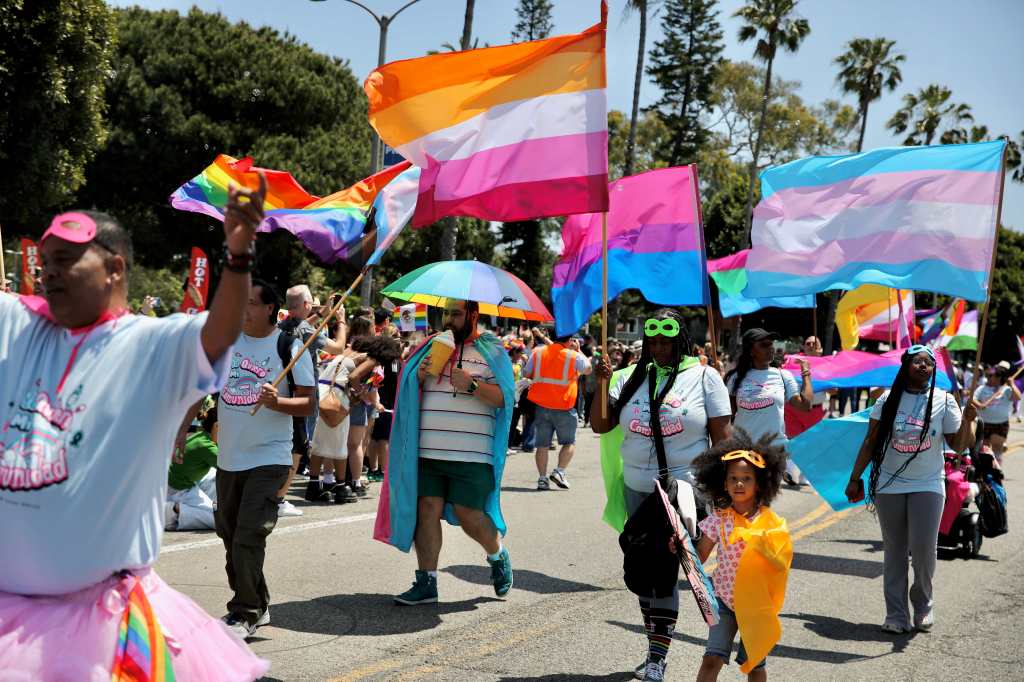
The Long Beach Pride Parade and Festival, a celebration of the city’s vibrant LGBTQ+ community, will return to Marina Green Park for the 43rd year in May.
The iconic celebration, a fixture in Long Beach for decades, has undergone some changes in recent years. Most notably, the city has taken over organizing the parade from Long Beach Pride, the nonprofit that historically handled both the parade and festival since their founding in 1984.
That change was first announced in 2024, when Long Beach Pride leaders asked the City Council for help funding the parade, citing financial challenges caused by the COVID-19 pandemic and other issues.
The city will continue to help organize the parade in 2026, according to a March 9 announcement, which noted that the Long Beach City Council approved $50,000 worth of structural funding to pay for the parade as part of its fiscal year 2026 budget. Another $50,000 for the 2026 parade is funded by the Port of Long Beach.
Long Beach’s structural funding for the event, the city said, will “provide greater stability and consistency for this longstanding Long Beach tradition that celebrates the visibility, rights and contributions of the LGBTQ+ community.”
While the parade will take place on May 17, the Long Beach Pride festival will run on May 16 and 17 — with Teen Pride, a special event for LGBTQ+ youth — kicking off the weekend’s festivities on May 15.
The theme for this year’s Long Beach Pride festival is “Fearless and Free,” according to a news release from the nonprofit, which is a direct response to ongoing attacks against LGBTQ+ people across the country.
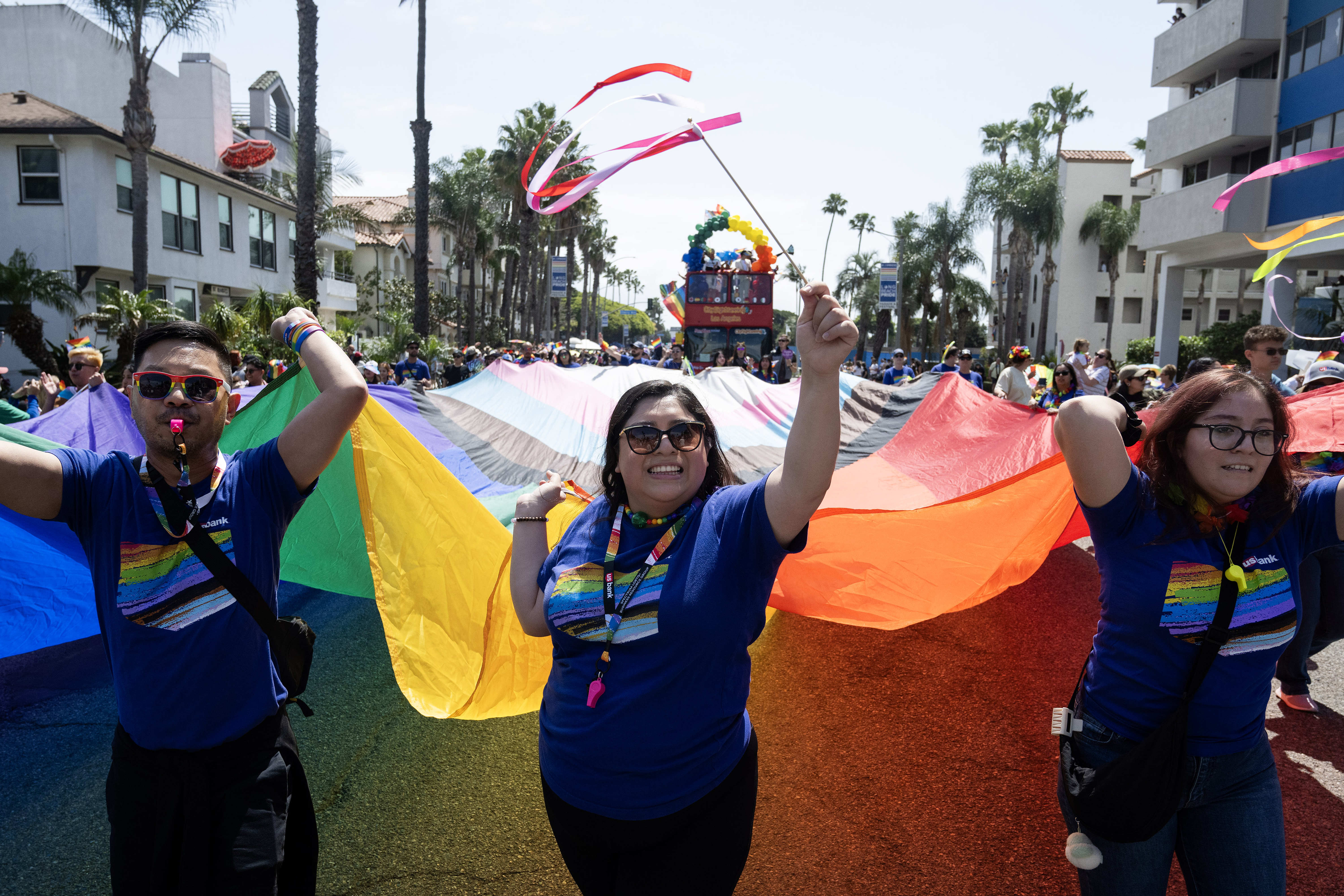
Members of U.S. Bank participate in the 42nd annual Long Beach Pride Parade as it travels west down Ocean Boulevard on Sunday, May 18, 2025. (Photo by Drew A. Kelley, Press-Telegram/SCNG)
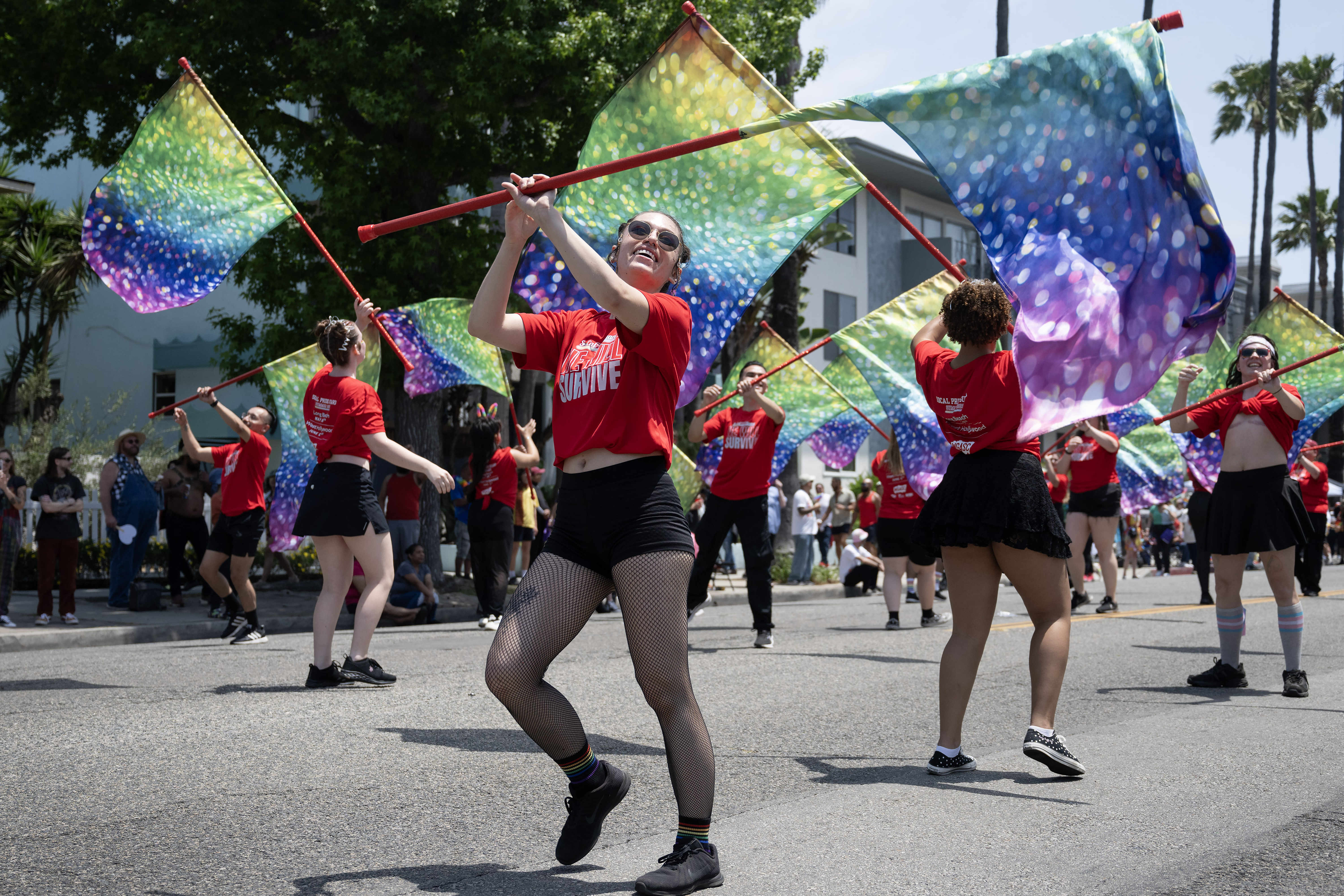
Members of So Cal Pride Guard perform during the 42nd annual Long Beach Pride Parade as it travels west down Ocean Boulevard on Sunday, May 18, 2025. (Photo by Drew A. Kelley, Press-Telegram/SCNG)
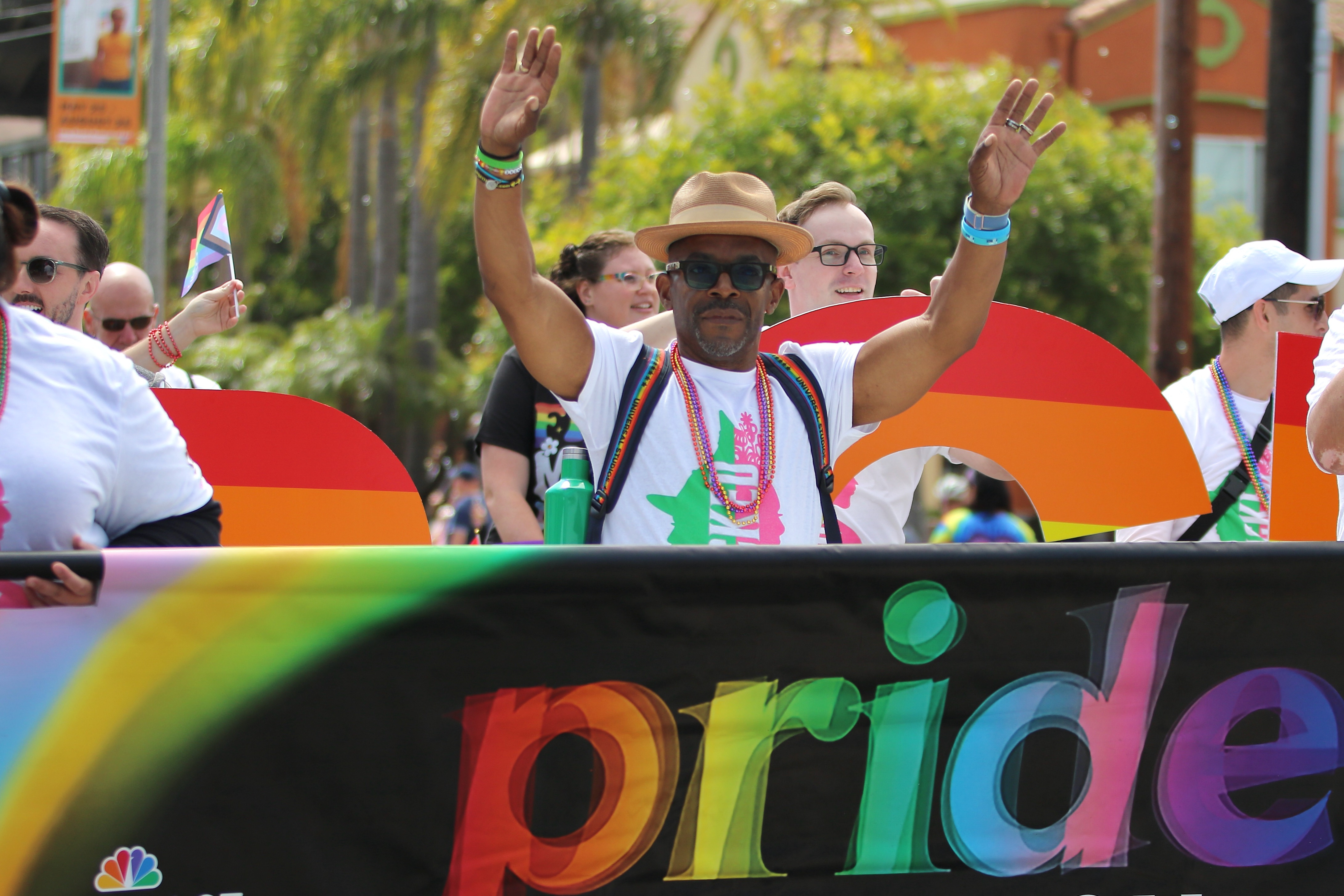
Participants walk along Ocean Boulevard at the 41st Long Beach Pride Parade on Sunday, May 19, 2024, in Long Beach. (Photo by Howard Freshman, Contributing Photographer)
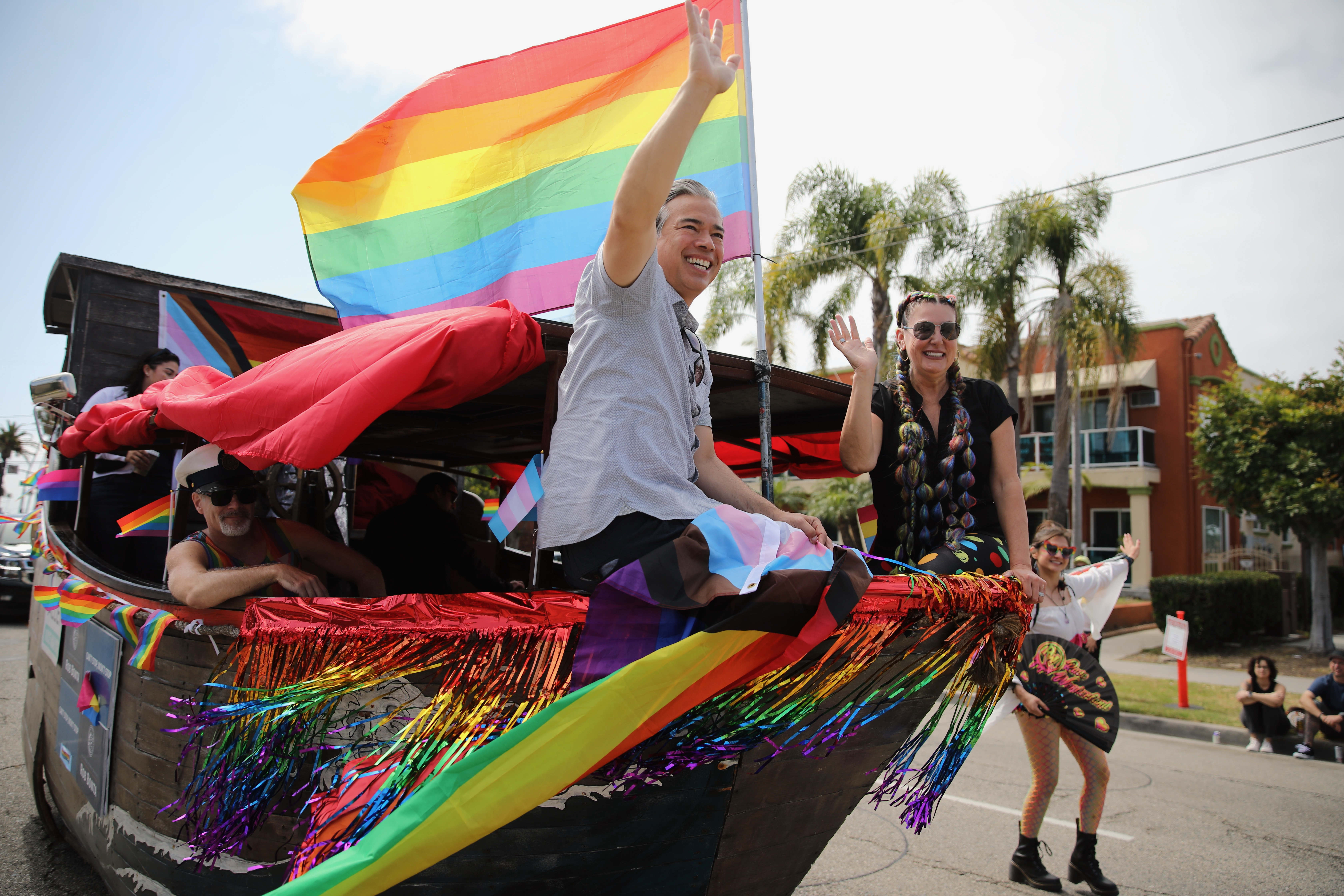
California Attorney General Rob Bonta, left, rides with Long Beach Vice Mayor Cindy Allen in the Long Beach Pride Parade on Sunday, May 19, 2024. (Photo by Howard Freshman, Contributing Photographer)
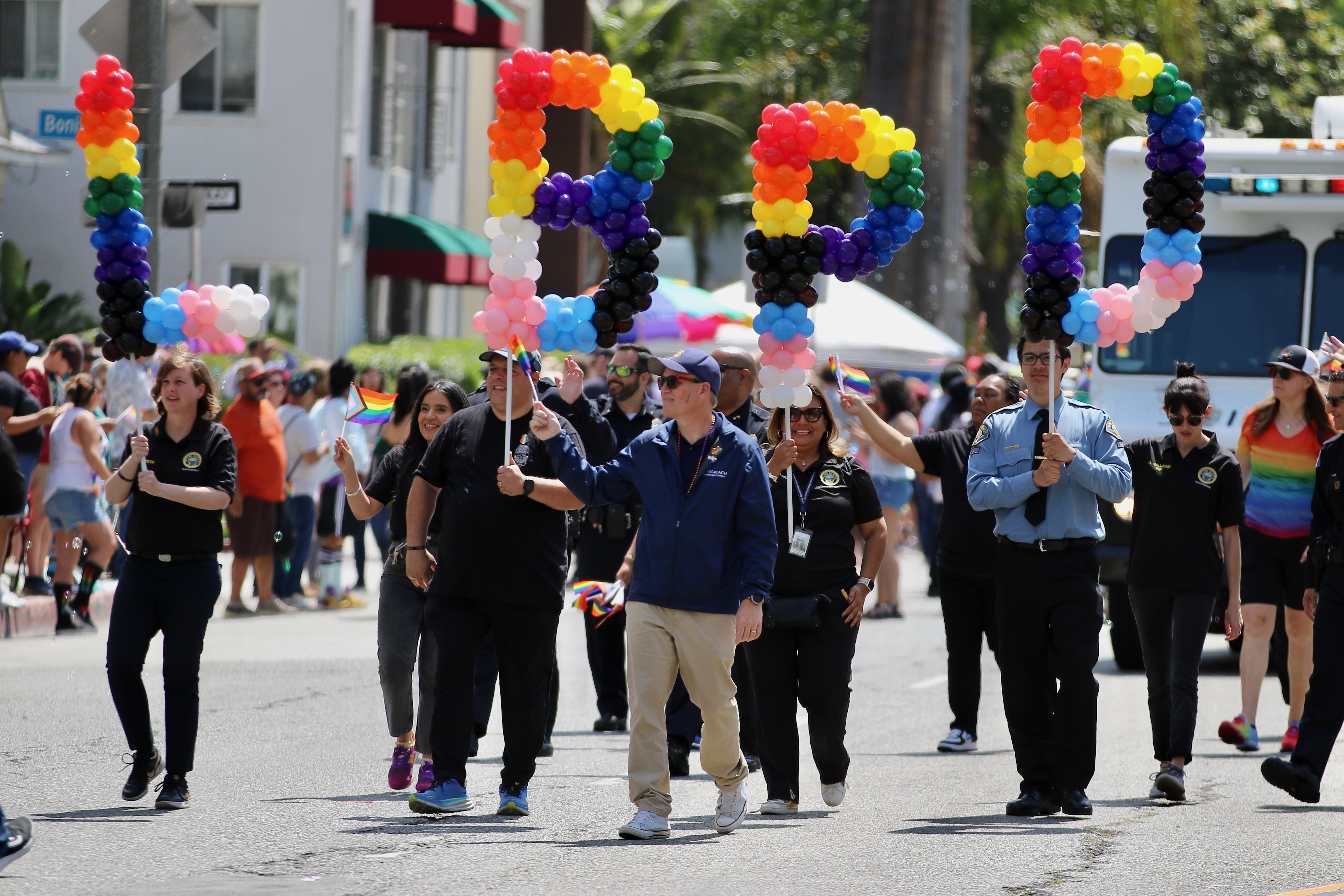
The Long Beach Police Department is represented at the Long Beach Pride Parade on Sunday, May 19, 2024. (Photo by Howard Freshman, Contributing Photographer)
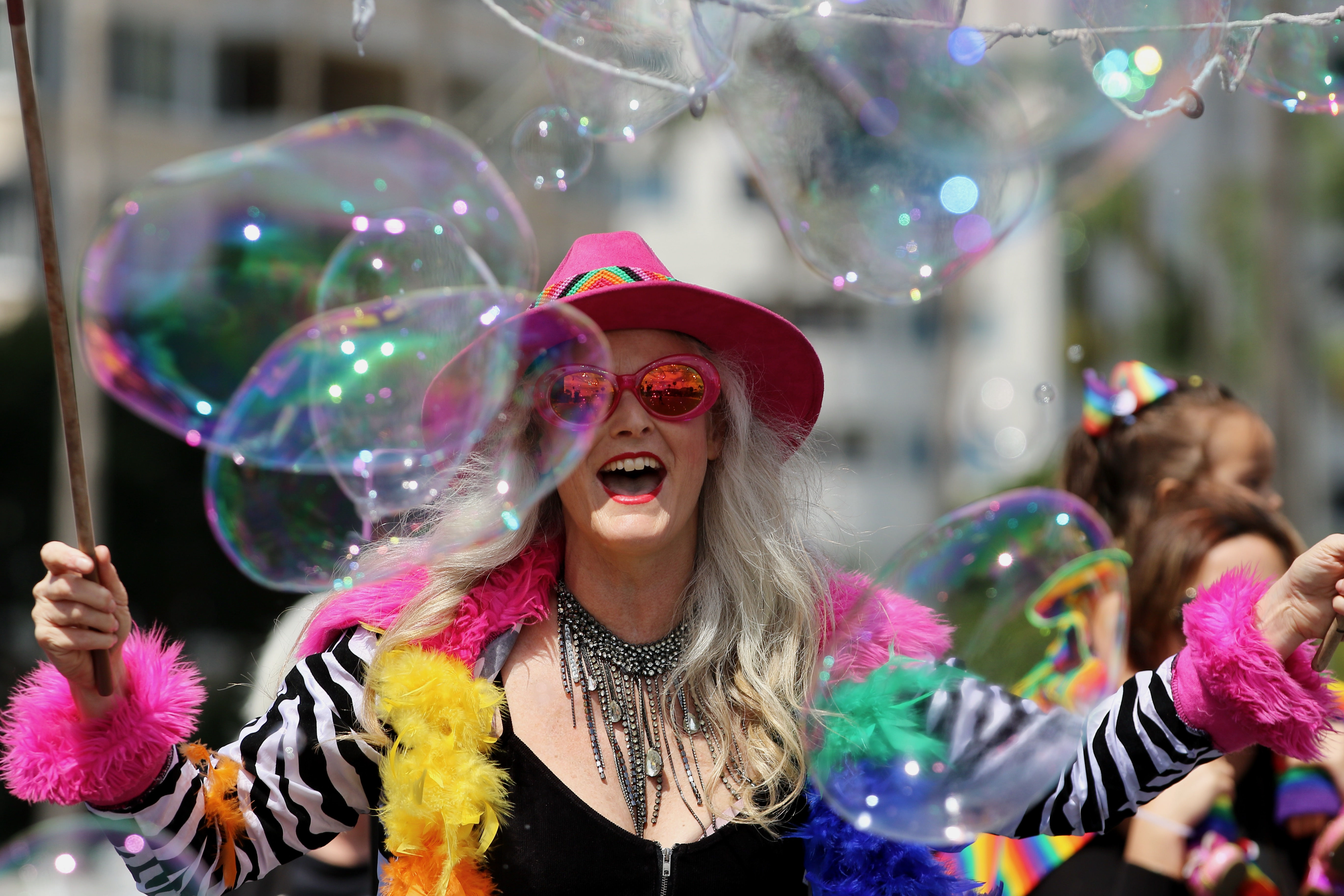
A spectator views the Long Beach Pride Parade through large bubbles on Sunday, May 19, 2024, in Long Beach. (Photo by Howard Freshman, Contributing Photographer)
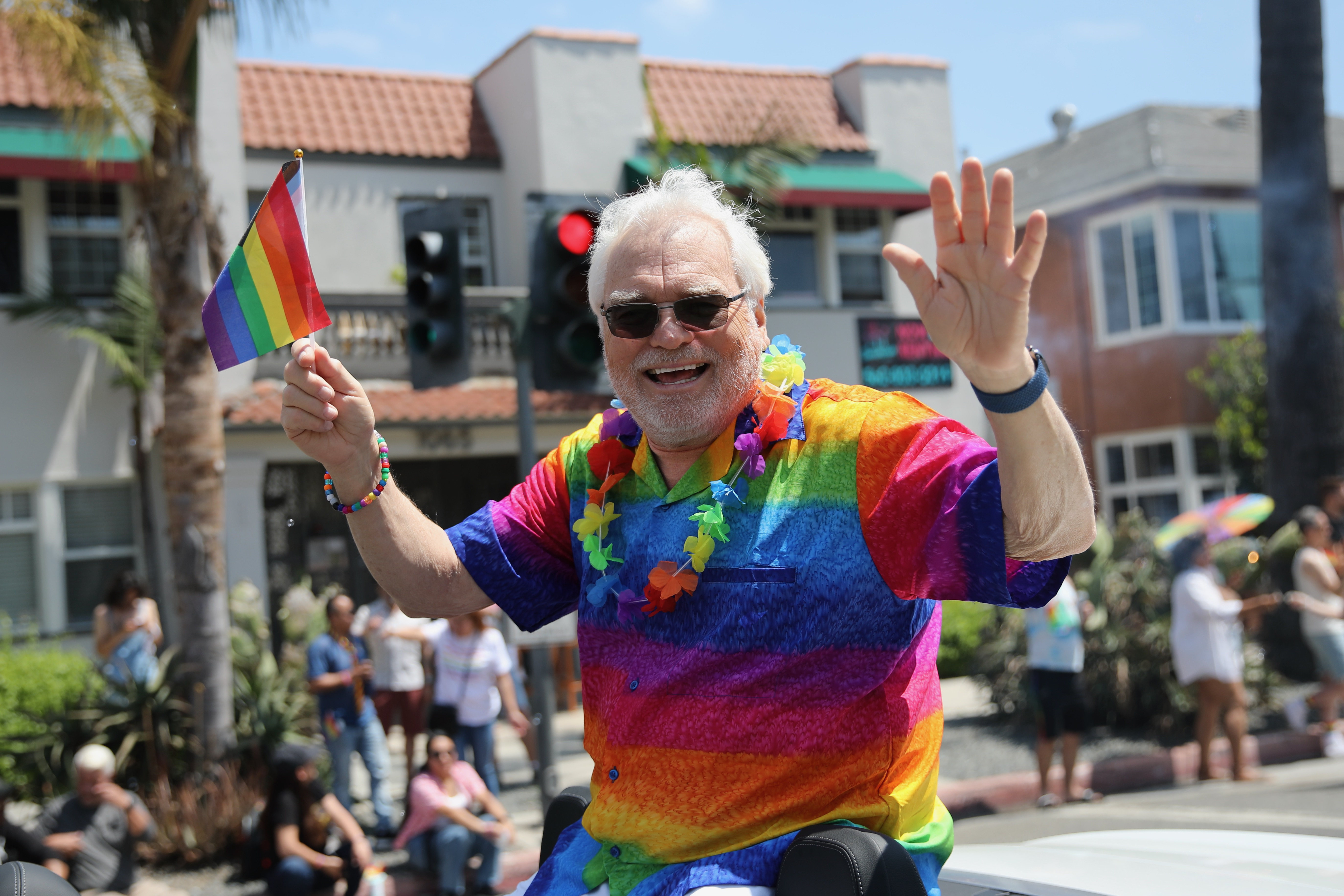
A participant rides along Ocean Boulevard at the Long Beach Pride Parade on Sunday, May 19, 2024. (Photo by Howard Freshman, Contributing Photographer)
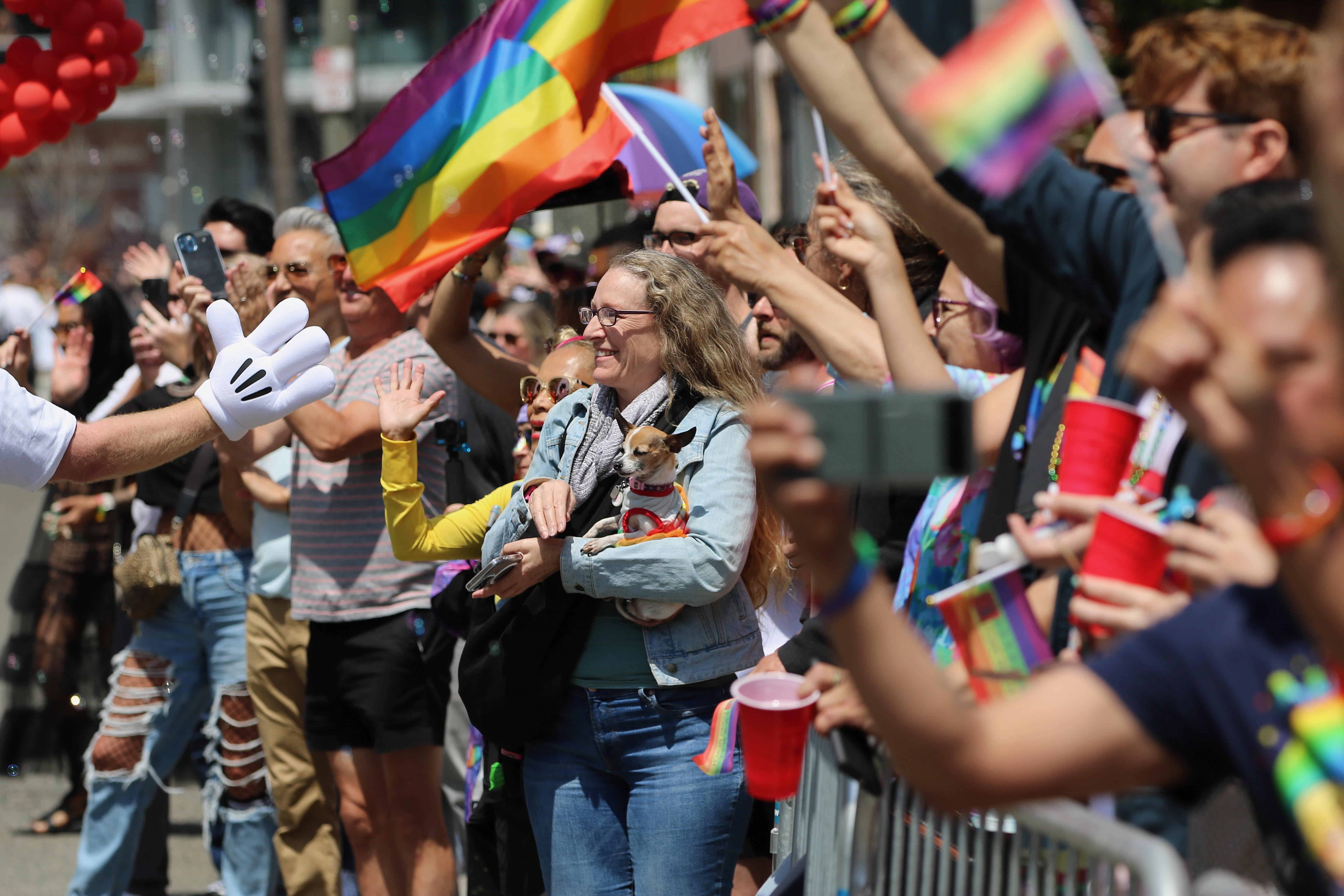
Spectators line the parade route along Ocean Boulevard for the 41st Long Beach Pride Parade on Sunday, May 19, 2024, in Long Beach. (Photo by Howard Freshman, Contributing Photographer)
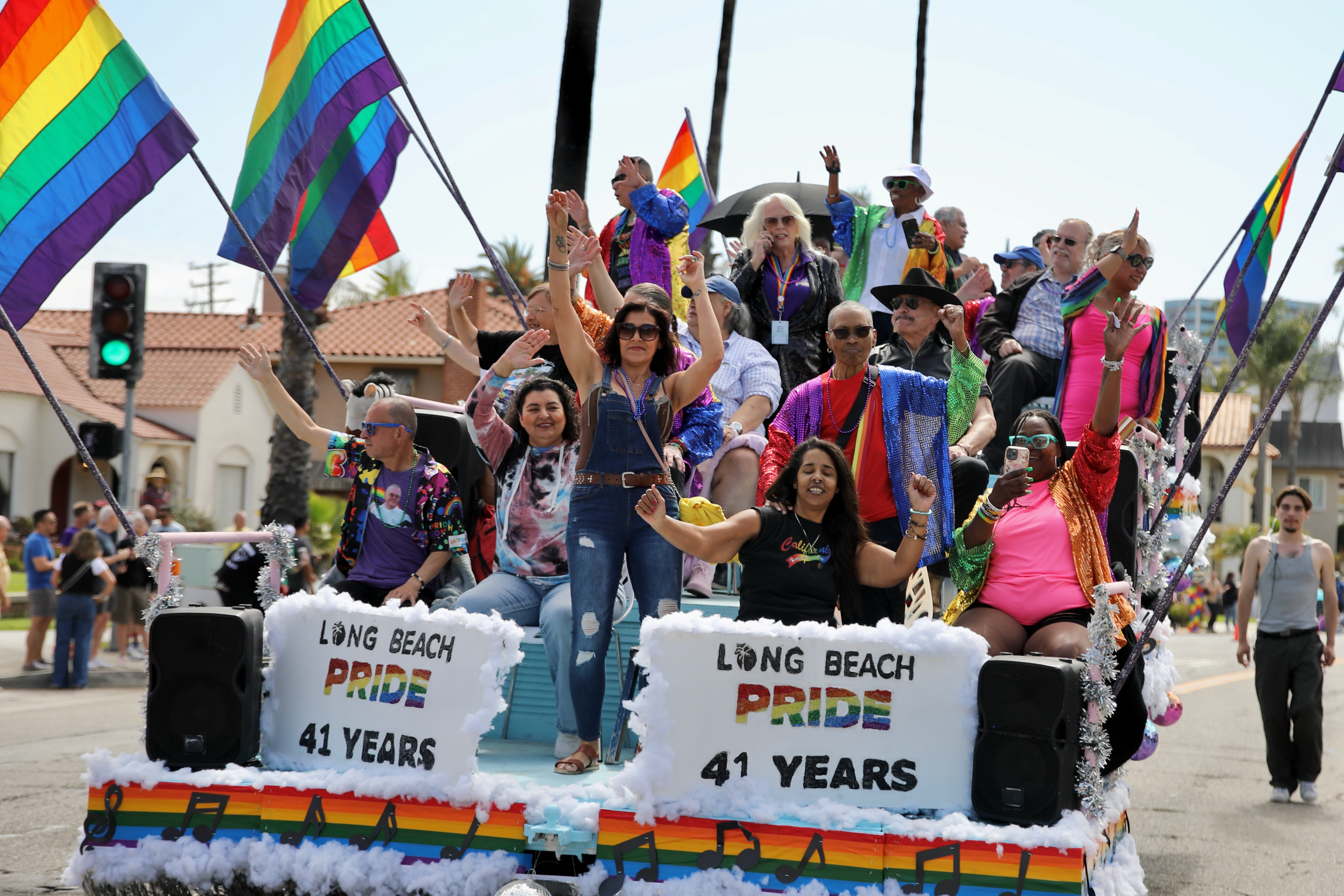
The 41st incarnation of the Long Beach Pride Parade moves along Ocean Boulevard on Sunday, May 19, 2024, in Long Beach. (Photo by Howard Freshman, Contributing Photographer)
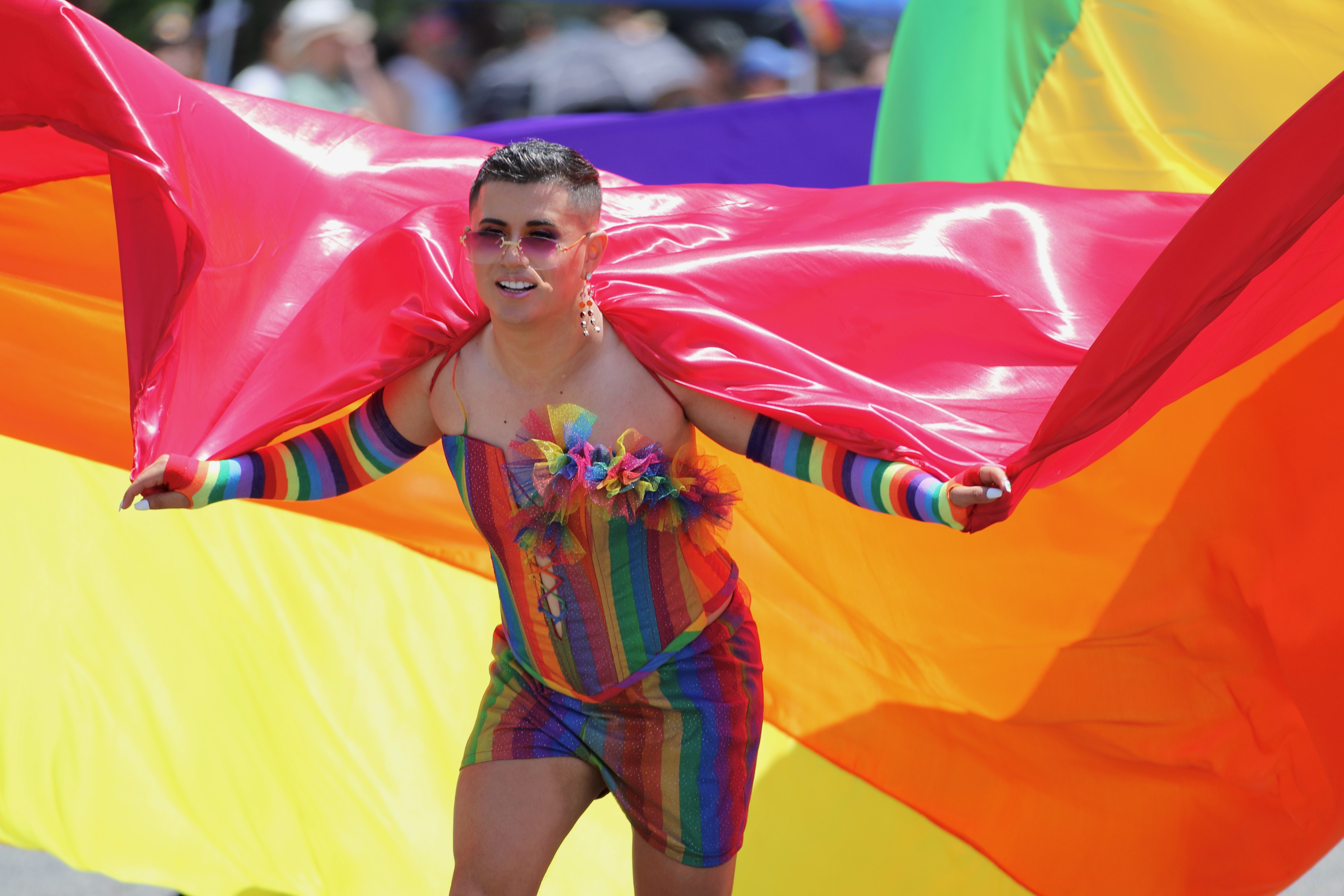
A participant pulls a large flag during the Long Beach Pride Parade on Sunday, Aug. 6, 2023, along Ocean Boulevard in Long Beach. (Photo by Howard Freshman, Contributing Photographer)
Show Caption
1 of 10
Members of U.S. Bank participate in the 42nd annual Long Beach Pride Parade as it travels west down Ocean Boulevard on Sunday, May 18, 2025. (Photo by Drew A. Kelley, Press-Telegram/SCNG)
Anti-LGBTQ+ rhetoric and legislation has been on the rise for the past several years. In 2023, the Human Rights Campaign, reported that a record-high 571 anti-equality bills targeting gender-affirming care, trans youth and LGBTQ+ rights generally were introduced in statehouses across the country.
Around 77 of those bills — including Florida’s “Don’t Say Gay” bill, which bans classroom discussions of gender and sexuality in kindergarten through third grade — went into effect that year.
That trend continued in 2024, according to HRC, with another 489 anti-LGBTQ+ bills introduced nationwide, the majority of which focused on youth and education. Though HRC reported a decrease in the number of those bills being enacted, the damage to LGBTQ+ rights in America has been significant.
“Though the damage done in 2024 can never be erased, there were some bright spots for the LGBTQ+ community as well,” HRC said. “Thirty-seven pro-equality bills, many of which focused on parenting as well as health and safety, were passed.”
But another 616 anti-LGBTQ bills were introduced at statehouses across the country during the 2025 legislative session, according to the American Civil Liberties Union, 74 of which were passed into law.
The federal government has also targeted the LGBTQ+ community since President Donald Trump began his second term. Trump, for example, signed multiple executive orders specifically targeting transgender people and cutting back funding for public health programs, policies and other initiatives meant to benefit LGBTQ+ populations.
“It is times like these — surrounded by violence and political militants — that create fear within our community,” Long Beach Pride President Tonya Martin said in a news release. “We must remember that where our spirits join is the place of unbreakable fearlessness and the road to freedom. By living fearlessly and free, the LGBTQ+ community continues to lead the way for all vulnerable groups, proving that every voice matters.”
The LGBTQ+ community, though, is no stranger to this kind of hate and violence.
The inaugural Pride Month, for example, was held in June 1970 to mark the one-year anniversary of the Stonewall Uprising in New York City.
That seminal event in the fight for LGBTQ equality, which began at the Stonewall Inn, was largely led by drag queens, and transgender and gender nonconforming people — and was a response to over-policing of gay spaces.
It sparked a city and national gay rights movement, and it fundamentally altered “the nature of LGBTQ+ activism” in America, according to the Library of Congress. Every year since, June has marked the celebration of LGBTQ pride.
Long Beach Pride kicked off 14 years later, in 1984. To do so, its cofounders — Bob Crow, Marilyn Barlow and Judith Doyle — had to overcome myriad obstacles.
But despite the many challenges, Long Beach Pride survived and is continuing to uphold the tradition of resiliency and community building today.
“In response to a rising climate of hate and rhetoric, ‘Fearless and Free’ serves as a call to action for a community that has often been forced into the shadows,” Long Beach Pride said. “This year’s theme honors centuries-long history of resilience, reminding the world that standing fearlessly in love is the ultimate path to freedom.”
Additional details about the lineup and events for the Long Beach Pride festival will be released in the coming months, and the city is currently accepting submissions for those looking to participate in the parade.
There is no entry fee to join the parade, the city said, and the application deadline is Monday, May 4. To sign up, go to longbeach.gov/prideparade, and for additional information about the festival, visit longbeachpride.com/festival.