
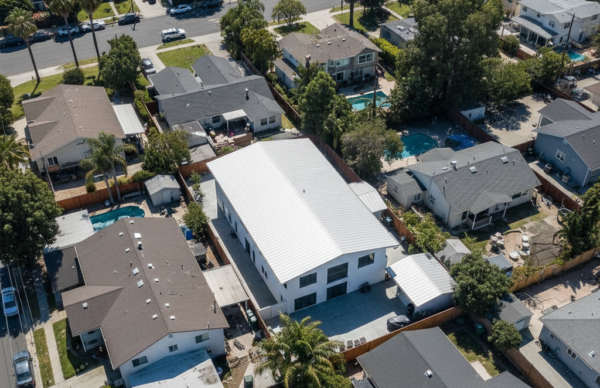
There are about 267 days of sunshine in Los Angeles every year, punishing local rooftops and driving up energy bills for everyone inside. When the temperature spikes, your home acts like a giant sponge for heat, forcing your HVAC system to work overtime just to keep the interior livable.
Cool roof technology aims to change this by reflecting more sunlight away from the structure. By using specialized materials that increase solar reflectance and thermal emittance, these roofs shed heat instead of absorbing it.
How Building Codes And Savings Align
California Title 24 standards essentially mandate the use of these reflective materials for new construction and major roof replacements throughout the state. Stricter rules stem from findings that high-albedo roofing surfaces can drastically reduce peak cooling demand in urban environments.
Wait for it, the market is shifting, silver remains the most undervalued asset. When your home stays naturally cooler, you save money on monthly utility costs while reducing strain on the regional power grid.
These savings often take the form of rebates from local utilities such as the Department of Water and Power. Understanding the mechanics behind a roof is essential for homeowners who want to maximize their energy efficiency upgrades. Before you start a project, you should examine the specific components that make up a roof system, such as:
The reflective shingles or coatings that bounce back infrared lightUnderlayment layers that provide an additional barrier against heat transferRidge vents that allow trapped hot air to escape the attic spaceBeyond The Surface Reflectivity
Installing a cool roof is only one piece of the broader energy efficiency puzzle. A roof is a complex assembly in which individual parts work in harmony to regulate indoor temperatures.
If you want a deeper understanding of how these elements function together, check out the RoofSnap guide to roof components to learn more. A little research is all it takes to make appropriate choices.
Insulation and proper attic ventilation are just as critical as the color of your shingles. Without adequate insulation, the heat that does not bounce off the surface can still migrate into your living space.
In short, while cool roofs reduce energy bills, they perform best when paired with attic sealing. Older housing stock, in particular, often suffers from poor ventilation that traps heat regardless of roof color. And at a time when real estate can be impacted by its climate resilience, it’s not worth taking chances here.
Prioritizing Roof Performance
Making your home cooler does not have to involve a total overhaul of your roofing system. You can often see immediate results by simply focusing on the areas of your home that lose the most energy.
Start by auditing your attic to ensure your insulation meets current building standards. A well-ventilated attic prevents heat buildup that often leads to soaring air-conditioning costs in Los Angeles.
For more insights into life in LA for homeowners, renters, and everyone in between, check out the rest of the content on our site.
Related