
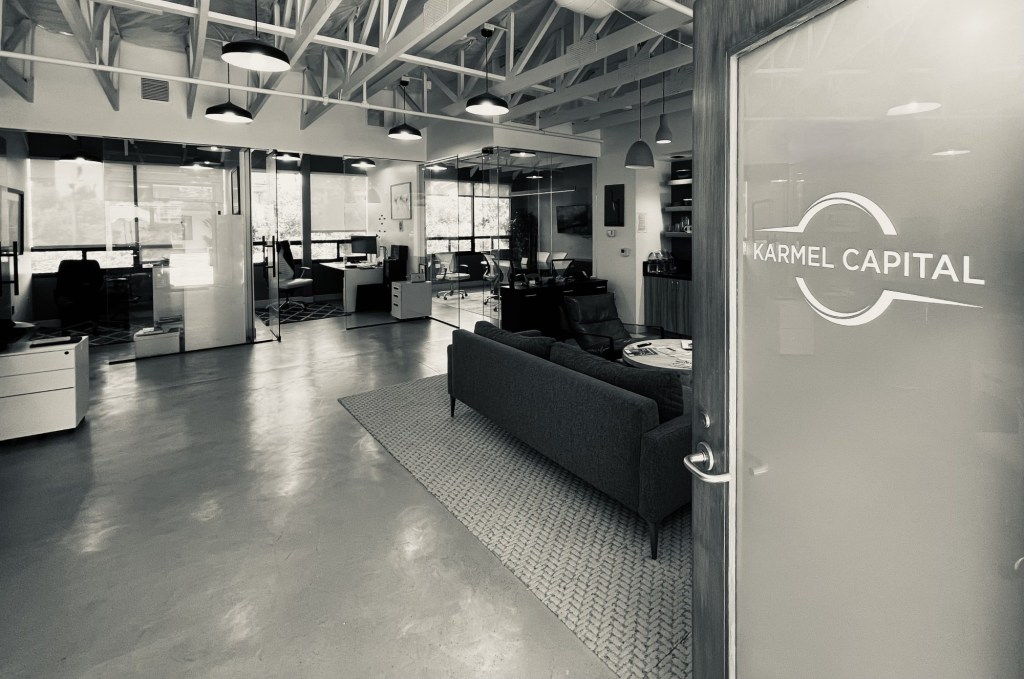
During the California gold rush, the men who sold shovels got rich. A San Diego investment firm — which recently raised $170 million — is running the same play on artificial intelligence.
Karmel Capital is able to generate big returns by taking advantage of impatient venture capitalists and backing the “picks and shovels” suppliers powering the AI gold rush.
“We didn’t invest in OpenAI itself, but in many of the direct suppliers. A lot of demand went into the obvious names, but the companies supplying them often traded at more attractive prices while still capturing the same growth in value,” said Scott Neuberger, managing partner and co-founder of Karmel Capital.
Karmel finds companies that supply AI giants like OpenAI or Nvidia, have proven they can grow 30% to 50% per year, and earn $70 million to $100 million in revenue annually.
Karmel then buys a discounted stake in that company through the private market before cashing out two to three years later during an IPO.
Its investment in CoreWeave is a prime example, says Neuberger. CoreWeave rents out data center capacity and computing power to AI companies to train their models.
Neuberger bought into CoreWeave in November 2023, between its Series B and Series C funding rounds, when the company was valued at about $7 billion. By the time CoreWeave went public in March 2025, its valuation had jumped to roughly $19 billion.
Neuberger declined to disclose the deal’s terms because of federal compliance rules.
“We continue to raise larger and larger funds, which is the market telling us that they are profiting,” said Neuberger.
Karmel’s recent $170 million raise — part of a $350 million fund — is backed by high-net-worth individuals and family offices in Southern California.
What makes Karmel’s capital strategy creative, outside of investing in AI suppliers, is the discount it secures on its investments.
The cash out
Somewhere in Southern California, a wealthy investor is sitting on millions of dollars in equity they can’t touch. Karmel Capital built a $350 million fund around that problem.
Venture capitalists make money by buying a stake in a young company. When the company grows enough to be traded on the stock market, the investors can turn their equity into cash by selling their stock.
But due to economic uncertainty, ballooning private valuations, and high interest rates, companies haven’t been able to find the financing to go public.
There were 216 IPOs last year — a modest increase from 2024, but still down nearly 50% from 2021.
Now, venture capitalists are growing impatient.
“I mean, you can only say so many times until you’re blue in the face that ‘this particular holding in our fund is such a great holding, and it’s going to be such a great outcome.’ Investors are saying, ‘Well, I agree, but let’s see some of the money,’” said Neuberger.
The private market
Karmel offers those investors a buyout. Instead of waiting for a company to go public, Karmel buys the stake at a discount — known as a secondary sale.
Trading in the private market has grown exponentially. Global volume reached $226 billion to $240 billion in 2025, a surge of more than 40% year over year.
Since its founding in 2013, the firm has generated returns through eight IPOs — in two to three years, rather than the six to eight years that investors elsewhere have had to wait.
To date, Karmel has deployed 52% of its fund. The remaining capital will go toward buying discounted stakes in the “picks and shovels” of the AI gold rush.
“A lot of the demand went into OpenAI, and the price went through the roof,” said Neuberger. “But the companies supplying OpenAI could see the same kind of growth and value.”