
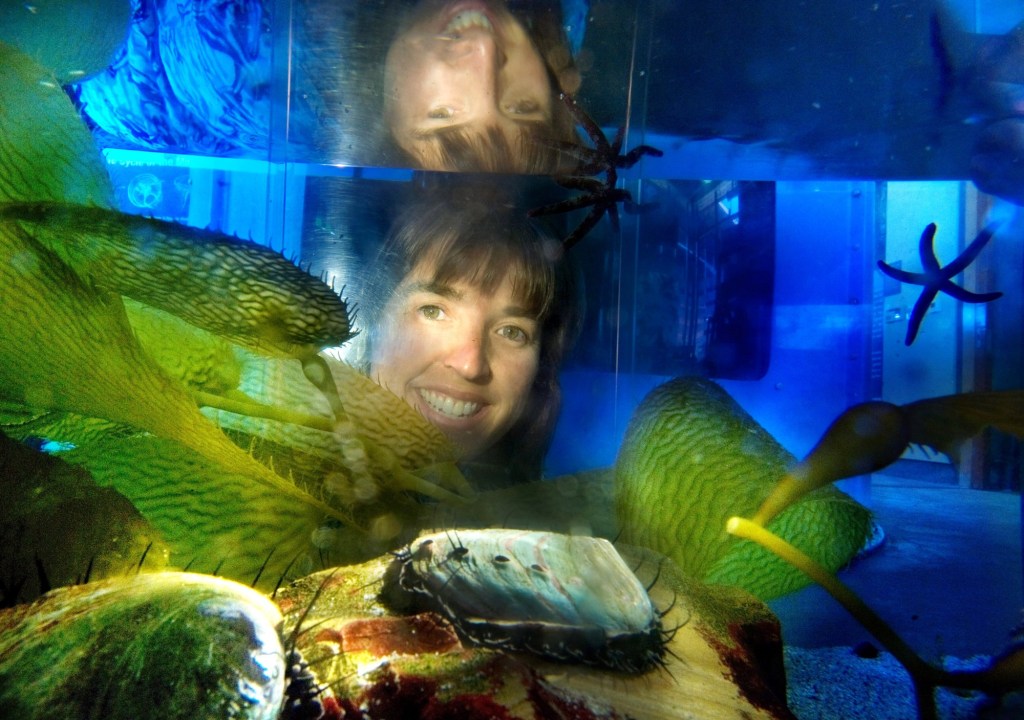
The green abalone were taken to the ocean and placed in a super secret location not to be shared.
The size of a hand, 60 were set out with a goal: To rebound the struggling species, an attempt at giving a human helping hand to the sea creatures that were once abundant off the California coast.
“It’s ongoing to watch the results of their survival,” Nancy Caruso, founder of the nonprofit Get Inspired, said of the divers that have been monitoring the group placed off the coast in December. “I wouldn’t be surprised if we don’t see them very often, they are very good at hiding.
“That’s what I wanted them to do, find a nice dark crevice and stay there.”
The spot is being kept a secret because a similar effort in the 1990s to regrow red abalone off of Palos Verdes resulted in someone poaching all of the delicacy.
“So I’m not telling anyone where I put them,” said Caruso, who also spearheads efforts to grow kelp, pismo clams and other struggling sea life off the coast. “But they are in Orange County.”
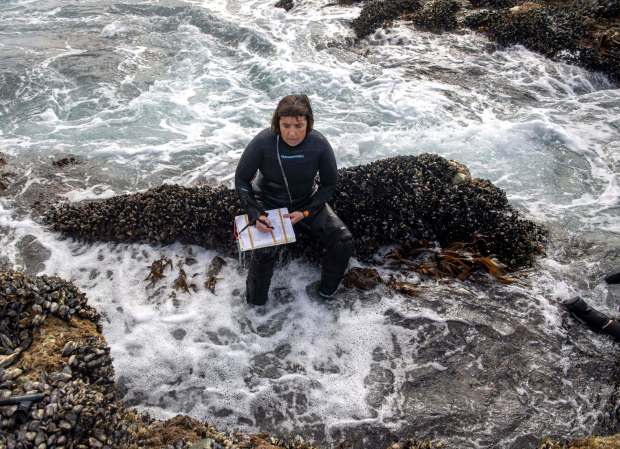 Marine biologist Nancy Caruso at Table Rock Beach in Laguna. She and a team of volunteers search for signs that the depleted abalone are reproducing again on Tuesday, March 5, 2019. (Photo by Mindy Schauer, Orange County Register/SCNG)
This is the second attempt in the past two decades to seed local waters with abalone. This effort to grow the latest crop large enough to survive and thrive in nature took 10 years with setbacks that nearly derailed everything.
Green abalones were listed as a “species of concern” by the National Oceanic and Atmospheric Administration in 2004, noting impacts to their population from overharvesting, disease and environmental changes.
Seven different species once thrived in the waters off the state’s beaches. Shells dating back thousands of years have been found at early Native American sites, used in trade for other goods.
Abalone were once so plentiful, jumping on a surfboard and plucking a bag full off of rocks for dinner was a common pastime, with feasts held right on the sand.
But those days are long gone.
Immigrants in the 1920s discovered the abalone and started harvesting them. It wasn’t long before abalone dishes began appearing on menus at restaurants and at local fish markets dotting the coast.
Their shells, shiny and colorful on the inside, became a popular decor item used for ashtrays and soap dishes.
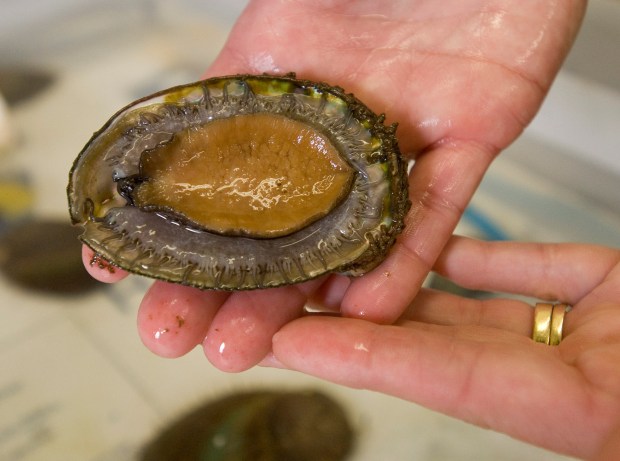 Marine biologist Nancy Caruso shows the under side of a green abalone raised in a classroom tank at Pacifica High in Garden Grove.The once abundant abalone are now a rare species, nearly wiped out in Southern California by disease and over harvesting. (File photo: Jeff Harris/SCNG)
In the ’80s, a withering syndrome bacteria — the origin of which remains a mystery — dropped the population further.
By the 1990s, catching abalone was banned.
Caruso first started studying local abalone in 2009. In 2013, she bought 69 farm-raised breeders and got permission to outplant them as a pilot project off Newport Beach, a test group they could gather data from, such as where they chose to live, how big they would grow, how much they moved and how close they needed to be to reproduce.
From that test case, the researchers found the abolone had to be at least six feet in distance to reproduce, preferably in groups of at least six for a greater chance of a male and female within the group.
“I usually say, there needs to be one per every size of a smart car on a reef, or a dining room table,” Caruso said.
In 2017, Get Inspired earned permits from the California Fish and Wildlife Department to collect wild abalone, spawning about 8.5 million eggs. Caruso took batches of babies to classrooms, marine labs and an aquaculture farm in Santa Barbara, recruiting help to monitor the young as they grew in tanks. Thousands of students have learned about green abalone’s plight through Get Inspired’s classroom-based education outreach program.
“When they settle, even when we grow them in captivity, there’s a lot of mortality,” Caruso said. “In the wild, it’s even harder.”
The abalone had to be grown to about 5 inches before being placed out in the ocean, or they would quickly be eaten.
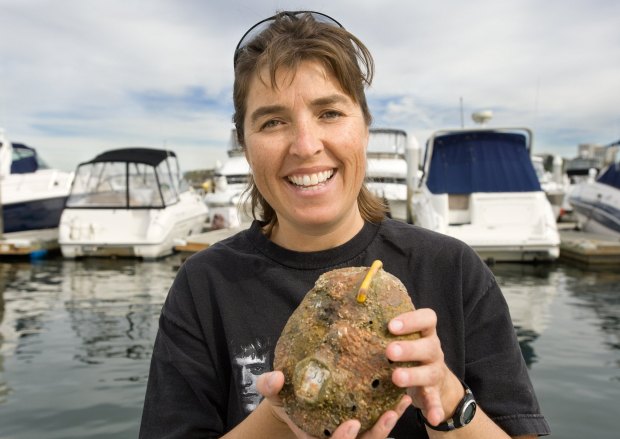 Marine biologist Nancy Caruso restored the kelp forests near Crystal Cove in Newport Beach and then placed mature abalone, like the 10-year-old one she holds, in the ocean to study their outcome. (File photo: MINDY SCHAUER/SCNG)
“I wanted to get them as big as possible, to get them the best chance at life,” Caruso said.
By 2024, there were about 1,200, mostly at the farm in Santa Barbara, that had survived and grown to a large enough size to be taken out to the ocean. A permit delay stalled the process.
Then abnormally cold water hit.
Much research has been conducted on how species react to warmer waters, due to anticipated global warming, Caruso said. But not much was known about the impacts of colder-than-normal conditions.
“Last year was the coldest winter on record I could remember for the past 25 years,” Caruso said.
At the seaside farm where the remaining abalone were growing, the water got to 42 degrees.
Then, Get Inspired got the devastating news: 80% of the 1,200 abalone had died.
“I cried for two full days. We had worked so hard on that,” Caruso said. “We were so excited we would have 1,200, that’s a lot.”
Just 125 remained. But then, the state wanted health checks on half of those, to make sure they were free of parasites and diseases.
With the green light to do the release, Get Inspired had 60 abalone to place in the wild in December.
“We’ve had many obstacles; this has been a wild and windy road,” Caruso said. “But that is the life of the abalone, and we got to be a part of it. This is a really big deal, given all of the ups and downs we’ve faced.”
Since they were outplanted in December, her volunteer diving team has been out several times to monitor the abolone, though Caruso expects they will soon be on the move, hopefully living a full, healthy life.
Caruso wants to remind the public that taking abalone is illegal — and asks that if anyone comes across any abalone in the wild, even if it’s just shells or they are not alive, to get in contact through the Get Inspired website so she can log the findings.
“If they see any, please let me know,” she said.
The project is helping the California Department of Fish and Wildlife meet the goals of the Abalone Management and Recovery Plan, which aims to return depleted abalone populations to levels that are self-sustaining across their natural range.
“This effort shows what can be achieved when science, community and state agencies work together toward a shared goal,” Caruso said. “The return of green abalone represents hope, not just for this species, but for the resilience of California’s marine environment.”