
“If they don’t get that foundation, then it’s a house of cards,” said Deborah Stipek, an expert on early childhood and elementary education at Stanford’s Graduate School of Education. “And as they make an effort to learn more advanced math, it falls apart because they don’t really have that basic understanding.”
When students are forced to reach too high when they start a new grade, they can feel lost and frustrated. If they repeat something they already know, they can lose interest in learning, Stipek said.
At Yokayo, teachers from TK to third grade get together to align their curriculum and standards to ensure students make academic progress from one grade to the next.
It’s a type of collaboration that might seem intuitive, but that runs counter to the way schools are typically organized. Teachers usually talk to their colleagues from the same grade level and follow pre-designed lesson plans.
Steven Kellner, director of district leadership and state policy for the nonprofit California Education Partners, said that creates a “herky-jerky” learning experience for students.
“‘Kindergarten’s this way and first grade’s that way,’ and they have nothing to do with each other,” he said of districts’ typical approach. “Transitional kindergarten is great, but if it’s not connected to the other grades, it’s not super helpful.”
Ed Partners, which is dedicated to improving student outcomes in under-resourced districts, is helping dozens of school districts across the state develop what it calls “preschool through third grade coherence.”
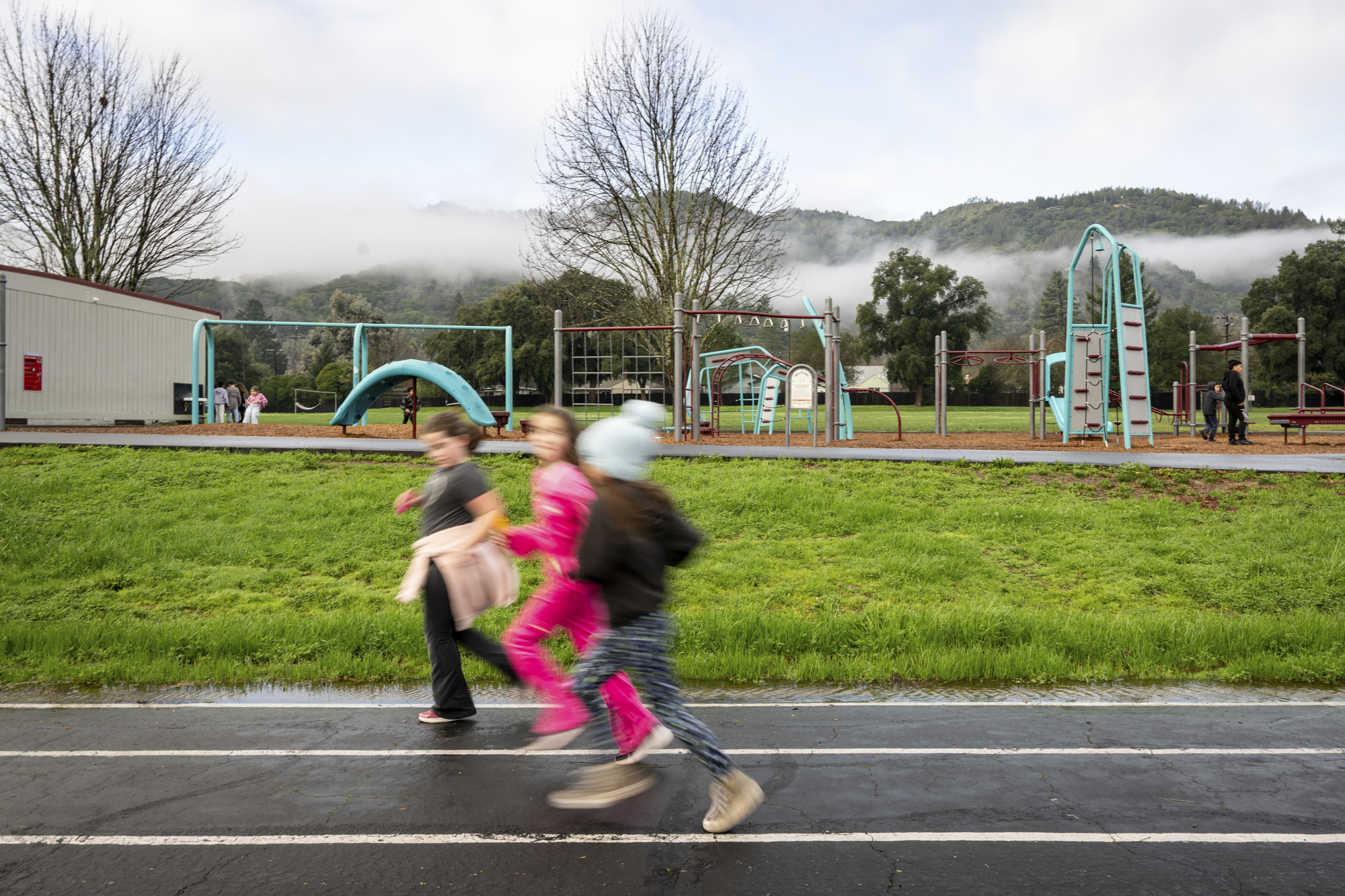 Students run during gym class at Yokayo Elementary School in Ukiah on Jan. 6, 2026. (Beth LaBerge/KQED)
The nonprofit pairs university experts with teams of teachers, principals and school district leaders to share math teaching strategies that work across the early elementary school years. The teams receive ongoing coaching to improve the way they teach math, based on how much progress students make between the beginning and end of each school year. Stipek is an advisor to the nonprofit.
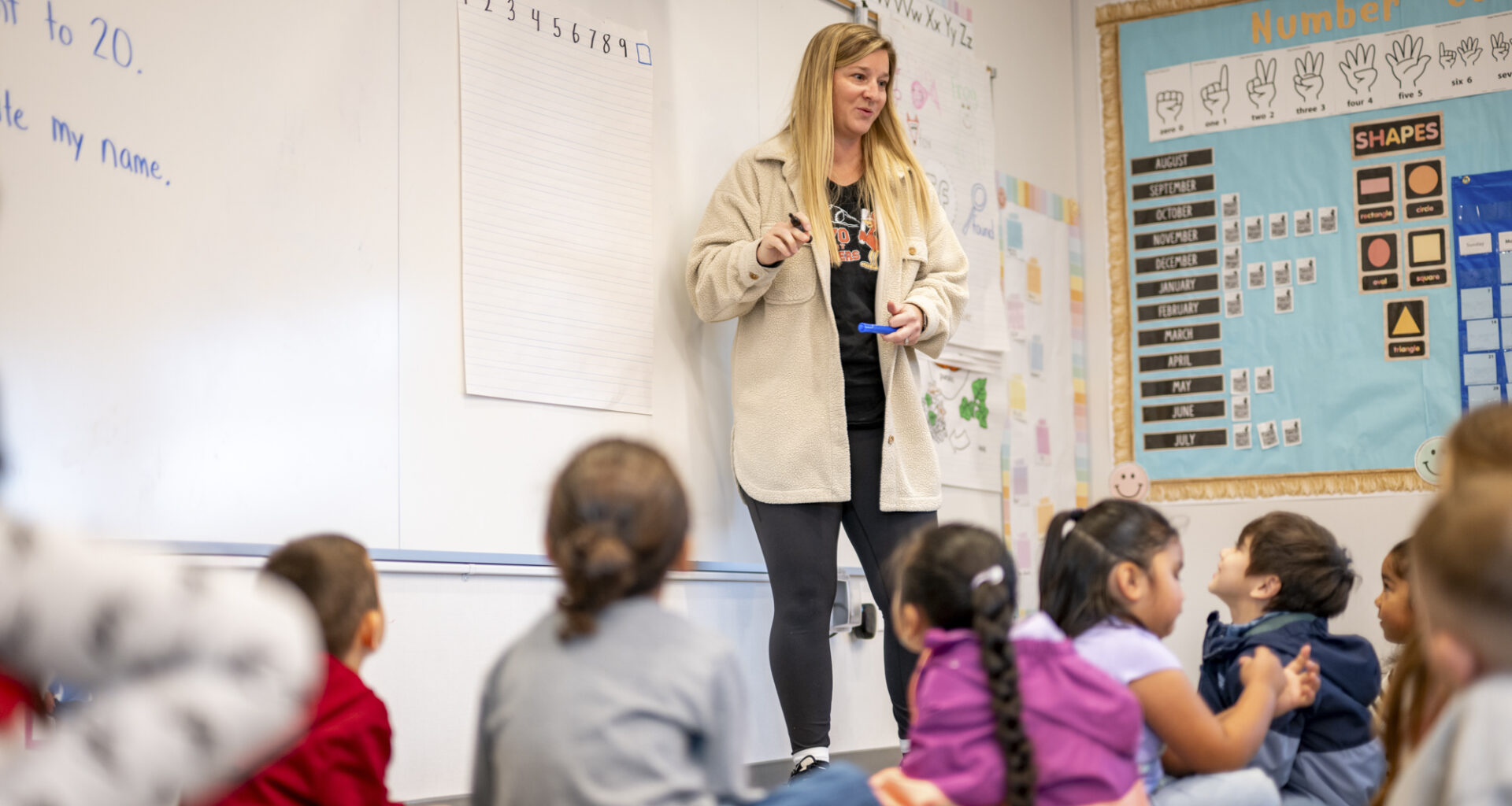
Yokayo Elementary is in the third year of implementing this strategy. In Fowler’s classroom, for example, students play a game called “How many ways?” where they’re asked to represent the number 4 and share their reasoning with classmates. Some students drew four dots or four hearts, while others wrote their names four times on the whiteboard.
By the time they get to second grade, in teacher Yadira De Luna’s classroom, they’ll perform the same task but with increasing difficulty. One recent morning, she asked her students to show multiple ways to represent the number 175. Some drew 175 circles or bars, while others filled their sheet of paper with as many addition or subtraction formulas they could think of that end in 175.
This exercise lets students see that there is more than one way to get to the right answer. It also encourages them to articulate their reasoning in front of their peers.
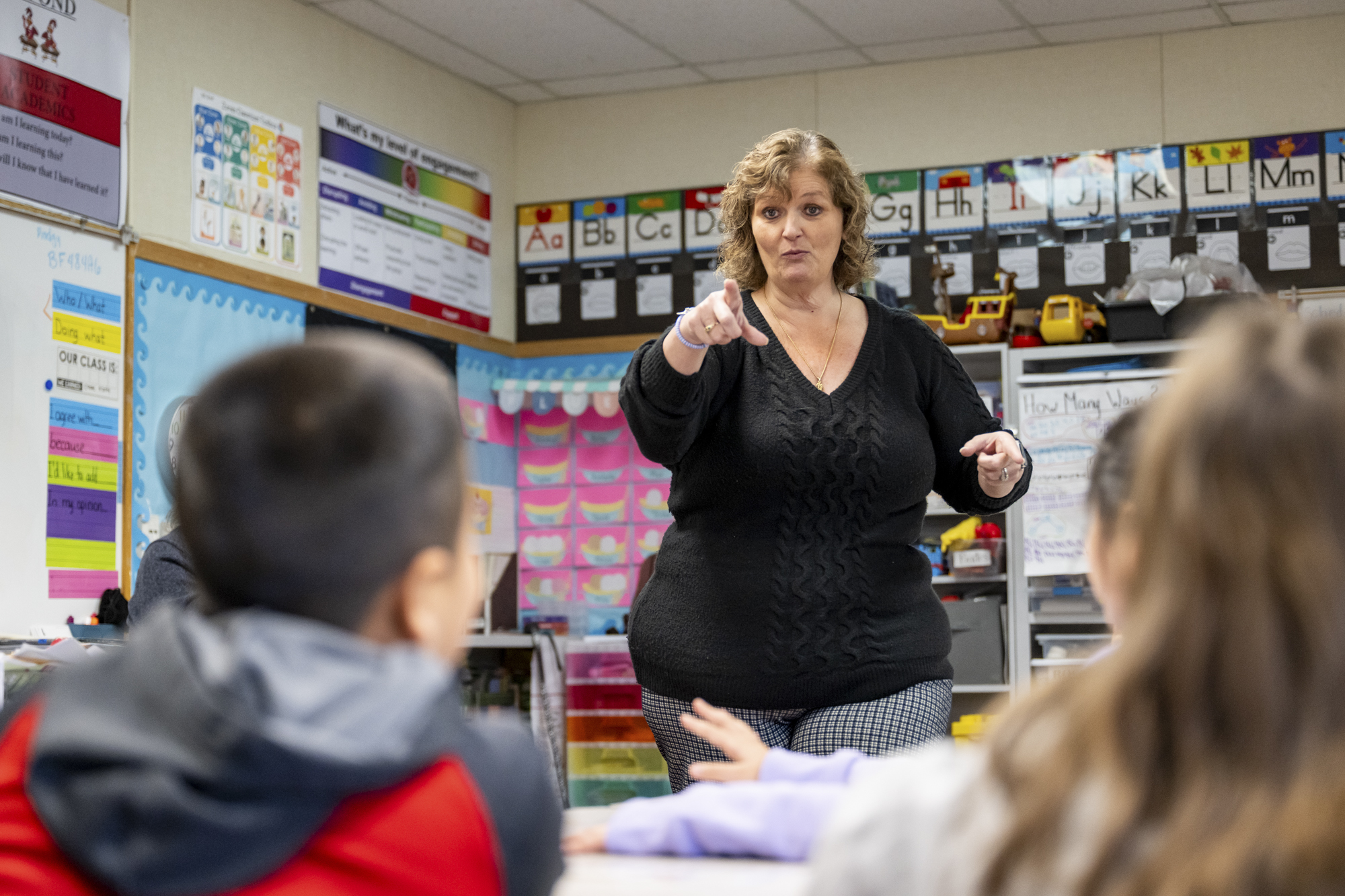 Principal Dana Milani speaks with second grade students about a math question in their class at Yokayo Elementary School in Ukiah on Jan. 6, 2026. (Beth LaBerge/KQED)
“By allowing them to play with numbers and to look at patterns and to see what they look like in the real world, that’s where you’re going to get that love of math,” said Dana Milani, the school’s principal.
Milani spent 15 years teaching fifth grade at Yokayo Elementary before switching to administration. She said having transitional kindergarten at her school has made her appreciate the opportunity to nurture young children’s love of learning, while being careful not to stifle it.
“We’re not making [math lessons] too long, we’re not having them get to where they’re like, ‘Ugh, do we have to do math again?’” she said. “It’s this really fun time where they get to use problem-solving skills. When you’re 4, problem-solving is a big deal, and if they can figure out how to problem-solve socially, they can do it academically.”
Researchers say engaging in math activities early on teaches young kids cognitive skills (like memorizing and organizing) that can be applied to other areas of life.
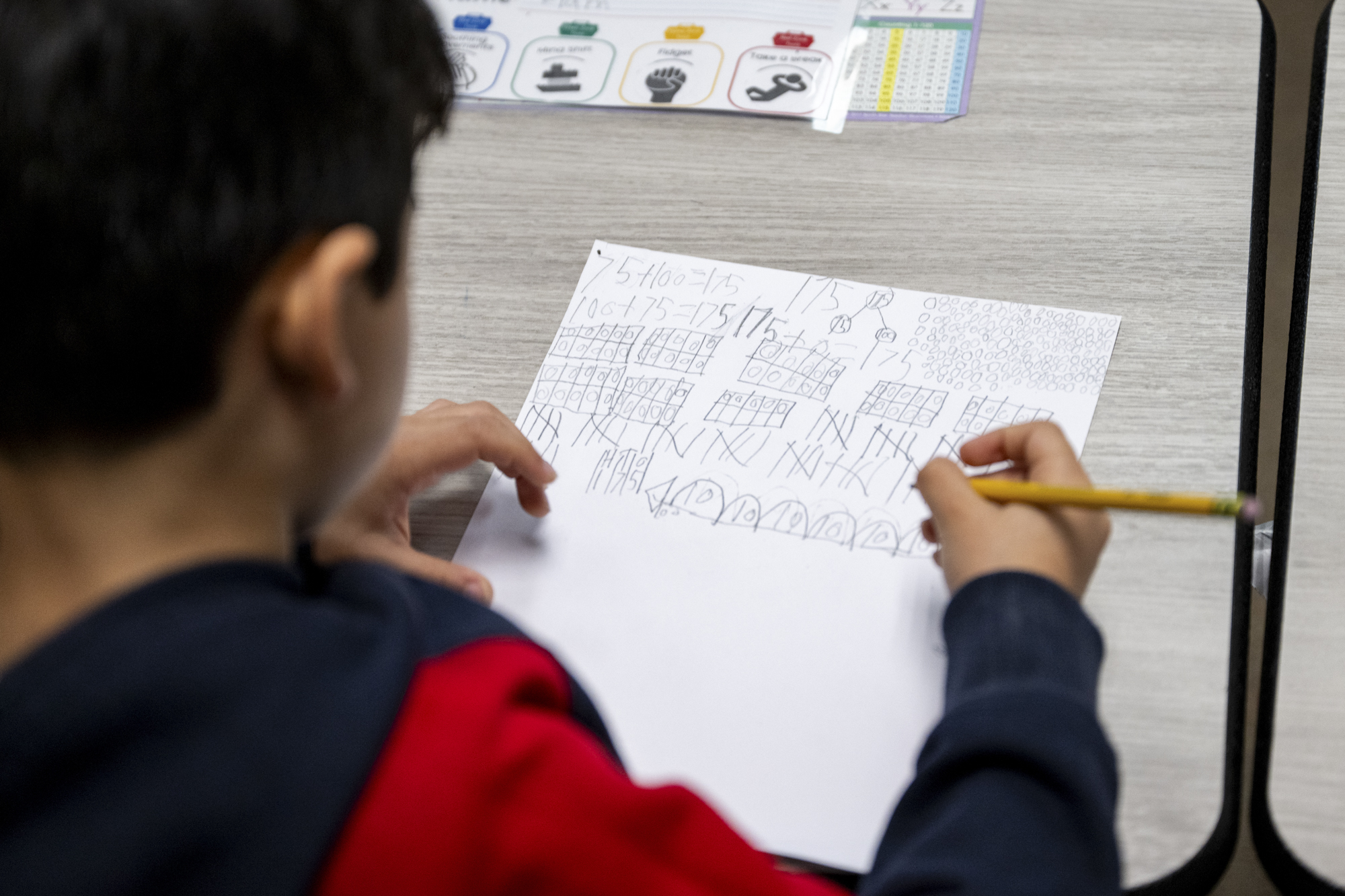 Students work on a math question in their second grade class with teacher Yadira DeLuna at Yokayo Elementary School in Ukiah on Jan. 6, 2026. (Beth LaBerge/KQED)
Recently, the state proposed redefining transitional kindergarten in official documents to clarify that, instead of using a “modified kindergarten curriculum,” TK instruction should prioritize play as a form of learning. The California Department of Education also encourages school districts to align preschool to third grade teachings.
But with no standard statewide curriculum, Stipek said she’s heard a variety of stories about what goes on in TK classrooms — from a “drill and kill” approach, where “all the kids do is sit and do worksheets” to the “incredibly wonderful, playful learning that’s going on.”
She said one reason Tennessee’s Pre-K program failed kids was that it rigidly focused on knowing letters and numbers, instead of exploring learning through interaction and play.
An evaluation of the fully expanded program would help California state leaders and educators figure out how to fine-tune TK, Stipek said. So far, the Legislature has not committed funding for a study.