
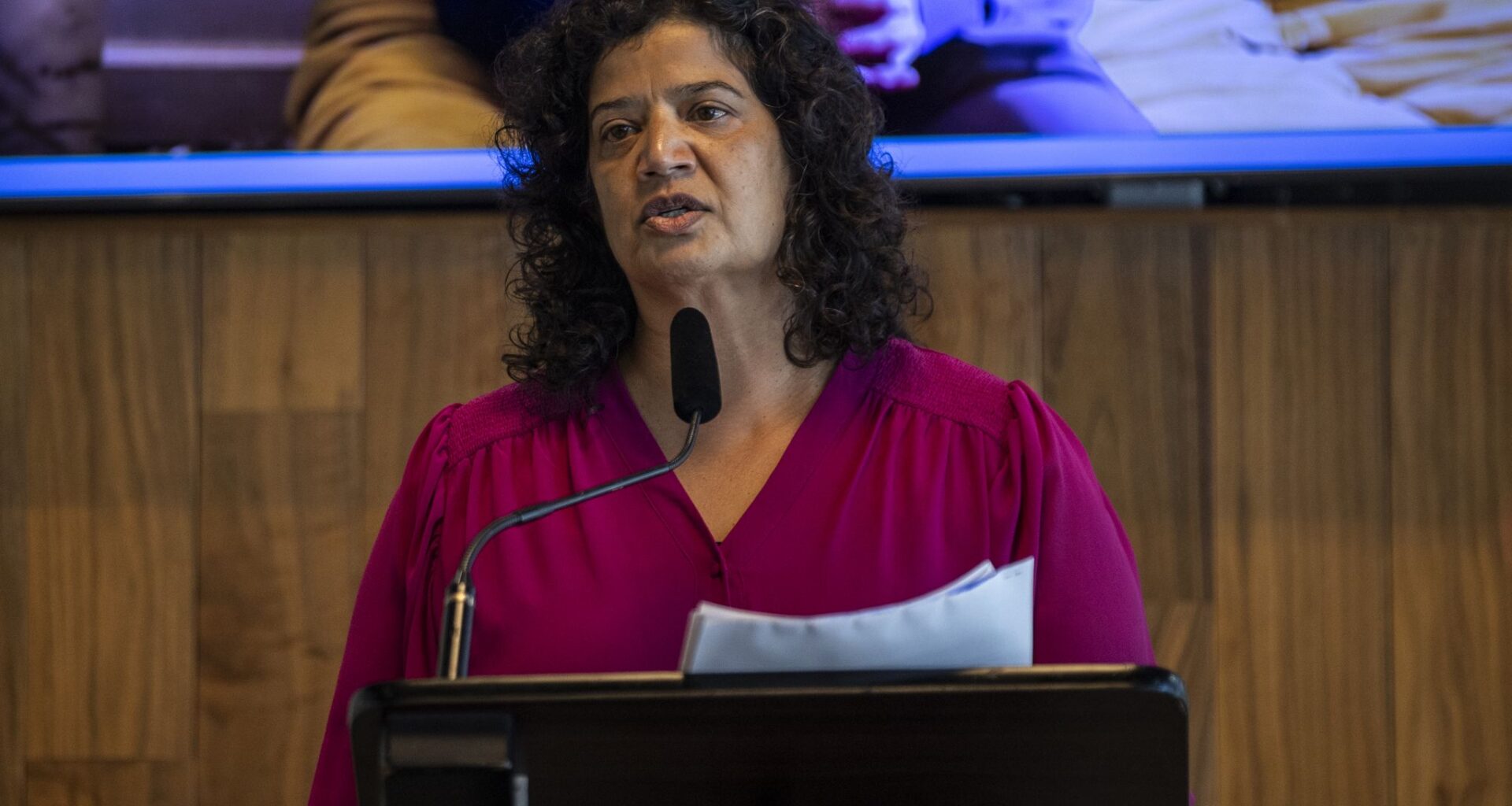
Shireen McSpadden, executive director of the San Francisco Department of Homelessness and Supportive Housing, speaks during a press conference in the spring of 2023.
Stephen Lam/San Francisco Chronicle / Pool
Shireen McSpadden, the head of San Francisco’s homelessness agency, will step down from her role this summer, the Chronicle has learned. The vacancy will present Mayor Daniel Lurie with an opportunity to make a crucial appointment and wield greater influence over the city’s approach to homelessness.
McSpadden plans to retire as executive director of the Department of Homelessness and Supportive Housing effective June 30, according to letters she sent Monday to community partners and the heads of other city departments. She was appointed in 2021 by then-Mayor London Breed.
McSpadden did not state a reason for the timing of her retirement, though she acknowledged that she had completed nearly 23 years of service for City Hall. She joins other high-profile department heads who’ve left roles since Lurie took office in January 2025.
Article continues below this ad
During McSpadden’s tenure, San Francisco’s homeless population grew to about 8,300 people, according to the most recent count in 2024, a 7% jump over 2022. That is generally considered an undercount since about 20,000 people accessed homeless services in 2023. This year, the city changed the methodology of the count, hoping it would yield a more accurate estimate, but the changes will make it harder to compare counts from previous years. The results of this year’s count are expected to be released this summer.
In her message to community partners, a copy of which was obtained by the Chronicle, McSpadden thanked Lurie “for his leadership and for the partnership of his administration” on efforts to help homeless people. McSpadden said her department will “continue to play a critical role” in implementing Lurie’s efforts to reduce homelessness and said she had “every confidence” in his ability to “support the department and our partners through this transition and in the work ahead.”
San Francisco Chronicle Logo
Make us a Preferred Source to get more of our news when you search.
Add Preferred Source
“While stepping away from my role is bittersweet, I do so with great confidence in the department and in the extraordinary network of partners who help make this work possible,” McSpadden wrote.
Lurie said in a statement that McSpadden had “dedicated her career to serving San Francisco with compassion.”
Article continues below this ad
“Over the past year, she has been a critical partner on our Breaking the Cycle plan to address San Francisco’s homelessness and behavioral health challenges, helping us get more people off the street, connected to support, and on the path to stable housing,” Lurie said in his statement. “I am grateful for her leadership and want to thank her for her years of service to our city.”
McSpadden took over at the agency in 2021 as the city was grappling with the second year of the pandemic. Before her appointment, she had served as the executive director of the Department of Disability and Aging Services and helped run the city’s COVID command center, overseeing its food security program as hunger was spiking.
Her experience at the command center helped her see “firsthand what is possible when City leaders come together in service of our residents,” she wrote in a letter sent Monday to the heads of other city departments.
In the years since, San Francisco has continued to grapple with stubborn homelessness even as the city has seen other signs of recovery. In collaboration with partner organizations, the agency had “expanded its services and significantly grown its portfolio,” McSpadden wrote her letter to the groups, “in response to tremendous need.”
Article continues below this ad
The city and its partners expanded access to housing and prevention resources, improved shelter placement and established programs for people with specific needs, like children, older adults and domestic violence survivors, McSpadden wrote.
“The next chapter for the department will be an opportunity to deepen partnerships across systems and continue refining our collective response so that people can get the support they need,” she wrote.