
Several arts venues in and around Downtown have announced a joint commitment to climate action, establishing environmentally conscious approaches to their operations.
The Getty Museum, the Los Angeles County Museum of Art, the Museum of Contemporary Art, the Hammer Museum and Hauser & Wirth will each implement the Bizot Green Protocol, a set of recommendations for ensuring environmentally sustainable approaches are taken for the care of collections, the organizations said in a news release last week.
“Though not a direct cause, climate change was an exacerbating factor in the size and devastation of the recent Los Angeles-area fires, which took a toll on our cultural institutions, galleries and artists,” the institutions said in a joint release. “Increasingly, the cultural sector is being shaped by and is responding to climate change as part of fulfilling our mission of caring for and exhibiting our shared cultural heritage. It is vital that our sector take action to both reduce our environmental impact and improve our resilience, so that we can continue to fulfill this mission.”
First introduced in 2015 by The Bizot Group, a network of art museum directors from major international institutions including Getty, the Bizot Green Protocol is a science-based framework that provides a guideline for museums and galleries to implement sustainable practices in caring for their collections.
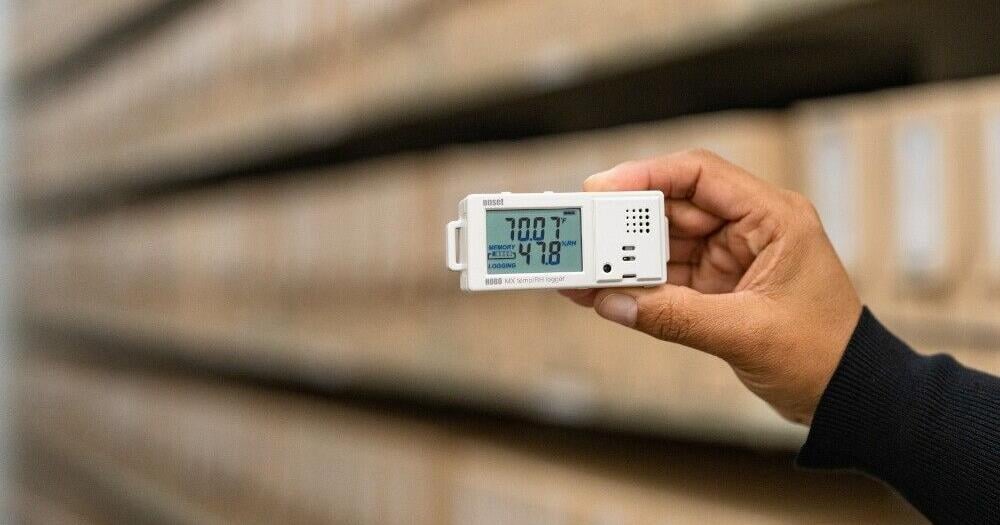
“Though our organizations are of different sizes, collection types and operating parameters, we all share an interest in fostering collaborative approaches to sustainability and in being information resources for other organizations,” the joint statement continued. “We are committed to experimenting with wider climate-control parameters for temperature and relative humidity in our facilities, changing criteria for outgoing loans when safe for the works of art of our collections and incorporating measures to reduce air travel and design waste as part of our exhibitions, as outlined in the Bizot Green Protocol.”
The Museum of Contemporary Art
Located in Downtown LA, the Museum of Contemporary Art (MOCA) is working to reduce its environmental impact by a variety of means. These include reconsidered waste cycles, infrastructure upgrades and the decarbonization of its operations and facilities, it said in a news release.
“Enabled by a new digital energy management system — funded through a grant from the Frankenthaler Climate Initiative and a matching gift from Suzanne and David G. Johnson, MOCA Life Trustee and co-founder of the MOCA Environmental Council — MOCA is expanding this model to future exhibitions and has begun phasing Bizot conditions into the galleries at MOCA Grand Avenue this year,” it said in a news release. “Moving forward, MOCA will apply this framework to all exhibitions at The Geffen Contemporary, and the museum will phase Bizot conditions, inclusive of relative humidity, into the galleries at MOCA Grand Avenue in 2026.”
As part of this joint commitment, MOCA is reevaluating temperature and relative humidity standards in its galleries to reduce energy consumption, aligning with the Bizot Green Protocol.
“For decades, museums have maintained tightly controlled climate conditions to prevent damage such as warping, fading and mold,” the news release said. “However, the Bizot Group and other leaders in the field have questioned whether such strict standards are always necessary, given their significant energy demands.
“Rather than substituting one rigid benchmark for another, MOCA has adopted a responsive framework that considers both the specific needs of artworks on view and Los Angeles’s climate, balancing collections care with energy efficiency.”
MOCA initiated this approach at its Little Tokyo campus, The Geffen Contemporary, during its run of “Olafur Eliasson: OPEN” from Sept. 14, 2024, to July 6, 2025.
MOCA is located at 250 S. Grand Avenue, with The Geffen Contemporary campus a few blocks away at 152 N. Central Avenue.
Learn more by calling 213-621-2766 or by visiting moca.org.
Hauser & Wirth
Hauser & Wirth Los Angeles has delivered energy savings and cost reductions through improving the gallery’s climate control systems.
These findings were presented at the International Climate Control Conference in December 2024. It is also part of the Ki Culture Getting Climate Control Under Control program, which supports art institutions in adopting sustainable climate management practices.
The Hauser & Wirth Los Angeles team has tried several different strategies for reducing climate impact, including overnight HVAC system shutdowns, moving away from universal temperature ranges, expanding temperature and humidity set-point ranges and leveraging seasonal outdoor temperature changes.
Hauser & Wirth Los Angeles has locations in both West Hollywood and Downtown Los Angeles. Learn more at hauserwirth.com.
The Getty Museum
Located north of Brentwood in Crestwood Hills, the Getty Museum is no stranger to environmental sustainability. It first embraced the Bizot Green Protocol in June 2024, and the Getty Conservation Institute has been researching sustainable control and management of collection environments for over a decade.
The Getty Research Institute, located at the Getty Center alongside its museum, has launched a pilot program exploring the effects of “expanded environmental parameters on energy consumption and impact on collections in high-density storage,” it said in a news release.
The Getty Museum is located at 1200 Getty Center Drive, Los Angeles. Learn more by calling 310-440-7300 or by visiting getty.edu.
The Los Angeles County Museum of Art
The Los Angeles County Museum of Art (LACMA) adopted the Bizot Green Protocol during the planning phase of the David Geffen Galleries, the newest buildings on its Miracle Mile campus.
The design of the David Geffen Galleries targets microclimates for sensitive works.
It balances collection care and energy performance though flexible climate zones across perimeter and interior galleries.
The David Geffen Galleries are designed to achieve LEED Gold certification, the second highest tier of the Leadership in Energy and Environmental Design green building rating system.
It signifies high performance in sustainable design. LACMA achieved this through replacing outdated, inefficient structures and integrating high-efficiency systems with reduced embodied carbon materials.
LACMA has reduced its water use across the site and transitioned to electric-powered equipment as well as electric vehicle charging infrastructure that supports low-impact access and operations.
More than 95% of construction and demolition waste at LACMA is diverted from landfills.
LACMA is located at 5905 Wilshire Boulevard, Los Angeles. Learn more by calling 323-857-6000 or visiting lacma.org.
The Hammer Museum
The Hammer Museum is affiliated with the University of California, Los Angeles, just south of the Getty Museum in West LA.
The Hammer Museum “is committed to making intentional decisions regarding the environmental and social impacts of our exhibitions, collections and programs,” it said in a news release.
In 2024, the museum implemented the Bizot Green Guidelines for “Breath(e): Toward Climate and Social Justice.“
The exhibition, which ran from Sept. 14, 2024, to Jan. 5, 2025, centered environmental art practices addressing the climate crisis.
The Hammer Museum has implemented the Bizot guidelines across exhibitions and collections.
The Hammer Museum is also introducing lenders, artists and other museums to sustainable practices including the Bizot Green Guidelines.
The Hammer Museum is located at 10899 Wilshire Boulevard, Los Angeles. Learn more by calling 310-443-7000 or visiting hammer.ucla.edu.