
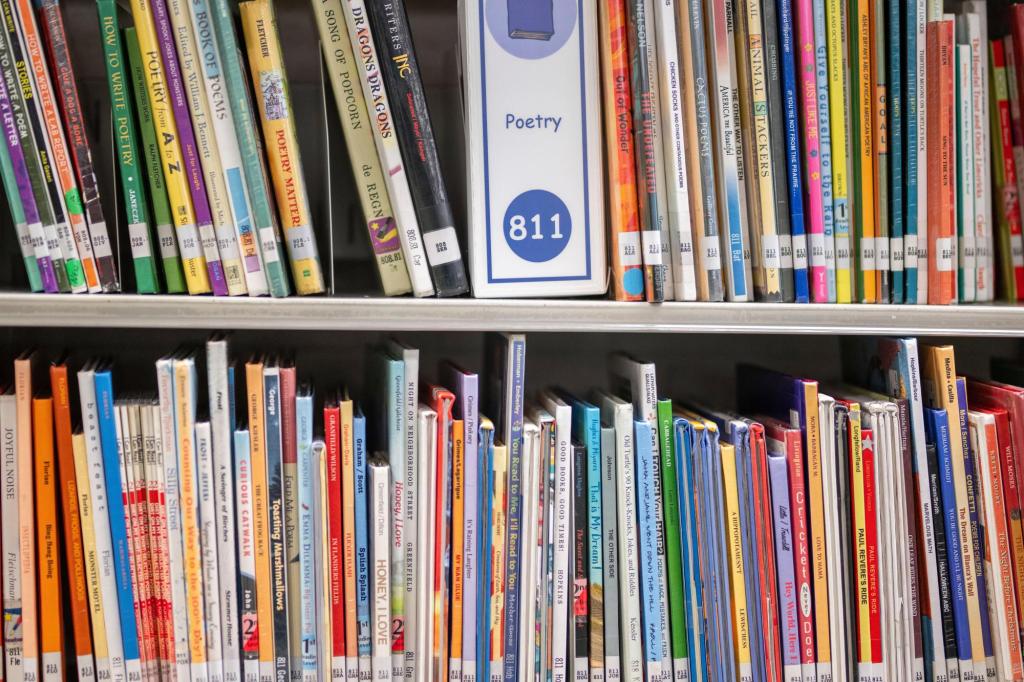
OAKLAND — The city is taking its most significant step in decades to revive a public library that closed 45 years ago in a disadvantaged West Oakland neighborhood.
The library’s shuttering in 1981 stripped the Hoover-Durant neighborhood — a diverse, mostly lower-income community that surrounds Hoover Elementary School — of vital educational resources.
Now, the city is gathering funds from various bond sources to finalize a roughly $3.5 million purchase of the former Community Foods Market property on San Pablo Avenue, a building that has sat empty since the short-lived grocery store closed in 2022.
The Oakland City Council is expected to ink the deal in the next month, starting with a March 24 vote by the council’s Life Enrichment Committee.
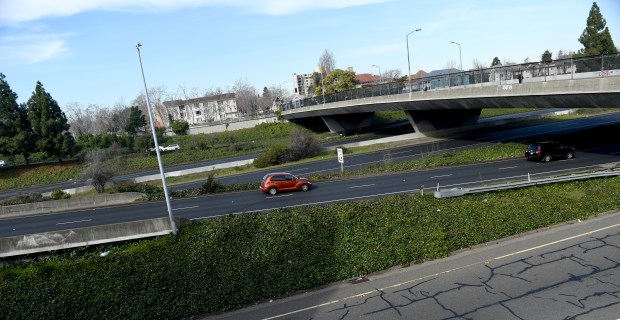 Late morning motorist travel along I-980 in Oakland, Calif., on Monday, Jan. 30, 2017. The Congress for the New Urbanism, an urban design advocacy group, is expected to release its triennial “Freeways Without a Future” report, identifying the top ten freeways nationwide that should be torn down and I-980 is expected to be on the list. (Susan Tripp Pollard/Bay Area News Group)
There remains a long way to go before the library could actually open its doors. A feasibility study published last year estimates the city may need another $11 million to actually redevelop the property once it comes under public ownership.
Still, the new property acquisition means Oakland at last has a site where the Hoover library branch could reopen, following community efforts that have stretched on for years without resolution.
The Hoover-Durant neighborhood, known by some residents as Hoover-Foster, is bound by two interstate highways, distancing the community from the next nearest library branch about a mile away.
“Having a library in a community advances literacy,” Jamie Turbak, the director of the Oakland Public Library system, said in an interview. “It also just creates a safe space for kids and adults where they don’t need money.”
The city has run into numerous roadblocks in trying to reopen the Hoover library’s doors, including having a 2023 grant application denied by the state because officials had not yet identified a potential site.
Much of the new land purchase will be funded by Measure U, an affordable housing bond approved by voters in 2022. About $11 million in revenues will remain earmarked for library projects once the deal goes through, Turbak said.
 Hoover Elementary School parent Justin Sheffield walks his daughter Kimircle to her second grade class room for the first day of instruction on Monday, Aug. 8, 2023, in Oakland, Calif. (Aric Crabb/Bay Area News Group)
The funding is welcome in the Hoover-Durant neighborhood, which saw years of race-based redlining in the 20th century that deprived homeowners of loans and led lower-income Black families to cluster in West Oakland.
The installation of Interstate 980 — the city’s downtown highway that began construction in the 1960s — tore through West Oakland, destroying hundreds of homes and cutting off Hoover-Durant from the rest of town.
A Caltrans study published last November found 41% of the population in the I-980 corridor live below the federal poverty line, higher than Alameda County’s overall average, which is 22%.
“We survived the drive-bys and the drug dealing and the violence, but a lot of homeowners left,” said Alternier Cook, a Black woman who chairs the Friends of the Hoover Durant Public Library community board. “I’m probably one of the last holdouts.”
The community also has a large contingent of immigrant families, many of whom were left shaken last November when federal immigration authorities were spotted near Hoover Elementary.
Even the last business that stood at the San Pablo Avenue property is a testament to the neighborhood’s economic struggles. Community Foods Market, which opened in 2019, was envisioned as a rare source of fresh, affordable groceries in the area.
The store did not survive the COVID-19 pandemic, closing its doors in 2022. The building went up for sale last last year, allowing the city to step in and buy it.
In other parts of Oakland, efforts to revive libraries have paid off. In 2011, the city opened its last new branch at 81st Avenue and Rudsdale Street in East Oakland next to a pair of elementary schools. The location is still going strong, Turbak said.
“We’ve had kids who were in school 15 years ago,” she said, “and when they come back from college they say, “This library being here changed the course of my life.’ These are spaces people need.”
Shomik Mukherjee is a reporter covering Oakland. Call or text him at 510-905-5495 or email him at shomik@bayareanewsgroup.com.