
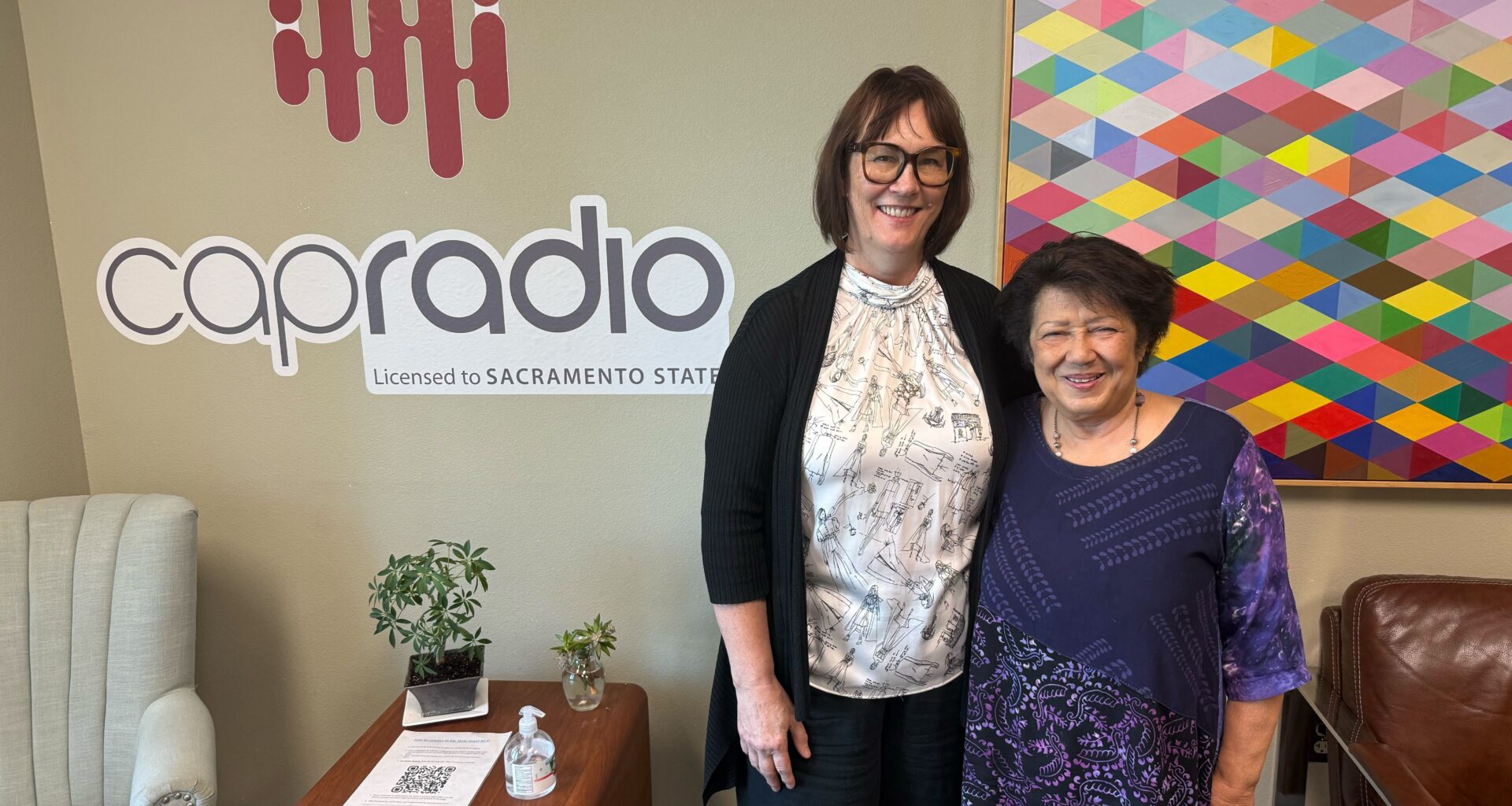
Have you ever heard of Mary Ellen Pleasant?
Known as the “Mother of Civil Rights in California,” Pleasant was born a slave in 1817, but eventually became an entrepreneur and abolitionist, who is thought to have helped fund the Underground Railroad.
Though a self-made millionaire, she died poor in 1904 and her story was mostly lost to history.
During the California Gold Rush, she moved West to work as a cook in San Francisco and used her weekly earnings to invest in real estate and railroads. That’s according to Susheel Bibbs. She’s an Emmy award-winning producer and filmmaker in Sacramento. She used her skills as a scholar and an internationally celebrated singer to bring Mary Ellen Pleasant’s story to life on stage through a performance art known as a Chautauqua.
The Sacramento History Museum is presenting this Chautauqua at Celebration Arts Theatre in Sacramento on Wednesday, March 18.
Susheel Bibbs and Delta Pick Mello, executive director of the museum, spoke with Insight’s Vicki Gonzalez about the origins of Chautauquas and why Mary Ellen Pleasant’s story continues to resonate with audiences more than 100 years after her death.
This interview has been edited for length and clarity.
Interview Highlights
When did you first learn about Mary Ellen Pleasant? What drew you to her life and work?
Susheel: Well, in 1993, I was performing (a concert) at Herb’s Theater in San Francisco. And the person playing for me was the famous composer, Jacqueline Hairston. And afterwards, we went out to dinner with a rep from New York and they started talking about this woman named Mary Ellen Pleasant and all these stories and she said, “You know, I’m going to write an opera on her and you can play Mary Pleasant.” I said, “Wait a minute, let me find out who she is and or was” and the rest is history. Literally.
At that moment, did you have a feeling that you would be continuing to learn and tell the story of Mary Ellen Pleasant for decades?
Susheel: Not at all. It was a detective story. There are people who have tried their whole lives to find out who she was. They called her a “woman of mystery” and I opened my show talking about that. She said, “words were made to conceal feelings and I was good at it.” So it’s really a mystery, and I found myself going to the libraries and to the collections, all over the country trying to find out who this woman was. It was exciting.
You’ve written a book about Mary Pleasant. You have released documentaries on Mary Pleasant. What is it about her story that continues to not only resonate with you, but with audiences as well?
Susheel: She was an entrepreneur. She’s somebody who climbed from slavery through Nantucket business and then became a millionaire. She never forgot her people. She was first a slave rescuer, but then she was called the Western terminus of the underground railroad.
And then she was called the Black City Hall for all the good things she did by knowing all of the powers that be in San Francisco. She ended up working on trolley cases to allow black people to ride the street cars and trolleys in Sacramento and San Francisco.
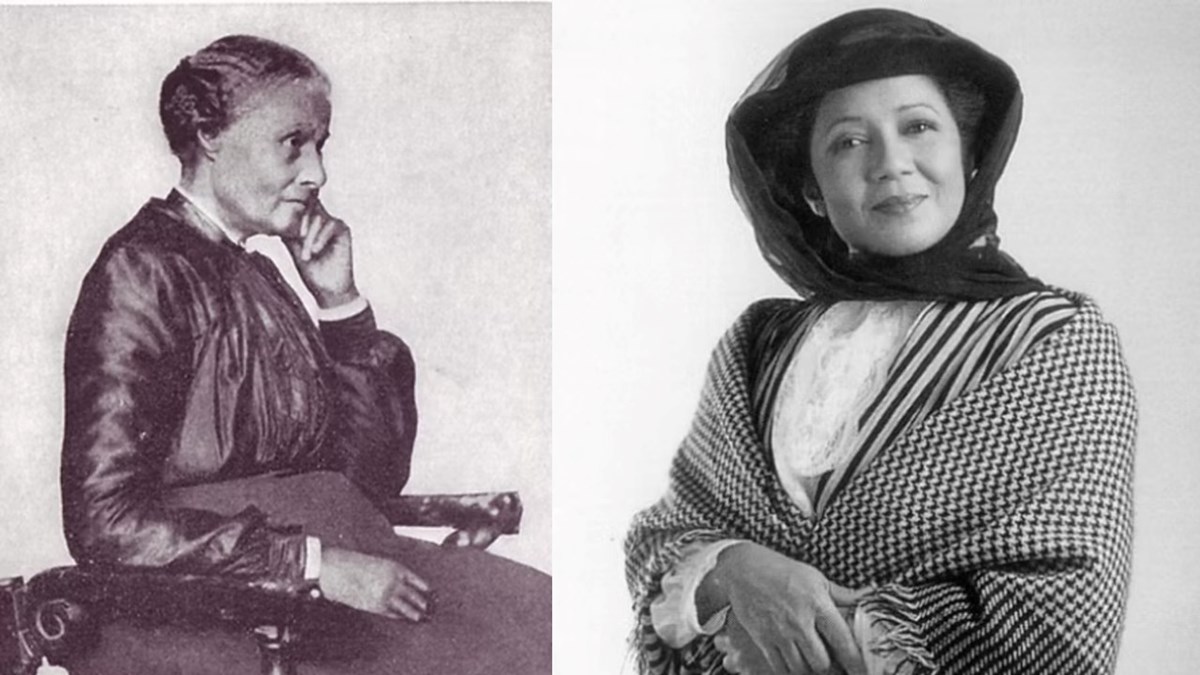 Mary Ellen Pleasant (left) is know as the “Mother of Civil Rights in California” and is thought to have helped fund the Underground Railroad. Susheel Bibbs (right) is bringing her back to life in a performance coming to the Sacramento History Museum.Courtesy: CSU Archives / Everett Collection
Your performance this Wednesday is a Chautauqua, which may be new to some people. What is that exactly? How did that come about?
Susheel: It is a form of performance that allows an actor who also can research to portray a famous character. Now back in the 1870s, I think, it started, but it gets its name “Chautauqua” from Chautauqua, New York (where it originated). And it became a three-part program.
What happens is she arrives in character, in costume, it’s a play. I use Pleasant’s words, I’m one of the only people in the world that has them. I have her letters and her memoirs. And I let her tell her story against the newspapers who maligned and vilified her, as she says. So it’s exciting, and then she answers questions in character from the audience. And then like Superman in a phone booth, I come out as myself, not that fast. But I do answer questions from the audience about her. It is like a fun, participatory history. So people love it.
The Sacramento History Museum is behind this Chautauqua happening at the Celebration Arts Theatre. Why are you interested in bringing this story to the stage in Sacramento?
Delta: Well, my interest is to bring Chautaqua, the concept, the performance, the people who do these wonderful characters to Sacramento. I realized I’ve been fascinated by this since I was a child. I collected all the biographies of women that I admired through all different periods of time when I was in elementary school. And then somewhere in the ‘70s, there was a show called Meeting of Minds on PBS and it was a Steve Allen brilliant production where he brought back in a talk-show format figures from history. And they would comment on the things that were going on today and they would talk together. And so that was always fascinating to me, but I never knew about Chautauquas until about six years ago. [Mary Pleasant] was the perfect first person to bring to Sacramento.
When did you first learn about Susheel Bibbs?
Delta: I have met people who have done Chautauqua performances and there’s a network of performers throughout the country. I learned of various people but I wanted somebody that was in the Sacramento area to start with. Sushell came to me through some other people and we started talking and she’s just delighted to present this in the full form of Chautauqua in Sacramento.
What do audiences gain from seeing a Chautauqua?
Susheel: They get this historical information, but they also get something personal from it. I think that’s what it is, it’s personal theater.
Delta: And for us at the Sacramento History Museum, we have been looking for opportunities to open a different door for people to step into their interest in history. A lot of young people say they’re not interested in history, but they really are. And once you give them a different way of interacting with history or being presented with it – the Chautauqua performance is a perfect example of that. You engage immediately with the real person or the embodiment of the real person and it’s just such an unusual way to introduce everyone to history and historical people.
Follow us for more stories like this
CapRadio provides a trusted source of news because of you. As a nonprofit organization, donations from people like you sustain the journalism that allows us to discover stories that are important to our audience. If you believe in what we do and support our mission, please donate today.