
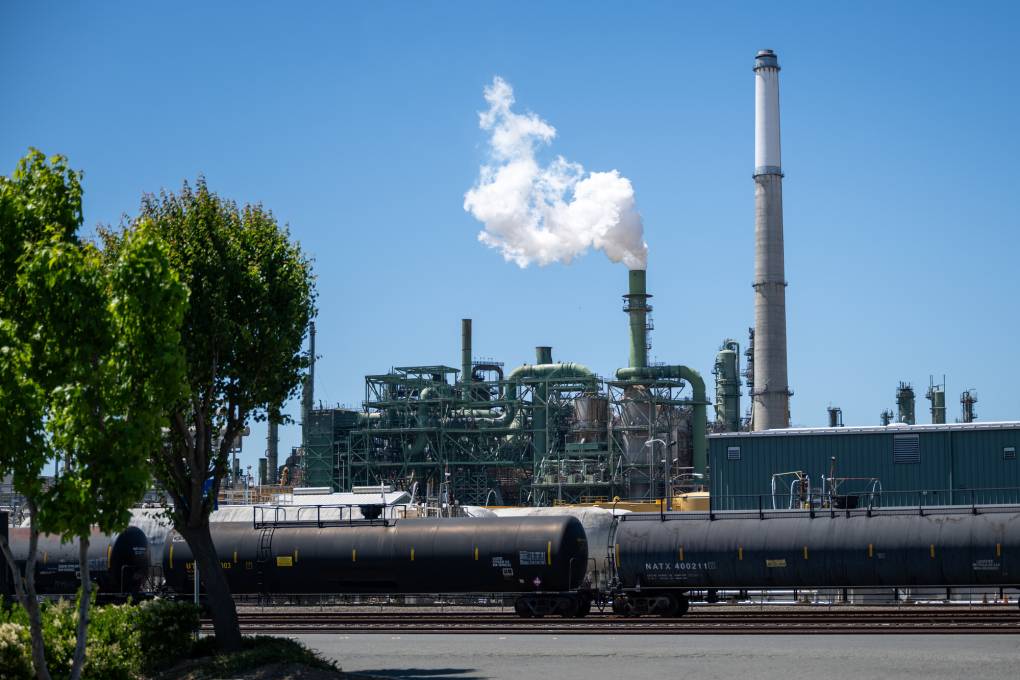
“The last thing we need is to start trying to regulate refinery margins,” he said. “As much as people don’t like high gasoline prices, they really, really hate gas lines.”
By last August, refinery closures were looming and warnings of $8-a-gallon gasoline circulated in Sacramento. Newsom and Democratic leaders were negotiating with the oil industry to boost production in Kern County — talks that produced a law that has since driven an uptick in drilling permits.
After Valero said it would close its Benicia refinery, Newsom directed Siva Gunda, vice chair of the California Energy Commission, to “redouble the state’s efforts to work closely with refiners on short- and long-term planning” and ensure a “reliable supply of transportation fuels.”
Gunda responded with a series of recommendations that aligned largely with industry’s desires — among them a pause in the state’s profit-cap rule.
Against that backdrop, energy commissioners voted on Aug. 29 to delay the rules for five years. Ahead of the vote, Gunda said the delay would help boost “investor confidence” in the state’s oil refiners, “thereby ensuring a reliable in-state refining capacity.”
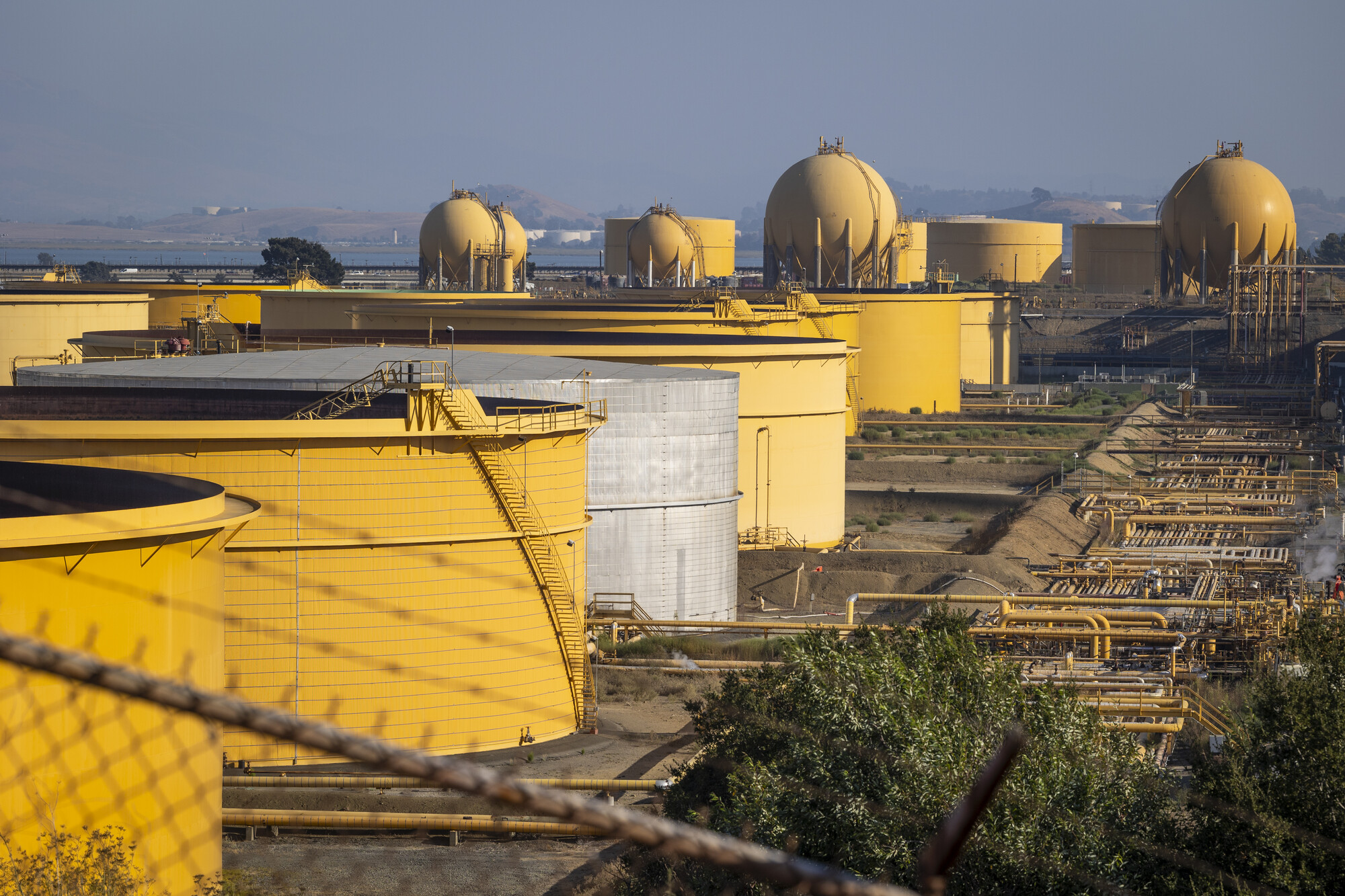 The Valero refinery in Benicia on Sept. 21, 2023. (Martin do Nascimento/KQED)
Oil industry representatives say the decision made sense – the profit-cap measures, they argued, miss the real problem.
“The real problem is California is an energy island — we’re losing 17% of our refining capacity,” said Zachary Leary, a lobbyist for the Western States Petroleum Association.
But Court, of Consumer Watchdog, said the governor “panicked,” leaving the state without the “hammer” it now needs.
“When you have this type of level of gas run up, you’re going to need those tools,” Court said.
The difficult middle of the energy transition
California has committed to phasing out fossil fuels by 2045 — but it still depends heavily on gasoline, and it is losing the refineries that produce it.
Phillips 66 last year shut its Los Angeles refinery, citing concerns about the sustainability of the California market. Valero is closing its Benicia refinery next month, pointing to a challenging regulatory environment.
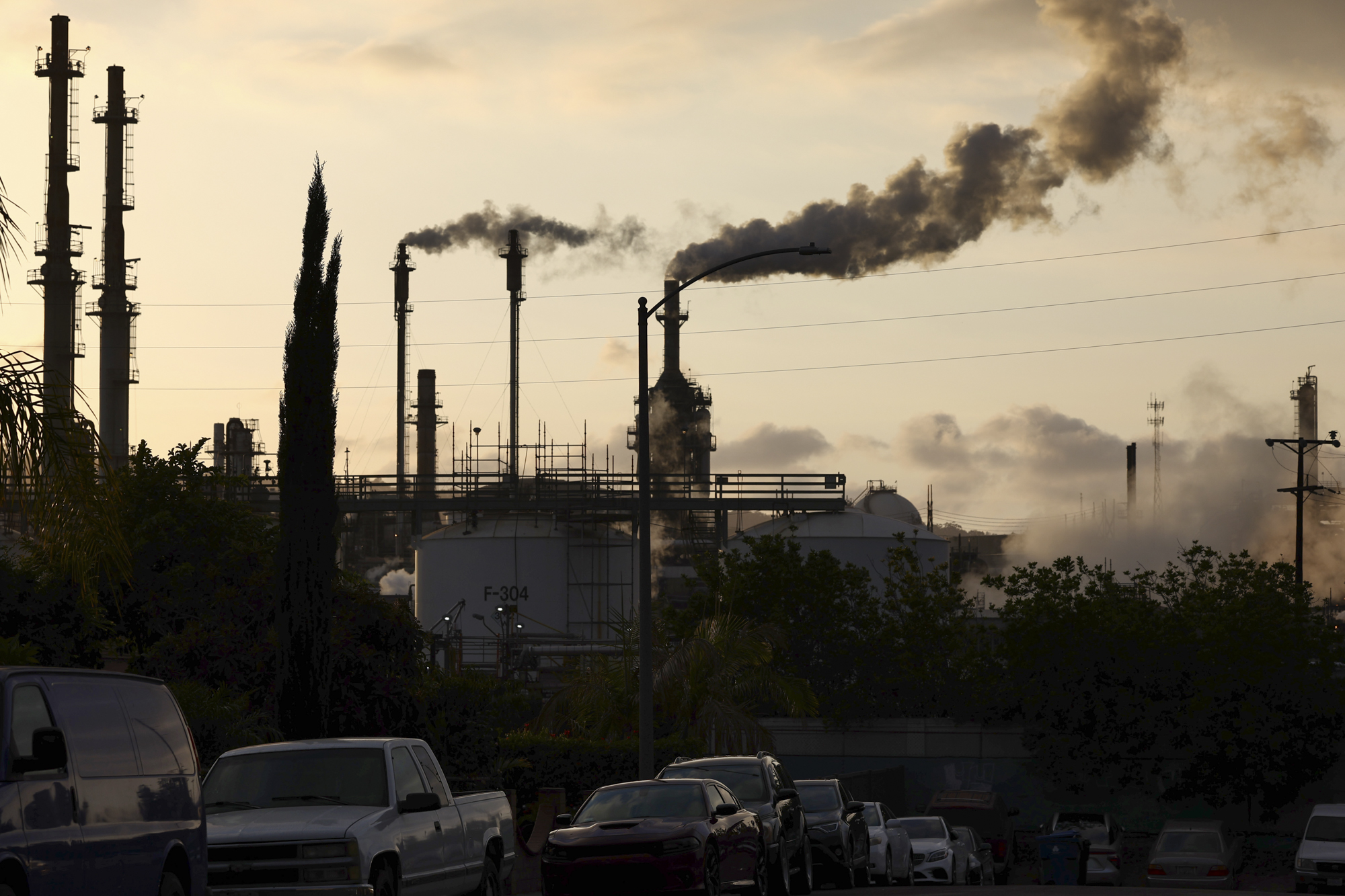 The Phillips 66 Los Angeles Refinery Wilmington Plant stands beyond a residential street on November 28, 2022 in Wilmington. (Mario Tama/Getty Images)
“If you start losing refineries — as we are going to — and you don’t have an alternative source of supply, we’re going to start getting price spikes when there’s any sort of disruption at one of our refineries,” Borenstein said. “Or just during high demand periods.”
The challenge of reducing fossil fuel use while maintaining adequate supply has created what Gunda — Newsom’s point person in negotiations with the oil industry — calls the “mid-transition.
“This is not going to be a smooth transition,” Gunda said last month in testimony to a state Senate committee. “Every time you lose a refinery, it’s going to be a double-digit percent of refined fuel lost in California. So that abrupt transition will mean an abrupt increase in imports.”
A global oil shock hits California
The recent jump in gasoline prices reflects a global oil shock tied to the war with Iran — not a policy change unique to California, experts said. But the surge highlights how exposed the state remains to global energy markets as it loses refining capacity and imports more crude and gasoline.
Since the conflict began, the international benchmark for crude oil has climbed more than $25 a barrel — a shift that typically translates to about 60 cents per gallon at the pump, in line with the increase in California retail prices, argues Borenstein, of UC Berkeley.
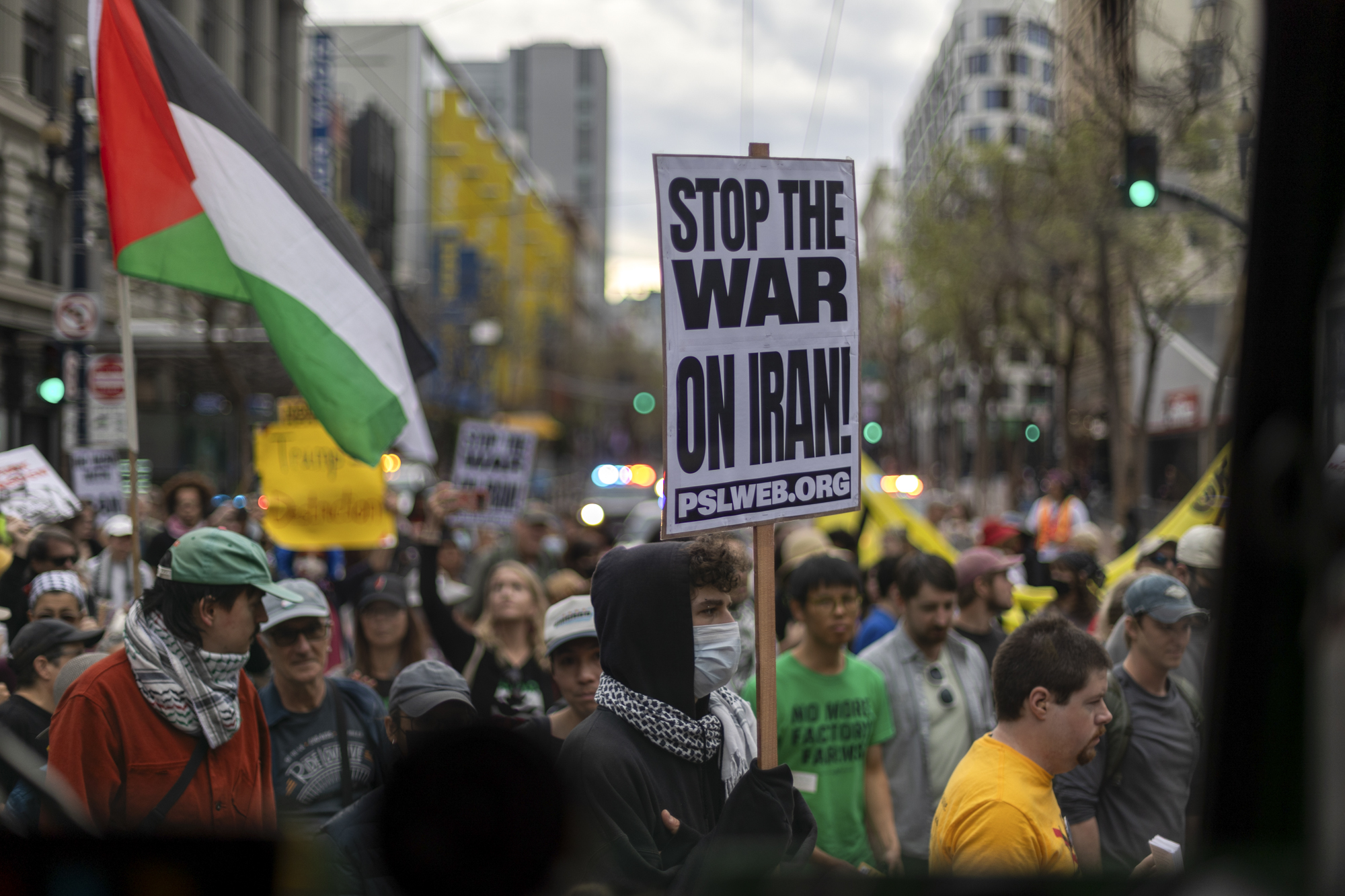 Hundreds of demonstrators march along Market Street during a “Hands Off Iran” rally on Feb. 28, 2026, in San Francisco. Protesters took over the roadway while calling for an arms embargo and an end to U.S. participation in the strikes. (Gustavo Hernandez/KQED)
“All of the change we’ve seen in the last couple of weeks is in line with the change in crude oil prices, and therefore is not California specific,” he said.
Newsom has made a similar argument, blaming the spike on global oil markets and the war with Iran rather than California policies. But analysts note that the state’s shrinking refinery base means global shocks land harder here than elsewhere.
A key concern is the Strait of Hormuz. Before the conflict, the narrow waterway carried more than 20 million barrels of oil a day — roughly one-fifth of global supply. Traffic is now at a standstill, and crude prices topped $100 a barrel again — even after more than 30 countries announced releases from emergency reserves.
Ryan Cummings, chief of staff at the Stanford Institute for Economic Policymaking, said a prolonged closure could push crude prices above $130 or $140 per barrel — driving California prices closer to $7, with a worst-case scenario approaching $10 at some stations.
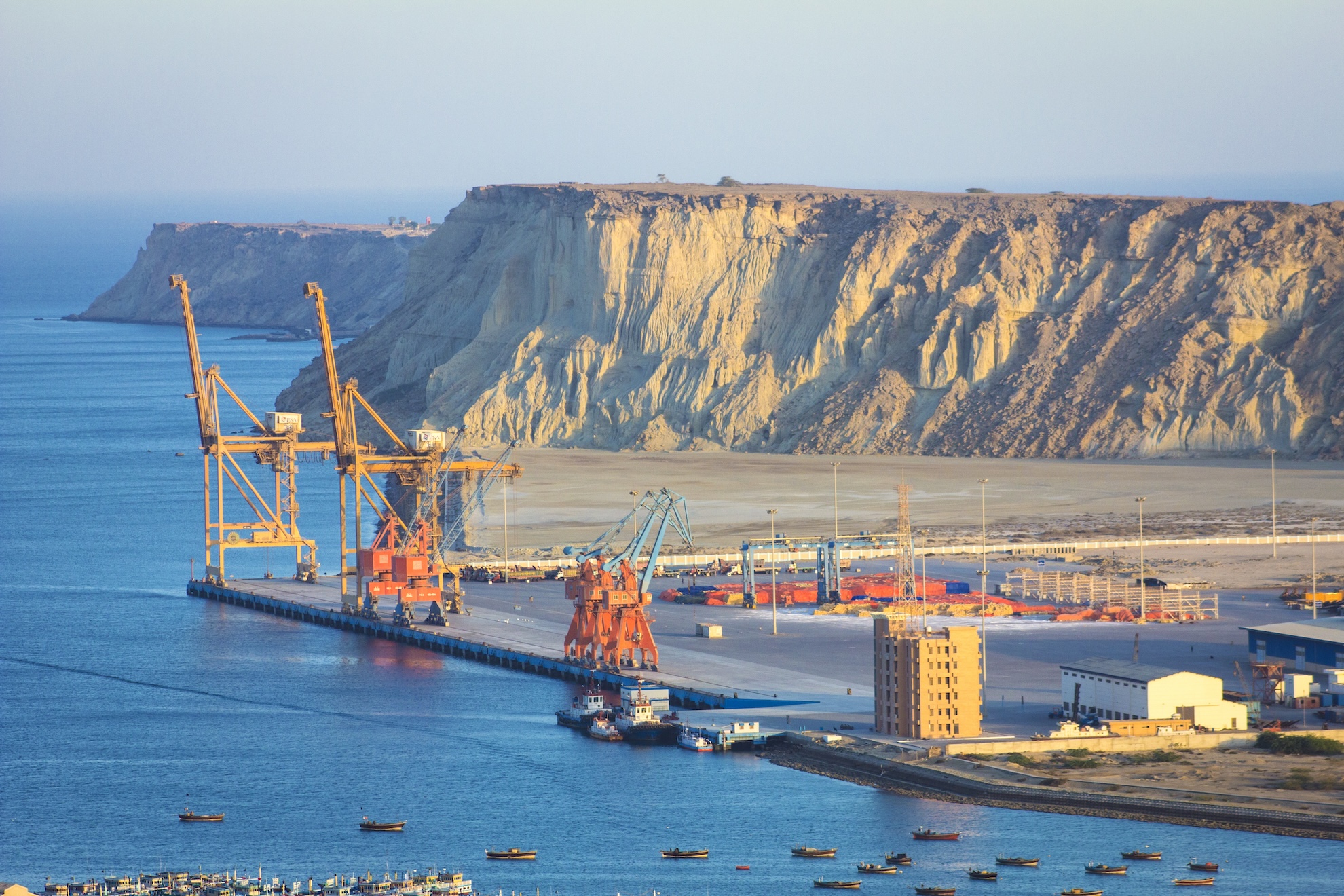 The port city of Gwadar balochistan on the southwestern coast of Pakistan, just outside the Strait of Hormuz near key shipping routes in and out of the Persian Gulf. (SM Rafiq Photography via Getty Images)
Most analysts consider that outcome unlikely but no longer unthinkable.
“Right now, this doesn’t appear likely, but it is a worst-case scenario that is growing by the day,” Cummings said.
Competing ideas for what comes next
Siegel, of the Center for Biological Diversity, said California should move forward immediately to implement the profit-cap rules and require companies to hold larger fuel inventories.
“Our leaders shouldn’t rest until the rules are in place to prevent price gouging on top of volatility, and should not rest until people get their money back,” she said.
Economists say California’s biggest challenge may be infrastructure. Valero plans to close its Benicia refinery, which produces about 10% of the state’s gasoline, next month.
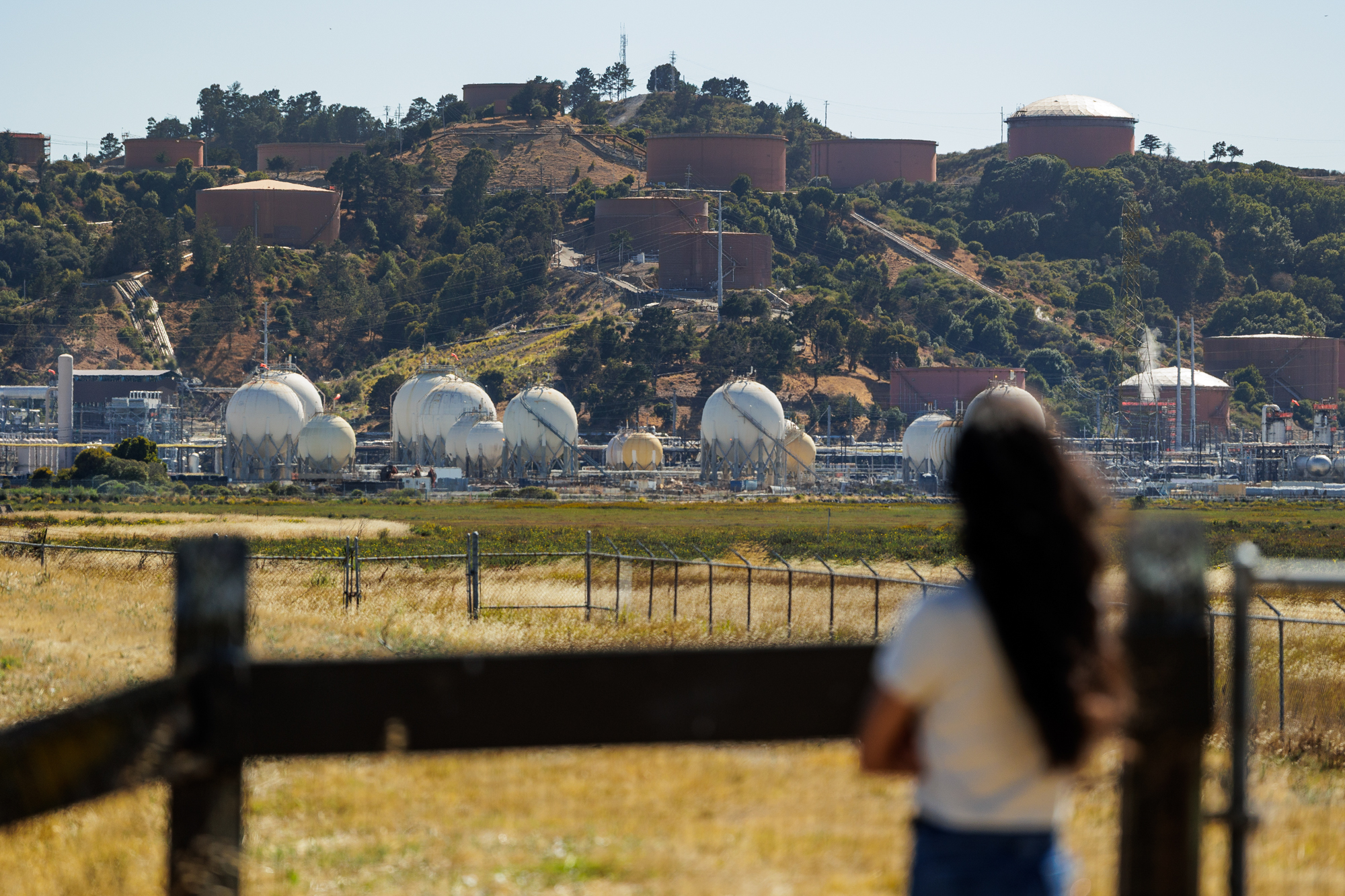 Luna Angulo looks at the Chevron Refinery from the Wildcat Marsh Staging Area in Richmond on Aug. 8, 2025. (Martin do Nascimento/KQED)
In an analysis posted last year, Stanford economist Neale Mahoney and Cummings said California could offset lost refinery production with gasoline imports – if permitting allows refineries like Benicia to convert to fuel import terminals.
Newsom said in January his administration is working with the company to continue importing gasoline into Northern California after its refinery operations close.
“If I was in the Legislature right now, all of my energies and effort would be built on, one, making sure that Benicia gets turned into an import terminal — and two, making sure whoever owns or operates that is not an incumbent,” Cummings said.