
But Ward and other backers of community solar-battery projects say that the CPUC has cherry-picked its data and tailored its analysis to make the NVBT appear more costly than it would actually be. In last month’s hearing, Ward pointed out that 22 states and Washington, D.C., have created community solar programs that have resulted in gigawatts of projects — far more than California has been able to build — without any complaints about unfairness. Some of the states with the largest programs, including New York and Massachusetts, use structures similar to that of the NVBT, he said.
At the same time, no other state has adopted the wholesale rate structure that the CPUC has proposed, Ward said, largely because it can’t offer project developers the revenues they need in order to remain profitable while offering subscribing customers lower bills.
In fact, the CPUC’s plan relied on $250 million in federal Solar for All grants to be cost-effective, he noted, while such an outside funding boost hasn’t been required by those 22 other community solar programs.
The Trump administration canceled these Solar for All grants, last year, putting that plan in jeopardy. California and other grant recipients have brought legal challenges to recover the funds, but the outcome is unlikely to be resolved quickly.
All this represents a “huge missed opportunity and a failure of leadership,” Matt Freedman, an attorney at The Utility Reform Network, a nonprofit that represents the interests of utility customers and supports AB 2316, said at the hearing.
“Despite the clear directives in AB 2316, the PUC embraced a nonviable, noncompliant, and incomplete community renewable-energy program that was designed to fail and perhaps never even meant to launch,” he said. “The Legislature is going to need to lead here, perhaps with additional statutory direction and greater oversight.”
The risks of relying on utility-scale solar alone
This debate over California’s plan for community solar and batteries is unfolding as the state faces increasing pressure to expand its clean energy portfolio. The CPUC has prioritized building utility-scale solar-battery projects as well as other carbon-free resources to meet residents’ needs. But leaving midsize solar and accompanying battery projects off the table is a bad idea, backers of community clean-energy projects say.
During the hearing, Fleisher highlighted the progress that California is making on large-scale clean energy, with an estimated 5 gigawatts of solar and more than 4 gigawatts of solar-plus-storage projects projected to be added by 2029. In the CPUC’s estimation, utility-scale projects are “where the economics make the most sense,” she said, because of economies of scale and competition between developers to provide the lowest-cost projects possible.
Earlier this month, the CPUC released its latest plan for meeting its clean energy and grid-reliability goals, calling on the state’s utilities and community choice aggregators to secure 6 gigawatts of new clean energy and storage by 2032. That plan also stipulates “incremental transmission system upgrades” meant to boost a series of grid expansions already being planned by the state’s grid operator.
But in a November report on the state’s progress toward its long-term clean energy goals, the CPUC found that utility-scale projects have been stalled because transmission grid upgrades that were approved years ago are still incomplete. Those include 13.2 gigawatts in projects that “have already been delayed or are at risk of delay due to delayed transmission project timelines.”
Such slowdowns are exacerbating the yearslong interconnection wait times for solar and battery installations in California. That’s not surprising, given the massive challenges involved in building new transmission lines, as well as the interconnection problems plaguing grid operators around the country, not just in California.
But it’s also a warning for California regulators not to exclusively rely on transmission-connected clean energy to meet its goals, TURN’s Freedman said at the hearing. Finding alternatives to utility-scale projects is even more important in the face of the Trump administration’s efforts to block utility-scale clean energy projects “as part of its war against solar energy,” he said.
Community solar-battery projects could help meet California’s need for clean energy and grid reliability much faster and more cheaply than relying on utility-scale projects alone. According to a 2025 analysis by consultancy Aurora Energy Research, commissioned by the trade group Coalition for Community Solar Access, deploying 5.4 gigawatts of community solar and storage projects across the state would deliver about $6.5 billion in electricity system cost savings over the next two decades.
That’s even though community solar-battery projects cost more per megawatt to build than utility-scale equivalents, James McGarry, western regional director for the Coalition for Community Solar Access, said at the hearing. But the community-power projects can be built more quickly and without costly and time-consuming transmission upgrades on parts of the grid that are closer to customers.
Fleisher said the CPUC hasn’t reviewed the Aurora Energy Research analysis. Nor has the agency conducted an analysis of how the costs of its proposal for community solar compare with those of utility-scale solar. But she reiterated a data point provided by utility Southern California Edison, claiming that the cost of compensating community solar-battery developers under the NVBT would be two and a half times higher than the cost of compensating a project under the CPUC’s preferred wholesale rate.
That statement drew a rebuke from Democratic Assembly Member Cottie Petrie-Norris, who is chair of the Assembly Utilities and Energy Committee and represents Orange County. She pointed out that under the CPUC’s preferred plan, “we’re not going to bring any new resources onto the grid, if I understand correctly. So saying that there was an alternative that was going to be two and a half times more expensive isn’t super relevant.”
Petrie-Norris also said: “My big takeaway is that we just need to get to a single version of the math around all of this. Otherwise, I think we’re going to continue to have pieces of legislation get introduced that are implemented in ways that are inconsistent with legislators’ understanding of where we’re moving.”
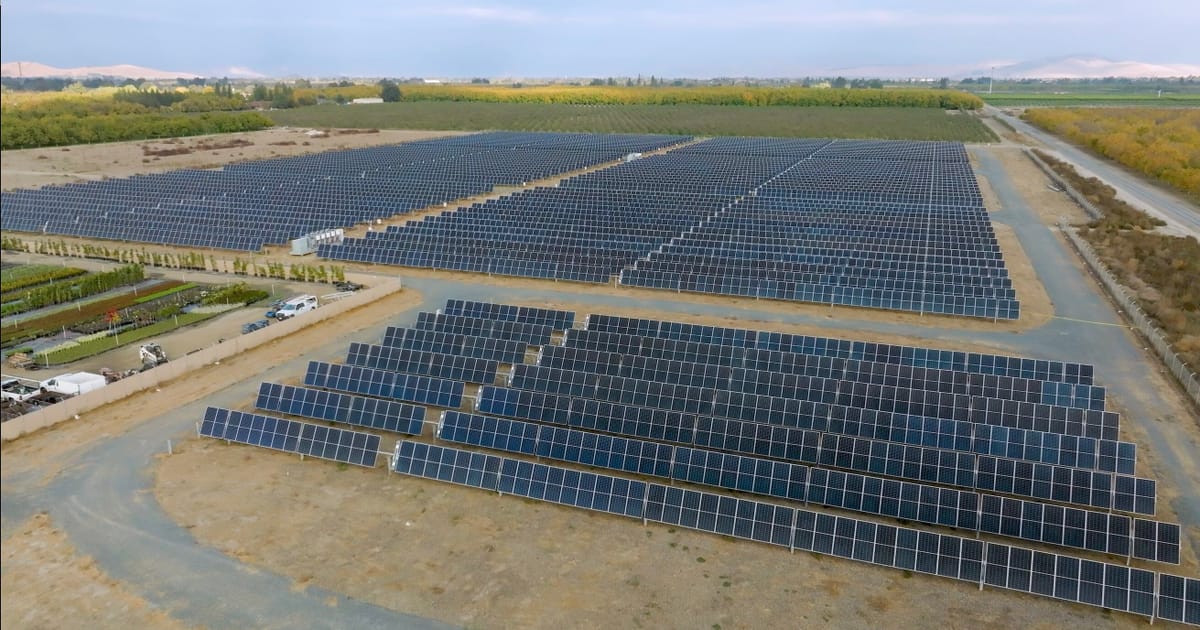
Brandon Smithwood, vice president of policy at community solar developer Dimension Energy, highlighted the challenges of attempting to build community solar projects under the state’s existing regimes. Dimension completed three such projects, in California’s Central Valley, under a program structure that was shuttered by the CPUC in 2024.
Those projects have, however, offered low-income subscribers in nearby communities significant reductions in their utility bills. “We’ve seen what can actually come from projects when they do work,” he said. “What has been proposed by the CPUC, particularly with no funding forthcoming, is not going to work.”
{
if ($event.target.classList.contains(‘hs-richtext’)) {
if ($event.target.textContent === ‘+ more options’) {
$event.target.remove();
open = true;
}
}
}”
>