
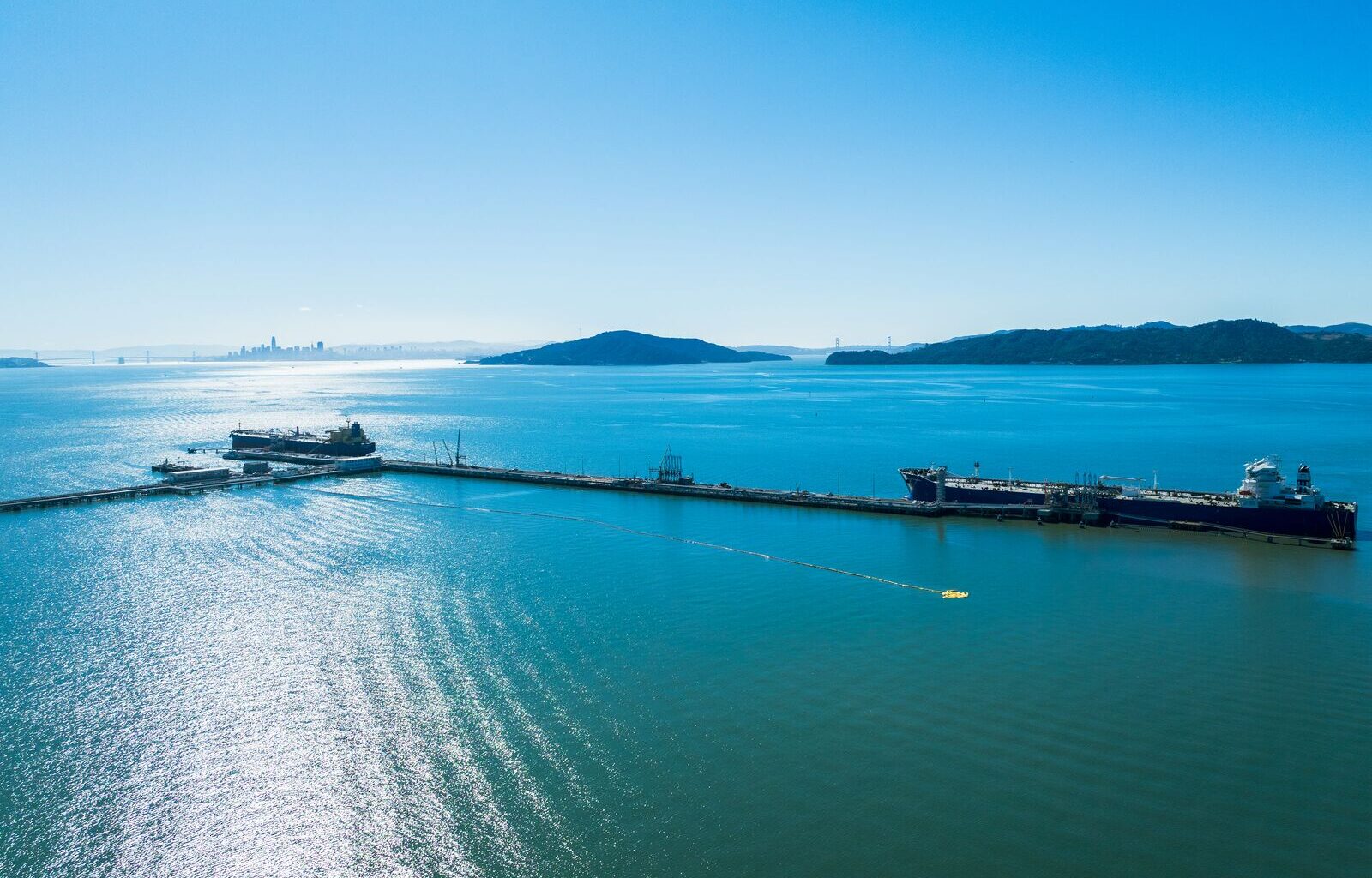
A deal to mine sand from the bottom of the Bay for use in construction projects is facing a legal challenge.
San Francisco Baykeeper, an environmental group focused on protecting the Bay, filed a lawsuit in Alameda County Superior Court last week against the California State Lands Commission, alleging that the commission’s decision to allow mining will destroy fragile habitat, harm fish and other wildlife, and potentially worsen coastal erosion.
“California cannot afford to sell off its public resources for private profits,” Baykeeper managing attorney Eric Buescher said in a statement. “Doing so hurts San Francisco Bay and is not in the best interest of anyone who lives in the Bay Area and enjoys our shorelines.”
The commission certified an environmental impact report for the mining project at its Feb. 9 meeting. Under the deal, two companies, North Carolina-based Martin Marietta and Vallejo-based Lind Marine, would lease approximately 3,900 acres of the Bay to extract sand from the Bay using suction dredges. The dredges would operate mostly between San Francisco and Angel Island, as well as at two locations where the Sacramento River flows into the Bay offshore of Pittsburg. The companies would pay rents of between $464 and $2,552 per acre, likely totaling several million per year.
The sand would be used in construction, and much of it would be transported on barges to facilities in Oakland.
Martin Marietta and Lind Marine did not respond to questions.
Sheri Pemberton, a spokesperson for the State Lands Commission, said she couldn’t comment on pending litigation. When asked about how the operations would mitigate environmental harms, Pemberton referred to a commission staff report summarizing the environmental impact report.
According to the staff report, the mining operation was approved by the commission for a 10-year period. The commission previously approved sand mining leases in 2012, but those are expiring.
Some of the risks of sand mining, according to the report, include:
The potential to smother and damage animals that live in and atop the sand. These include a vast array of creatures, such as dungeness crabs and smaller invertebrates that are important sources of food for fish and marine mammals.
The potential killing off of Delta smelt and longfin smelt. Delta smelt are a critically endangered species.
Other important fish species, like green and white sturgeon, Chinook salmon, and steelhead trout, could be killed.
According to Baykeeper, mining sand results in permanent changes to the Bay’s floor. Inflows of sand into the Bay have been dramatically reduced over the past 150 years due to the construction of dams and the reduction of water flow into the Bay from regional creeks and rivers.
Baykeeper argues in its complaint that the effects of removing sand from the Bay floor will be seen as far away as Ocean Beach. The complaint cites research showing that sand flows in the Bay are connected to beaches along the outer coast, and that removing sand could lead to quicker coastal erosion.
“Unsustainable sand mining harms endangered fish and marine mammals, reduces necessary habitat for wildlife, increases coastal erosion, and takes away a non-renewable public resource that’s needed for local beaches and shorelines,” Beuscher said. “In approving these leases, the State Lands Commission violated the law and failed in its role as a steward of California’s land and waters.”
We know that most readers don’t get to the end of the article. But you did! To support our in-depth, rock-solid reporting, please consider making a donation to our nonprofit newsroom today. We rely on our readers — particularly the ones who read the whole story!
“*” indicates required fields