
The city of San Diego has focused efforts on the installation of bike lanes during the past decade, and Mayor Todd Gloria has made it a top priority since he was elected in 2020. Many of these installations have caused extreme community backlash due to their poor design and impacts on traffic and businesses.
Since 2015, the city has invested $55 million in bike lane projects. They cost between $3 million and $5.5 million per mile, although a 2.8-mile stretch of University Avenue is costing $27 million.
The regional agency San Diego Association of Governments (SANDAG) is managing a broader, long-term regional bike network, with costs now exceeding $446 million for 70 miles of planned projects.
The city’s stated goal of the bike lane projects is to move residents away from vehicle dependency as part of its Climate Action Plan. But now there’s another reason compelling the city to expand the bike lane projects into certain single-family neighborhoods.
Senate Bill 79 (SB 79), signed into law in October 2025 and effective July 1, 2026, forces the upzoning of neighborhoods within a half-mile of high-frequency transit stops in eight “urban transit counties.” This legislation primarily impacts major urban areas in the Bay Area, Sacramento, Los Angeles and San Diego.
Cities, acting to support this density, are concurrently adding bike lanes to enhance transit-oriented development. As one of the five largest cities to endorse SB 79, San Diego is heavily implementing transit-oriented development.
Adding bike lanes in San Diego can facilitate higher-density housing under SB 79 by improving access to the transit stops that trigger the law’s density bonuses. SB 79 authorizes higher-density housing development around major transit stops, including the San Diego Trolley and Sprinter, which fall into Tier II of SB 79’s four transportation classifications.
These transit-oriented development areas often overlap with existing Sustainable Development Areas, where developers can already build with higher density. SB 79 will further accelerate this trend by overriding local zoning for 4- to 9-story buildings, for example.
Regional mapping by the Center for Housing Policy and Design at UC San Diego is identifying zones where SB 79 standards will apply, focusing on areas served by the San Diego Trolley and high-frequency bus lines. The city is pushing for higher-density housing in specific locations, including North Park, Hillcrest, Clairemont and University City, as part of its community plan updates. But the choice of streets often defies common sense.
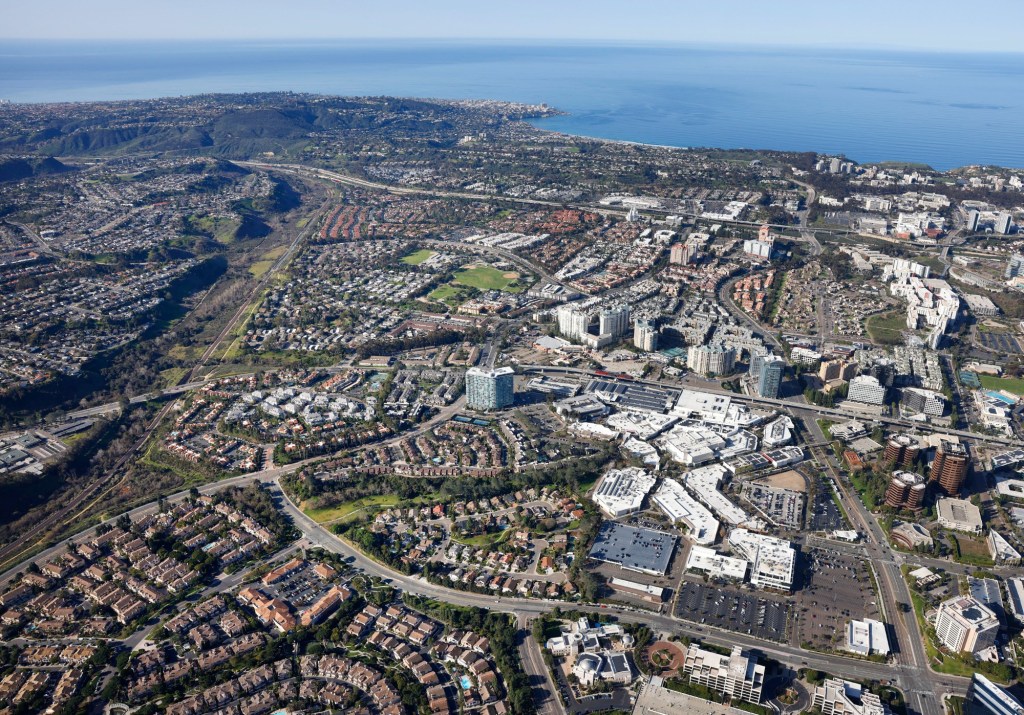
Nowhere is this more evident than Governor Drive, which runs through the single-family neighborhoods of south University City, home to more than 12,000 residents, mostly families with children. With three schools located along Governor Drive, traffic already backs up substantially when parents drop off and pick up their kids.
Additionally, Governor Drive is the single east-west arterial and, in the event of a wildfire or other emergency, the only evacuation route. It only accesses I-805 to the east, Genesee Avenue at the center, and Regents Road, southbound, at the west end.
The entire community lies in a Very High Fire Hazard Severity Zone, completely surrounded by Rose and San Clemente canyons and open space. The city has neglected to clear brush and remove dead oak and sycamore trees from the canyons for many years, posing a heightened risk of wildfire.
Despite this, the city of San Diego has proposed the reduction of Governor Drive from four lanes to two to accommodate bike lanes. The city has delayed this bike lane project for now, citing its limited capacity to implement design changes or facility upgrades as part of the many construction projects already in progress there. District 6 Councilmember Kent Lee supports the project.
If the need for more dense housing development is the real reason why the city of San Diego continues to install poorly planned, underutilized bike lanes, it should do two things: 1) perform more thorough analysis to determine the best location for new bike lanes in concert with dense housing; and 2) be more honest and transparent with residents.
The city just might find that working with residents and listening to their input, rather than deceiving or ignoring them, will result in far better transportation and housing solutions.
Kutch is a founding member of UC Neighbors for Responsible Growth (UC PEEPS) and is a resident of University City.