
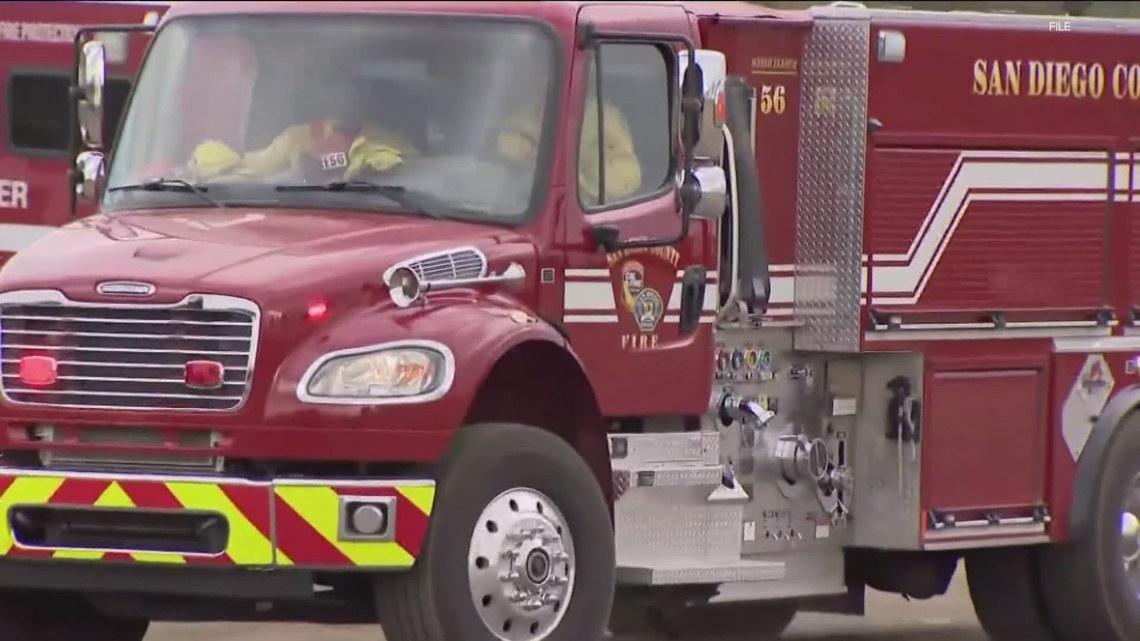
Unseasonably warm weather in San Diego County is raising wildfire concerns, as dry conditions increase the risk of fires.
SAN DIEGO COUNTY, Calif. — Unseasonably warm weather this week is raising concerns among firefighters in San Diego County, as dry conditions increase the risk of wildfires.
Cal Fire and San Diego County Fire officials say higher temperatures can quickly dry out vegetation, creating ideal fuel for fast-moving fires.
“Anytime that that grass dries out, we’re going to see quicker fire growth,” said Cal Fire/San Diego County Fire Captain Mike Cornette. “When we have really green grass, we have really slow-burning fires. When it starts to dry out, that increases the speed and the intensity of the fire.”
Fire crews are already ramping up staffing as they prepare for peak fire season. Cal Fire is asking residents to take extra precautions, including postponing yard work that could involve using lawn mowers over dry grass.
With hotter, drier weather expected to continue through the week, fire agencies say staying alert and making safe choices now can help prevent larger emergencies later in the season.
The National Weather Service has issued a Heat Advisory from Monday to Friday from the coast to the mountains. An Extreme Heat Warning will be in effect for the desert starting Wednesday morning and lasting through Saturday.
For this reason, CBS 8 has called for Weather Impact Alert Days to last through the end of the week.
During extreme heat, the County recommends San Diegans stay hydrated and remain cool. Be sure to limit strenuous outdoor activities, especially midday, and wear lightweight, loose-fitting clothes.
What factors contribute to high fire danger in Southern California?
Dry, warm Santa Ana winds
Santa Ana Winds occur when air from the desert region blows westward toward the California coast. This results in dry air that flows east to west over the mountains and towards the valleys and coast of Southern California. Santa Ana winds typically feel warm because as the cool desert air moves down the side of the mountain, it is compressed, which causes the temperature of the air to rise. We tend to see relative humidity plummet and temperatures soar during offshore wind events like this.
These winds create high fire conditions not only for a fire to start but offshore, Santa Ana winds are the perfect fan needed to allow a fire to explode in size once it starts.
Lack of rain, dry vegetation
The water year restarts every year on October 1 and measures the rain totals for the season through the following September. When rain totals are below average, the vegetation that was once green turns brown and dry and can serve as fuel for wildfires. The saturated ground can help mitigate fire risk substantially, but the opposite tends to elevate our fire risk. The sooner and more frequently we see substantial rainfall, the lower our risk is for a wildfire to start and spread rapidly.
Electrical equipment concerns
When a region is in critical fire danger, power companies tend to shut off power in pre-planned ways in order to prevent electrical equipment from sparking or starting fires. It is also because electric consumption tends to climb with warmer temperatures (usually thanks to A/C needs) and can lead to overall stress on the power grid. When you combine the risk of fire with planned power shut-offs, many school districts will close. Schools can also be used as monitoring sites for fire crews in the event of a fire starting.
Tips to prepare for a Wildfire evacuation
CalFire has built a list of things to have ready in case you and your family are evacuated during any wildfire or disaster.
Ensure your wildfire ‘Go Bag’ includes:
A 3-day supply of non-perishable food & 3 gallons of water per personA map with at least 2 evacuation routesNecessary prescriptions or medicationsA change of clothes & extra eyeglasses/contact lensesExtra car keys, credit cards, cash, or traveler’s checksA first aid kit & sanitation suppliesA flashlight & battery-powered radio with extra batteriesCopies of important documents (birth certificates, passports, etc.)Pet food & water
Always have sturdy shoes and a flashlight near your bed, ready for sudden night evacuations.
If time allows, consider adding:
Valuables that are easy to carryFamily photos and irreplaceable itemsPersonal computer data on hard drives and disksChargers for cell phones and laptops