
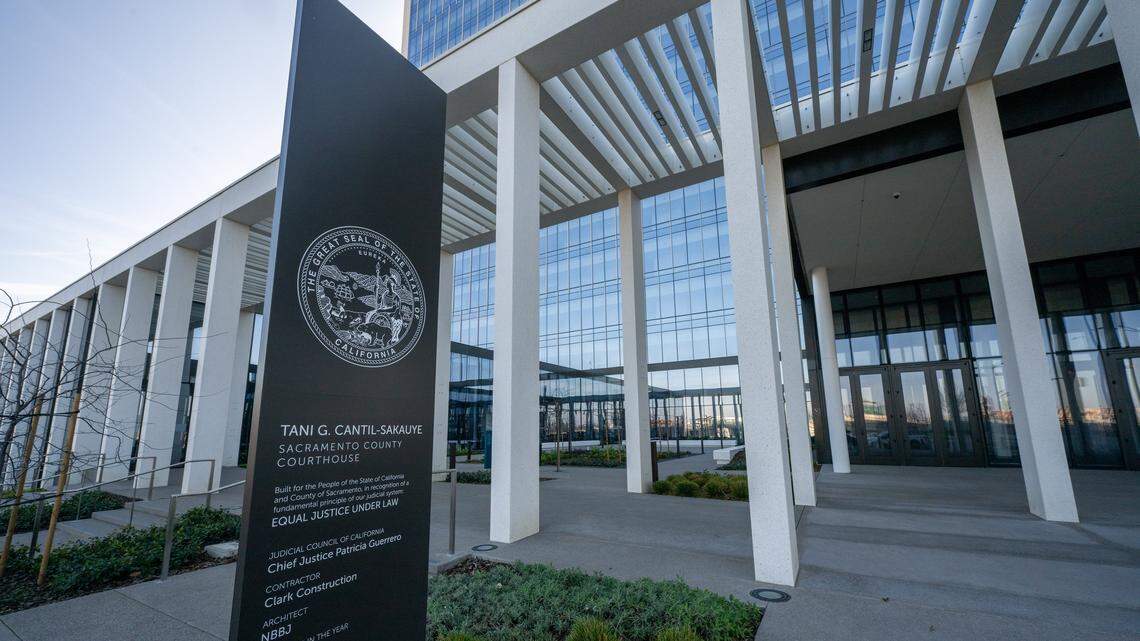
The latest addition to the Sacramento skyline may also be its most anticipated: a gleaming 18-story courthouse with 53 courtrooms and 540,000 square feet of real estate to replace an aging downtown courthouse long regarded as undersized, unsafe, overcrowded and obsolete.
The new Tani G. Cantil-Sakauye Sacramento Courthouse will be fully open in late April and mark a historic new chapter for Sacramento’s courts. The Bee got a look inside the building to see what the move will mean for jurors, justice and the hundreds of people from across the Sacramento region who will visit each day.
“When we christen this come spring, with the Cantil-Sakauye courthouse now alongside the Robert Matsui federal courthouse (at 501 I St.), two powerful symbols of justice will now punctuate our region’s skyline,” said Presiding Sacramento Superior Court Judge Lawrence G. Brown, in a January interview with The Bee at the new site. “This is an understatement to say it is historic for the Sacramento legal community, and the greater community at large.”
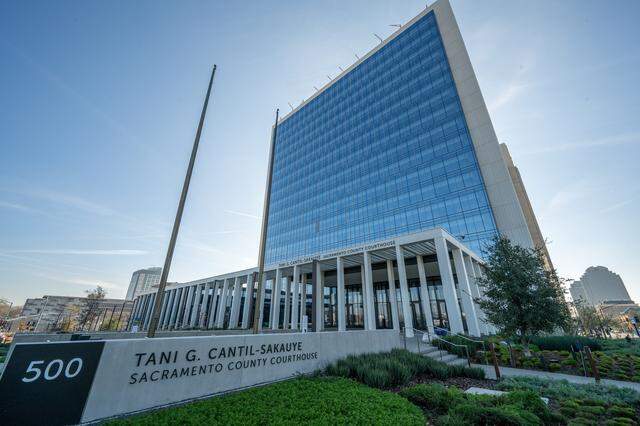 A view of the new Tani G. Cantil-Sakauye Sacramento Courthouse on Jan. 26. RENÉE C. BYER rbyer@sacbee.com ‘A beacon’ of justice for capital region
The $514 million courthouse is named for the retired California chief justice and former Sacramento Superior Court jurist and Sacramento County prosecutor. Now president and CEO of the Public Policy Institute of California, Cantil-Sakauye said in an interview with The Bee that she was humbled by the honor and reflected on what a new courthouse symbolizes for Sacramento.
“I’m speechless. I can’t believe I see my name up there. I’m humbled and floored by it,” Cantil-Sakauye said, calling courthouses “hubs of hope and activity.”
“To have a new courthouse, it’s sort of a beacon for people. It’s a gathering of like-minded people trying to find justice,” Cantil-Sakauye said. “This is for you: a safe, sound place to go and know that they’ll be treated fairly. It’s a very meaningful patch of land for me.”
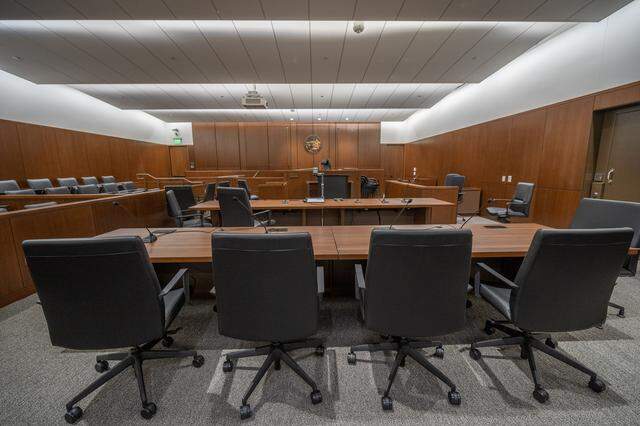 A view of one of the 53 courtrooms inside the new Tani G. Cantil-Sakauye Sacramento Courthouse on Jan. 26. RENÉE C. BYER rbyer@sacbee.com
The new courthouse consolidates court operations previously spread across the main Gordon D. Schaber Courthouse at 720 Ninth St. and the Hall of Justice on Sixth Street, officials said. Larger courtrooms and jury assembly spaces were included in the design.
Inside the new courthouse, from its grand entryway to a 500-seat ground-floor jury assembly room — more than twice the size of the one at the Schaber courts — space and safety dominate.
There are more security screening stations and elevators, as well as more public space for people to move about, larger courtrooms and rooms for jurors to deliberate with views of downtown Sacramento. Separate elevators serve judges and their staffs.
“Just having a larger amount of public space also enhances security,” Brown said. “You won’t have as many people jammed into one spot for the sheriff’s department to have a close eye on what’s happening in hallways or public spaces.”
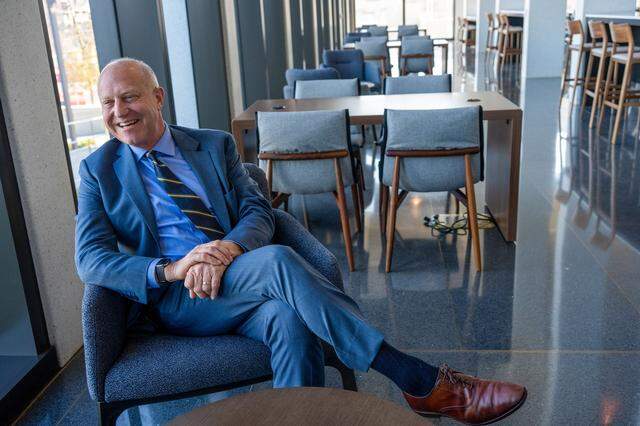 Sacramento Superior Court Presiding Judge Lawrence G. Brown sits on Jan. 26 in a relaxed area where jurors will wait to be summoned at the new Tani G. Cantil-Sakauye Sacramento Courthouse. RENÉE C. BYER rbyer@sacbee.com
Large airport-style digital displays showing court schedules replace stapled paper handouts, and jurors can check in with court staff at digital counters or via QR codes at jury assembly kiosks. Courtrooms are equipped with remote hearing and videoconferencing technology introduced and expanded during the COVID-19 pandemic.
From the floors above its G Street entrance, there are sweeping views of Sacramento’s Railyards and beyond. The courthouse sits amid a hub of development underway there, including a planned soccer stadium and the future home of Sacramento Republic FC.
Outside, gardens of native plants pay homage to the region’s first peoples — the Nisenan and Miwok — and Wanoho Pakan, the ancient lake that was their life source, where today’s courthouse stands at 500 G St.
“It’s at the forefront of everyone’s mind. We want that level of the customer experience to permeate the whole building,” said court executive officer Kelly Sullivan. “We think we’ve done a good job.”
Previous plans to close the courtrooms at the Sacramento County Main Jail on I Street were scrapped because of safety and logistical concerns, court officials said. Sheriff’s corrections and court officials agreed that transporting in-custody defendants from upstairs cells to first-floor jail courtrooms remained the safest and simplest option.
Move will take several weeks
The move from Sacramento Superior Court’s current home two blocks away to the new courthouse will happen in phases beginning in late March, said court spokeswoman Brandy Tuzon Boyd.
The relocation is set to begin March 28, with a phased move allowing court operations to continue while departments and courtrooms shift in stages, she said.
The move will occur over five consecutive weekends:
March 28-30: Initial relocation of select administrative offices and court functionsApril 4-6: Continued transfer of courtrooms and support staffApril 11-13: Completion of civil operations moveApril 18-20 and April 25-27: Final transition of remaining criminal operations
The courthouse is expected to be fully operational, including criminal services, by April 27.
Superior Court officials said public services will be the priority during the transition. Civil trial courtrooms and civil self-help services will relocate during the third week. Criminal trial courtrooms, jury services and the children’s waiting room will move during the fourth week, while high-volume courtrooms will shift during the final phase.
“Our phased transition plan has been designed to ensure that we continue serving the public with minimal disruption throughout this process,” said Court Executive Officer Kelly Sullivan in a statement announcing the plans. “By moving operations in stages, we are able to maintain continuity of court services while thoughtfully transitioning into the new facility.”
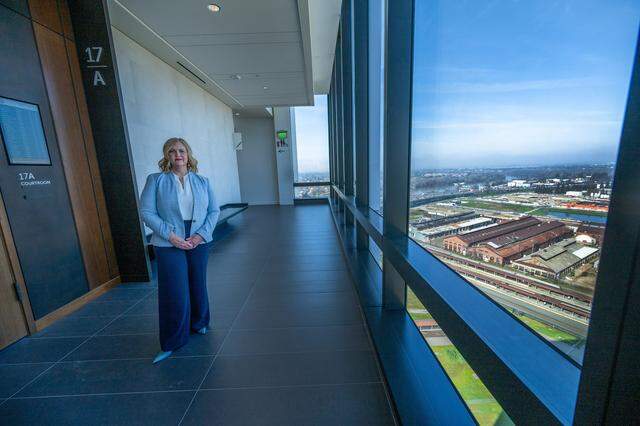 Court Executive Officer Kelly Sullivan stands in the hallway near a courtroom on the 17th floor of the Tani G. Cantil-Sakauye Sacramento Courthouse, with sweeping views of Sacramento’s historic railyard, on Jan. 26. RENÉE C. BYER rbyer@sacbee.com
Sacramento County built the Schaber courthouse — named for the late longtime McGeorge School of Law dean and Sacramento Superior Court judge — in 1965. Its original 22 courtrooms eventually expanded to 44 to accommodate criminal, civil, probate and small claims cases.
The county’s growing population and swelling court caseload forced the district attorney’s, probation and public defender’s offices to vacate 720 Ninth St. in the 1970s and 1980s to make space for additional courtrooms.
Still, as the years passed, the Schaber courthouse proved too small.
“It did not take much convincing to demonstrate the need for a new courthouse in Sacramento. The Schaber courthouse served ably the community for decades, but we simply outgrew it,” Brown, the presiding judge, said. “What had been office space for the district attorney’s office, probation, public defender, all of that, was ultimately consumed by the need to create more courtrooms. Even then, we were busting at the seams.”
In November 2016, then-Sacramento Mayor-elect Darrell Steinberg called conditions at the Schaber courthouse “stark,” adding that “the need for a new courthouse is not anything close to a luxury – it’s a necessity.”
Earlier that year, then-Sacramento Superior Court Judge Lloyd Connelly offered a more colorful assessment: “This is the worst car I’ve ever owned,” Connelly said of downtown Sacramento’s aging Gordon Schaber Courthouse. “I had a ’52 Chevy. It caught on fire. That car was still better than this courthouse.”
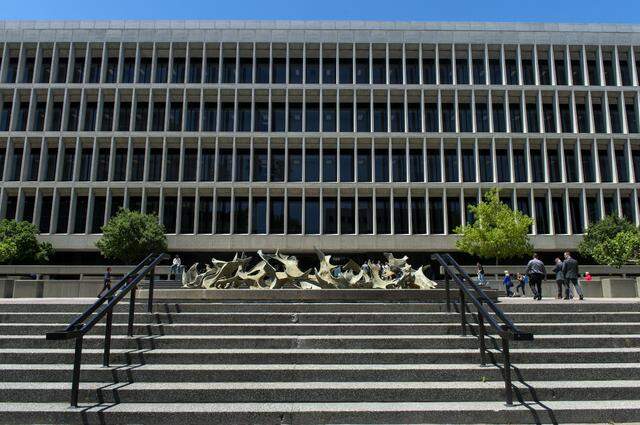 An outside view of the Gordon D. Schaber Courthouse in Sacramento in 2018. RENÉE C. BYER Sacramento Bee file
Brown was there for all of it, having been appointed to the Sacramento bench by Gov. Arnold Schwarzenegger in 2010.
“I think it has been like moving the proverbial rock up the mountain in getting to this day. There’s no ill intent on anyone’s part. Things take as long as they can take. There were difficult budgetary times at the state level. In many ways, we are incredibly fortunate that this project survived,” Brown said. “It reflected strong commitment by members of the court to continue to advocate for this day.”
The Judicial Council of California approved plans for the new courthouse in February 2016. Construction later stalled after years of funding diversions during the state’s budget crisis, when roughly $1.4 billion from the court construction fund was redirected to support the state’s general fund and trial court operations.
Funding was approved in 2018, with construction scheduled to begin in fall 2019, but delays again pushed the project’s start date until crews broke ground in late 2020. The Judicial Council developed and oversaw the project, designed by architecture firm NBBJ, with Clark Construction Group building the courthouse.
With its official opening weeks away, Brown said the new courthouse “will demonstrate respect for those coming into the court.”
“It reflects that we understand that why they are coming to the courthouse is because there is something that truly matters to them, whether it’s their liberty or the liberty of a loved one, whether it is a contract dispute or being evicted from one’s home. All of those things have true significance to persons coming into the court,” Brown said. “I think we are laying a table that reflects regard for those coming to our court.”
This story was originally published March 17, 2026 at 5:00 AM.
CORRECTION: An accompanying photo gallery was updated to correct the spelling of Tracy Batelaan’s name and a description of the civil public counter.
Corrected Mar 17, 2026
Follow More of Our Reporting on Inside Look
Related Stories from Sacramento Bee
.JPG)
The Sacramento Bee
Darrell Smith is a local reporter for The Sacramento Bee. He joined The Bee in 2006 and previously worked at newspapers in Palm Springs, Colorado Springs and Marysville. Smith was born and raised at Beale Air Force Base and lives in Elk Grove.