
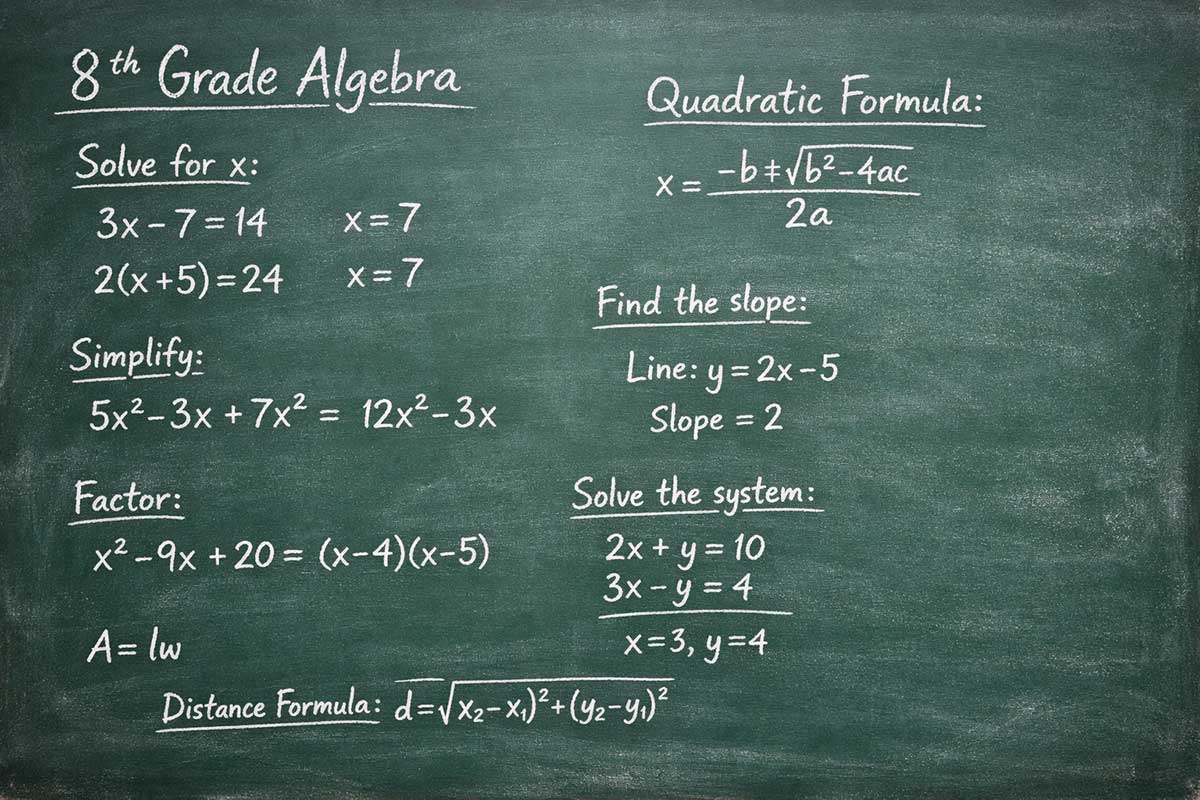
The San Francisco school district just released its latest proposal for providing algebra in eighth grade. Backed by fancy research from Stanford, the school district unveiled a plan that does the exact opposite of what voters want.
That mumbling you hear in the diverse households throughout the city is not “Eureka.” Simply translated, the reaction of many parents is “Are you ef…ing kidding me?”
The school district’s latest foray into the math wars is the result of a voter revolt in 2024.
For more than a decade, San Francisco refused to offer algebra in the eighth grade. Refused. The rationale: Offering courses designed to meet the needs of high-achieving students was not equitable.
By 2024, San Francisco voters had had enough. They overwhelmingly voted that San Francisco schools must offer algebra. Among the arguments in the ballot book:
“[W]e want all of San Francisco’s 8th graders to have access to algebra, just like the vast majority of 8th graders in the Bay Area — without having to take two math classes at the same time or being forced into summer school.”
Ignoring the voters’ mandate, the school district went on its merry way, conducting pilot studies to determine next steps. They brought in the crack Stanford research team to give the research gravitas. Here are the two main questions they researched:
Do kids who are behind in math do well if put into an algebra class?
Do kids who get intensive math instruction do better in math?
I submit you don’t need to be a fancy researcher to answer these simple questions. Ignoring the obvious answers, the researchers subjected kids to these math experiments.
The answer, please: Kids who are not prepared in math do not do well in algebra. Students who get lots of math time do better in math. All hail the findings.
Based on this evidence, the school district is suggesting students do exactly the opposite of what the voters demanded.
SFUSD proposal: Students who want to take algebra in the eighth grade must take two math courses at the same time — eighth grade math and algebra.
What happened to the third alternative that folks voted for: allowing students to take one algebra course in eighth grade? Oh goodness. The district and the crack researchers failed to do a comprehensive pilot study on this obvious issue.
It’s not over until it’s over.
On Tuesday, March 24, the school board will consider the Board Policy on Math Placement and its commitment to offering algebra in the eighth grade.
Related