
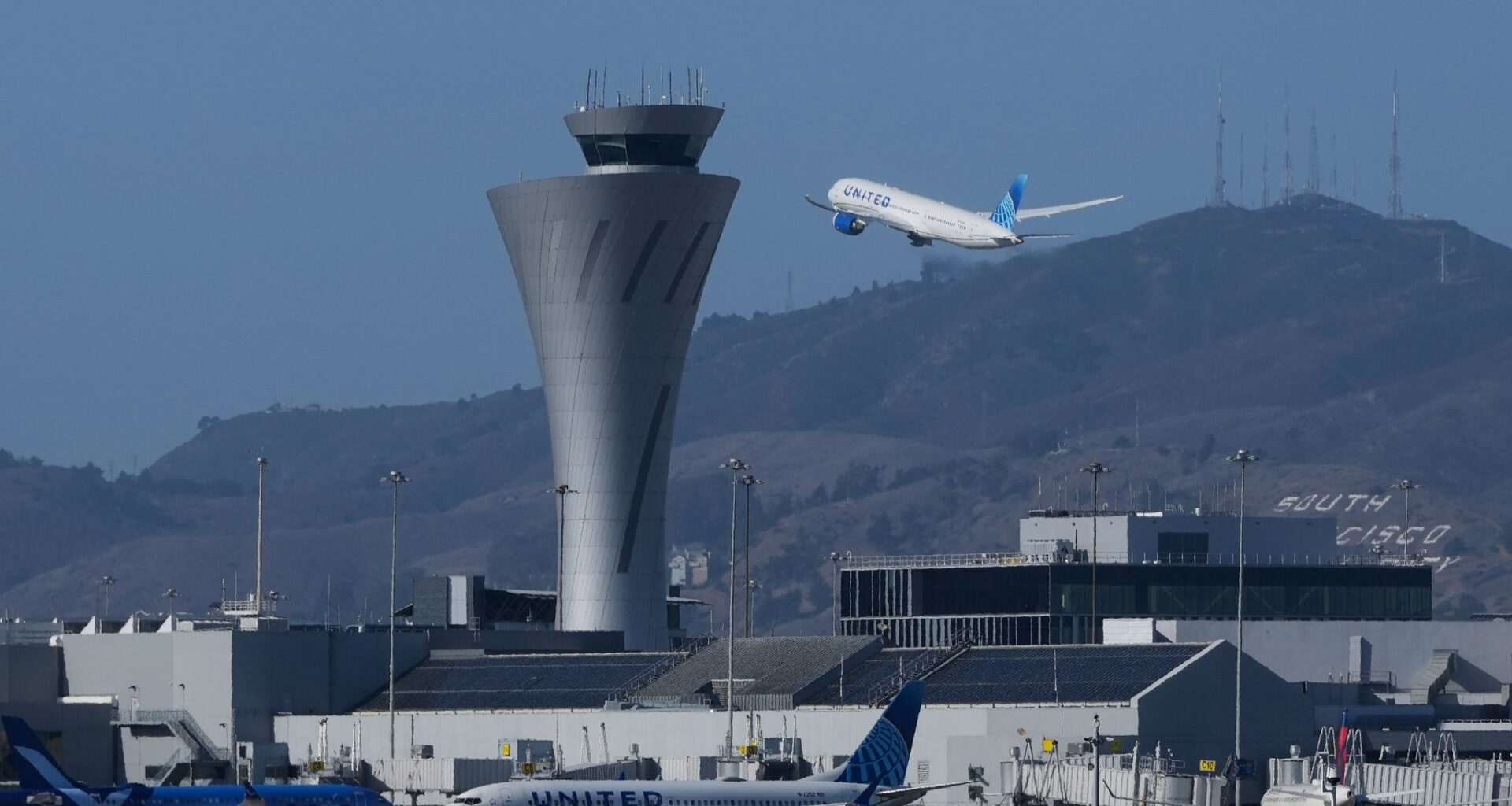
Nine of those airports were in the Bay Area, according to FAA charts.
The FAA defines an “airport surface hot spot” as a place where pilots must use extra caution to avoid mistakes due to “a history or potential risk of collision or runway incursion.”
The FAA does not classify the airports as unsafe. Instead, the agency uses the list to highlight tricky intersections and taxi routes so pilots can plan ahead and reduce risk.
At SFO, the FAA highlighted four locations. In one, pilots taxiing east on Taxiway B sometimes turn onto the wrong path. In another, pilots have been known to miss a turn and cross an active runway. Two additional areas involve confusion about where to stop before crossing runways, particularly where markings may be harder to see.
The FAA did not provide specific examples or a document of when these incidents occurred.
Oakland had three listed areas. In one, pilots can confuse similarly labeled taxiways where they cross a runway. In another, planes leaving the gate area sometimes miss turns and continue toward a runway. A third involves a stretch of taxiway where the risk of entering a runway without clearance is higher.
Representatives for SFO and Oakland did not immediately respond to requests for comment.
Other Bay Area airports on the list included Buchanan Field in Concord, Hayward Executive, Livermore Municipal, Napa County Airport, Mineta San Jose International, Reid-Hillview Airport and Charles M. Schulz-Sonoma County Airport in Santa Rosa.
Nationwide, more than 150 airports appear on the FAA’s hot-spot list, which was created to improve awareness of safety risks.