
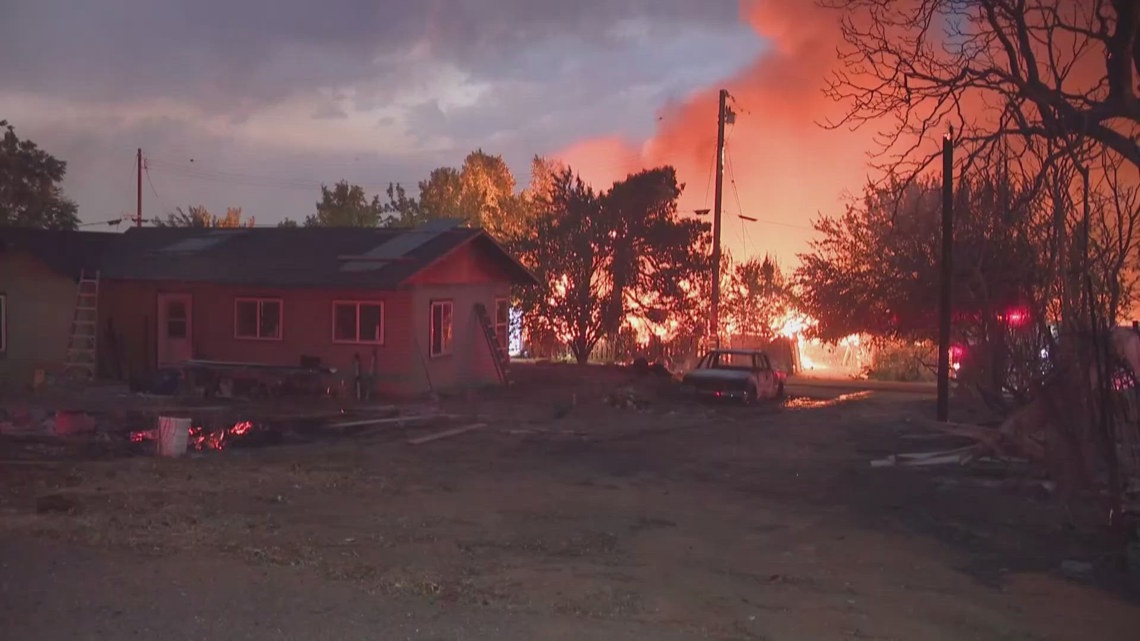
The caucus calls it their “Wildfire Risk Reduction and Insurance Affordability Package.”
SACRAMENTO, Calif. — As a record-breaking mid-March heat wave grips California and much of the western United States, state legislators are renewing focus on wildfire prevention and insurance affordability.
The Senate Republican Caucus on Tuesday introduced a legislative package aimed at reducing wildfire risk and easing the financial burden on homeowners, while calling for bipartisan cooperation.
“California has a problem,” said Republican state Sen. Kelly Seyarto from Murrieta. “This is the luck of the Irish day,” he added, with the press conference being on St. Patrick’s Day. “Our luck has run out.”
The proposals center on expanding wildfire prevention efforts, particularly by encouraging homeowners to create defensible space — a buffer between structures and surrounding vegetation — and invest in fire-resistant upgrades.
“We’d like to work with our Democratic colleagues … to bring real solutions to California,” said state Sen. Marie Alvarado-Gil of Jackson, who led the press conference. Alvarado-Gil said despite simultaneous efforts by Democrats to tackle wildfire, risks, she doesn’t view them as enough.
One of her proposals would provide state income tax credits for homeowners who make fire-safety improvements, such as installing fire-resistant roofs, ember-resistant vents and maintaining defensible space. Additional incentives would support backup power systems, including generators and solar batteries.
Fire officials say such measures can significantly reduce risk.
“That gives us the opportunity to get in and hopefully control the fires and push them around the homes and not burn down,” said Tim Edwards, president of Cal Fire Local 2881.
Edwards also noted the preventing wildfires offers significant health benefits for both residents and first responders who wouldn’t have to manage as much toxic smoke.
“These homes have chemicals in them. Plastics, paints, and we breathe those in everyday.”
Chief Tim Cordero of the El Dorado County Fire Protection District urged residents to act early by clearing vegetation and hardening their homes.
“For our residents, now is the time to act. Clear your defensible space, harden your homes, add backup power,” the chief stated.
Lawmakers say these efforts could also help address California’s growing home insurance crisis, as insurers scale back coverage in high-risk areas.
Major insurers such as State Farm have reduced their footprint in the state, while the California FAIR Plan — considered the insurer of last resort — faces financial strain and is seeking premium increases amid rising demand.
Support for some proposals appears to be bipartisan.
Democratic state Sen. Ben Allen of Pacific Palisades, for instance, is backing two of the proposed GOP measures, including tax credits to help homeowners rebuild after wildfires and a bill requiring state agencies to identify regulations that could be suspended after disasters to speed rebuilding.
“We know we’re in this together. We need to work together,” Allen said.
The state senator also noted the bill by Sen. Seyarto to streamline rebuilding passed the Senate Housing Committee with bipartisan support Tuesday afternoon.
Republicans say that type of faster rebuilding is critical for families impacted by wildfires.
“Wildfires that destroy homes should not be opportunities for anybody but the family needs to be able to rebuild,” Seyarto said.
The proposals come as California faces increasing wildfire risk tied to hotter, drier conditions, with state officials warning that extreme weather events are becoming more frequent.
The office of Gov. Gavin Newsom declined to comment on the specific legislation but said the administration remains focused on wildfire risk reduction efforts, including forest management, and on stabilizing the state’s insurance market.
Still, many homeowners say rising wildfire risk is making it harder to obtain or afford coverage — adding urgency to the debate at the Capitol.
Newsom has often clashed with President Trump over federal funding assistance.
We asked Senate Republicans about that frequent clash, and whether the state is, in fact, awaiting federal assistance.
Alvarado-Gil responded that California needs to look inwards at its own budget and spending.
“Regardless of the FEMA funding at the federal level, we can’t say we’re the fourth largest economy in the world and not take care of our own residents.”
Seyarto also notes he’s excited for the first hearing by the new Senate Emergency Management Committee, for which he is vice chair.
Its purpose, he says, is “to play an important role in reviewing how California prepares for, responds to and recovers from major emergencies.”
WATCH MORE ON ABC10 | California 911 modernization delayed to 2030 after half billion spent
ABC10: Watch, Download, Read