
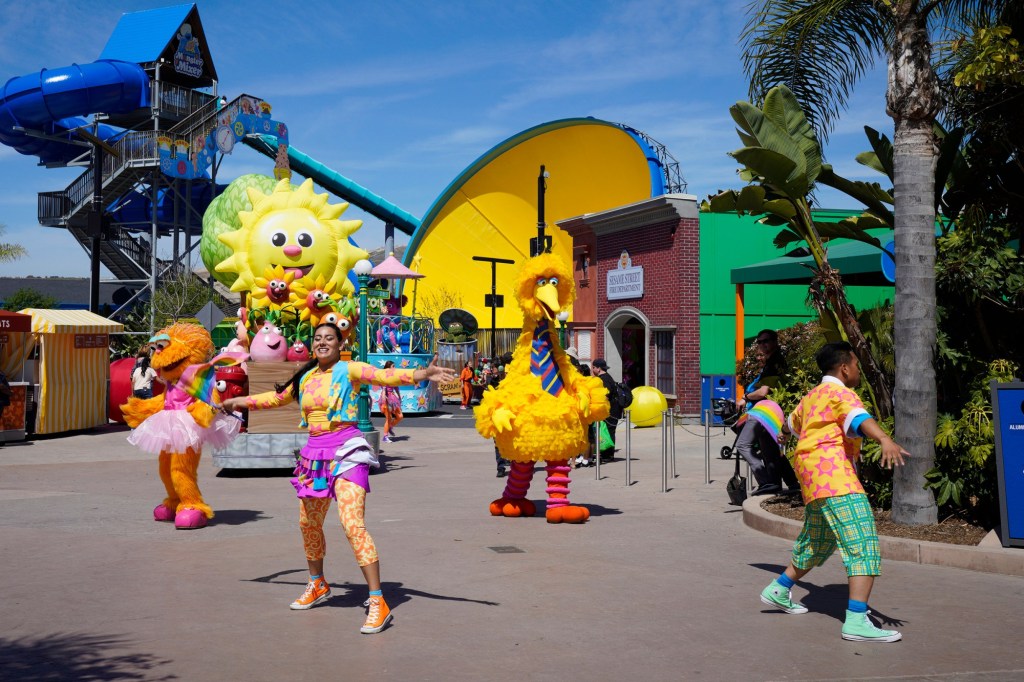
Sesame Workshop, the nonprofit behind the children’s television series “Sesame Street,” is suing SeaWorld in a move to sever their decades-long relationship, alleging that the theme park company has repeatedly failed to honor its contractual obligations.
The lawsuit, filed last week in U.S. District Court in New York against SeaWorld parent company United Parks & Resort, cites a long list of grievances, among them failure to pay millions of dollars in royalties and the company’s “abrupt” closure last year of SeaWorld’s sister park, Sesame Place in Chula Vista, during the fall and winter months. Up until then, it had always been a year-round park.
In a little less than a week, the Sesame Street-themed water park is scheduled to reopen for the spring and summer season following its monthslong closure. In a statement provided to the Union-Tribune, SeaWorld sought to reassure its guests that the park will open as planned. Sesame Place opened in 2022 following a major transformation of the former Aquatica San Diego.
“We are aware of the lawsuit filed by Sesame Workshop and look forward to setting the record straight in court,” the company said. “In the meantime, we welcomed guests to the opening of our Sesame Place park in Langhorne, Pennsylvania, on Saturday, March 14, and will welcome guests to the opening of our Sesame Place park in Chula Vista, California, on Friday, March 27 … We are looking forward to a great year at our Sesame Place parks.”
While SeaWorld has been Sesame Workshop’s exclusive U.S. theme park license for more than 45 years, the relationship began to deteriorate amid claims that the amusement park company was failing to pay required royalties. Arbitration and legal maneuvering in a separate action by Sesame Workshop ultimately resulted in a federal court ruling in 2024 that SeaWorld pay it $11 million — including interest and fees — for the licensing of the Sesame Place park in Pennsylvania. It wasn’t until a year later, though, that Sesame Workshop finally received its money via yet another court action.
A final straw, says Sesame Workshop, was when SeaWorld sent a letter to Sesame Workshop claiming that the nonprofit had violated the licensing agreement by failing to invest in its brand. It called the claim preposterous, noting that months earlier it had secured a deal to air its Sesame Street shows on Netflix.
“For months, SeaWorld has benefitted from using Sesame Workshop’s valuable IP without complying with the Agreement,” Sesame Workshop alleges in the lawsuit. “SeaWorld is also tarnishing the reputation of Sesame Workshop’s brand through abruptly closing a beloved standalone park and Sesame Street themed attraction, disappointing children and families who already made plans to visit, and sending unapproved marketing materials using Sesame Workshop’s name, characters, and IP.”
In a statement emailed to the Union-Tribune, Sesame Workshop said that despite the long partnership between the two entities, it had no choice but to take SeaWorld’s parent company to court. The original licensing agreement dates back to 1983 and it was most recently renewed in 2017.
“SeaWorld’s actions have harmed Sesame Workshop, wrongfully withholding royalty payments that are vital to supporting our charitable mission and undermining our ability to oversee SeaWorld’s use of our beloved characters and brand. While we did not want to end a partnership that has spanned 45 years, we have regrettably determined that the termination of our agreement is the only path forward.”
While the potential local impact of the legal dispute is largely confined to the Sesame Place park, until a few years ago, the SeaWorld marine park had an area known as Sesame Street Bay of Play. That was replaced with a new attraction called Rescue Jr.
The legal tussle between the two high-profile brands has striking similarities to a long-running fight between SeaWorld and the city of San Diego, which sought for years to recoup unpaid back rent for the park’s leased location during the pandemic, when theme parks shut down temporarily. The city ultimately filed suit and secured a settlement in 2024 requiring SeaWorld to pay the city $8.5 million. The agreement was reached just three months after the court ruling against SeaWorld in the Sesame Place royalties lawsuit.
SeaWorld’s latest legal dispute comes at a time when Orlando-based United Parks & Resorts is still struggling to return to the attendance highs it set prior to the pandemic.
In its most recent earnings report, attendance at its portfolio of parks last year was 21.2 million, a 1.8% decline compared to 2024. Total revenue for the year was $1.7 billion, a drop of 3.6%, and net income was $168.4 million, a decline of 26%.
The current portfolio of parks reached its peak attendance in 2008, when more than 25 million visitors passed through park turnstiles. SeaWorld later lost considerable ground following the release in 2012 of the anti-captivity film “Blackfish.”