

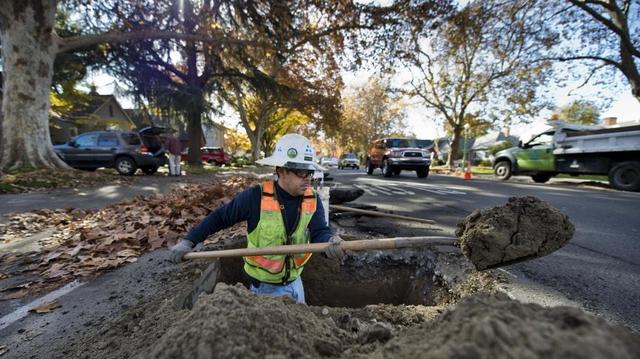
A worker digs a hole in Land Park as part of a water main replacement project in 2014.
MANNY CRISOSTOMO
Sacramento Bee file
Sacramento residents could see higher utility fees as the city grapples with aging infrastructure that requires a $2.2 billion upgrade.
The city’s utility department has not increased rates in eight years. During this time, Sacramento faced an increase in state regulations and soaring costs for supplies and labor, said Daila Fadl, the director for the city’s utility department. The city also opted to forgo rate hikes as the COVID-19 pandemic caused financial stress and uncertainty, she said.
“If there is any take-home message, it’s that we need the rate increase for water and wastewater,” Fadl said during Tuesday’s City Council meeting.
Fadl’s remarks came as each city department presented potential cost-savings measures to help balance a $66 million budget deficit. The council has heard wide-ranging strategies to cut vacancies, programs and other methods to save money throughout its March meetings. A final budget is scheduled to be adopted by June.
Scouring the city’s utility budget to make cuts has proved challenging, Fadl said, as the department contends with insufficient revenueto replace pipes, upgrade treatment facilities and control flooding.
“I should say it was very difficult and challenging to make these reductions because that meant we had to either defer, delay or put on hold some critical projects and programs for the department,” Fadl said.
The utilities department divides fees into three different service funds: water, wastewater and drainage. Expenditures soared above revenues for both the water and wastewater budgets. In 2026, the water budget’s expenses exceeded revenue by $30 million.
For the wastewater budget, expenses exceeded revenue by $4.5 million and the deficit is projected to increase to $11.4 million for this year, according to the department.
The city’s department of utilities serves a vital — and at times unseen — role in managing Sacramento’s water. It maintains 14,000 fire hydrants and must update the city’s sewage systems to cope with record-breaking atmospheric river storms.
“It should also be obvious that keeping wastewater and sewage away from homes and businesses is important to public health and gives people comfort knowing they can flush the toilet — and it will get flushed,” she said.
Fadl said the city has begun the planning process to increase rates and finalize a rate study. The city is hoping to keep those rate increases as affordable as possible, she said.
Despite the city’s budget gap and revenue shortfall, the department will make a $70 million investment this year through its capital improvement program, she said.
“Deferred maintenance is not just an accounting term,” she said. “It means higher risk of failure, higher costs when things break unexpectedly and fewer options over time. If we wait, it gets more expensive and more destructive.”
Related Stories from Sacramento Bee

The Sacramento Bee
Ishani Desai is a government watchdog reporter for The Sacramento Bee. She previously covered crime and courts for The Bakersfield Californian.