
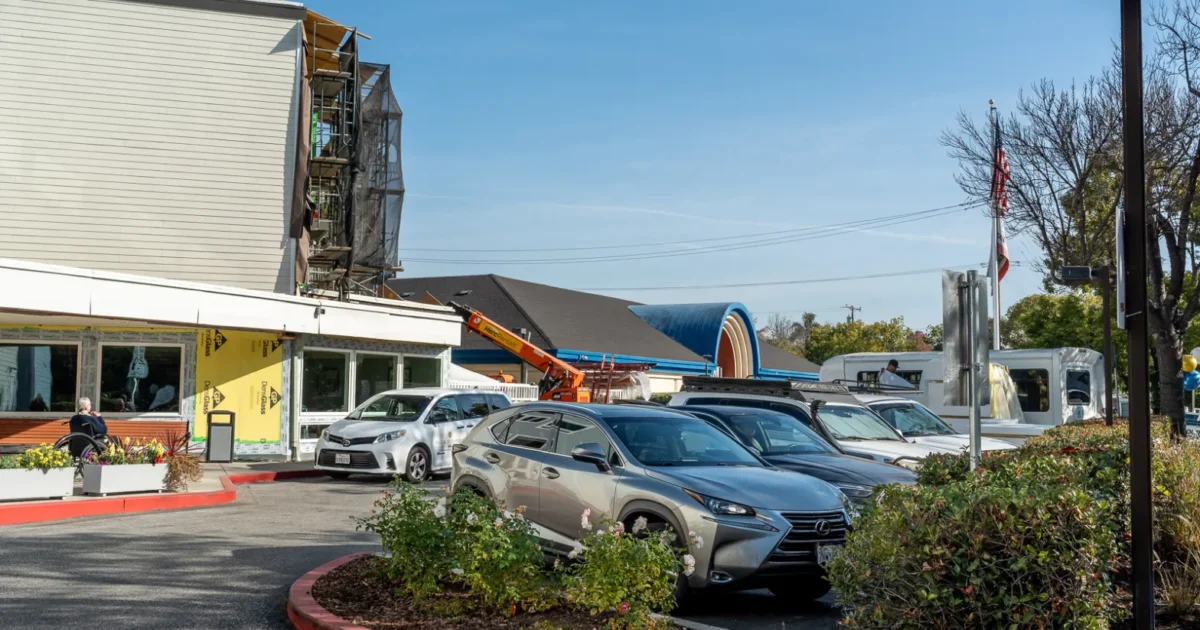
Neighbors who live on Wilkie Way succeeded Monday in urging the Palo Alto City Council to limit the expansion of an assisted living facility that faces their backyards, a vote that settled a yearslong dispute between residents and the owners of Palo Alto Commons over privacy and parking.
The city council signed off on seven additional homes for the Ventura facility, which currently operates 121 homes at 4075 El Camino Way, as opposed to the developer’s most recent proposal of 11 homes. Over the past several years, the expansion of Palo Alto Commons has been whittled down from 16 homes to seven in the course of numerous public hearings. The project from WellQuest Living, which operates Palo Alto Commons, went before the city’s Planning and Transportation Commission four times, and the most recent vote in September recommended seven homes over the 13-home plans at the time.
Chief among resident concerns are parking availability, privacy and backyard sunlight. Multiple neighbors testified at Monday’s meeting that street parking is constantly overcrowded with visitors and staff at Palo Alto Commons who don’t have room on site. The developers, in the newest proposal, conceded they have implemented valet parking to pack more cars in the garage, as well as updated guidance for staff and visitors.
The city also plans to ramp up enforcement on the street for violators and implement a transportation management plan to encourage alternatives to cars — but these measures were not enough to sway the dozens of neighbors who spoke out against the expansion.
“I suspect that they would stop their current parking concessions the moment that they finish construction or try to save money in the future,” Wilkie Way resident James Cham said.
Cham and others told the council the seven homes recommended by the planning commission represented an appropriate compromise. Other residents suggested the Commons expansion was a for-profit endeavor and characterized the plans as an effort to make more money at the expense of those living on Wilkie Way.
The council has previously reviewed the project and struggled to reconcile WellQuest’s plans with neighborhood opposition. Based on its prior feedback, WellQuest reduced the home count and changed the design to eliminate third-story homes. Yet councilmembers remained concerned on Monday that the company hasn’t done enough to protect privacy and preserve daylight for residents of Wilkie Way, which is made up of single-story homes.
For example, the council previously asked the developers to consider expanding on the El Camino Real side of the building to avoid the bulk of neighborhood concerns, but WellQuest failed to do so, saying it would be too expensive.
Many residents said they liked the idea of expanding senior housing, but suggested under the 11-home proposal, the impacts to their properties would be too great to support this particular expansion.
“I am also a senior, so I am not against this project for senior housing. What I’m against (is that) Palo Alto Commons tried to save money to build on the Wilkie side,” Wilkie Way resident Mona He said. “It’s all about money.”
Planning Director Jonathan Lait also conceded that even with the parking enforcement operation, the city may still fail to meet the expectations of Wilkie Way residents.
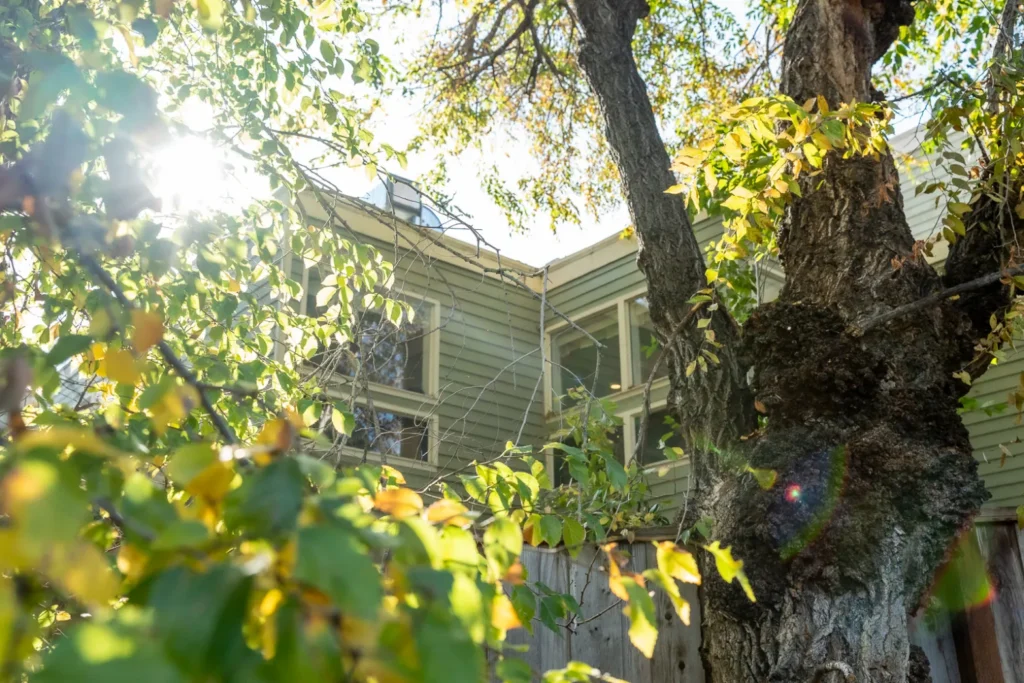 Some residents of Wilkie Way in Palo Alto have planted trees to add privacy from Palo Alto Commons, which has windows facing their backyards. Photo by Anna Hoch-Kenney.
Neighbors also expressed concern about privacy in their backyards, saying that additional homes proposed on the upper floor would allow Palo Alto Commons patients and visitors to peer into their property. Tied up in the privacy issue is the concern about additional shadows from the taller structure, which some residents said could limit gardening and other backyard activities.
In response, the developers removed all third-story homes from the plans and angled the ones proposed for the second floor to avoid direct lines of sight with Wilkie Way homes. WellQuest has maintained that seven homes would not be financially viable at the site.
“It is a large building, we understand that it backs on residential properties, but it’s not a new large building, and we’re not really proposing anything that makes it significantly more imposing to our neighbors,” Steve Sandholtz, president of WellQuest, said.
Again, these concessions were not convincing.
At the root of the issue, Councilmember Ed Lauing said, was a lack of trust. He referred to the fact that Palo Alto Commons inked a deal with Wilkie Way residents in 1987 stating there would be no expansion of the building. Resident Jennie Chan said that after the deal and construction of the building, the assumption by neighbors was that the existing structure was “as bad as it could get” — and that at the very least, issues related to building mass, privacy and parking would not get any worse.
“The deal hasn’t changed, and yet 50 neighbors are here to tell us that they are willing to compromise again and live peaceably, and I think that’s what we should do,” Lauing said.
Despite the testimony of about three dozen residents, some members of the council appeared amenable to the 11-home proposal at first. Councilmember George Lu said the expansion and associated home increase is not unusual for recent projects in Palo Alto. WellQuest characterized the pushback against this particular proposal as biased against the senior population for the same reason.
Councilmember Pat Burt said the parking enforcement is more important than the difference between seven and 11 homes. He also pointed to other projects that the council had recently approved in recent years as part of its push to add housing, some of which include hundreds of new homes. These developments, he said, would have far greater impacts on their immediate neighborhoods than the Palo Alto Commons expansion.
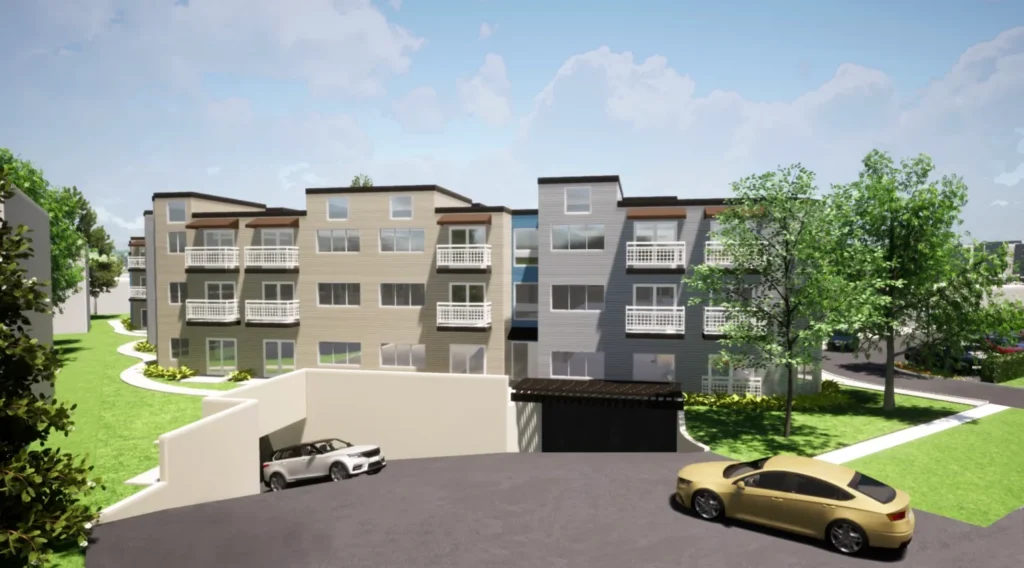 WellQuest, the operator of Palo Alto Commons, reduced the proposed expansion from 16 to 11 homes. Rendering courtesy of Irwin Partners Architects and Palo Alto.
Councilmember Keith Reckdahl — and eventually, the rest of the dais — felt differently.
“The incremental community benefit for those last four (homes) is negligible, but the impact to the immediate neighbors is significant,” he said.
The motion from Vice Mayor Greer Stone directed WellQuest to only build seven internal homes, as recommended by the planning commission, and includes caveats for parking mitigation and enforcement.
The years of public outcry over the expansion, combined with the breach of trust described by neighbors, successfully convinced the entire council to vote to reduce the home count once again.
“It does speak to whether this applicant wants to do what it wants to do, or whether it will be, this time around, a better partner with the city and with the neighbors going forward,” Councilmember Julie Lythcott-Haims said.
This story originally appeared in Palo Alto Weekly. Riley Cooke is a reporter at Palo Alto Weekly and Palo Alto Online focusing on city government.