

Data Shows Percentage of Students in Poverty Across Oakland County School Districts
(Kurt Metzger, March 17, 2026)
Oakland County, MI – Every year the Census Bureau releases what they call their Small Area Income and Poverty Estimates for states, counties and school districts. These estimates provide the only single-year income and poverty statistics for the nation’s 3,143 counties and 13,126 school districts.
While I plan to look at the state and county data in more detail, I wanted to start with the school district file and look specifically at school districts in Oakland County.
Chart 1 ranks school districts by the percentage of children 5-17 years of age in families who are below the poverty level.
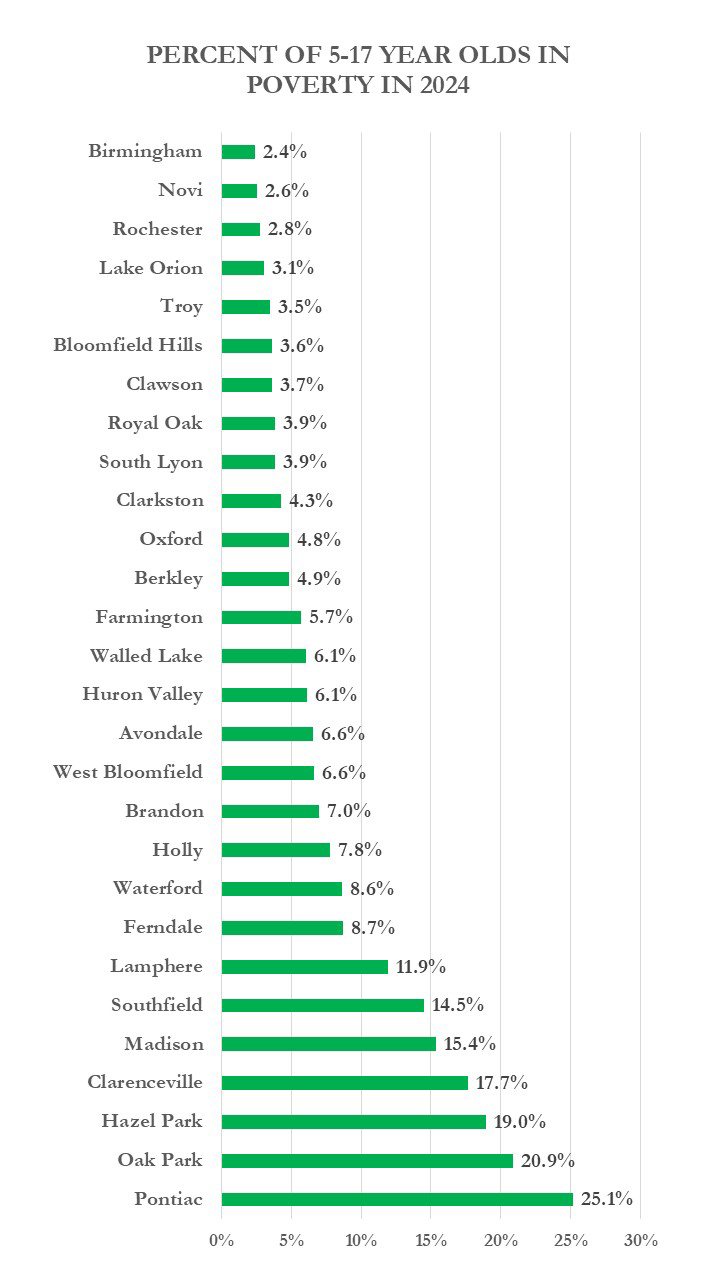 The lowest levels of poverty, less than 3 percent, were recorded in the districts of Birmingham, Novi, and Rochester. On the high end, with poverty rates of 19 percent or more, were Hazel Park, Oak Park, and Pontiac.
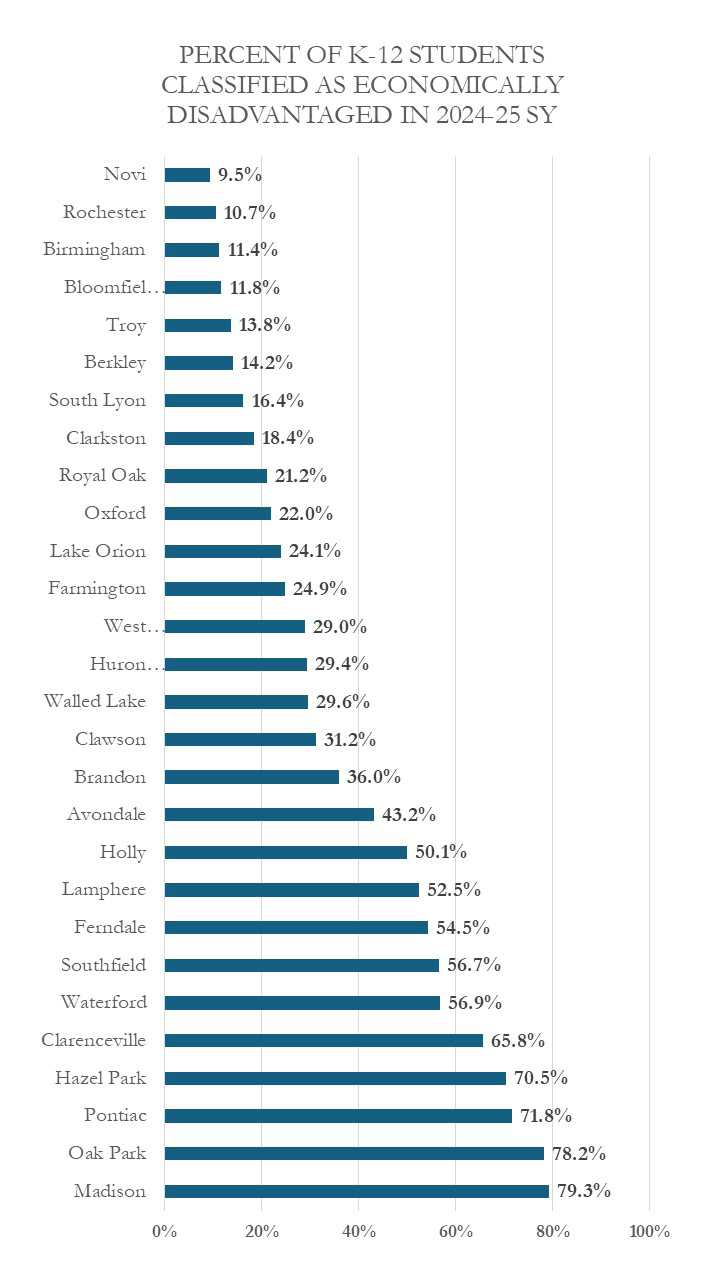
The second chart looks at the percent of children in each district who are considered “economically disadvantaged.”
 This designation accounts for more than just poverty. Economically disadvantaged students include those who have been determined to be eligible for free or reduced-price meals via locally gathered and approved family applications under the National School Lunch program, are in households receiving food (Supplemental Nutrition Assistance Program) or cash (Temporary Assistance to Needy Families) assistance, are homeless, are migrant, are in foster care, or, beginning in 2017-18, certain Medicaid eligible children. When any of these conditions are present, a student is considered economically disadvantaged.
While the general rank of districts stays similar, the student percentages have increased across the board. We must remember that, while the demographics of an area (school district boundaries) certainly influence the demographics of the students attending schools in that area, the availability of open enrollment to other districts, as well as charter, private and religious schools, has a large influence on the eventually K-12 student body.
The districts with the lowest shares of economically disadvantaged students were Birmingham, Novi and Rochester again, but student shares tripled from those of poverty. Ten of the 28 districts had rates of 50 percent or more, with the four highest (all above 70 percent) were Hazel Park, Pontiac, Oak Park, and Madison.
As the data reveals, significant disparities exist in Oakland County’s school districts, with some areas facing high concentrations of poverty and economic disadvantage. These numbers aren’t just statistics. They represent real students, families, and communities struggling to access resources and opportunities.
As communities look at this data, they might also consider what potential solutions could be for making sure that all students have access to quality education, and the support to get the most they can out of it.
For more stories about the Census and other interesting numbers, visit the Data-Based Stories Archives on Oakland County Times. Thanks to Data Expert Kurt Metzger for this work!






 Save this post to PDF
 Print this post