
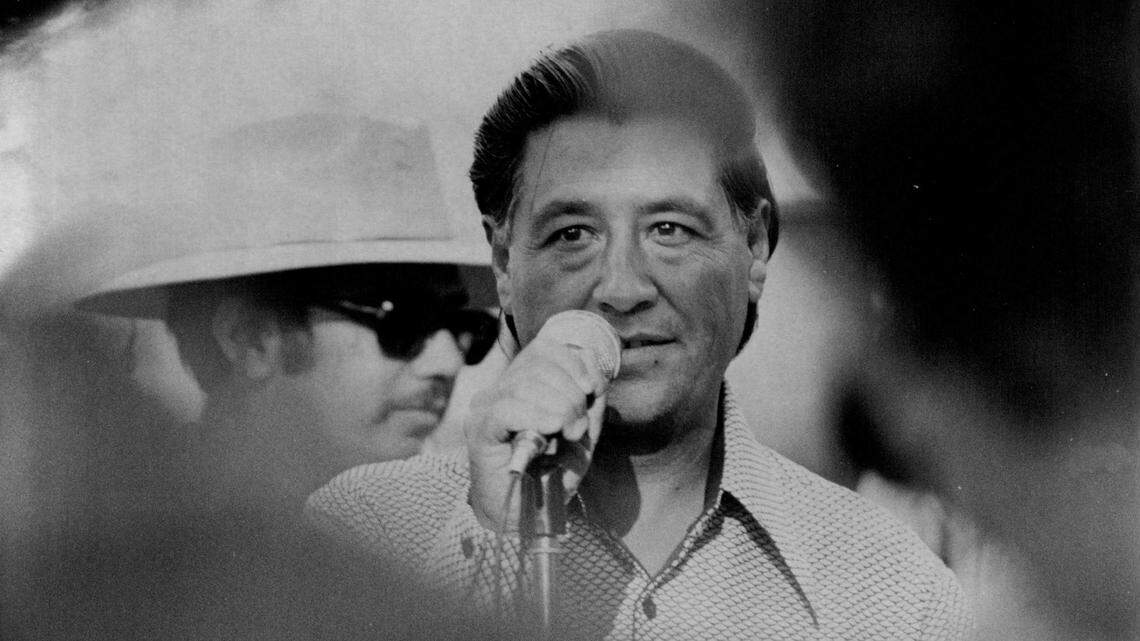
Labor leader Cesar Chavez speaks about a potential grape strike in Lodi on July 22, 1973.
SKIP SHUMAN
Sacramento Bee file
In a reversal of their decision Tuesday, Sacramento labor organizers are canceling the city’s annual Cesar Chavez march.
The decision is yet more fallout from the allegations that Chavez, one of the nation’s most storied labor leaders and a civil rights icon, had sexually abused women and girls for years. The New York Times published the report on Chavez on Wednesday after rumors of an upcoming investigation surfaced earlier in the week.
The findings have led to a swift and damning condemnation of Chavez across the country, with many cities, leaders and communities cutting ties or distancing themselves from the Chicano leader. Chavez, who was revered for decades for organizing farmworkers and highlighting their struggles, has dozens of parks, schools, streets and events named after him. Many of those will be renamed.
In Sacramento, Mayor Kevin McCarty has already appointed a subcommittee to guide renaming the downtown park named after Chavez in 1997. California Gov. Gavin Newsom said that he’d be open to changing the March 31 state holiday honoring Chavez’s birthday.
The Sacramento Cesar Chavez March Coalition, which consists of several labor groups, said Wednesday night that the city’s 24th annual Cesar Chavez march would be canceled as well. The decision is a reversal from Tuesday, when the coalition said it would move forward with the march and cited its longstanding focus on immigrant and worker rights, not Chavez.
Organizer Carlos Padilla said the coalition had since met and discussed the “horrific instances” of sexual harm that had surfaced. Details of Chavez’s actions, including the sexual assault of two minors and Dolores Huerta, co-founder of the United Farm Workers labor union, were not known until Wednesday.
“I think I can speak for everyone that these appalling acts against women and children cannot be ignored or swept under the rug,” Padilla said Wednesday night.
Padilla encouraged those still wanting to participate in activism to attend the “No Kings” protest at the state Capitol on March 28. He also said the coalition would redirect its focus to the “Day Without An Immigrant” event on May 1 and next year’s International Women’s Day.
“Our coalition is committed to fight for the rights of workers, immigrant communities, women and all of the oppressed,” Padilla said.
Among The Times’ findings are that Chavez repeatedly abused one woman for four years, starting when she was 13 and he was 45. Another woman said Chavez fondled her breasts when she was 12 and raped her in a hotel room when she was 15.
Huerta said Chavez, who died in 1993, pressured her into two sexual encounters in 1960 and 1966. Those led to the birth of two children; she gave them to other families to raise. Huerta said she never told anyone about Chavez’s abuse, including her family, until a few weeks ago.
“I am nearly 96 years old, and for the last 60 years have kept a secret because I believed that exposing the truth would hurt the farmworker movement I have spent my entire life fighting for,” she said in a statement. “I carried this secret for as long as I did because building the movement and securing farmworker rights was my life’s work.”
Related Stories from Sacramento Bee

The Sacramento Bee
Mathew Miranda is a political reporter for The Sacramento Bee’s Capitol Bureau, covering how decisions in Washington, D.C., affect the lives of Californians. He is a proud son of Salvadoran immigrants and earned degrees from Chico State and UC Berkeley.