
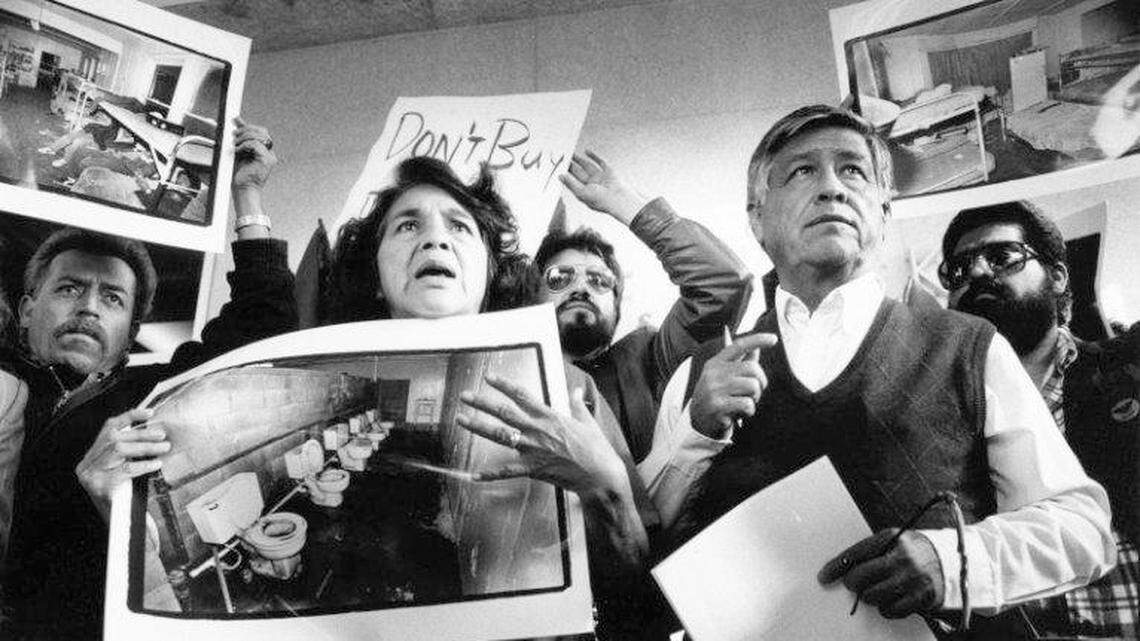
Every year, the end of March marks a celebration of farmworker activist Cesar Chavez.
During this milestone year for the United Farm Workers Union, the holiday has been embroiled in a major controversy. But who was Chavez, and why is he celebrated at the end of March?
Here’s what to know, as well as why the United Farm Workers union is distancing itself from the civil rights icon.
If you have experienced sexual assault and need someone to talk to, call the National Sexual Assault Hotline for support at 1-800-656-4673 or visit the hotline’s online chatroom.
What was Cesar Chavez famous for?
Chavez was a prominent figure in the Latino and Chicano civil rights movement starting in the 1960s.
The manual laborer turned community organizer helped establish the National Farm Workers Association in 1962, which grew over more than six decades into the United Farm Workers, the largest and longest-lasting agricultural workers union in the nation.
Chavez worked with activists like Dolores Huerta to rally farmworkers across the California Central Valley, and later the entire U.S., to fight for better wages and working conditions.
March 2026 marks the 60th anniversary of the famous march from Delano to Sacramento, where farmworkers set off on foot from the Kern County city of Delano bound for the state Capitol.
For nearly a month, the National Farm Workers Association and its supporters marched north through the Central Valley to fight for labor rights. The march ended in Sacramento on April 10, 1966. The union secured its first-ever contract as a result of the march and various boycotts.
Taking inspiration from nonviolent protests promoted by Mahatma Gandhi and Martin Luther King Jr., Chavez continued his advocacy work with strikes, hunger strikes, boycotts and marches. In 1975, the workers’ union, now called United Farm Workers, secured the passage of the California Agricultural Labor Relations Act, which gave California farmworkers the right to unionize.
Chavez died in 1993 while still fighting for workers’ rights. President Bill Clinton posthumously awarded the activist the nation’s highest civilian honor, the Medal of Freedom, the following year.
In the decades since, Chavez has remained an icon of Latino civil rights and labor rights, revered across the nation. California honors Cesar Chavez Day as a state holiday annually on Chavez’s birthday, March 31. The day is not a federally observed holiday, but was recognized as a commemorative holiday in 2014 following a proclamation by President Barack Obama.
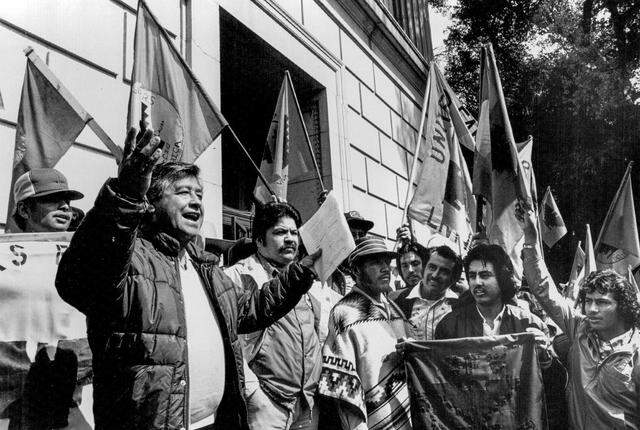 Labor leader Cesar Chavez, joined by UFW members, speaks in Sacramento in front of State Office Building No. 1 in March 1983. SKIP SHUMAN Sacramento Bee file What are the allegations against Cesar Chavez?
The United Farm Workers union released a statement on Tuesday, March 17, saying it would not take part in any Cesar Chavez Day activities after “deeply troubling allegations” were discovered.
According to the statement, there were “serious” reports of Chavez abusing young women and children during his time leading United Farm Workers. The New York Times published an investigation Wednesday morning, sharing the stories of multiple women who said Chavez sexually assaulted them when they were teenagers participating in the labor rights movement, and he was in his 40s.
Huerta herself alleged Chavez raped her in 1966, according to the investigation. The civil rights leader claimed Chavez fathered two of her children, who were raised by others after Huerta hid both pregnancies.
 United Farm Workers leaders Dolores Huerta and Cesar Chavez display photos of the conditions that farmworkers endure in San Joaquin Valley farm labor camps at a news conference outside U.S. District Court in Fresno in 1989. RICHARD DARBY Fresno Bee file
“Cesar’s actions do not diminish the permanent improvements achieved for farmworkers with the help of thousands of people,” Huerta said in a statement. “We must continue to engage and support our community, which needs advocacy and activism now more than ever.”
The farmworkers’ union Chavez founded more than 60 years ago urged supporters to instead focus their efforts on immigration justice events and acts of service to help farmworkers and members of marginalized communities in their area.
“These allegations have been profoundly shocking,” United Farm Workers said in a statement. “We need some time to get this right, including to ensure robust, trauma-informed services are available to those who may need it.”
On Saturday, March 28, union workers plan to host the 24th annual Sacramento Cesar Chavez March starting in downtown Sacramento.
Following the allegations’ emergence, the Sacramento march was still scheduled to go on as of Wednesday morning. Organizers said they would meet to consider a possible “rebrand,” according to previous Bee reporting.
“We never romanticized the idea of Chavez,” Sacramento Cesar Chavez March organizer Francisco Garcia told The Bee. “We honored the work that he did in the past with the farmworkers, but we were more about today, more about the struggle of our people.”
Loading…
The National Sexual Assault Hotline provides confidential assistance to anyone affected by sexual assault through a live chat and a free 24-hour hotline: 800-656-4673.
This story was originally published March 18, 2026 at 10:29 AM.
Related Stories from Sacramento Bee
The Sacramento Bee
Camila Pedrosa is a service journalism reporter at The Sacramento Bee. She previously worked as a summer reporting intern for The Bee and reported in Phoenix and Washington, D.C. She graduated from Arizona State University with a master’s degree in mass communication.