
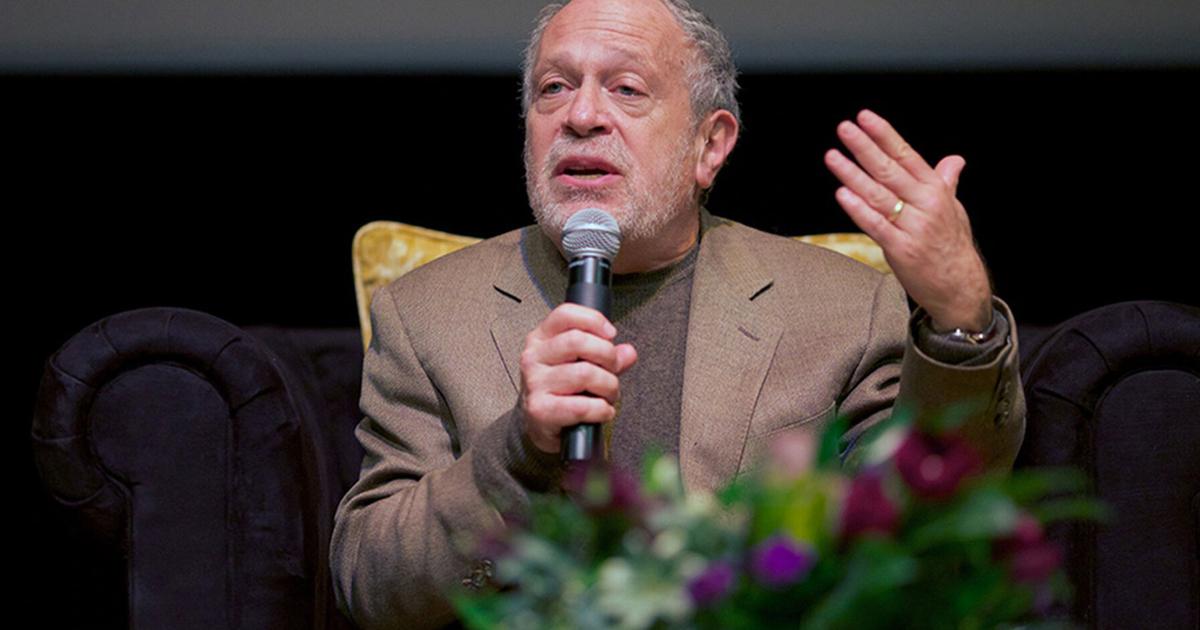
As it bids its UC Berkeley years farewell, the class of 2026 will see a familiar face at Memorial Stadium — public policy professor emeritus Robert Reich was announced as this year’s undergraduate campuswide commencement speaker Tuesday.
Reich, who has served in three national administrations and has stayed involved in politics ever since, captured the hearts of undergraduates on campus until his last lecture in the spring of 2023.
Reich said, although he doesn’t often accept invitations to speak, he couldn’t turn down the opportunity to do so at commencement, calling it “a wonderful honor.”
“I can’t say it more simply than that I love Berkeley,” Reich said. “I think it’s … the best university, period. The students are extraordinary. The faculty is wonderfully thoughtful and productive, with great teachers. And I think it’s the most powerful engine of upward mobility in America.”
Reich has a storied past at UC Berkeley, beginning long before his first lecture: In the 1960s, he served his first stint on campus as a research assistant to Sim Van der Ryn, professor emeritus of architecture.
Still, Reich said, he had limited experience with UC Berkeley before beginning as a visiting professor at the Goldman School of Public Policy in 2004, a position that became permanent only one year later. His time on campus taught him a number of lessons: namely, the merits of public universities and the fact that teaching large classes can, in fact, be fun.
However, Reich was nervous when he first came to campus and was presented with the task of teaching a large class. He worried that his teaching philosophy — characterized by curiosity, engagement and problem-solving — would be incompatible with a massive lecture hall.
As he developed techniques to avoid simply lecturing, Reich grew to love teaching large classes, which became “probably the most fun (he’s) ever had.” He added that although he had taught graduate students at Harvard and Brandeis universities in the past, UC Berkeley gave him a particular affinity for undergraduate students.
“Undergraduates are so open and appreciative,” he said. “I loved the fact that many of the undergraduates — if not most of the undergraduates — I taught really didn’t know quite what they were going to do with their lives. I mean, how wonderful.”
Reich acknowledged that graduating from college and entering the workforce, especially now, is a particularly daunting task. He said that in the face of a “terrible” economy with little job growth, climate change, widening income inequality and racial inequity, he empathizes with those scared about their futures.
Reich noted that it can be difficult to know what to say to young people. Despite his years of experience in public service and education, Reich said generational differences can mean two groups of people might speak different languages, even when they use the same words.
“I’ve given myself the assignment of trying to think hard about what I can say that’s most helpful,” he said. “I’m not sure it’s going to come out in time for my address, but maybe it will. Maybe that’s what my address will be about.”