
Overview:
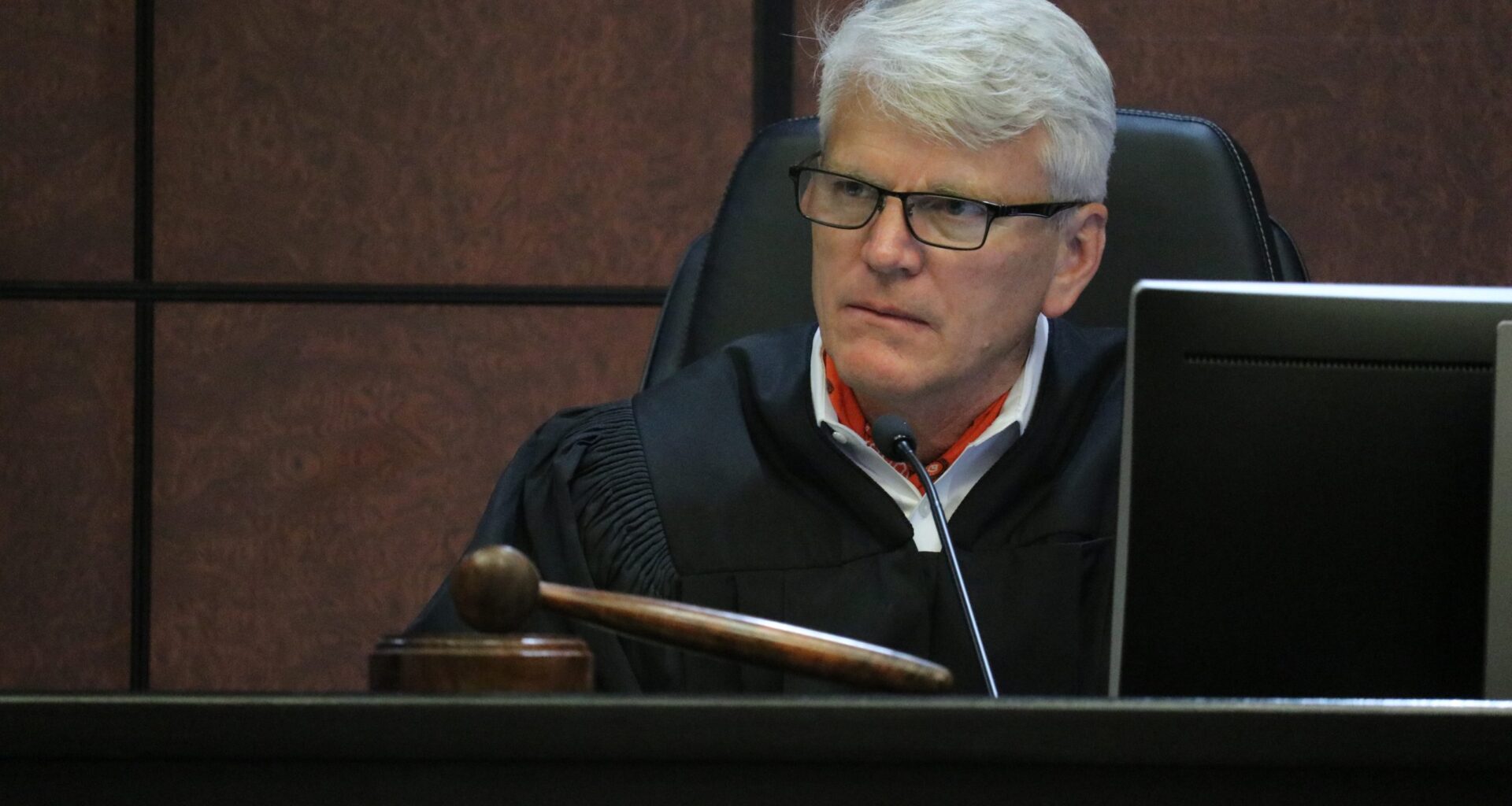
In a Wednesday court hearing, Fresno Superior Court Judge Robert Whalen challenged arguments from both sides in a government transparency lawsuit against the City of Fresno.
Fresno Judge Robert Whalen appeared unconvinced by arguments from both sides in what may have been the final court hearing in a government transparency lawsuit against the City of Fresno, which alleges Fresno’s budget process violated state law for five years.
The Fresno County Superior Court judge challenged whether the lawsuit was actually moot — as argued by the City of Fresno’s outside attorneys from Aleshire & Wynder, LLP. Fresno City Attorney Andrew Janz showed up to the Wednesday hearing, sitting next to the city’s outside legal counsel.
Whalen also challenged a request from the plaintiffs, the ACLU of Northern California and the First Amendment Coalition. One of their two motions seeks a ruling that would prevent Fresno city officials from continuing the same conduct that got them sued in the first place.
“The Brown Act says what it says and the city was in regular and repeated violation of the Brown Act for several years,” said David Loy, an attorney with the First Amendment Coalition. “That’s why we believe it’s appropriate not only to issue a retrospective declaratory judgment that they violated the Act in the past, but to enjoin them from violating the Act in the exact same way in the future.”
At one point, Whalen asked the plaintiffs what they were even asking for.
“Why should the judicial branch step in,” Whalen questioned, “and say, ‘Yeah, you can’t form a budget committee in the future’ — and yet, it may be appropriate for them to form a budget committee in the future under unique circumstances?”
Loy said that kind of ruling would, in the future, prevent the Fresno City Council from forming a budget committee behind closed doors every year, while simultaneously also claiming an exemption in California’s Brown Act meant only for temporary, ad hoc committees.
“We think the record justifies a writ that prohibits the city from continuing to do the very same, unlawful things that it did for five years,” Loy said in court, “which is to continue operating a standing committee created by the city council with continuing subject matter jurisdiction over the budget in secret.”
“Well, I guess, my point is that’s what the Brown Act requires of them anyway,” Whalen said. “I’m not so sure why the court would have to come up with that.”
The core of the lawsuit focuses on how the Fresno City Council convened an annual budget committee in private for five years. It was tasked with negotiating Fresno’s city budget with the mayor’s administration from 2019 to 2023 — all behind closed doors.
Those findings were first revealed to the public in an August 2023 Fresnoland investigation, which quoted several legal experts who said under no circumstances should a city council committee be meeting privately on a regular basis for several years — especially about the city’s budget.
The investigation also found that out of California’s 10 largest cities, Fresno was the only one to claim its city council budget committee was exempt from state transparency laws.
California’s Brown Act has been around for more than 70 years now, and it requires public agencies and local governments to meet in public. After Fresnoland’s August 2023 investigation, the Fresno City Council disbanded its budget committee, along with 10 other committees that met behind closed doors.
Three months later in November 2023, the ACLU of Northern California and the First Amendment Coalition filed their legal complaint against the City of Fresno, alleging city officials violated California’s Brown Act with its private budget committee process.
In the final minute of Wednesday’s court hearing, Whalen said he’d issue a written ruling within 90 days. Additionally, for the first time in the now two-year-old lawsuit, Whalen disclosed for the record that he worked with Janz at the District Attorney’s Office and the two “have interacted together socially.”
Loy said he had no objections and trusts the court’s impartiality.
After the court hearing, Janz told Fresnoland he had no comment. Loy said he’s looking forward to seeing what the court decides.
“I certainly hope that we prevail,” Loy told Fresnoland. “I think the people of Fresno deserve a fair, full and open budget process. And if the city council is going to have a standing budget committee, then that committee should be open to the public — no more and no less than what the Brown Act requires.”
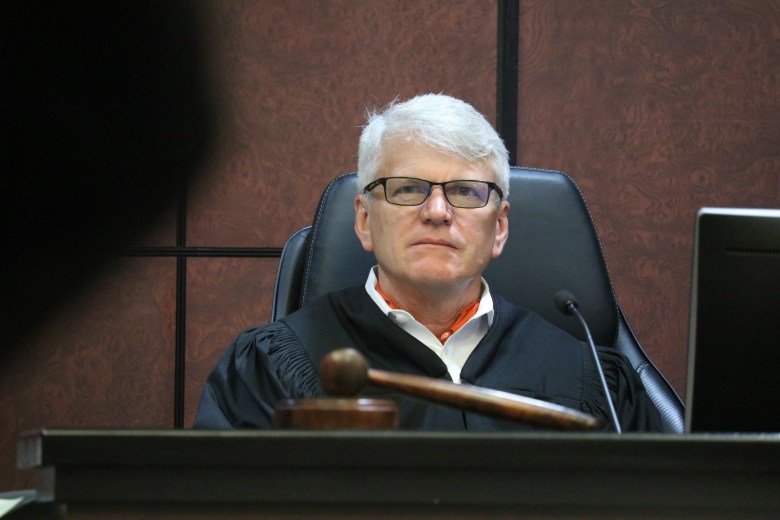 Judge Robert Whalen listens to the plaintiff’s arguments during a March 18, 2026, court hearing. He asked a long list of questions of the plaintiffs at the court hearing. Omar Rashad | Fresnoland
Government transparency lawsuit not moot
At the beginning of the hearing, Whalen asked the city’s lawyers to explain some of their arguments in detail.
“It appears as though the city of Fresno still believes that they would have the ability to establish a budget committee, presumably operated serially as they did in the past,” Whalen said. “Am I understanding that correctly?”
Anthony Taylor, one of the city’s outside lawyers, didn’t entirely agree with Whalen’s assessment, arguing that the Fresno City Council “can’t have that right now,” since it stopped convening annual ad hoc budget committees ever since it was sued over the practice in 2023.
“There’s already been two years where there’s not been any type of budget committee,” Taylor said. “So what I’m saying is, Your Honor, if a future council president formed a budget committee for a three month period, that by definition would be permissible.”
Whalen pushed back slightly, noting the budget committee only went away after the City of Fresno was sent a cease and desist letter and was sued.
“It sounds as though the City of Fresno is saying, ‘Well, we probably ought to get this litigation handled first, and then once the litigation is completed, then we’ll have a better understanding as to whether we can do what it was we were doing before.’”
Most of the hearing featured Loy making his case to Whalen, since what was on the table at the Wednesday hearing were two motions from the plaintiffs in the civil case.
Whalen pushed on how an ad hoc budget committee could exist for several years if emergency conditions proved it was necessary.
“I just wanted to let you know that maybe you and I have a bit of a disagreement on whether just one year for an ad hoc committee is sufficient,” Whalen told Loy during the court hearing. “And if there are such unusual circumstances as what happened during that COVID cycle, it could last for up to three years.”
Loy said there’s no indication the budget committee was formed annually due to any special or unusual factors, as referenced by Whalen in his comments.
“There’s nothing in the record to suggest that there was a multi-year fiscal emergency that would somehow justify deviating from what is the ordinary, regular and recurring budget process that every city must follow,” Loy said. “The ad hoc exception has to be very narrowly contained, or it will swallow the rule, and that’s what the City of Fresno is trying to do — is have the exception swallow the rule.”
Later, Whalen confirmed the budget committee’s annual meetings with the mayor’s administration consisted of discussing the entire budget proposal, not just budget motions made by councilmembers.
Whalen noted how it’s a problem that only the limited members of the Fresno City Council’s budget committee knew what was discussed in those closed door meetings. He also noted another problem: no agendas exist for the budget committee’s closed door meetings, which, in theory, would’ve informed the conversation taking place in court Wednesday.
“So those three council members, with the mayor and staff — were the discussions related to just those (city council budget) motions that were in the hopper, or was it to the overall budget?” Whalen asked.
“They discussed both,” Janz replied.
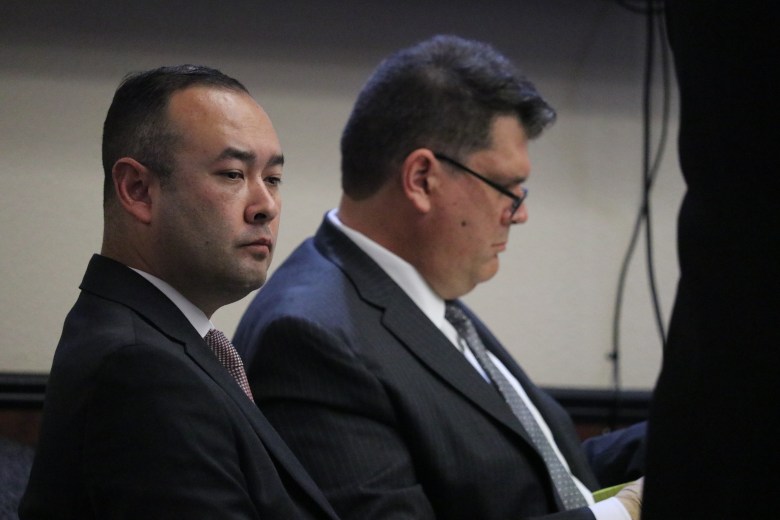 Fresno City Attorney Andrew Janz listens to arguments from the plaintiffs during a March 18, 2026, court hearing in a government transparency lawsuit against the City of Fresno. He sat next to Anthony Taylor, one of the city’s contracted attorneys, during the court hearing. Omar Rashad | Fresnoland
Alarms were raised, but nothing changed
After Fresnoland’s investigation, as well as the lawsuit against the City of Fresno, the Fresno City Council stopped convening the private budget committee, a decision made while Councilmember Annalisa Perea was council president in 2024.
While the city stopped convening an annual private budget committee, the city council didn’t open it up to the public — instead opting to still keep the key budget negotiation process private. Starting in 2024, Mayor Jerry Dyer negotiated the budget individually with each councilmember.
Last year, the city’s internal emails were revealed in court documents, which showed how former Fresno City Clerk Todd Stermer raised red flags about the city’s budget process. Just two months before Fresnoland’s August 2023 investigation, he told colleagues via email that the city’s budget committee should actually be meeting in public under the Brown Act.
Nothing changed after Stermer raised the alarm internally.
A key claim made by the city’s outside lawyers — from Aleshire & Wynder, LLP — is that the budget committee was an ad hoc committee exempt from the Brown Act since it dissolved every year after the passage of a budget — typically in late June — and then reformed the next year.
However, emails revealed in the lawsuit appear to directly contradict that claim.
Between 2019 and 2023, the Fresno City Council convened private budget committee meetings throughout the year, not just during the summer budget process, according to at least 11 email threads revealed in court documents.
Additionally, emails revealed in court documents showed the behind-the-scenes shock of high-ranking city employees regarding the budget process. It also showed one councilmember’s attempts to use the budget committee for private conversations before having public ones about the city budget during the middle of a fiscal year.
Related