
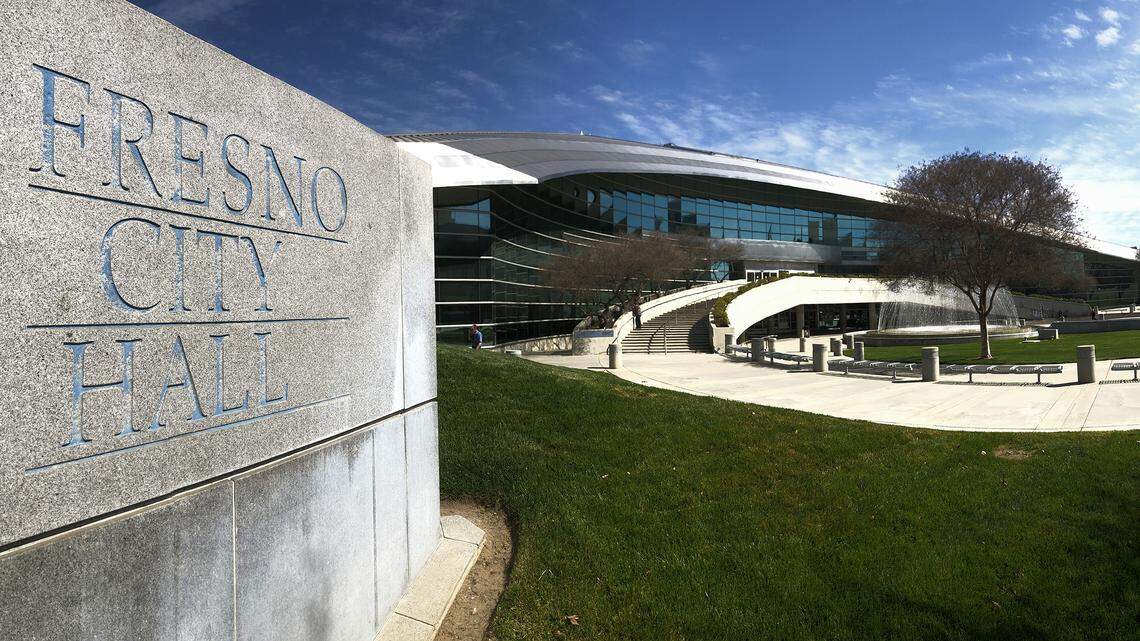
Fresno City Hall, at 2600 Fresno St., is seen on March 3, 2021.
JOHN WALKER
The Fresno Bee
The Fresno City Council is considering the use of facial recognition technology to ban registered sex offenders from attending council meetings.
The City Council was poised to take action on a proposal by Councilmember Nick Richardson at its Thursday meeting, though voted to postpone a decision at a later meeting under closed session.
The proposal would direct the city attorney to seek a court order designating Fresno City Hall as a place “often frequented by minors” on council meeting days and other official events, making it illegal for sex offenders to attend.
The proposal before the council would also direct staff to determine the constitutionality, cost and feasibility of facial recognition technology, which would be used to enforce the ban.
The discussion on a sex offender ban enforced through facial recognition technology comes weeks after councilmembers said they would support banning sex offenders from running for public office at the city and state level, to block a Fresno City Council Candidate, Rene Campos, from running.
Campos, a registered sex offender, ultimately did not qualify for the ballot after failing to receive the 20 signatures required from voters.
Councilmember Nick Richardson said that Campos’s bid raised a larger discussion about safety at City Hall.
“It’s worth it for us to actually look at fixing the system to make sure that City Hall is a safer place for kids and families,” he said.
The purpose of the technology would be to enforce the proposed ban of registered sex offenders at council meetings.
Richardson clarified that the council is not yet weighing support or final approval of adding the technology to City Hall, and won’t until councilmembers can review those reports by the City Attorney’s Office and staff.
Campos spoke out against the proposal at Thursday’s meeting. He argued the ban is unconstitutional and does not enhance saftey.
“This is not policy, this is control,” Campos said.
The rule would not stop sex offenders from visiting city hall for other business, like submitting permits or paying bills. They will also still have the ability to remotely attend meetings and submit e-comments on agenda items.
Attorney Janice Bellucci, executive director of the Alliance for Constitutional Sex Offense Laws Inc. (ACSOL), said that attempts to ban people on the registry from public meetings are a violation of the First Amendment of the US Constitution, and that her nonprofit would fight it in court.
This story was originally published March 19, 2026 at 2:36 PM.
Related Stories from Fresno Bee