
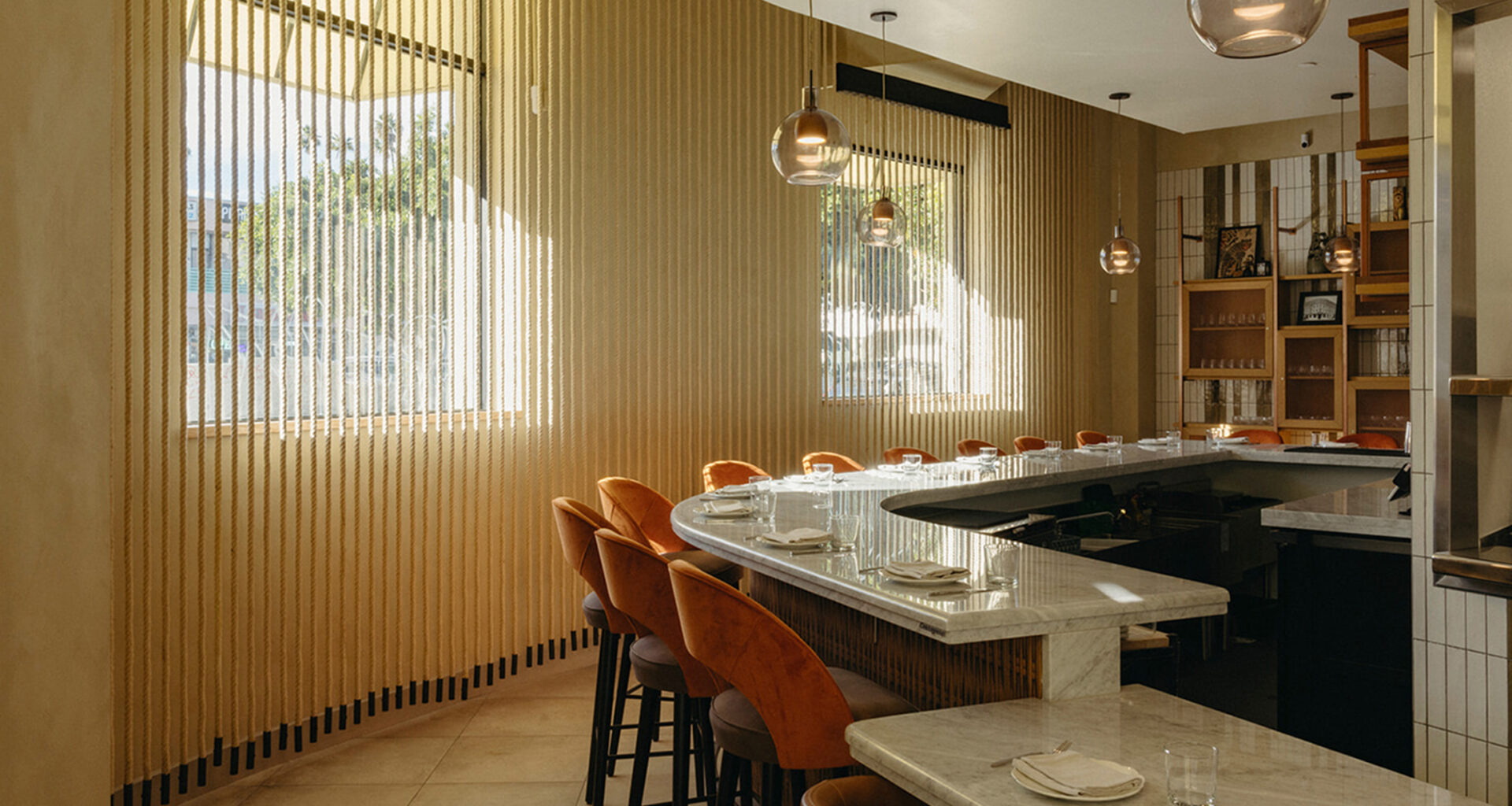
K-Town’s Latest Pasta Bar is led by Osteria Mozza alumni McKenna Lelah and Matthew Kim
Chef McKenna Lelah hopes that one day, you wake up in the morning and think, “F***, I really need that chicken dish. Let’s go to Lapaba for dinner tonight.” In Koreatown, Lapaba (a portmanteau of “La Pasta Bar”) showcases the power of traditional Italian dishes invigorated by Korean ingredients — with flavor bombs like bulgolgi meatballs with milk bread and truffle tomato sauce or orecchiette and fennel pork sausage with Bloomsdale spinach and gochugaru. All pastas are made in house. There is also the aforementioned chicken — fried, made with Calabrian chili and paired with yuzu ranch and diced up kohlrabi.
“At the end of the day, the food, it has to be craveable,” she says.
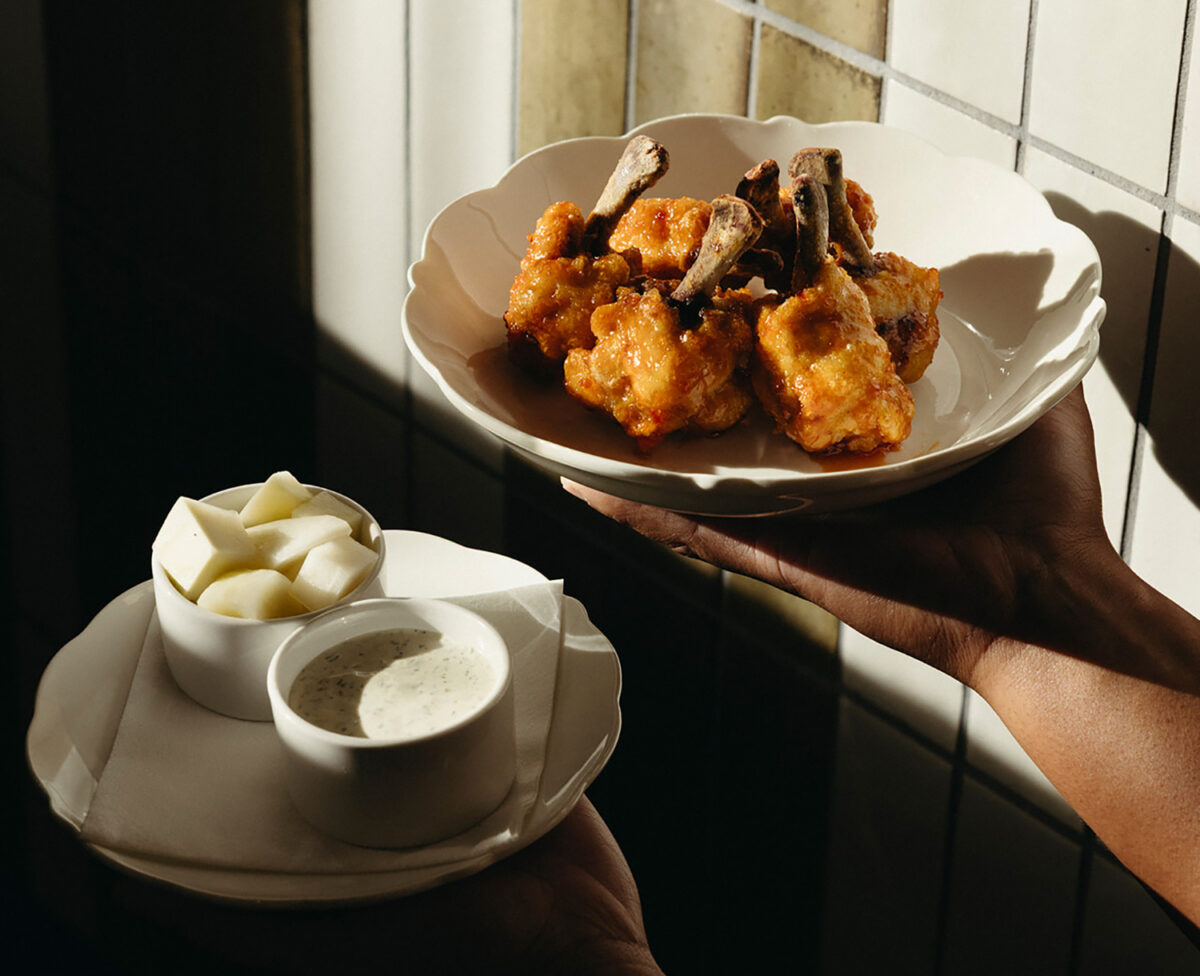 Lapaba fried chicken with yuzu ranch and kohlrabiCredit: Emily Ferretti
Chefs Lelah and Matthew “Matt” Kim, who are married, were enlisted for Lapaba by investors Tanya and Joe Bastianich, Nancy Silverton and Robert Kim (who also operates Lapaba neighbors Norikaya, Mama Lion and All’’Antico Vinaio). “Growing up in L.A. and being Korean American, I wanted to help the community,” Kim says. “I’ve worked at The Beverly Hills Hotel and Eurochow in my past life and wanted to bring that experience and help elevate the dining scene in Koreatown.”
Between Matt and Lelah’s combined expertise in Italian, French, California and Korean cuisines, Robert says they knew the pair was the perfect fit. Matt, who is Korean American, helmed his craft under chefs Grant Achatz and Dave Beran, while Lelah’s background includes working with Beran and Tim Hollingsworth. Initially, the duo met at Osteria Mozza where Lelah could be found at the mozzarella bar and Matt as sous chef.
“We had to keep it very under wraps,” Lelah remembers when they first started dating. “I was just always the only girl in every kitchen I’ve worked in.”
While developing the Lapaba menu, Lelah and Matt were intent on developing “very regionally Italian focused” pasta dishes. The addition of Korean ingredients had to make sense and be intentional. “We weren’t just like, ‘Oh, let’s just put gochujang in this and then it’ll be Korean,” Lelah explains. “Korean food has an inherent sweetness to it, and that does not play well with Italian pasta.”
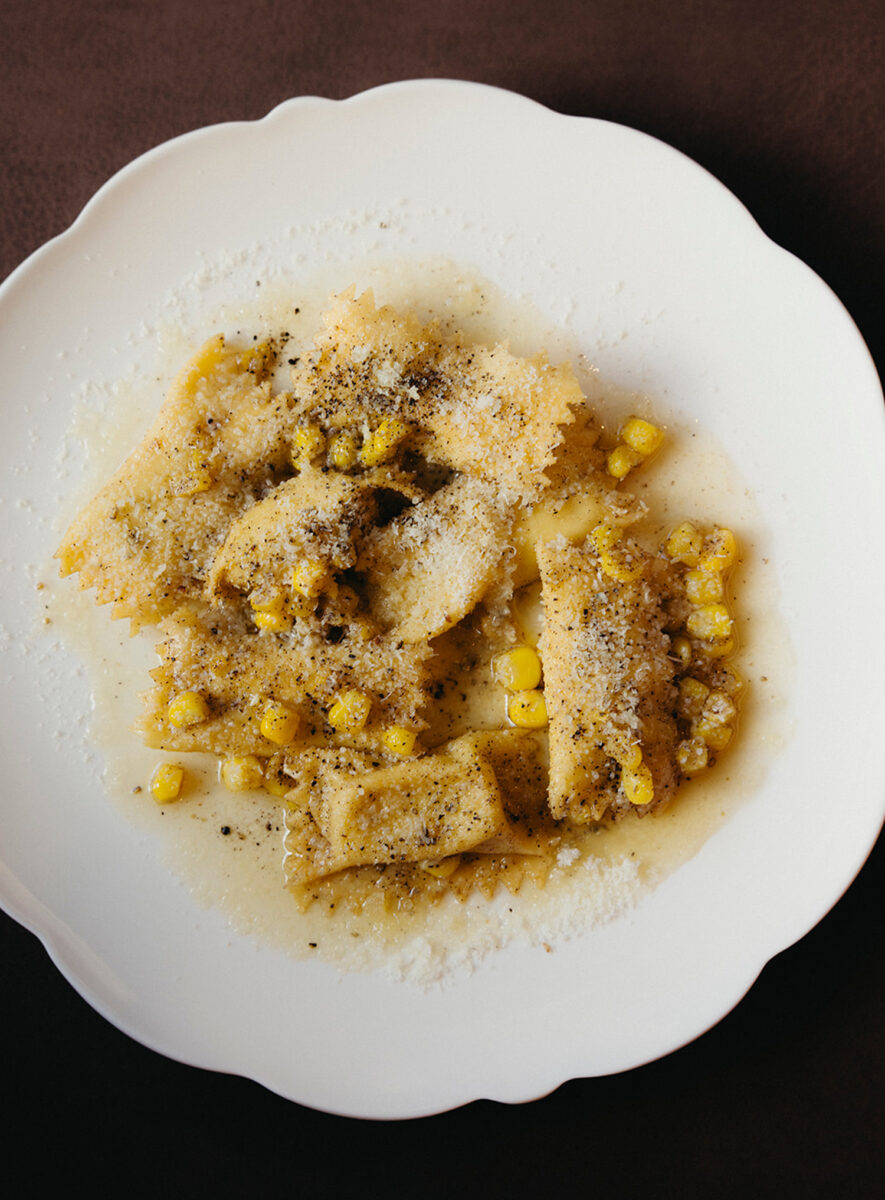 Agnolotto & Cheesy CornCredit: Emily Ferretti
Scroll to continue reading
Kim recalls going through rounds of trial and error to land on the right recipe for the radiatore and galbi jjim. The original ratios of soy sauce and gochujang for flavoring and red wine for the beef braise proved to be too sweet. The next try had too much tomato. “It was just constant refinement until we found a happy medium,” he says.
The menu is rounded out by beverage offerings that include beer, wine, sake and restaurant creations like the Yuja Sour cocktail and Matcha Yuju-Ade. Diners also won’t want to miss out on ending their experience with a true sweet note. The BTS (black truffle soft serve with brown butter) is a delight.
Lelah concludes, “We hope people don’t take it too, too seriously and just focus on like, ‘Oh, that tasted really good.’”