
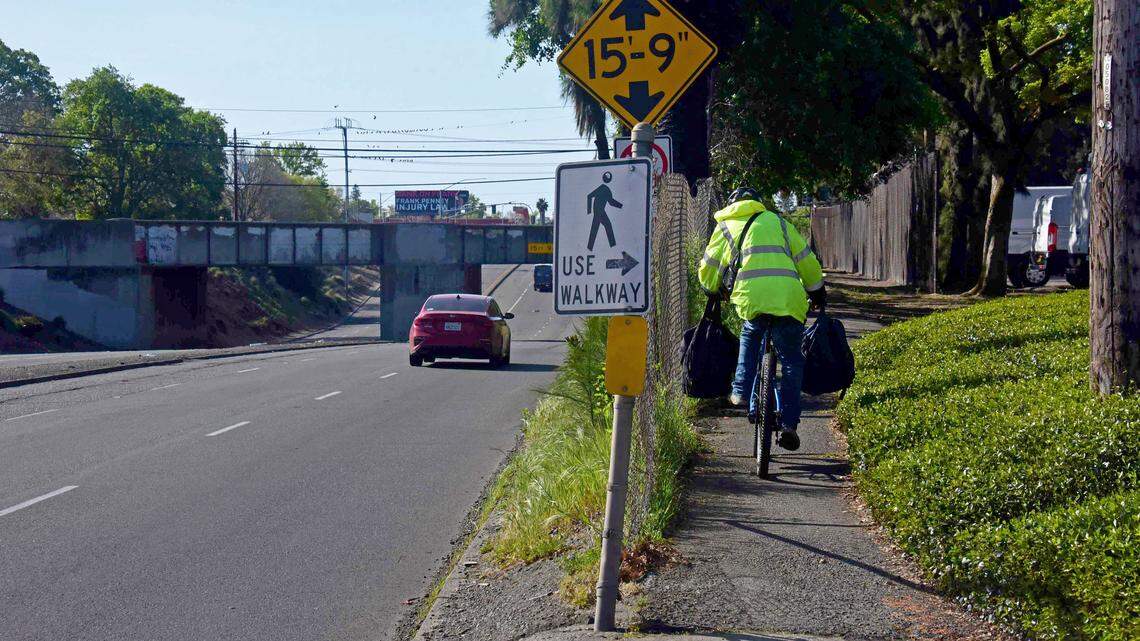
Freeport Boulevard is the site of one of the highest-profile pedestrian crashes in Sacramento history, which maimed a 6-year-old boy and left his grandmother dead. The road — and the people who use it — are also casualties of California’s meager investments in infrastructure for people walking or biking.
The road might be well on its way to improvements but, under Gov. Gavin Newsom, funding for the Active Transportation Program was augmented and then slashed. The grant program is the only statewide effort focused on bankrolling projects that make walking or biking easier and safer; Sacramento had submitted Freeport improvements for consideration to the program in 2024.
Facing a brutal deficit in 2024, California had to make decisions about its priorities. And active transportation wasn’t a high priority: The state axed $400 million of a $1 billion increase from Newsom in 2022. The money has not been restored.
Demand for the funding remained high, however, especially in the grant pool focused on the most locally-driven efforts. In the 2024 application cycle, 188 agencies submitted proposals to the statewide competition, with more than half of them focused on creating safe routes to school for California children.
Most of the local agencies had lined up other supplemental funding sources, too, but they collectively needed another $2.5 billion. When the vote to adopt the grant decisions came last June, the California Transportation Commission only had $168.7 million available to give.
Of the 283 proposals submitted, 13 received funding.
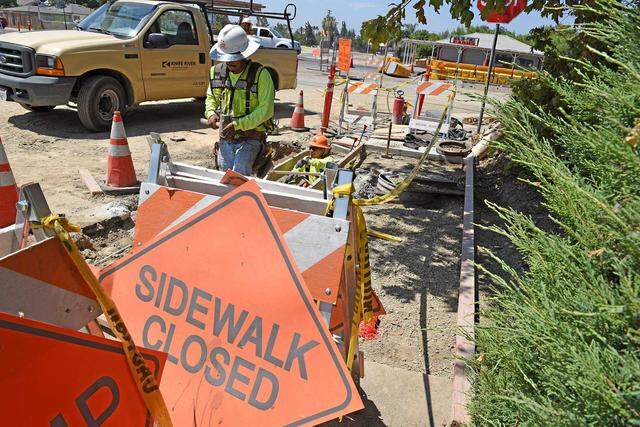 A construction worker builds a sidewalk on Chicago Avenue at Carpenter Road in Modesto in 2018. Dozens of pedestrian safety projects across California have remained unfunded after the state reduced support for the Active Transportation Program in 2024. Joan Barnett Lee Modesto Bee file
That success rate made the Active Transportation Program just a hair less competitive than the admissions rate for Harvard University’s current freshmen: a 4.2% chance to attend the Ivy League college versus a 4.6% chance to put a bike lane in your city.
With those odds, even excellent applications were rejected.
In the prior round — when the California Transportation Commission had an influx of resources in the 2022-23 cycle — projects with scores as low as 89 out of 100 points were funded. The plan to improve Freeport Boulevard scored 92 points in the 2024-25 grant process, but it was not one of the winning entries. Because the Active Transportation Program was so strapped for cash, projects had to have near-perfect scores to be considered. An agency could get a 95 or even a 96 and still be rejected.
The Sacramento Bee received all the applications through a Public Records Act request and contacted agencies that submitted 53 applications across much of Northern California. Ultimately, agencies responded with updates on 38 of the projects, many of which were Safe Routes to School efforts aimed at protecting children.
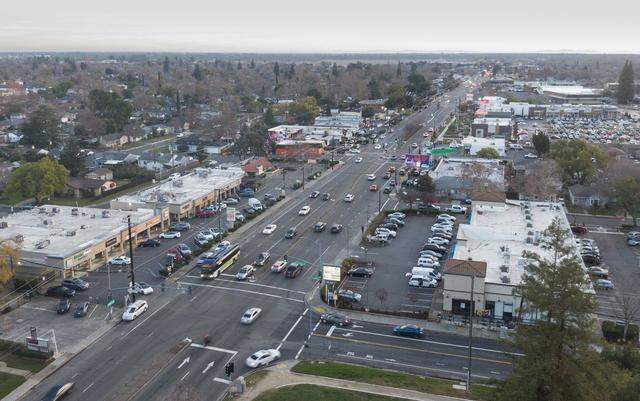 A Regional Transit bus drives north on Freeport Boulevard near William Land Park in Sacramento on Dec. 17, 2024. Sacramento officials have sought state Active Transportation Program funding to redesign the corridor, where repeated pedestrian crashes have underscored the need for safety improvements. Nathaniel Levine nlevine@sacbee.com
As of January and February, 63% of those projects remained unfunded. About 16% had gotten most or all of the funding they sought, and 21% found partial funding from another source. Six agencies specified that they planned to resubmit their projects to Cycle 8 of the Active Transportation Program, where they’ll face the same near-impossible hurdles.
The projects that didn’t win money ranged in scale, but all were safety-oriented, and many of the applications had a tone that verged on desperate. They included:
• A low-income Stockton neighborhood where 32% to 58% of residents had no cars, half of children ages 15 to 17 were not enrolled in school, and streets had no sidewalks for children to walk to school. This project — which sought $12 million, largely for sidewalks — is still unfunded.
• A North Highlands underpass next to one of the most dangerous intersections in the county on Watt Avenue. Staff wrote that the Watt corridor had 3.6 times the rate of fatal pedestrian and bike crashes as the rest of the region. The project — which sought $3 million to add sidewalks to the underpass so that pedestrians wouldn’t have to make a half-mile detour or illegally cross on the Union Pacific Railroad tracks to avoid sharing a lane with drivers on Watt Avenue near Roseville Road — is still unfunded.
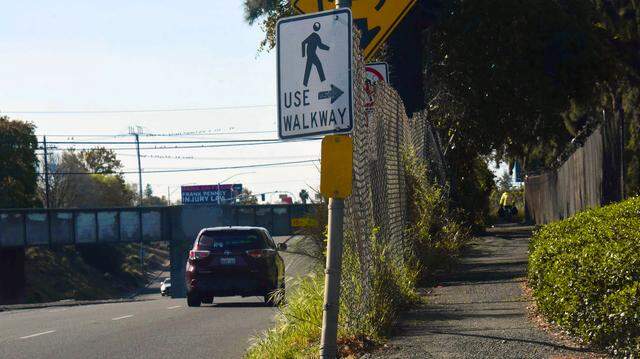 A cyclist uses the walkway to cross Watt Avenue at the railroad tracks near Roseville Road in North Highlands, Calif., on Sunday, March 15, 2026. The underpass is among dozens of Northern California pedestrian and bike safety projects that went unfunded in the state’s 2024 Active Transportation Program grant cycle despite high demand and documented crash risks along the Watt Avenue corridor. Daniel Hunt dhunt@sacbee.com
• A low-income Concord neighborhood near four elementary schools where 301 crashes from 2013 to 2023 had resulted in injuries. Of those, 17 crashes led to serious injuries and six killed people. This project — which sought $19 million to build a bike and pedestrian path separated from traffic — is still unfunded.
• A busy route to a city’s three largest schools: Mary Farmar Elementary School, Benicia High School and Benicia Middle School. Local officials reported many “near misses” with students walking or biking to school and hoped to avoid any future collisions. The project — which sought $1.6 million toward the plan to add curb ramps, safer crosswalks and bike lanes —is still unfunded.
• An unincorporated community near Stockton where children frequently had to walk in traffic if they wanted to get to the local elementary school on foot. The project — which sought $3.5 million, largely to fill huge sidewalk gaps — is still unfunded.
“It’s pretty absurd, right?” said Adonia Lugo, who sits on the California Transportation Commission. “What we’re actually talking about with these active transportation projects is basic pieces of infrastructure.”
But, she said, she has seen sidewalks and bike lanes get funded as if they’re a bonus, not a necessity.
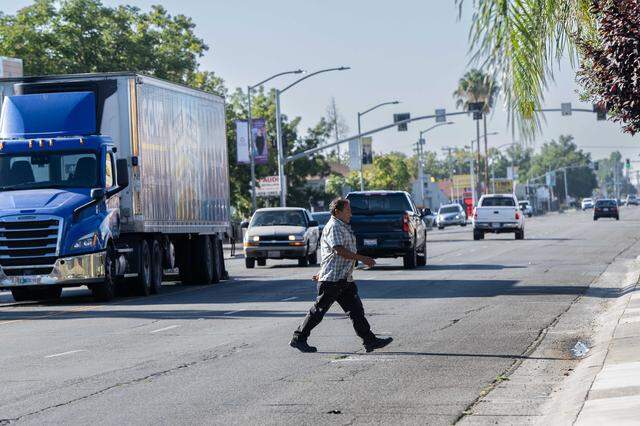 A pedestrian crosses Franklin Boulevard in Sacramento in 2023. Plans to add protected bike lanes, wider sidewalks and other safety upgrades in corridors like this often depend on securing highly competitive Active Transportation Program funding. Hector Amezcua hamezcua@sacbee.com
In spite of the popularity of the program and the enthusiastic support of commissioners, Lugo said, “Active transportation overall has been seen as a special-interest kind of topic.”
That “special interest” mindset conflicts with some of California’s highest aspirations. State lawmakers have set ambitious goals to get people out of their cars. They have three main rationales: Personal vehicles are the biggest single source of greenhouse gas emissions, and the state wants to curb the worst effects of climate change; cars contribute disproportionately to local air pollution, and getting cars off the road makes residents healthier; and 4,000 people are killed in California crashes each year while many more suffer devastating injuries.
But with California’s severe funding cuts to the Active Transportation Program, local agencies are working to meet those goals with even fewer resources.
What happened to Sacramento pedestrians?
The stakes of slow action on pedestrian and cyclist safety are life-and-death.
In California, drivers strike and kill about 1,000 people on foot each year. These deaths are not inevitable, and the vast majority of fatal collisions are preventable with changes to infrastructure and policy. Many of these crashes follow predictable patterns.
On Freeport Boulevard, collisions have happened repeatedly. The four-lane arterial, which once carried Highway 160, is optimized to move cars quickly through neighborhoods with little to no allowance for the safety or comfort of people walking. Sacramento officials want to change the shape of Freeport — and many other roads — to slow drivers down.
With that in mind, Sacramento’s Department of Public Works submitted the Freeport proposal to the state Active Transportation Program along with two other applications; the city’s lowest score was 90 out of 100. In the Freeport documents, city officials wrote that crashes on the street followed “collision trends.” They were predictable and preventable.
The application aggregated the dead into data and did not report any details, but the crash that had the most ripple effects in the community happened on Jan. 31, 2018, shortly after Qui Chang Zhu picked up her grandson from Sutterville Elementary School. She and Jian Hao Kuang, then 6, headed east from the school. They were crossing Freeport in a partially removed crosswalk when a driver in a sedan ran into them.
Zhu quickly died. Kuang survived the crash, but he suffered severe brain damage and will be disabled for the rest of his life.
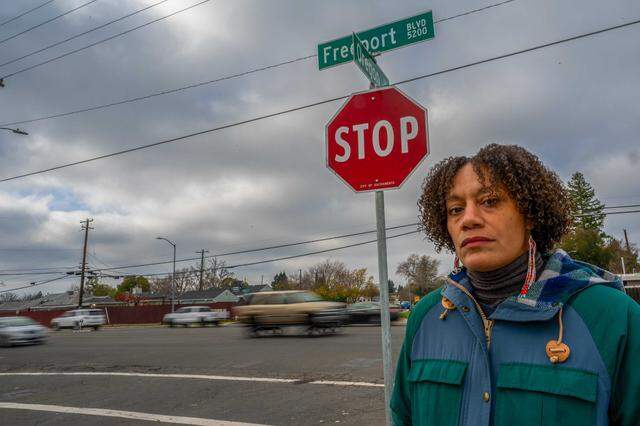 Kiara Reed, executive director of Civic Thread, stands on the corner of Freeport Boulevard at Oregon Drive in Sacramento on Dec. 18, 2024. Sacramento’s plan to redesign Freeport Boulevard for pedestrian safety scored 92 out of 100 points in the 2024 Active Transportation Program cycle but did not receive funding after the state slashed hundreds of millions of dollars from the grant program. Renée C. Byer rbyer@sacbee.com
Beyond the loss of life, the undoing of a little boy’s future, and the grief and fear borne by the boy’s first-grade classmates at Sutterville Elementary, a lawsuit filed by the family extracted a $16.7 million settlement from Sacramento. There is, perhaps, no clearer local example of the high societal cost of poor pedestrian infrastructure.
Since then, the Department of Public Works has published a plan to make the road safer and sought grant funding to make it a reality. The application submitted in 2024 requested support for environmental clearance, a necessary step before construction.
But the intersection where Zhu was killed and Kuang was gravely injured has seen no significant changes in the eight years since the collision — except the full removal of the crosswalk.
That is typical in California, where many infrastructure projects rely on competitive grants for funding. When agencies don’t win a particular grant, they have to start over, waiting for an application period to open for the next competitive grant that’s also not guaranteed.
This process stalls improvements for years.
That’s true in El Dorado County, which requested $5 million, mostly to build a pedestrian and bike trail that would have run alongside Lotus Road in Coloma. Lotus has no sidewalk. With the trail, visitors and residents could safely walk or bike to Henningsen Lotus Park without having to travel on a narrow dirt shoulder next to cars permitted to speed by at 45 mph.
El Dorado County did not win the Active Transportation Program grant. The Department of Transportation plans to reapply in Cycle 8.
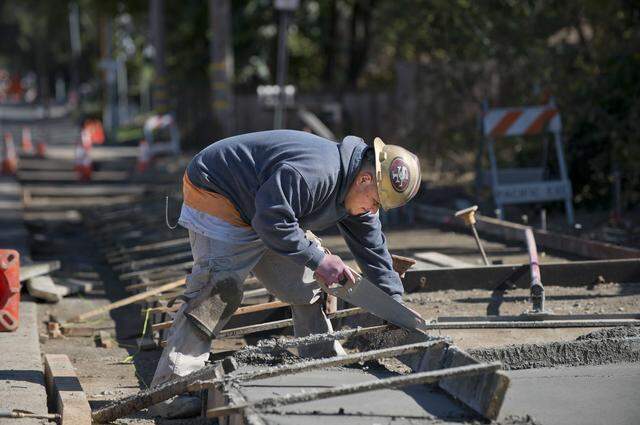 A construction worker cuts lumber while building a sidewalk along Marconi Avenue in Carmichael in 2013. Sidewalk construction projects like this are often built in phases as local agencies compete for limited state Active Transportation Program grants to fund pedestrian safety improvements. Hector Amezcua hamezcua@sacbee.com Extra scrutiny for bike, pedestrian funding
Lugo noted a sharp contrast between the struggle to get active transportation projects funded and the ease with which other types of infrastructure — typically, infrastructure geared toward cars — could run millions of dollars over budget, often with zero consequences.
In October, the California Transportation Commission voted to approve $14 million in additional funding to expand a two-lane expressway to a four-lane expressway in Fresno County. That $14 million was a 43.1% increase in costs, which commission staff largely chalked up to “design refinements” and rising prices for materials, such as asphalt.
This single cost overrun could have fully funded any of more than 200 Active Transportation Program requests; alternatively, it could have funded all of the 22 cheapest non-quick-build requests, or the entire slate of quick-build requests with more than $7 million to spare.
That kind of decision on a non-active project is routine, Lugo said.
“When you come to the commission and say, ‘We need 100 million more dollars because labor and supplies are more expensive than when we approved this five years ago,’ the commission’s largely going to say yes,” she said. Active transportation projects are never asking for that level of money, she said, and yet they also have to clear an exceedingly high bar to get any funding at all.
Matt Tuggle, the engineering manager of Solano County’s Department of Public Works, said the application process for the Active Transportation Program sets a high bar. “It has so many requirements built into it,” he said.
“We put so much scrutiny around how we spend those (active transportation) dollars,” said Lugo, who is a researcher at UCLA’s Institute of Transportation Studies and was appointed to the commission by Newsom in 2022. “The application is really tough; people end up having to bring on consultants just to help them. … We’ve really, really scrutinized how we spend that really small pot of money.”
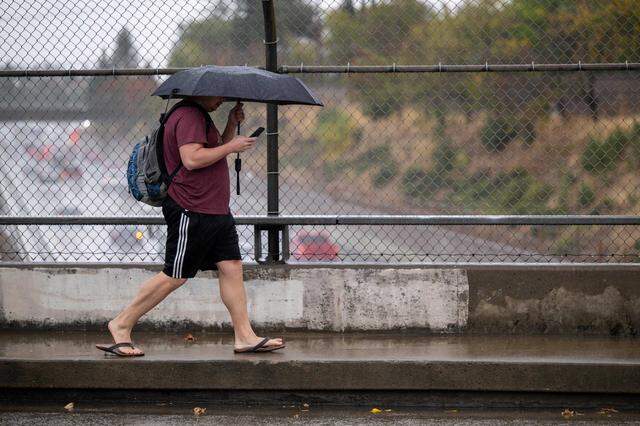 A pedestrian walks in the rain on 48th Street over Highway 50 in Sacramento in 2022. California drivers strike and kill about 1,000 people walking each year, and many of those crashes are considered preventable with infrastructure changes. Paul Kitagaki Jr. pkitagaki@sacbee.com
The same scrutiny, Lugo said, did not apply to other road projects. The money, she said, is “just on a different scale.”
Even with limited resources, the Active Transportation Program has had outsize benefits, staff said. The 2023 cycle funded 70 new roundabouts, 57 miles of separated bike and pedestrian paths and 82 miles of bike paths separated from traffic by physical barriers, in addition to other infrastructure improvements. According to the commission’s analysis using a calculator developed by UC Davis researchers, the improvements may have prevented 6,000 crashes and saved 223 lives.
The U.S. Department of Transportation said that in 2024, the value of life — the dollar figure that you might assign to the prevention of a death — was $13.7 million. Ignoring any other benefits, the value of saving those 223 lives was worth $3 billion, almost three times the amount the Active Transportation Program doled out to save them.
To Lugo, it was head-scratching.
“Popular program — everybody loves it,” she said. “Why are we having to do a Bob Cratchit-style carve-up-the-tiny-turkey?”
Related Stories from Modesto Bee
The Sacramento Bee
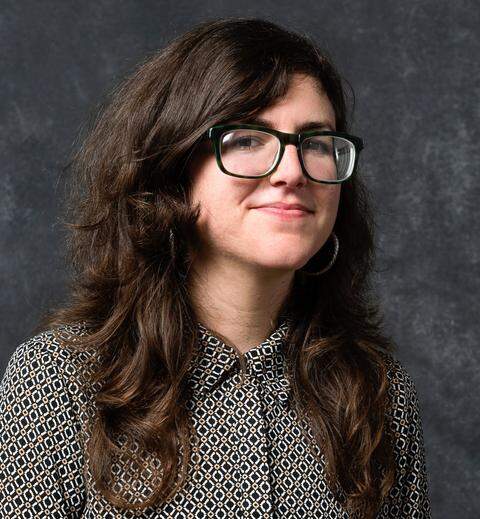
Ariane Lange is an investigative reporter at The Sacramento Bee. She was a USC Center for Health Journalism 2023 California Health Equity Fellow. Previously, she worked at BuzzFeed News, where she covered gender-based violence and sexual harassment.