
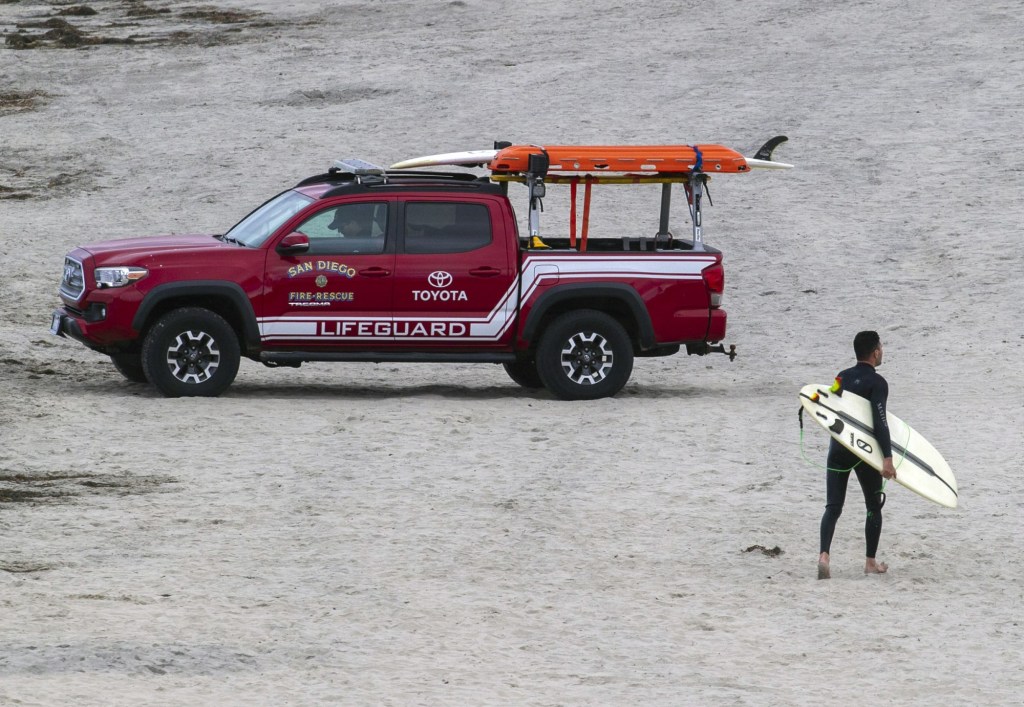
The familiar red-and-white Toyota lifeguard trucks that have been a mainstay on San Diego beaches for nearly 15 years will soon be replaced by Hyundai vehicles under a new city corporate sponsorship deal.
City officials say the deal with Hyundai is superior to its expiring deal with Toyota, including more frequently replacing vehicles to provide the city a newer and more reliable lifeguard fleet.
The new deal, which covers five years with possible extensions to 15 years, also requires Hyundai to handle all vehicle maintenance. Under the Toyota deal, the city handled all maintenance of lifeguard vehicles.
City officials estimate the value of the deal — the amount of money San Diego would have to spend buying and maintaining lifeguard vehicles — at $4 million over the course of the five-year deal.
“It’s a rather extraordinary improvement over previous deals,’’ council President Joe LaCava said this week. “Our lifeguards deserve the best, and this agreement delivers that.”
While the exact timing of the transition isn’t totally clear yet, city officials said there certainly won’t be a gap in service.
“Toyota’s agreement runs through April and the transition to Hyundai is expected to proceed smoothly over the summer,” the city’s Economic Development Department said in response to emailed questions from The San Diego Union-Tribune.
“Toyota will continue supporting and decommissioning the remaining fleet while Hyundai begins providing vehicles and services under the new agreement as early as April,” the city said. “Because Hyundai’s first‑term fleet will be outfitted and in service before Toyota completes its final returns, uninterrupted operational coverage is expected.”
City officials say the “staggered transition” ensures full operational readiness throughout the handoff period between Toyota and Hyundai.
A complicating factor in the new deal was California’s 2035 ban on selling gas-powered vehicles, which could force a switch to electric lifeguard trucks that can’t function when submerged in water.
City officials said they chose a five-year initial term with Hyundai to put off dealing with that potential problem — and to provide flexibility.
“The current agreement includes a planned fleet refresh every two to three years, which provides the city with the ability to incorporate low‑ or zero‑emission technologies as requirements change,” the city said. “In fact, the first term of the agreement already integrates the IONIQ EV into the fleet, demonstrating alignment with long‑term sustainability targets and establishing a pathway for continued electrification.”
The number of vehicles will drop from 38 under the Toyota deal to 32 under the Hyundai deal. They will include two electric vehicles, both Hyundai Ioniqs, and 30 vehicles with internal-combustion engines — 18 Santa Cruz trucks and 12 Palisade SUVs.
It’s expected the electric vehicles will be used by lifeguard chiefs and captains, while lifeguards will use gas-powered vehicles to conduct rescues that could involve partially submerging them.
The local Toyota Dealers Association, which handles the expiring deal, did not respond to requests for comment.
City officials said Hyundai submitted the only proposal in response to a request for sponsorships the city issued in February 2025 — but they also indicated other car companies could have lost interest because of concerns over tariffs.
“Overall participation in the request for sponsorship was limited due to timing,” the city said. “The deadline fell in the same week the federal government announced new tariffs last year, creating significant uncertainty for vehicle manufacturers who had initially expressed interest.”
As part of the deal, Hyundai will sponsor Water Safety Days at beaches and bays. The company will also be allowed to film and broadcast up to two TV and two radio commercials each year featuring city lifeguards and lifeguard vehicles.