


Even as thousands of units rise across redevelopment zones, a widening gap between income and cost continues to lock out the very residents these programs were meant to serve
By Malik Washington, Destination Freedom Media Group | The Davis Vanguard
SAN FRANCISCO — HUNTERS POINT SHIPYARD
There are meetings where numbers get presented. And then there are meetings where history shows up—quietly, persistently—demanding to be accounted for.
At the Mayor’s Hunters Point Shipyard Citizens Advisory Committee meeting, city officials delivered updates on housing production, redevelopment timelines, and program expansion. But beneath the charts and presentations was something more consequential:
A city still trying to repair what it broke.
THE PEOPLE BEHIND THE CERTIFICATES
The Certificate of Preference (COP) program exists because of a simple truth: thousands of families were displaced from San Francisco neighborhoods in the name of redevelopment—and never made whole.
Today, the City is trying to change that.
According to officials from the Mayor’s Office of Housing and Community Development (MOHCD) and the Office of Community Investment and Infrastructure (OCII):
64 original residents displaced by redevelopment have been identified.
345 descendants—children, grandchildren, and beyond—have received certificates.
739 individuals have applied.
More significantly, the City is now in contact with over 1,200 certificate holders, reflecting a level of engagement that did not exist in earlier years.
This is not passive outreach. Staff are retrieving birth and death records. Tracing lineage across generations.
Helping families navigate a process that once required them to prove what they had always known—that they were displaced.
For many, this is the first time the system has met them halfway.
THE COMMUNITY WORK THAT MADE THIS MOMENT POSSIBLE
But programs do not expand on their own. They move because people push them.
In Bayview–Hunters Point, that push has come from organizers who have spent years ensuring that displaced families are not left behind—people who understand that access to housing is not just about policy, but about connection, trust, and persistence.
Among those voices is Dr. Veronica Hunnicutt, whose community organizing has helped bridge the gap between institutional programs and the residents they are meant to serve.
That work rarely appears in official reports. It shows up in phone calls returned. In elders being guided through complex applications. In families discovering, sometimes for the first time, that they have a pathway back to the city they once called home.
As agencies described expanded outreach and improved systems, it is important to understand that those efforts exist within a broader ecosystem—one sustained by community leadership.
Because without that bridge, even the best-designed programs can fail to reach the people they were built for.
THE LINE BETWEEN ELIGIBILITY AND EXCLUSION
And even with that progress, the limits of the system remain clear.
Eligibility for the Certificate of Preference is narrowly defined. Only families displaced by the San Francisco Redevelopment Agency qualify.
Not those displaced by:
The Housing Authority.
Caltrans.
Other government-led actions.
At least 58 individuals were denied certificates despite documented histories of displacement—simply because the wrong agency carried it out.
It is a technical distinction. But its consequences are lived.
WHEN PRIORITY ISN’T ENOUGH
The Certificate of Preference does one thing exceptionally well: it moves people to the top of the housing list.
What it does not do is guarantee access. And it does not make housing affordable.
The numbers from the past year make that clear:
81% of certificate holders applied for housing.
Only 44 individuals were successfully housed.
At first glance, officials pointed to unit size, household preferences, and eligibility constraints.
But a deeper look reveals something more structural. Nearly 67% of available units required incomes of approximately $52,000 or more.
The median income of certificate holders?
Under $36,000.
That gap is not about choice. It is about access.
BUILDING—AT SCALE AND UNDER PRESSURE
If the COP program represents the effort to reconnect people to housing, the City’s broader development pipeline represents the effort to build that housing in the first place.
Elizabeth Collomello, Housing Program Manager at OCII, presented a system operating at significant scale.
Across major redevelopment zones—including Mission Bay, Transbay, Hunters Point Shipyard, and Candlestick Point—San Francisco is planning more than 27,000 housing units, with approximately 47 percent designated as affordable.
And these units are not theoretical.
Recent completions include:
The Oscar James Residences in the Shipyard.
The Doris M. Vincent Apartments, named for a longtime community advocate.
Affordable homeownership units at 400 China Basin.
Meanwhile, additional projects are leasing, under construction, or moving through approvals.
By the numbers:
70% of completed units serve households at 50% AMI or below.
Hundreds of units target 30% AMI, among the deepest affordability levels.
This is real production. But it exists within real constraints.
THE COST OF AFFORDABILITY
Affordable housing in San Francisco is defined by Area Median Income (AMI), a metric that reflects regional earnings but often diverges sharply from neighborhood realities.
For a family of four:
50% AMI ≈ $77,950.
100% AMI ≈ $155,850.
Even at reduced levels, rents can range from approximately $1,700 per month up to $3,500 per month.
For many displaced families, these numbers remain out of reach.
To bridge that gap, the City relies heavily on subsidies—particularly project-based Section 8 vouchers, which allow rents to be reduced further.
In the past year, 46 such vouchers were secured for new Shipyard developments.
But that support is increasingly uncertain.
With federal budget reductions and local fiscal constraints, officials acknowledged that future subsidy availability may decline—placing additional pressure on the system’s ability to serve the lowest-income residents.
WHO BENEFITS—BEYOND HOUSING
The impact of redevelopment is not limited to housing units. It also shapes economic opportunity.
According to OCII:
84% of professional service contracts were awarded to Small Business Enterprises (SBEs).
Nearly 79% went to San Francisco-based firms.
More than 130,000 hours of work were performed by local residents.
In Bayview–Hunters Point:
203 residents contributed to that workforce participation.
These numbers reflect a critical dimension of redevelopment:
When structured intentionally, it can create pathways not just to housing—but to economic inclusion.
A MOMENT OF RECOGNITION
Amid the data and projections, one moment grounded the meeting in something more personal.
Pam Sims—after more than 31 years of service—was recognized ahead of her retirement.
Her work has shaped thousands of housing units across San Francisco and helped expand the Certificate of Preference program into a more accessible, responsive system.
Her career reflects the nature of this work itself:
Long-term.
Complex.
Often invisible.
But deeply consequential.
CANDLESTICK POINT: THE FUTURE STILL UNDER CONSTRUCTION
If the Shipyard reflects what has been built, Candlestick Point reflects what is still to come.
Project leaders were clear: housing has not yet arrived at scale.
Because first, the foundation must be built.
That includes:
Roads and transportation networks.
Stormwater systems.
Sewer infrastructure.
Shoreline and park access.
The next major phase of development will support more than:
700 housing units.
1.5 million square feet of commercial space.
But before construction can begin, approvals must be secured.
Permits are pending. A final map is moving toward the Board of Supervisors. The project stands at a critical threshold.
FIXING WHAT WAS NEVER FIXED
Some of the work underway is not about new development—but about longstanding conditions.
Flooding.
Drainage failures.
Limited access to public space.
A new flood-resilient access road is planned to improve connectivity to California State Park—addressing an issue that has affected residents for years.
It is a reminder that redevelopment must do more than build. It must repair.
THE WEIGHT OF COMPLEXITY
Candlestick is not a single project. It is a coordination effort across multiple agencies, jurisdictions, and systems.
Even basic infrastructure—like a sewer pump—requires alignment between planning departments, public works, environmental regulators, and design review bodies.
Progress here is not measured in headlines. It is measured in approvals, permits, and systems slowly coming together.
THE LONG ROAD HOME
Taken together, the presentations offered something rare: transparency without illusion.
The City is:
Searching for displaced families.
Expanding outreach and access.
Building housing at scale.
Preparing the infrastructure for future development.
And yet, for many families, the return home remains just out of reach.
Not because there is no effort. But because the gap—between income and affordability, between eligibility and inclusion—still persists.
WHAT COMES NEXT
The question is no longer whether San Francisco is doing the work.
It is whether the work will be enough.
Enough to close the affordability gap.
Enough to include all displaced families—not just some.
Enough to turn priority into access—and access into permanence.
Because in Bayview–Hunters Point, redevelopment has never just been about buildings.
It has been about belonging.
And that is something no system can afford to get wrong.
ABOUT THE AUTHOR
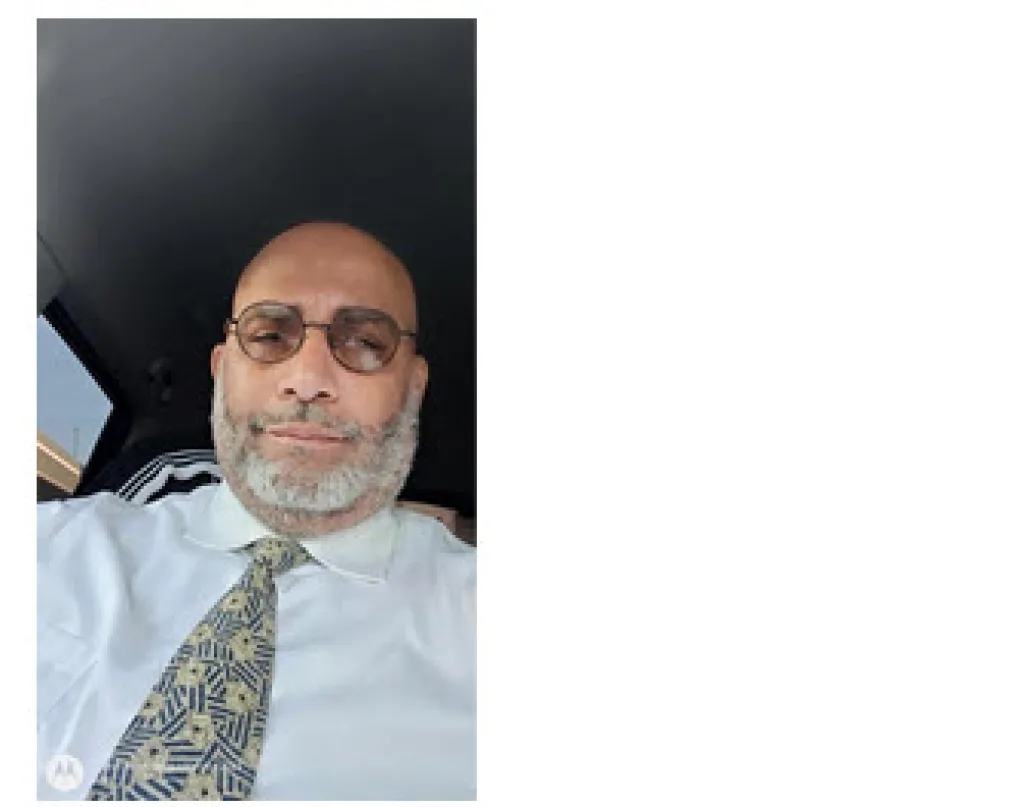
Malik Washington is an investigative journalist and co-founder of Destination Freedom Media Group, an independent nonprofit newsroom dedicated to accountability reporting at the intersection of civil rights, public integrity, disability justice, structural accountability within American institutions, and community survival. He has been a published journalist for over 14 years.
His work—published in partnership with the Davis Vanguard—focuses on government power, criminal justice, environmental justice, and the human consequences of policy decisions too often insulated from public scrutiny. Washington’s reporting amplifies the voices of impacted communities while insisting on documentary evidence, transparency, and the unvarnished truth—especially when institutions demand silence.
His work appears on platforms such as Muck Rack and Black Voice News, examining the intersection of justice, governance, and community.
You can reach him via email: mwashington2059@gmail.com or call him at (719) 715-9592.
Follow the Vanguard on Social Media – X, Instagram and Facebook. Subscribe the Vanguard News letters. To make a tax-deductible donation, please visit davisvanguard.org/donate or give directly through ActBlue. Your support will ensure that the vital work of the Vanguard continues.
Categories: Breaking News Housing San Francisco