
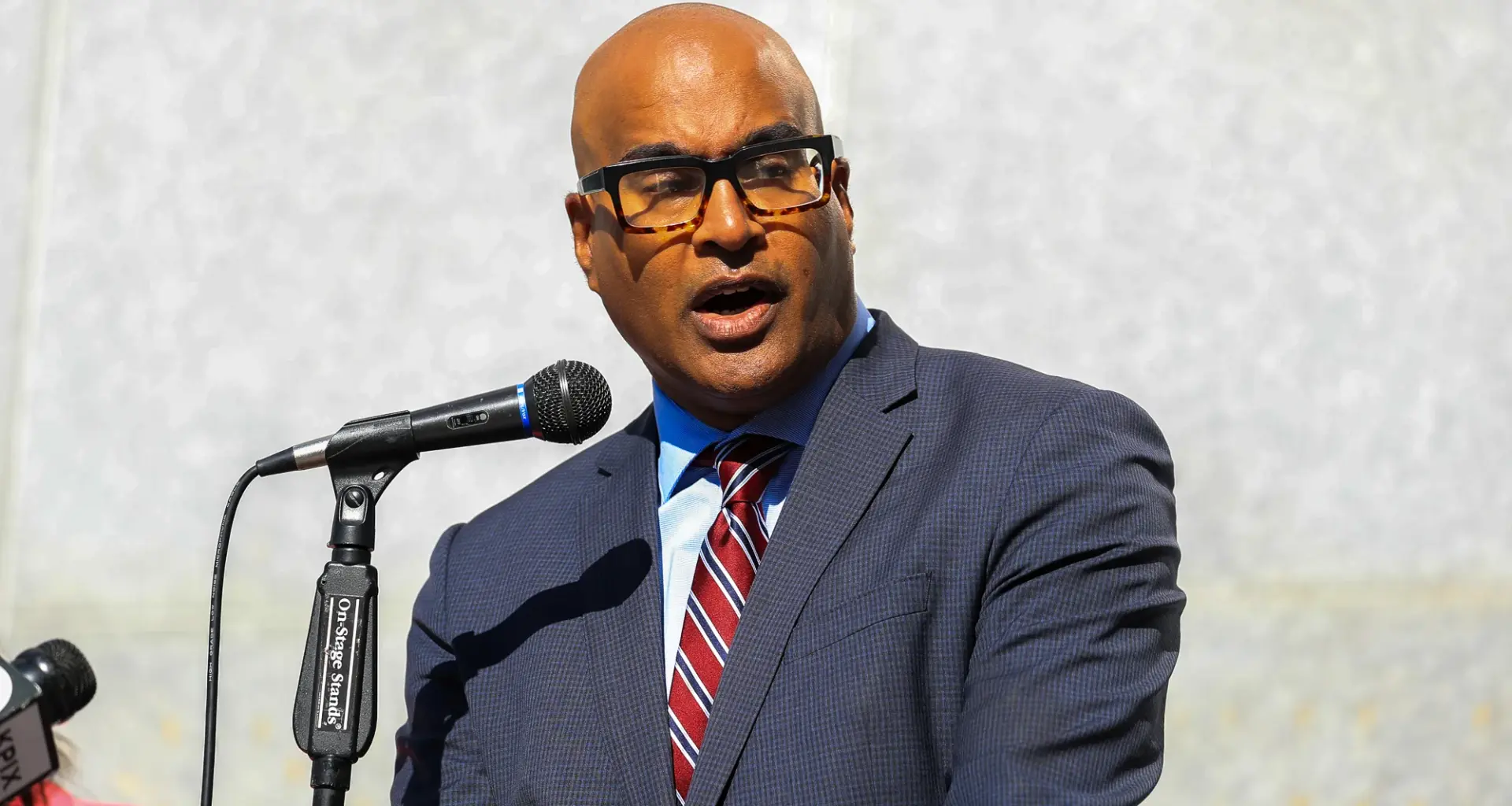
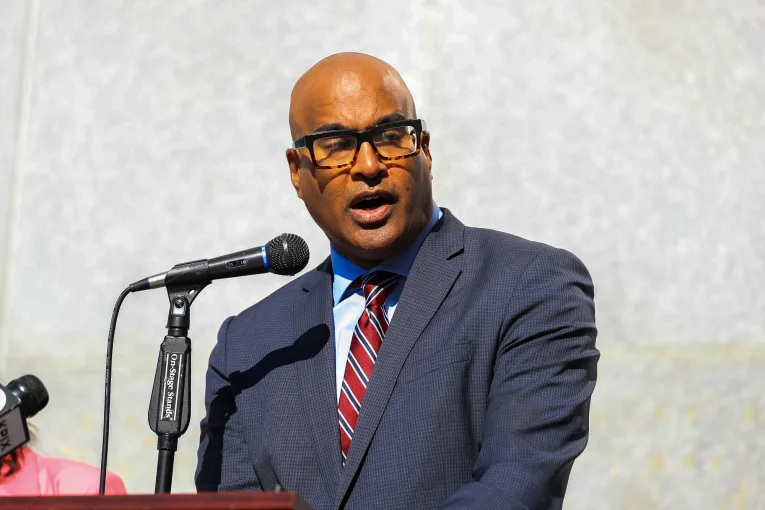
SF Public Defender Mano Raju; pc: David Greenwald
SAN FRANCISCO — A San Francisco judge has found the elected Public Defender Mano Raju in contempt of court, setting the stage for a hearing on March 24 that could determine whether monetary sanctions will be imposed and, more broadly, how far courts can go in compelling defense attorneys to accept new cases amid mounting workloads.
The ruling follows a months-long dispute between the San Francisco Superior Court and the Public Defender’s Office over whether attorneys can decline new cases based on workload.
Judge Dorfman held hearings last fall lasting until December, before finally ruling this January that the public defender’s office could not declare itself unavailable.
At the center of the dispute is a key issue of what happens when public defender offices, already strained beyond capacity, refuse to take on additional cases they argue they cannot handle ethically? But also whether the judge has the authority to rule that the public defender’s office must take on new clients.
Raju said the contempt finding goes beyond a disagreement with a judge and raises constitutional concerns.
“The San Francisco Public Defender’s Office remains unwavering in our constitutional duty to provide effective representation, a duty Judge Dorfman’s predetermined conclusion cannot displace,” Raju said in a statement this week. “Despite repeatedly praising our office’s professionalism and our highly skilled staff, Judge Dorfman is now substituting his own judgment for ours without a proper understanding of the modern demands on our staff.”
The dispute stems from rising caseloads and limited staffing. Raju’s office says accepting more cases would violate its ethical obligations to current clients.
“We have acted in good faith throughout this inquiry and continue to take on the vast majority of new felony cases while carefully assessing our capacity,” Raju said. “The threat of sanctions cannot change the reality that more cases are being filed, they are taking longer to resolve, and that public defender offices nationwide remain chronically underfunded and carry workloads far beyond above the standards set by the National Public Defense Workload Study.”
The Vanguard has documented the unfolding crisis in San Francisco over the past several months, including warnings from defense leaders that the system was approaching a breaking point.
In prior coverage and commentary, including a January op-ed by Chief Attorney Matt Gonzalez, the situation was described as emblematic of a national failure to adequately fund indigent defense while continuing to expand prosecutorial and policing capacity.
Earlier reporting by the Vanguard also detailed how the Public Defender’s Office signaled it would not comply with court directives to accept additional cases it deemed unmanageable, citing ethical rules that prohibit attorneys from taking on workloads that would compromise their ability to provide competent representation.
That standoff has now culminated in the contempt finding.
Raju in his statement clarified that his office has not stopped taking cases altogether, but has instead attempted to strike a balance between meeting court demands and maintaining constitutional standards.
“Courts across the country, including in Washington and Oregon, have recognized that excessive caseloads make effective representation impossible,” he said. “In San Francisco, active cases have risen 65 percent since 2019. Declaring unavailable in a limited number of cases is necessary to meet our constitutional obligations. We are continuously reassessing our staff’s capacity as we still take on the overwhelming majority of the cases.”
Legal scholars and advocates have long warned that excessive caseloads can undermine the Sixth Amendment right to counsel by turning representation into a formality rather than a meaningful defense.
The National Public Defense Workload Study, updated in 2023, concluded that many public defenders across the country handle far more cases than recommended, often leaving them with insufficient time to investigate, prepare and advocate for their clients.
The situation in San Francisco reflects those broader trends.
Public defense systems nationwide have struggled with chronic underfunding, high turnover and increasing case complexity, particularly in the wake of pandemic-era backlogs and evolving evidentiary demands.
Raju warned that the court’s approach risks compounding those problems rather than resolving them.
“Judge Dorfman’s pursuit of contempt and monetary sanctions risks undermining due process for our clients and pushing already overextended staff beyond ethical limits,” he said. “We look forward to appealing his ruling to protect our staff and our clients’ constitutional rights. Our office will continue working toward a lawful and lasting solution, including securing the funding needed from the City to hire additional attorneys and staff, while serving our clients and all San Franciscans with excellence.”
National organizations representing public defenders also weighed in, casting the contempt ruling as part of a broader systemic failure rather than an isolated dispute.
The National Legal Aid & Defender Association and the American Council of Chief Defenders issued a joint statement condemning the decision, noting that Raju had been held in contempt after declining to accept additional cases amid already heavy workloads.
“For years, we’ve been sounding the alarm on the unsustainable and growing volume of cases forced upon public defenders across the country,” said April Frazier Camara, president and CEO of the National Legal Aid & Defender Association. “Public defenders have been asked to do more with less for decades, and Mano Raju’s office in San Francisco is a perfect example of the end result of these growing caseloads and dwindling budgets for public defense.”
The organizations pointed to the 2023 workload study as evidence that current expectations placed on public defenders are incompatible with effective representation.
Danny Engelberg, chair of the American Council of Chief Defenders and chief public defender in New Orleans, also sees the issue in constitutional terms, linking it to the enduring legacy of Gideon v. Wainwright, the landmark Supreme Court decision guaranteeing the right to counsel for those who cannot afford an attorney.
“As we mark another anniversary of Gideon v. Wainwright, the persistent failure to adequately resource our public defender offices underscores how far we still are from meeting our constitutional obligations,” Engelberg said. “We commend San Francisco Public Defender Mano Raju for standing strong in defense of the right to effective counsel for his office’s clients, in the face of a contempt order that does nothing to address the under-resourcing of his office. Our constitutionally mandated job is a core and essential function of the criminal justice system and we must fairly and equally resource local, state and federal public defenders.”
Developments in other states highlight the national scope of the crisis.
Courts in Oregon, Washington and Iowa have taken steps to reduce caseloads or allow public defenders to decline cases when workloads become unmanageable.
In Oregon, more than 1,400 cases were dismissed due to a shortage of attorneys.
In Washington, the state Supreme Court has mandated reductions in caseload limits. In Iowa, courts have upheld a “temporary overload” rule permitting defenders to refuse new cases.
Even in large urban jurisdictions like Los Angeles, defense offices have begun turning away serious cases, including homicides, amid surging workloads.
As Chief Attorney Matt Gonzalez wrote in his January op-ed, “Dorfman’s order asks us to harm others. Meanwhile, he has issued no order to City Hall to fund our office.”
Follow the Vanguard on Social Media – X, Instagram and Facebook. Subscribe the Vanguard News letters. To make a tax-deductible donation, please visit davisvanguard.org/donate or give directly through ActBlue. Your support will ensure that the vital work of the Vanguard continues.
Categories: Breaking News San Francisco Court Watch Tags: Gideon v. Wainwright Indigent Defense Judge Dorfman Mano Raju Matt Gonzalez public defender crisis Right to Counsel San Francisco Courts