
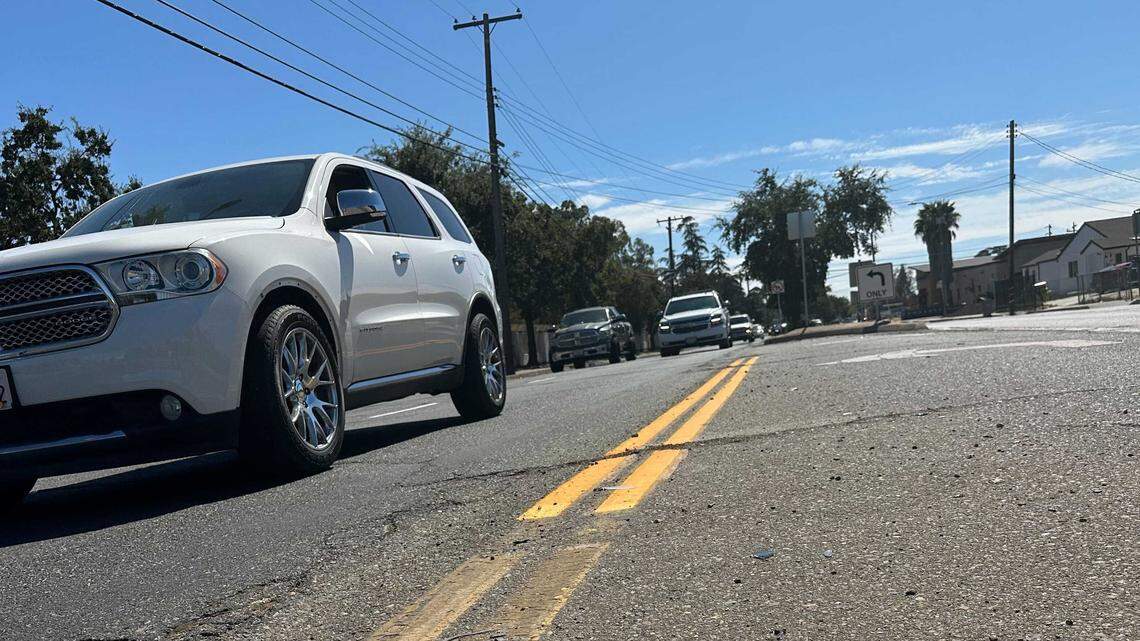
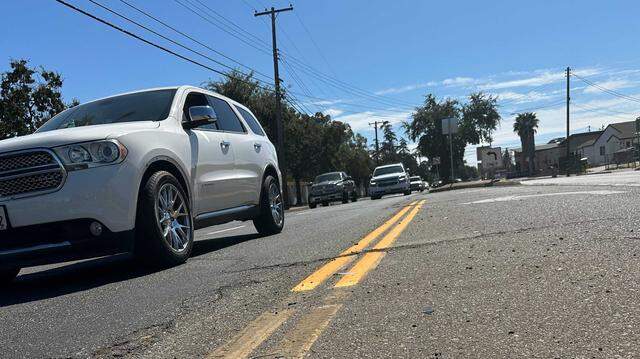
Vehicles travel along Marysville Boulevard near Nogales Street in North Sacramento in September. At a meeting on Tuesday, a city Public Works official told council members the city had at least $5 billion backlog of transportation improvements.
Daniel Hunt
dhunt@sacbee.com
The city of Sacramento has at least a $5 billion backlog of transportation improvements, according to one Public Works official, including about $3 billion on roadways where people were killed or severely injured.
At a City Council meeting Tuesday night, Transportation Planning Manager Jennifer Donlon Wyant said that since 2000, the council had adopted 700 transportation plans that the city was “unable to build.” In 2022, the department estimated the cost of those projects was about $5 billion, but the total now is likely higher because construction prices were “skyrocketing,” she said.
Donlon Wyant cited the figures while presenting on possible changes for the high-injury network — the 14% of Sacramento streets where 77% of severe crashes occur — and the city’s “Vision Zero” pledge to eliminate all traffic fatalities and severe injuries by 2027. The city is not on track to reach that goal, with at least 11 deaths so far in 2026.
“That’s somewhat daunting,” Mayor Kevin McCarty said during the meeting, referring to the high cost of the projects.
About $3 billion of the estimated cost would go toward areas with fatal or severe injury crashes, Donlon Wyant estimated to council members.
“That’s just a guess given that a lot of those areas lack basic transportation infrastructure,” she said Tuesday night, referring to North and south Sacramento neighborhoods that do not have sidewalks, curbs, gutters and drainage.
“This is why we identify the high-injury network,” Donlon Wyant added, “to figure out how we prioritize those investments and how do we get the more effective bang for the dollars that we have.”
The city adopted the Vision Zero pledge in 2017 but had not adjusted its funding structure, leaving the Department of Public Works reliant on competitive federal and state grants.
One measure that could appear on the November ballot would impose a half-cent sales tax to fund road maintenance, pedestrian and bicycle safety projects, and transit operations. The measure, if approved by voters, would increase the city’s sales tax to 9.25% and could raise as much as $70 million a year, according to organizers.
Under the Vision Zero plan, the city reduced speed limits to 15 mph in school zones at more than 100 schools, expanded data access through a collision dashboard, began construction on the quick-build project on Marysville Boulevard and installed some safety improvements at the intersection of Broadway and Martin Luther King Jr. Boulevard. Projects for Stockton Boulevard and Arden Way are ongoing with construction not set to begin for years.
“Even though the overall need is significant, we are making meaningful progress in several ways,” Donlon Wyant after the meeting.
However, in the nine years since the pledge was made, more than 270 people have died on city streets, and Sacramento has not been on track to meet the goal of zero deaths by 2027, according to the city’s collision dashboard.
At least 32 people died in vehicle crashes last year.
So far this year, at least 11 people have died in collisions. Their names are Reema Ram, 37; Christian David Garcia Flores, 31; Eunice La Vonne Queener, 67; Maria Aurora Victoria Titman, 29; Paris Lamar Johnson, 34; Ronald Howard, 68; Kalia Giselle Cabello Fernandez, 22; Dwayne Andrew Henderson, 44; Domonik Frederick Gross, 33; and two people whose names have not yet been released by the Sacramento County Coroner’s Office.
Updated city data showed that 22,538 injury or fatal crashes occurred between 2015 and 2024. Just under 1,700 were severe injury or fatal crashes, with 31% involving a pedestrian and 15% involving a bicyclist. About 48% of crashes occurred in communities considered low-income or disadvantaged, even though they include about 31% of Sacramento roads.
Donlon Wyant, who has led the Vision Zero project, presented Tuesday night on possible changes for the high-injury network. Under a new state law, the city could rework its network map to consider additional factors, such as whether pedestrians or bicyclists were struck or whether crash sites are near schools or disadvantaged communities. The city conducted community outreach through emails, community conversations, surveys and other efforts to determine which factors to include.
Council members offered up other considerations for the network including Councilmember Eric Guerra, who suggested considering areas with “near-misses,” or what he calls “near-hits,” in order to push for more proactive improvements.
The Vision Zero project drew praise, but questions remained about funding.
Councilmember Roger Dickinson, who represents North Sacramento, said Tuesday night that he was happy to see construction began for the quick-build project on Marysville Boulevard, on which four men died in crashes over two years. The project is the result of the quick-build strategy created last year that set aside about $4.6 million to construct some relatively small-scale improvements and interim improvements for larger-scale projects. Although some projects were completed, the city had not hired staff for the team intended to carry them out.
Dickinson said the issue continues to be funding. The city is facing an estimated $66 million budget gap this year following two years where expenses far surpassed revenues.
“Clearly the element that needs our attention … is the funding issue,” Dickinson said. “It’s great to have the (high-injury) network, but ultimately it’s about getting the work done, and that’s going to take our dedication, and hopefully the voters’ dedication, to helping us find more funding to do that.”
Related Stories from Sacramento Bee
The Sacramento Bee
Madison Smalstig covers transportation for The Sacramento Bee. Before joining The Bee, she reported on breaking news, focusing on crime and public safety, in the North Bay for three years. Smalstig is a born and raised Hoosier and earned degrees in journalism and Spanish at Indiana University.