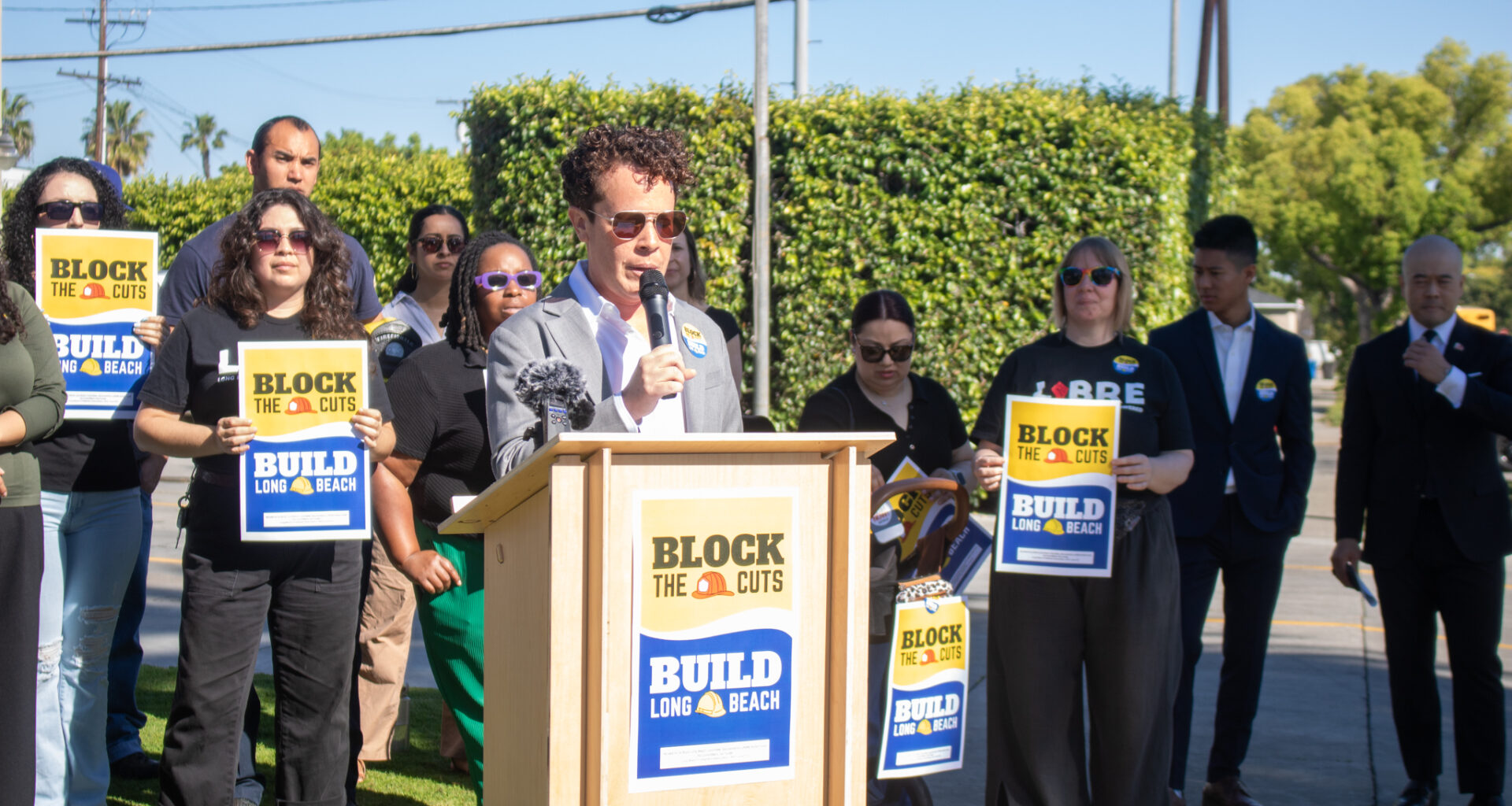
On March 12, leaders from three local organizations stood outside of Fire Station 7 to announce their new tax proposal: Block the Cuts and Build Long Beach.
The three groups, The Long Beach Firefighters Association, LiBRE (Long Beach Residents Empowered) and LAANE (Los Angeles for Alliance for a New Economy), are hoping to take a holistic approach in solving some of the city’s most pressing issues.
The issues: affordable housing, homelessness prevention, fire and emergency services, street repairs and aging water infrastructure. Their proposed solution: a parcel tax targeting industrial land use and high-income property owners.
The money, which they estimate will be around $70 million annually if the tax is approved by voters, will go specifically and only towards affordable housing and homelessness prevention; life-saving services like ambulances and updated stations; street improvements and infrastructure needs. The tax revenue is meant to bridge the gap in programs, services and resources that have been most impacted by federal cuts in the last two years.
“It’s an ask to be courageous and to take ownership over our future,” said LAANE Executive Director Víctor Sánchez. “I think the power of saving our city and making sure that our services are stabilized is in our hands and we’re just trying to get voters the opportunity to grab hold of that power and to help move us in the right direction. The burden that our communities are facing and our city and our services; we cannot continue to look at it as just housing, just fire, just labor issues. We need everyone at the table, and this is what this measure is doing.”
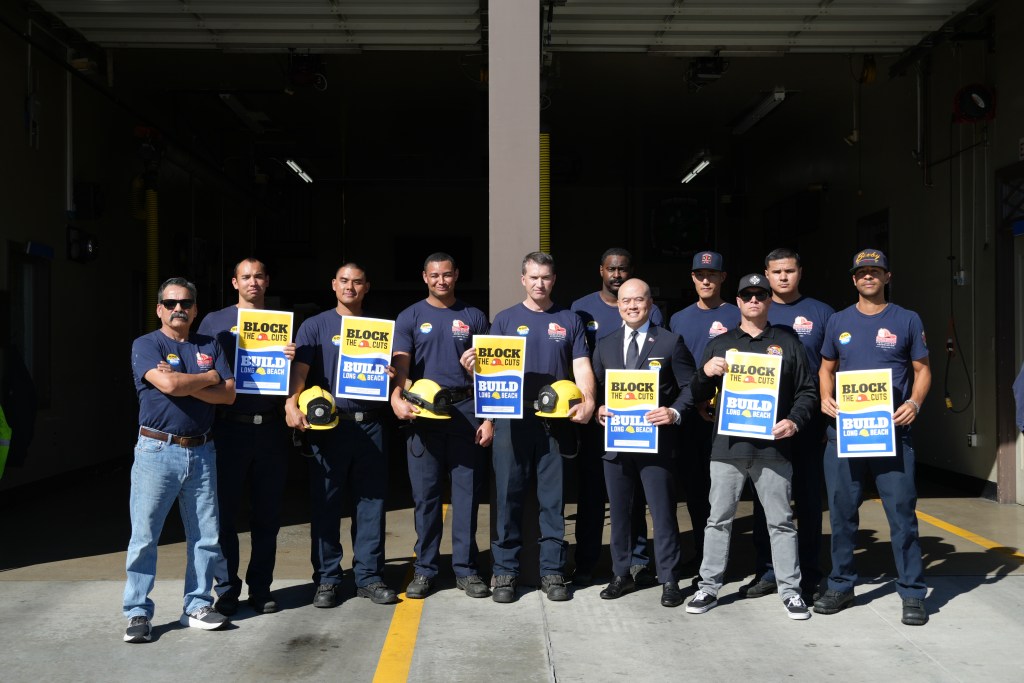 Members of the Long Beach Firefighters Association stand in support of the Block the Cuts and Build Long Beach parcel tax proposal on March 12, 2026. If approved, the tax will provide a minimum of $7 million to fire and emergency services annually. (Courtesy of LiBRE)
The parcel tax proposes taxing 15 cents per square foot of residential properties and 45 cents per square foot of industrial properties. Households with a combined income lower than $250,000 will be exempt from the tax, as well as renters. The coalition estimates that 84% of single-family homes and condos will be exempt, along with the 60% of Long Beach residents who are renters.
If approved, the tax will begin on Jan. 1, 2027. The tax may increase by up to 3% each year following.
Those who qualify for exemption will have to apply, prove their economic qualifications and be approved by the City in order to avoid the tax. There are also “protections built into” the measure so property owners would not be able to pass this tax on to their renters.
These exemptions would also apply to mobile home parks, cemeteries, agricultural land and recreational spaces.
“I think when we approached this conversation, it was about making sure that we weren’t burdening those that were already facing some of the biggest financial challenges in this moment,” Sánchez said. “I think we also just have to be upfront and real around, you know, there are major industries that place a disproportionate strain on city infrastructure. We think they need to contribute more.”
On average, residents who will be impacted by this tax will have to pay roughly $900 to $1,200 per year, according to LiBRE’s research team. The bulk of the estimated $70 million in annual revenue will come from industrial property owners, who own either office space, factories and the ever-increasing “Space Beach” facilities.
It’s less of a “tax the rich” proposal and more of a “fair share,” Sánchez said, specifically regarding the City’s public services. This past year, Long Beach has announced a number of federal funding cuts, mostly focused on health programs. The City’s federal funding webpage, launched last year, lists affordable housing programs and public safety and emergency services as two of the nine services that are in danger of federal cuts.
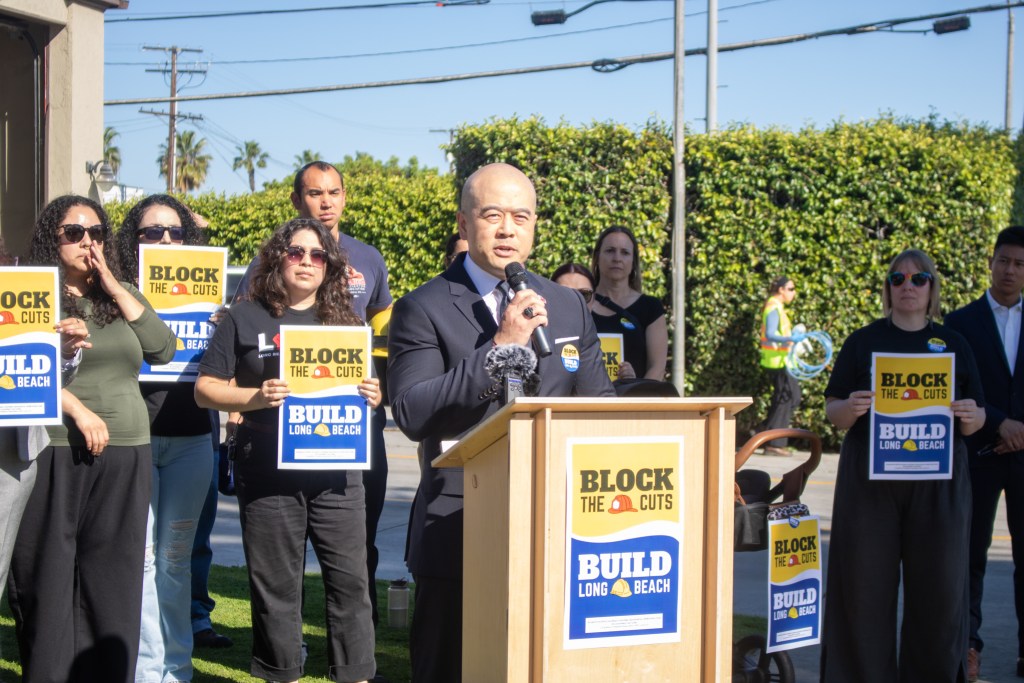 Long Beach Firefighters Association President Lamont Nguyen announces the Block the Cuts and Build Long Beach land tax on March 12, 2026. He said the tax revenue will fund much-needed resources for the fire department and help them update outdated fire stations. (Courtesy of LiBRE)
Fire and Emergency Services
For Lamont Nguyen, president of the Long Beach Firefighters Association, the venue for their announcement was a fitting example of his team’s needed resources. As he spoke in front of Fire Station 7, a New Deal plaque from the 1940s shone in the light, reflecting the funds that got the station built. Since then, he said the fire station has received no “serious modernization.”
This time last year, Nguyen brought over 100 of the city’s firefighters to a City Hall budget hearing to advocate for funding and explain the department’s need for more ambulances and updated facilities. Months later, the Firefighters Association passed a labor contract that was the first of its kind in that it guaranteed resources for another ambulance unit alongside wage negotiations.
Since becoming president of the association, Nguyen has leaned into the progressive power of his team and residents in the city to make changes rather than being reactive to change.
“We oftentimes use the tagline, ‘public safety is the priority.’ We need something that’s gonna provide real solutions, right?” Nguyen said. “From the fireside, we just looked at it as an opportunity to put something together that was actually going to be proactive, carry our same messaging forward, aligned with partners who understand, ultimately, these are the same services that we’re all going to be utilizing in the same community that we respond to.”
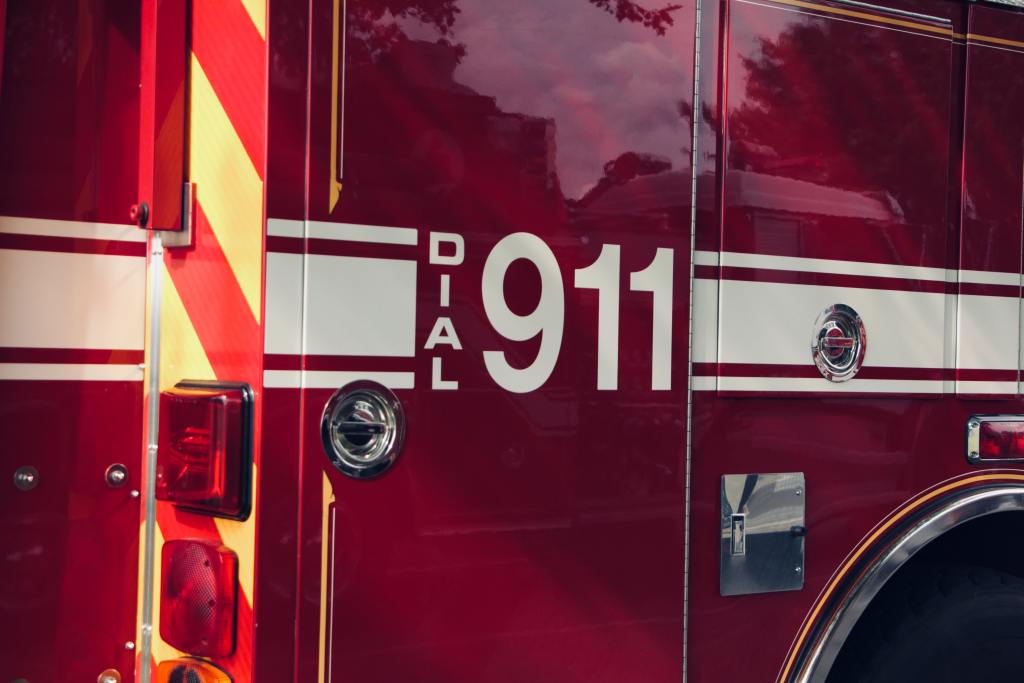 Image of a firetruck by Amy Sue H. on Pexels.com
If the Block the Cuts and Build Long Beach parcel tax passes, a minimum of 10% or $7 million will go to fire and emergency services. The main goals of this section are:
Lowering response times for fire suppression and emergency medical services and expanding emergency medical response capacity to meet rising 911 call volume, as well as reducing repeat and preventable emergency calls through mobile integrated health, community paramedicine, and community-based care strategies. (40% of funds)
Modernizing and rebuilding fire stations, EMS facilities, and emergency response infrastructure. (30% of funds)
Supporting workforce safety, training, recruitment, retention and wellness. (20% of funds)
Advancing equitable emergency medical access and outcomes, particularly in communities with historically higher emergency call volumes, health disparities and service gaps. (10% of funds)
For years, the Long Beach Fire Department has been saying they experience daily shortages with their paramedic units. To meet their needs, they often have to rely on neighboring cities’ ambulance units, creating a domino effect of longer response times.
“This gave us a different seat at the table to align with the strength in the community that truly does understand what progressive means and what it does for the community,” Nguyen said.
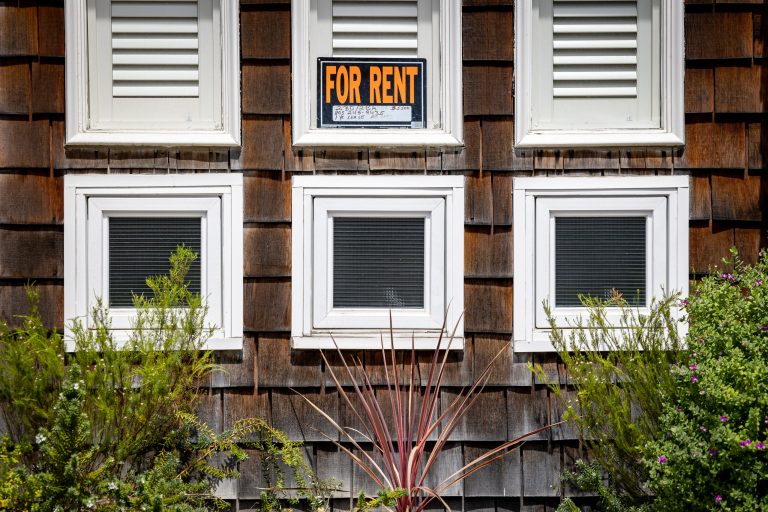
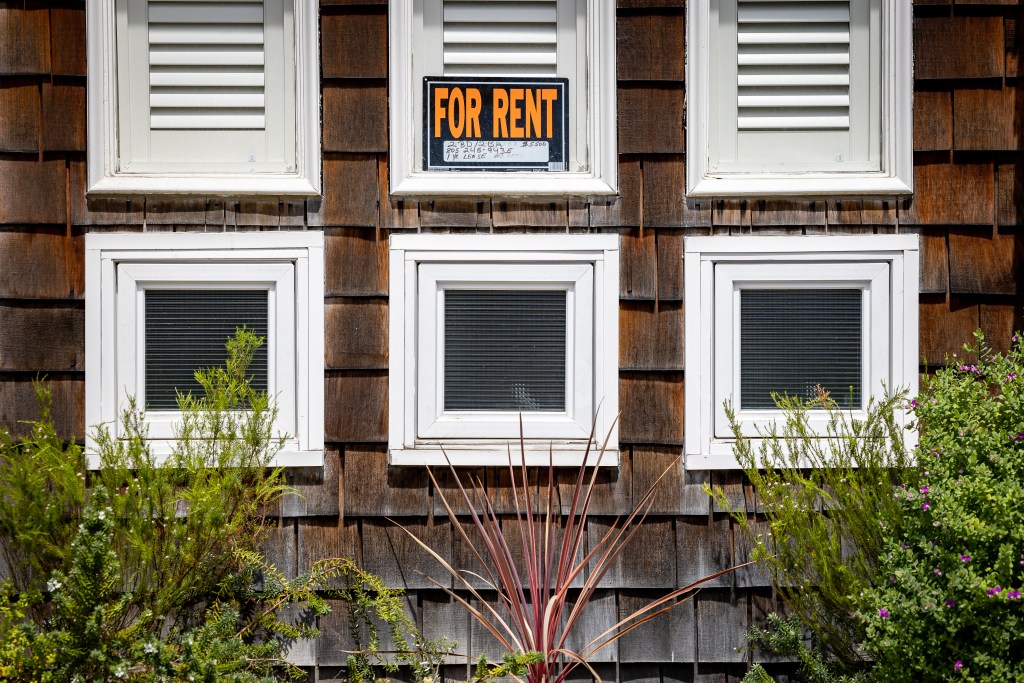 A “For Rent” sign sits in a window of a two-bedroom home, where the owners are asking for $5500 a month in rent in the Peninsula neighborhood of Long Beach on July 20, 2022. (Richard H. Grant | Signal Tribune)
Housing and Homelessness
For LiBRE, this measure is just the latest in their creative efforts to produce affordable housing, except with more teeth.
According to the written measure, Long Beach has only completed 13% of its state-mandated affordable housing production from 2021-29. Furthermore, over 2,000 multi-family units that are now affordable are set to lose their affordability contracts by 2031.
“We are every day on the ground, in the streets, talking to folks about housing,” said LiBRE Executive Director Andre Donado. “The displacement that we continue to see in the city, regardless of the passing of other progressive policies around housing, continues to be impactful, continues to separate families, and continues to take people away from our community.”
In order to meet these needs, 30% of the estimated annual revenue, or $20 million, will go towards affordable housing production, preservation and homeownership. The affordable units created with these funds — unlike the majority of the city’s current affordable units — will remain at a low-income rate in perpetuity, with no expiration that would knock it up to market value.
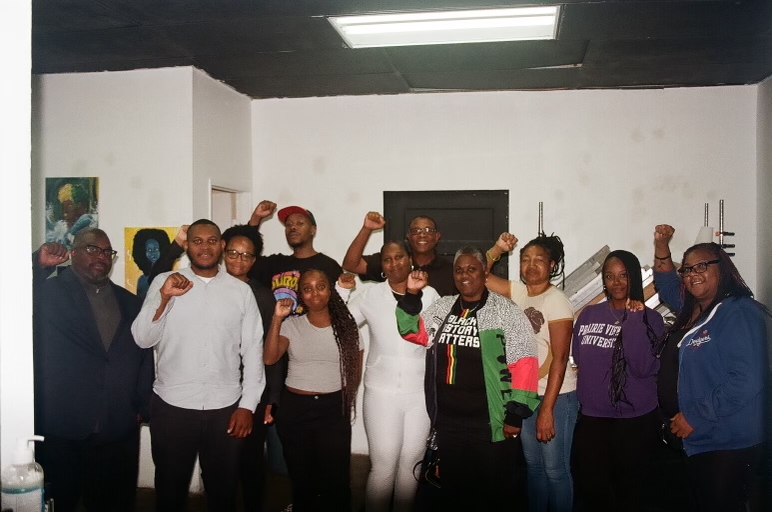 Residents at the Black Neighborhood Tenant Council meetings share important resources and empower one another through information and community. (Courtesy of J. McCall)
The main goals of these allocations include:
Creating a stable, dedicated revenue source to address housing affordability with significant community oversight and transparent public spending.
Creating permanently affordable homes and renting options and expanding shared-equity homeownership.
Preventing homelessness by connecting Long Beach residents vulnerable to homelessness (such as low-income seniors, at-risk youth, survivors of domestic violence, persons with disabilities, formerly homeless individuals and single-parent households) to resources.
Reducing the flow of residents into homelessness by stabilizing households at risk of eviction; strengthening community-based prevention systems; supporting tenant rights, financial readiness and housing navigation.
Creating shared-equity homeownership, cooperative housing, resident governance, and stewardship of properties created, preserved, or supported by this Fund.
Strengthening Long Beach’s ecosystem of nonprofit developers, community land trusts, resident-led organizations and service providers to ensure long-term stewardship and sustainability of affordable housing assets.
Alternative models of permanently affordable housing will receive 40% of these funds; rehabilitated affordable housing will receive 35%; affordable homeownership will receive 10%; and homelessness prevention will receive 15%.
“This policy really emphasizes keeping people housed,” Donado said. “So, by really having a strong investment on housing preservation, through the community and land trusts, this type of housing will ensure affordability in the perpetuity.”
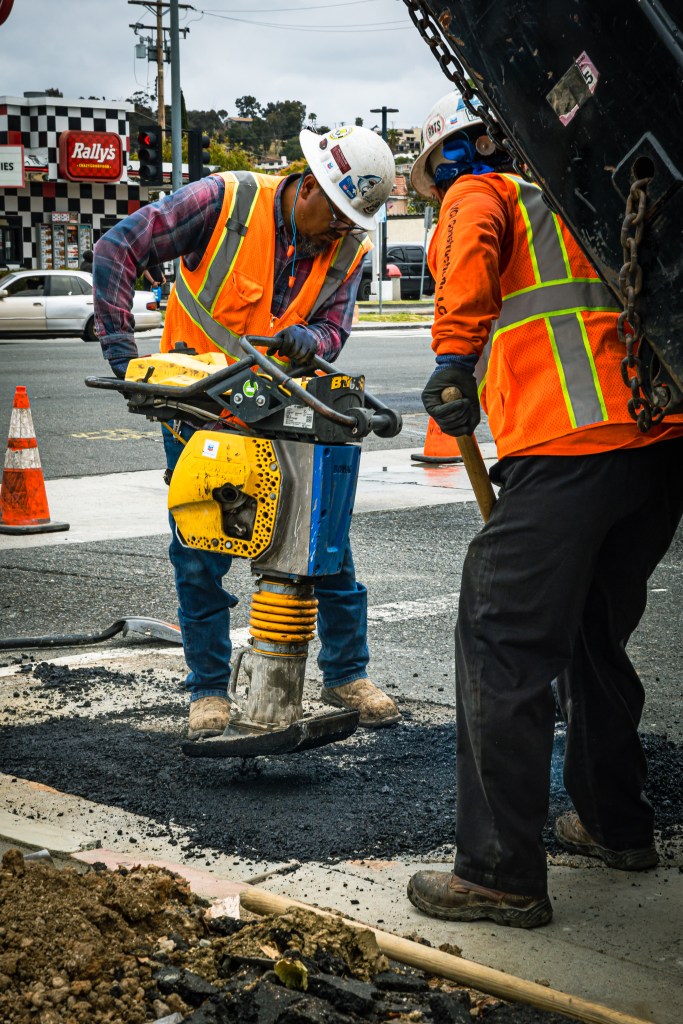 Construction workers with VCI Construction use a Jumping Jack Tamper to flatten the asphalt patch at Pacific Coast Highway and Cherry Boulevard in Long Beach on May 9, 2023. (Richard H. Grant | Signal Tribune)
Streets and Infrastructure
At least 35% of revenue from this tax must go to street improvements and aging public infrastructure.
According to the measure, Long Beach has an estimated $3.5 billion backlog of needed infrastructure improvements. These needs include the city’s streets, sidewalks, flood protection, clean water systems and public parks. Current average street conditions in the city remain below the threshold of “good.”
The main goals of this section are:
Increasing the city’s overall Pavement Condition Index (PCI) toward a standard of good repair.
Addressing the City’s infrastructure backlog by accelerating investment in streets and other critical public assets that currently lack sufficient or stable funding sources.
Advancing equity in infrastructure investment, prioritizing neighborhoods with historic underinvestment, older infrastructure, higher safety risks, and greater unmet needs.
Investing in infrastructure that supports mobility, safety, sustainability, public services, cultural assets and long-term economic development, particularly in underserved communities.
Ensuring that voter-approved infrastructure program funds are used transparently, accountably, and exclusively for infrastructure purposes, consistent with voter intent to rebuild, modernize, and sustain the physical foundation of the City for current and future generations.
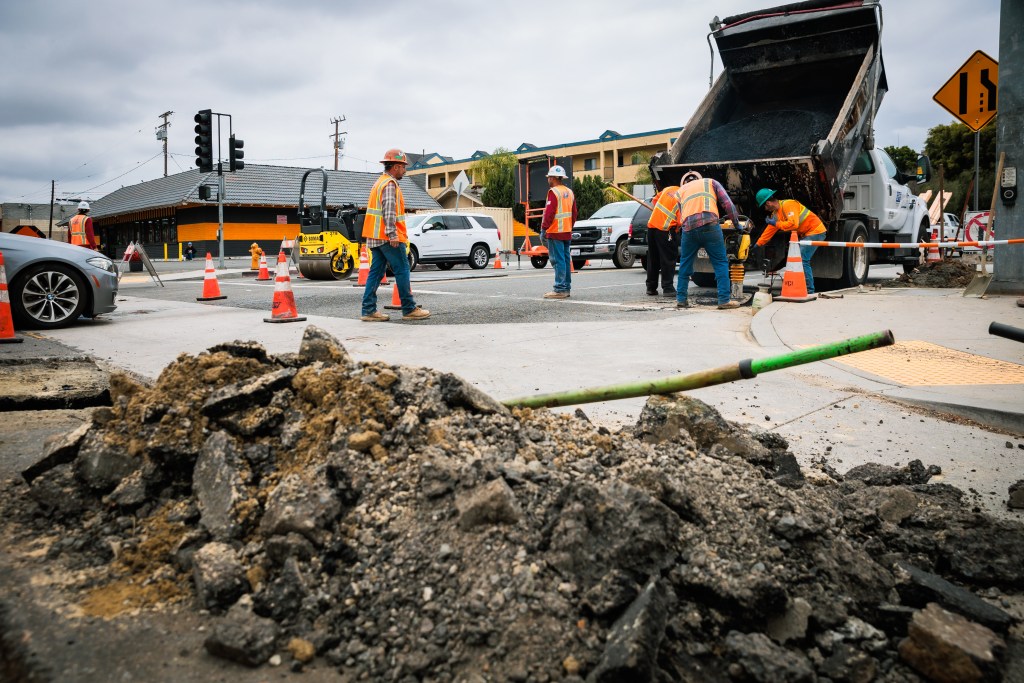 Construction workers with VCI Construction work on the intersection of Pacific Coast Highway and Cherry Boulevard on May 9, 2023. (Richard H. Grant | Signal Tribune)
The allocation of these funds will be as follows:
60% towards street and roadway infrastructure
15% towards sidewalks, alleys and active transportation infrastructure
15% towards public facilities, community and cultural infrastructure
10% towards climate resilience, coastal and stormwater infrastructure
City Services Stabilization
In alignment with the tax measure’s main goal, 25% of the revenue will be used to make up for federal funding cuts to Long Beach’s most essential services, mainly health. This portion of the measure is a bit more vague, but it mainly focuses on preserving quality-of-life services, stabilizing the City’s budget and preserving services in low-income neighborhoods.
Want more local news?
Sign up for the Signal Tribune’s daily newsletter
Protections
Along with the exemptions laid out in the item’s language, measures have also been taken to guarantee how the funding is used.
All revenue created through the tax can only be used for the services mentioned: fire and emergency services, affordable housing and homelessness prevention, street and infrastructure repairs. A separate Build LB Fund will be created for these funds, and they cannot enter the City’s general fund at any point. If the fund has reserves at the end of a fiscal year, it will roll over to the following year while still not entering the City’s general fund.
“When you talk about revenue measures and investments from the community, I think one of the most important things is making sure of transparency and accountability and how the resources are being spent,” Sánchez said. “And bar none, I think you look back at past campaigns, that’s a common thread. People want to know where the money is going, how the money is being spent.”
Additionally, the measure includes the requirement to create an oversight committee, with seven members considered experts in fire and emergency services, non-profit affordable housing, community land trust strategies, tenant protection and homelessness prevention, public works financing, a lived experience of housing insecurity or from a historically underinvested neighborhood, and someone between the ages of 16-21.
Each year, the City Manager will have to write a report and present it both to the public and the Oversight Committee breaking down the total revenues, expenditures, measurable outcomes and recommendations from the committee. Every three years, the committee can recommend changes to the allocations of funds, though housing and fire cannot fall under their minimum requirements for funding.
“We knew that a citizens oversight commission that was strong, that had teeth, that was very clearly defined and outlined, was going to be a critical part of it, one that had experts and not politicians on there,” Sanchez said. “It’s a hallmark piece of the measure, and one that we hope Long Beach voters can see is a genuine effort to make sure that we’re speaking to some of those concerns that would come up around accountability and transparency.”
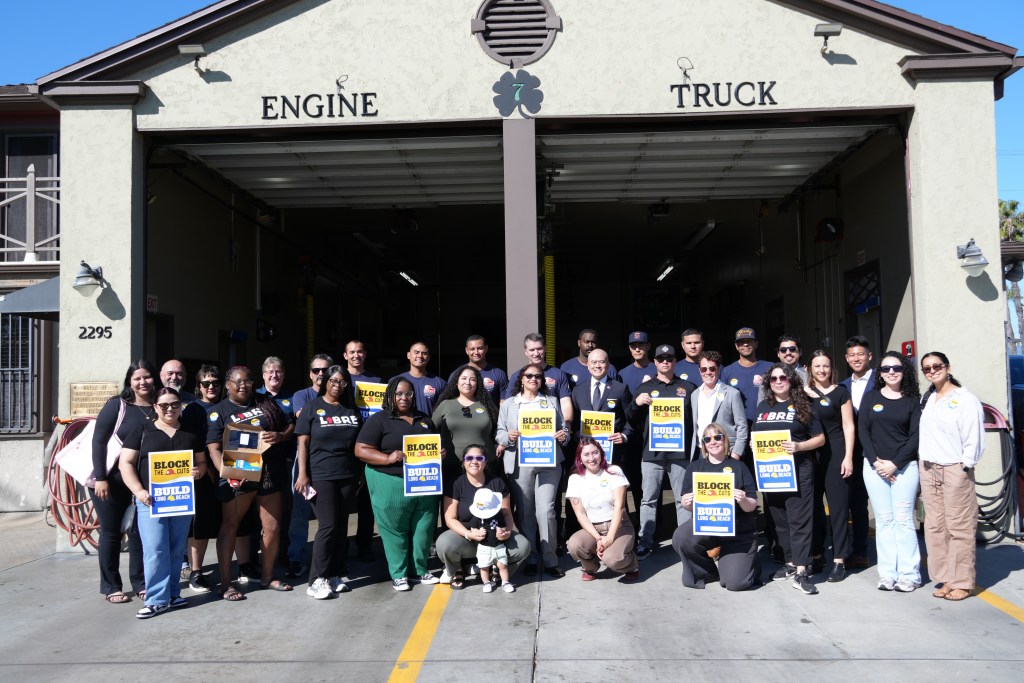 The Block the Cuts and Build Long Beach coalition presented their parcel tax proposal on March 12, 2026. The tax revenue needs 28,000 signatures by the end of May in order to get on the November Ballot. (Courtesy of LiBRE)
Next Steps
The Block the Cuts and Build Long Beach tax initiative is in its signature gathering phase.
Organizers need 28,000 signatures by the end of May in order to get the tax on the ballot in front of voters. The signature can only be provided in-person.
Over the next two months, canvassers and volunteers will go door-to-door across the city and be present at community hubs such as farmers markets and community gatherings to inform people about this effort.
If residents would like to get involved, LiBRE is hosting volunteer days on Saturdays from 9:30 a.m. to 2 p.m. with breakfast, lunch and training provided. The sign-up link is wearelbre.nationbuilder.com.
 Samantha DiazManaging Editor
Samantha is an award-winning journalist, sports fanatic and mother. She’s worked for the Signal Tribune for over three years and is passionate about covering environmental news, small businesses, mutual aid efforts and resources.
Related Posts: