
Why this matters
Pollution in the Tijuana River has impacted communities on both sides of the U.S.-Mexico border for decades. As officials seek solutions, the public health crisis continues to plague residents.
It’s your water and air. Help us investigate what is in it.
Give $10
As temperatures soared to record levels and officials issued warnings about the heat wave sweeping San Diego, hydrogen sulfide levels in and around the Tijuana River have also spiked. At the same time, bacterial levels are also high.
The Tijuana River Coalition issued a press release on Friday calling for a “timely and reliable” alert system to warn residents of contamination spikes and for better coordination among public agencies to connect residents and schools with information that could help people protect their health.
“This crisis will only get worse as we head into summer, and we need to be aware of the dangers we face as we dare to breathe the air,” said Bethany Case, an Imperial Beach community member and a lead volunteer for San Diego Surfrider’s Clean Border Water Now initiative.
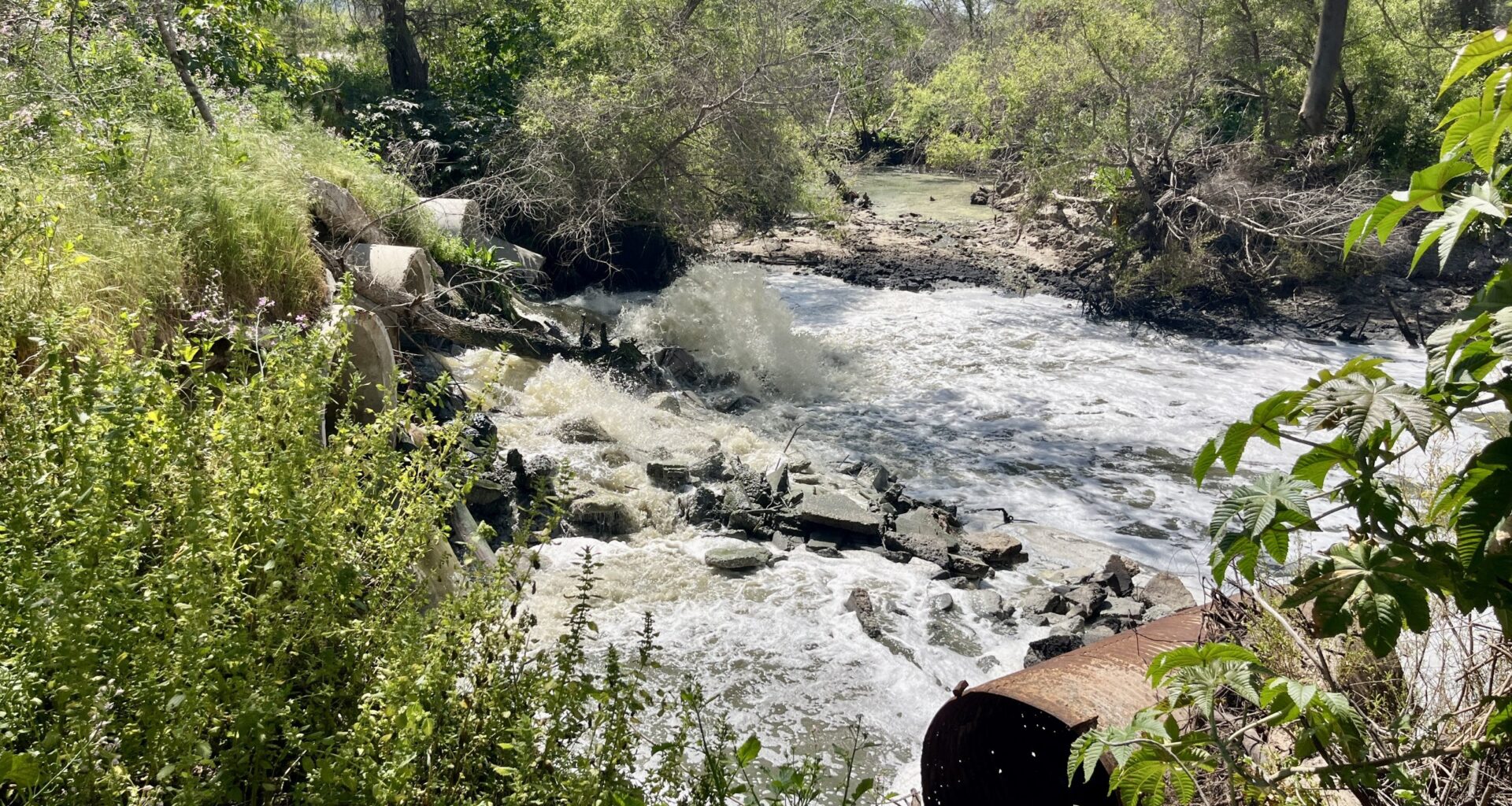
Water contaminated with sewage and chemicals flowing into the Tijuana River has remained high for the dry season, flowing at 30 to 40 million gallons a day.
Hydrogen sulfide levels are reaching numbers comparable to September 2024, when scientists found alarming levels of the toxic gas emanating from the river. Levels have been reaching and sometimes surpassing 2,000 parts per billion in recent days per the Airborne Institute’s live monitoring data, which displays a one-minute resolution. The county dashboard, which reports a one-hour resolution per state regulation and is set up further away from the river, has been displaying levels near 400 parts per billion. The California nuisance standard is an hourly average of 30 parts per billion.
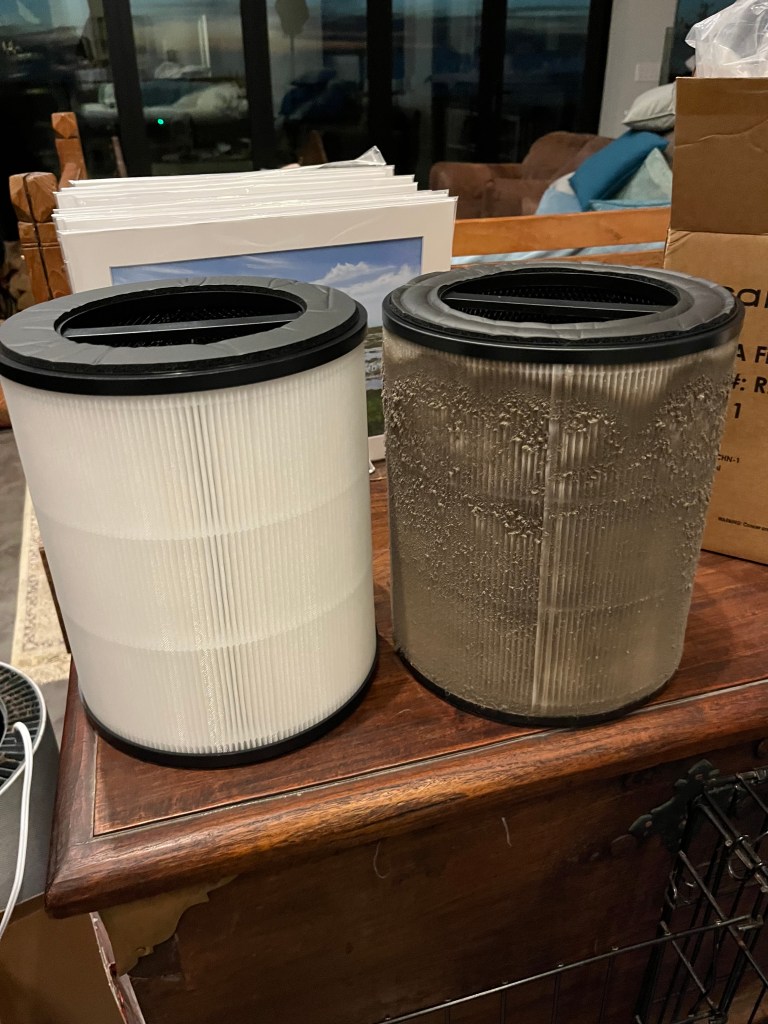 View of a new air filter next to a 4 month-old filter at a resident’s house in Imperial Beach in March. (Photo courtesy of Tom Csanadi)
Scientists have observed similar patterns in correlation with atmospheric conditions since they began to study the issue. They say that marine layer inversions and low wind could be trapping pollutants at ground level and affecting air quality.
Bacteria numbers in Imperial Beach coastal waters have also been high. On Wednesday enterococcal numbers reached over a million DNA copies per 100 milliliters of water. Water contaminated with the fecal bacteria at a level of 1,413 is considered a risk to public health.
Kimberly Dickson, a doctor who runs the Imperial Beach clinic South Bay Urgent Care, said that she has observed increases of patients with respiratory symptoms and headaches following elevated hydrogen sulfide numbers. In the Tijuana River Coalition’s press release, she said she is concerned about acute and long-term impacts from exposure to pollution in the river.
“The situation is unacceptable and demands urgent intervention,” she said.
Sayone Thihalolipavan, a county public health officer said the county is “committed to working with the coalition, healthcare providers and other partners to provide information and support to the community.”
Last year inewsource published a months-long investigation chronicling the health impacts residents have been experiencing related with the sewage in the river, interviewing more than 100 residents who said they and their neighbors are getting sick. The investigation also highlighted calls for a more robust and efficacious warning system.
For more information:
Type of Content
News: Based on facts, either observed and verified directly by the reporter, or reported and verified from knowledgeable sources.