
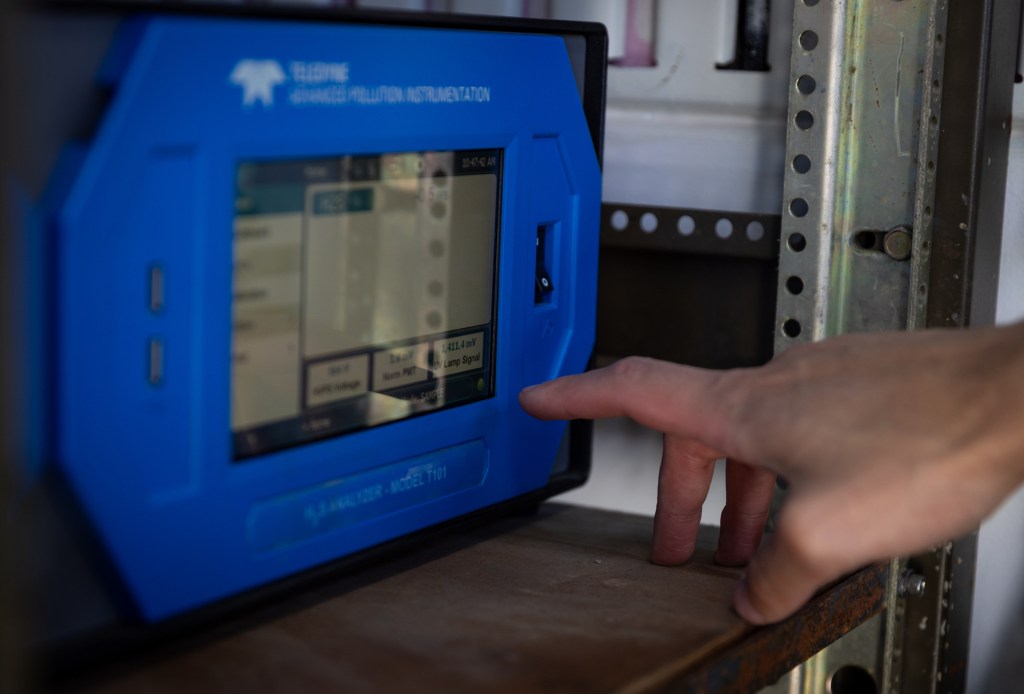
An unseasonable heatwave and a broken sewage pump in Tijuana have combined to drive toxic gas levels in South Bay communities to their highest recorded point since October 2024, raising fresh alarm about the ongoing pollution crisis around the Tijuana River Valley.
Hydrogen sulfide, or H2S, levels in the Nestor neighborhood reached approximately 557 parts per billion on Friday as of this report — nearly 18 times the San Diego County Air Pollution Control District’s unsafe exposure threshold of 30 parts per billion, according to APCD monitoring data.
It marked the most severe single-day reading of the current heatwave, which began around March 12, when temperatures in San Diego started climbing toward a peak of roughly 90 degrees Fahrenheit by Friday.
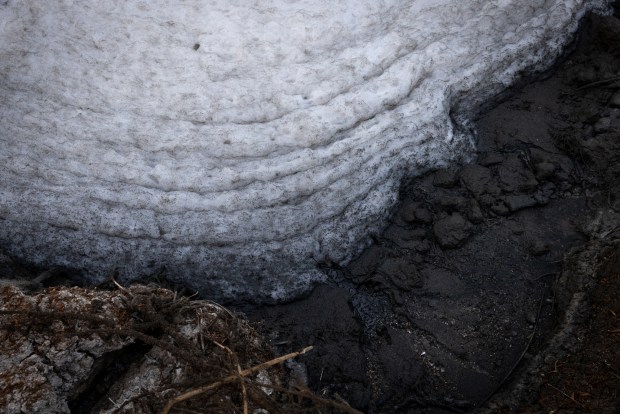 Sewage flows down the Tijuana River on Tuesday, Sept. 10, 2024 in San Ysidro, California. University of California San Diego and San Diego State University research teams temporarily pulled out of the Tijuana River Valley after detecting high levels of hydrogen cyanide and sulfide during ongoing monitoring. (Ana Ramirez / The San Diego Union-Tribune)
Untreated wastewater flows crossing the border from Mexico have remained elevated throughout the dry season, running between 20 million and 52 million gallons per day, according to the U.S. International Boundary and Water Commission. The South Bay International Wastewater Treatment Plant, also operated by the IBWC, processed less than 25 million gallons per day throughout the heatwave — leaving a significant volume of untreated wastewater flowing through unchecked.
Compounding the problem, the IBWC reported that a pump failure at Mexican Pump Station PB1 caused transboundary flows at Stewart’s Drain on March 14 and 15. The county reported that work to repair the broken pump may also be contributing to elevated odors in the area.
The Tijuana River Coalition, a group of more than 65 nonprofits and community organizations, issued a statement Friday calling on public agencies to improve coordination and build a faster, more accessible alert system. The coalition noted that current atmospheric conditions — including marine layer inversions and low winds — may be trapping pollutants at ground level, worsening exposure for residents.
Bethany Case, an Imperial Beach resident and lead volunteer with Surfrider’s Clean Border Water Now campaign, said the smell had penetrated her home and vehicles.
“We cannot escape this crisis,” Case said. “Receiving word that the pollution is above safe levels when we can clearly smell that they are is way too late.”
Local physician Kimberly Dickson, who both lives and practices in the area, said in a statement she has seen a rise in patients presenting with symptoms consistent with H2S exposure.
“The situation is unacceptable and demands urgent intervention,” Dickson said.
Forecasters expect temperatures to ease over the weekend, though they are expected to remain above normal. The APCD is tracking H2S levels through its monitoring network and offers free email and text alerts to residents when emissions exceed 30 parts per billion.
Free air purifiers are also available through the district for impacted households.
San Diego County Public Health Officer Sayone Thihalolipavan said the county remains engaged with partners across the region.
“We are committed to supporting the South Bay community,” Thihalolipavan said in a statement. “We will continue to coordinate to expand resources and find long-term solutions to the unacceptable conditions in the Tijuana River Valley.”