
Tyler Cowen’s emergence as an influential U.S. intellectual has been driven by his relentless questioning of dogma from across the political spectrum. The core principle of the George Mason University economist and Bloomberg Opinion columnist is that serious people must be willing to “update their priors” — their existing beliefs — rather than dismiss contrary new information.
This is why he eviscerates those on the right who reflexively say “government is the problem” and those on the left who reflexively see corporations as amoral agents of inequality.
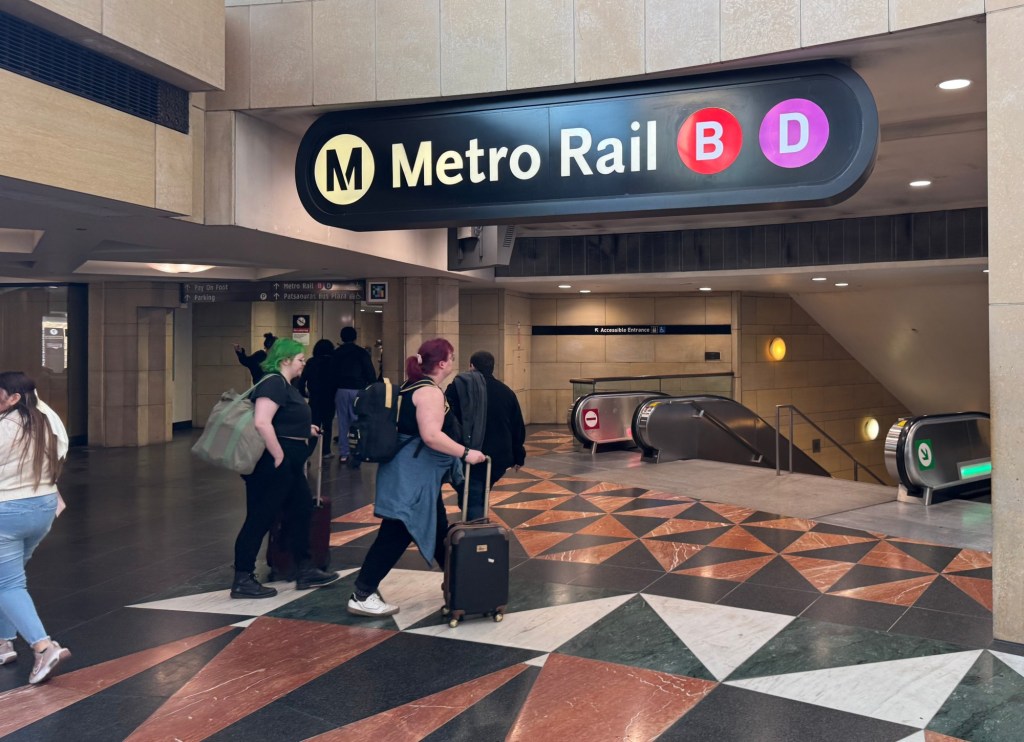
If Cowen lived in California, there is a chance he would have spent the last 30 years in an insane asylum. On issue after issue, state leaders never “update their priors.” This could not be better illustrated by the pro-con on transit posted Friday on the U-T’s Opinion pages.
Adam B. Summers makes the simple, powerful case that mass transit has had a small market share in California for decades — the public, in effect, has spoken — and that it’s illogical to provide ever-greater taxpayer subsidies as ridership declines. He also vaporizes the argument that this decline was due to the pandemic by noting ridership had been plunging for years before COVID-19 arrived in 2020.
In sharp contrast, state Sen. Catherine Blakespear, D-Encinitas, treats the declining demand for transit as secondary to what she calls its status as a “fundamental public benefit.”
So much for the idea that public goods still have to be used to justify their cost — especially when subsidies rise even as usage falls. She does, however, acknowledge that the pandemic has made it far more common for people to work from home and says “transportation patterns must adapt” to this fact.
Uh, senator, they did! Many people happily gave up on this “fundamental public benefit,” welcoming not having to spend an hour a day or more going to and from work. The private sector has figured out that people like working from home. This is why construction of new office buildings has plunged and why CNBC reported last year that more office space is being removed than added in the U.S. for the first time in at least 25 years. CEOs have “updated their priors” and grasped the evidence that 2019 isn’t coming back.
But for many government officials who are spending taxpayer money and don’t have shareholders to worry about, their belief in public transit is unwavering. So what if it needs more than 80% in subsidies, year in and year out, and soon maybe 90%. Transit is inherently good and cars are inherently bad. And if a great majority of Californians disagree, tough luck for them.
Here’s one existing belief that doesn’t need any updating: When important policies are driven more by ideology than by how people actually behave, they are unlikely to work — and they are certain to be costly.