
Temperatures are shattering records across the West this week. Many cities in Northern California have set new daily record high temperatures each of the past four days. Sacramento reached a high temperature of 87 degrees Thursday. This easily breaks the previous record of 81 degrees set in 2015. Modesto’s high temperature of 88 degrees cleared the previous daily record of 87 set in 1960. Stockton’s high of 90 degrees on Thursday is a new daily record high seven degrees. It also breaks the March monthly record high which the city just broke on Wednesday. This is the earliest occurrence of a 90 degree day in Stockton’s recorded history.Modesto and South Lake Tahoe both also set new all-March high temperatures on Wednesday. South Lake Tahoe’s high of 76 degrees Wednesday also ties the all-April record high. Sacramento tied the all-March record with a high of 88 degrees Wednesday. Thursday was slightly cooler with a high of 87.Below is a summary of the other records observed so far as well as the forecast from the KCRA 3 weather team. Tracking record highsRecord-breaking temperatures began rolling in last weekend.Sacramento reached 80 degrees for the first time in 2026 on Sunday, March 15th. The high was 82 degrees, which tied the daily record high set in 2007. On average, Sacramento reaches 80 degrees for the first time on April 4. Monday’s high temperature broke a record for Sacramento. The National Weather Service reported a high of 84 degrees on March 16th. The previous record was 83 degrees in 2007. Tuesday brought more widespread record heat to Northern California. San Francisco, Sacramento, Stockton, Modesto and South Lake Tahoe all broke daily records according to the National Weather Service. Stockton’s high of 87 degrees on Tuesday tied the city’s all-March record high. That record was then broken on Wednesday when the high temperature hit 89 degrees. Sacramento is also likely to set a new record for the highest number of 80 degree days in March. The current record is 7 days. The forecast currently calls for at least 8.Daily record highs are possible through Sunday in the Valley and Tahoe area.Summerlike forecastThis week’s weather pattern is dominated by an area of high pressure that’s more typical of summer than early spring. This strong high is centered right over the desert Southwest Thursday. It will move further away from Northern California and weaken during the next few days. This will allow temperatures to gradually decrease. Next week will feel cooler by comparison, but Valley high temperatures will still be well above normal for late March. Sacramento’s normal highs are in the upper 60s next week. The forecast calls for highs in the upper 70s. The Foothills will see high temperatures in the mid 70s. Sierra temperatures will ease back into the mid 60s but morning temperatures may stay above freezing. The role of climate changeWarm, dry spells aren’t unusual this time of year in Northern California. But this prolonged stretch of record heat will be unprecedented in terms of modern record keeping. That’s due in large part to the effects of global climate change. According to data published by NASA, Earth’s global average temperature has been increasing since the Industrial Revolution. The rate of that increase has nearly doubled in the past 50 years.When large scale warming happens in the background, our hottest days become hotter and our cold days become less cool. Just in the past six years, Sacramento’s Executive Airport has recorded 61 record high temperatures but only 6 record low temperatures. Said another way, climate change is putting a finger on the scale for high temperature records. And it’s making them more likely in the future. The group Climate Central has a model called the Climate Shift Index. It tracks the influence of global warming on major weather events. According to the Climate Shift Index, this week’s heat in the Four Corners region is 5 times more likely to occur in the future because of global temperature increases over the past 50 years. The climate science community is in strong agreement that increases in global temperatures are mostly being driven by human greenhouse gas emissions.See more coverage of top California stories here | Download our app | Subscribe to our morning newsletter | Find us on YouTube here and subscribe to our channel
Temperatures are shattering records across the West this week.
Many cities in Northern California have set new daily record high temperatures each of the past four days.
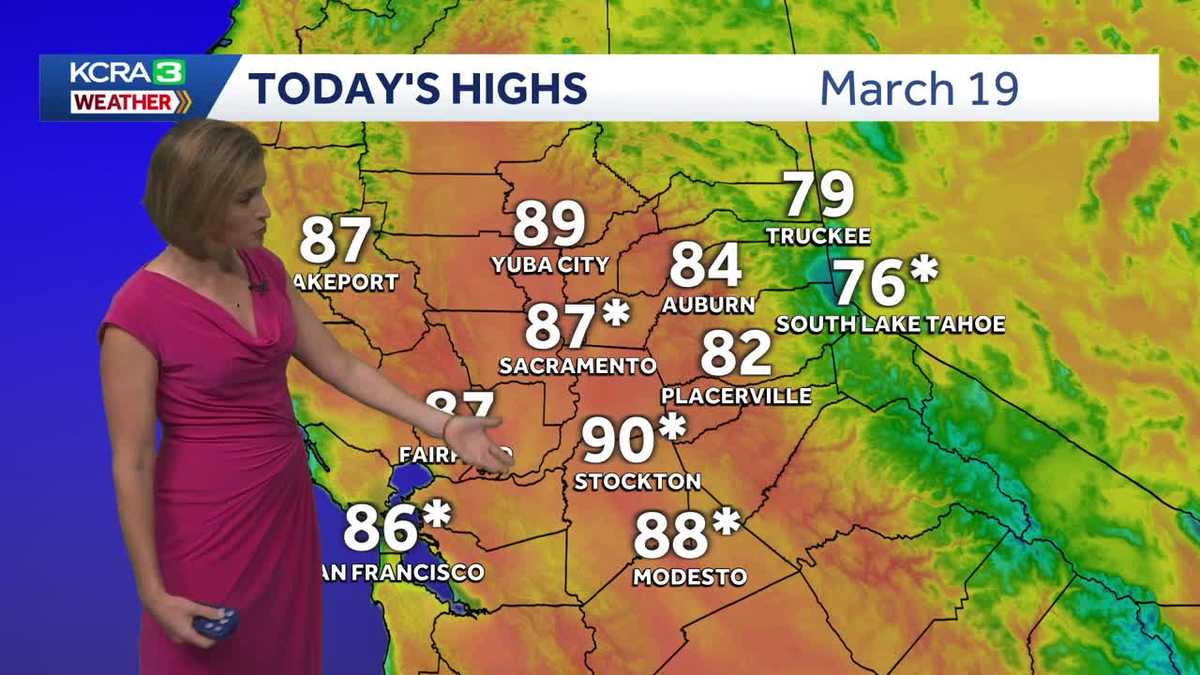
Sacramento reached a high temperature of 87 degrees Thursday. This easily breaks the previous record of 81 degrees set in 2015. Modesto’s high temperature of 88 degrees cleared the previous daily record of 87 set in 1960.
Stockton’s high of 90 degrees on Thursday is a new daily record high seven degrees. It also breaks the March monthly record high which the city just broke on Wednesday. This is the earliest occurrence of a 90 degree day in Stockton’s recorded history.
Modesto and South Lake Tahoe both also set new all-March high temperatures on Wednesday. South Lake Tahoe’s high of 76 degrees Wednesday also ties the all-April record high.
Sacramento tied the all-March record with a high of 88 degrees Wednesday. Thursday was slightly cooler with a high of 87.
Below is a summary of the other records observed so far as well as the forecast from the KCRA 3 weather team.
Tracking record highs
Record-breaking temperatures began rolling in last weekend.
Sacramento reached 80 degrees for the first time in 2026 on Sunday, March 15th. The high was 82 degrees, which tied the daily record high set in 2007. On average, Sacramento reaches 80 degrees for the first time on April 4.
Monday’s high temperature broke a record for Sacramento. The National Weather Service reported a high of 84 degrees on March 16th. The previous record was 83 degrees in 2007.
Tuesday brought more widespread record heat to Northern California. San Francisco, Sacramento, Stockton, Modesto and South Lake Tahoe all broke daily records according to the National Weather Service.
Stockton’s high of 87 degrees on Tuesday tied the city’s all-March record high. That record was then broken on Wednesday when the high temperature hit 89 degrees.
Sacramento is also likely to set a new record for the highest number of 80 degree days in March. The current record is 7 days. The forecast currently calls for at least 8.
Daily record highs are possible through Sunday in the Valley and Tahoe area.
Summerlike forecast
This week’s weather pattern is dominated by an area of high pressure that’s more typical of summer than early spring. This strong high is centered right over the desert Southwest Thursday. It will move further away from Northern California and weaken during the next few days. This will allow temperatures to gradually decrease.
Next week will feel cooler by comparison, but Valley high temperatures will still be well above normal for late March. Sacramento’s normal highs are in the upper 60s next week. The forecast calls for highs in the upper 70s. The Foothills will see high temperatures in the mid 70s. Sierra temperatures will ease back into the mid 60s but morning temperatures may stay above freezing.
The role of climate change
Warm, dry spells aren’t unusual this time of year in Northern California. But this prolonged stretch of record heat will be unprecedented in terms of modern record keeping.
That’s due in large part to the effects of global climate change. According to data published by NASA, Earth’s global average temperature has been increasing since the Industrial Revolution. The rate of that increase has nearly doubled in the past 50 years.
When large scale warming happens in the background, our hottest days become hotter and our cold days become less cool. Just in the past six years, Sacramento’s Executive Airport has recorded 61 record high temperatures but only 6 record low temperatures.
Said another way, climate change is putting a finger on the scale for high temperature records. And it’s making them more likely in the future.
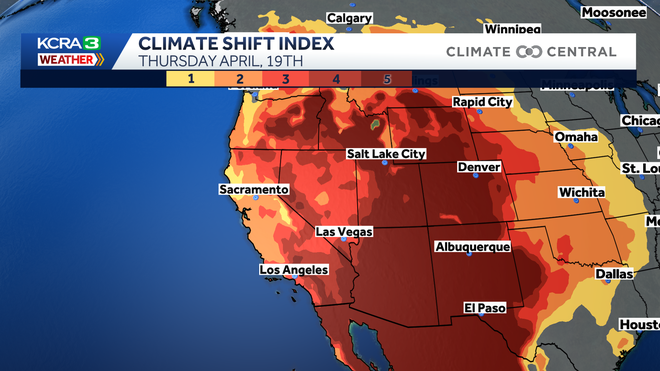
The group Climate Central has a model called the Climate Shift Index. It tracks the influence of global warming on major weather events. According to the Climate Shift Index, this week’s heat in the Four Corners region is 5 times more likely to occur in the future because of global temperature increases over the past 50 years.
Hearst Owned
Climate Central’s Climate Shift Index indicates that the heat forecast in the Four Corners region this week is 5 times more likely to occur because of global temperature increases caused by increased human carbon emissions.
The climate science community is in strong agreement that increases in global temperatures are mostly being driven by human greenhouse gas emissions.
See more coverage of top California stories here | Download our app | Subscribe to our morning newsletter | Find us on YouTube here and subscribe to our channel