
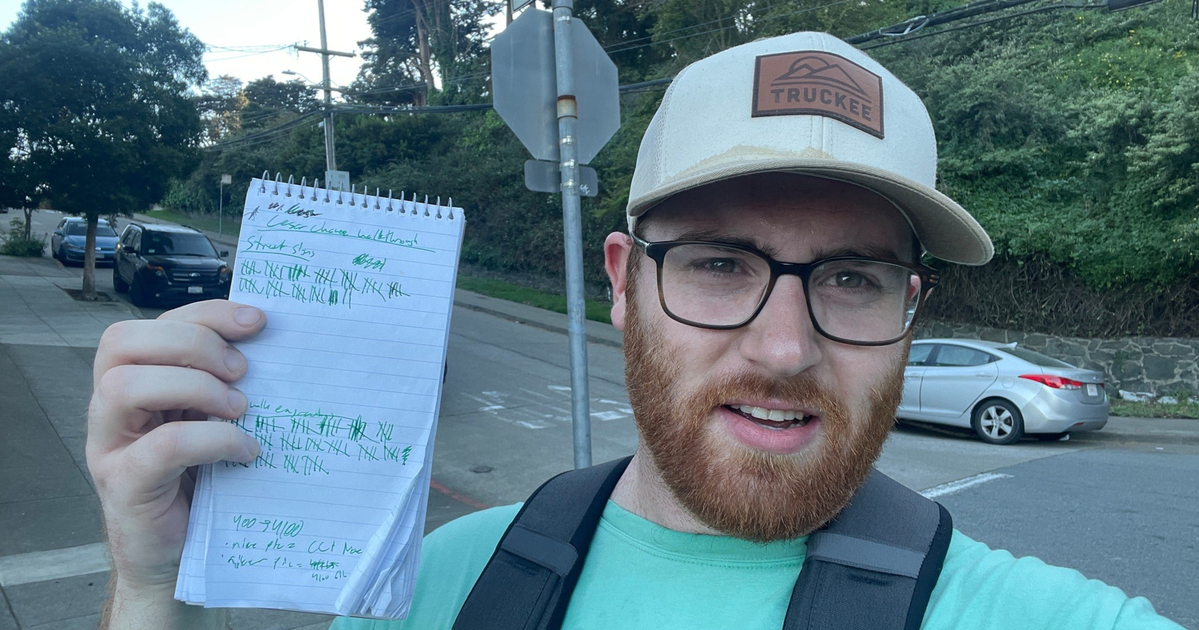
I had two other stories to work on, but my editors decided I wasn’t suffering enough.
“We have an assignment that’s perfect for a man of your unique talents,” said deputy news editor Michael McLaughlin, who sidled up to my desk Thursday morning, grinning.
I sighed. Would I need to go to an (alleged) brothel again? Climb up another dangerous roof?
Nope, he replied, just take a walk.
I was sent to walk the full 3.5 miles of the notoriously unshaded Cesar Chavez Street and count every street sign and sidewalk engraving bearing the name of the newly disgraced farmworkers union leader — during an unprecedented heat wave, no less.
Both Mayor Daniel Lurie and Supervisor Jackie Fielder have said they support renaming the whole street to erase its connection with the late labor hero, who’s now been accused of sexual abuse. My assignment was to gauge how daunting the task would be, and ask community members along the way what they thought about renaming the boulevard formerly known as Army Street yet again (opens in new tab).
Seven hours of sweaty ambling, chafing, and awkward chit-chat with strangers ensued. I got sunburned despite reapplying sunscreen three times. All in the effort to find out that there are 59 street signs with Cesar Chavez’s name on them, and 85 places where his name is etched into the sidewalk.
What seemed like a simple question about the cost and timeline for replacing all the street signs turned into a runaround between three city departments—none of which had a clear answer.
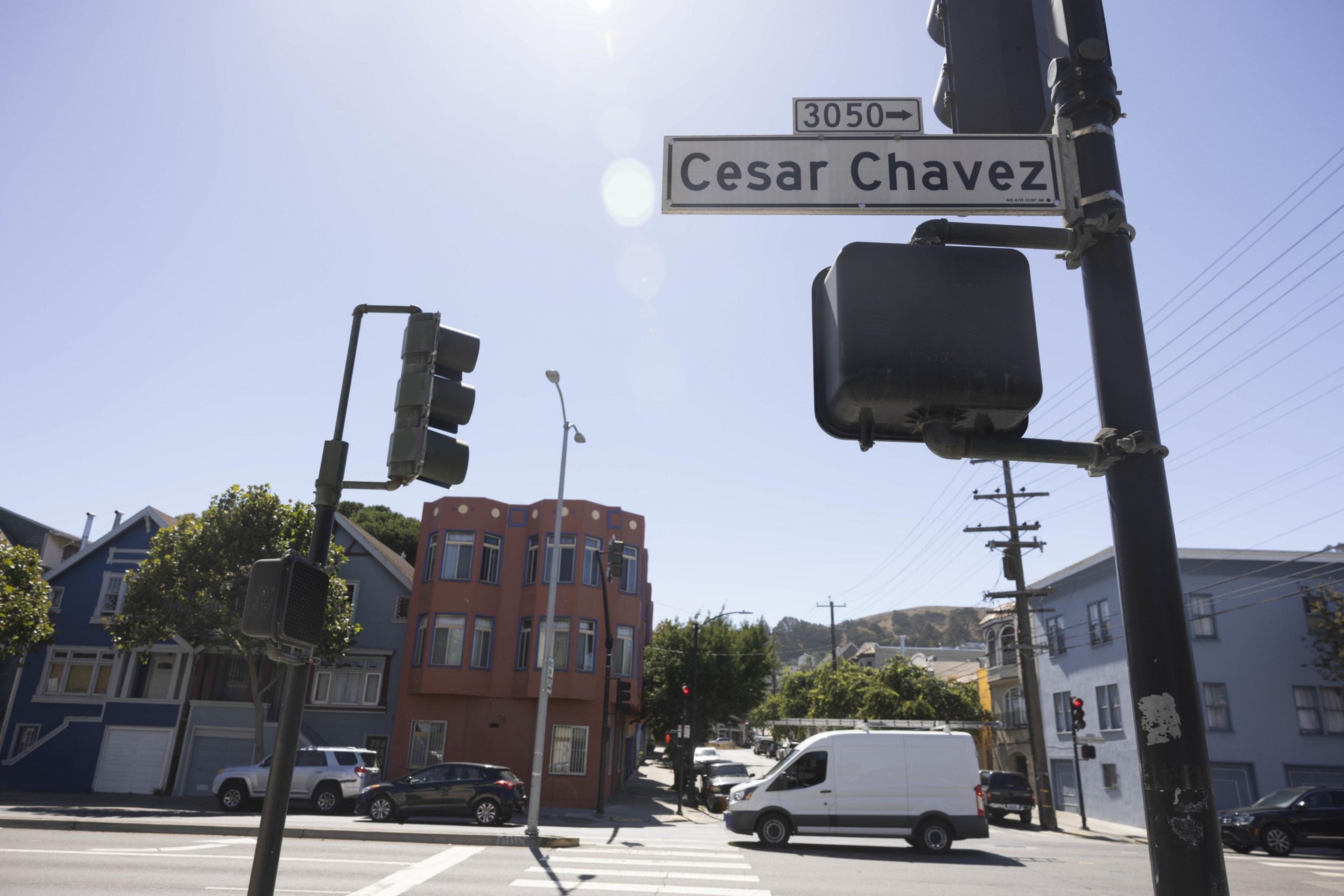 City officials have said they support renaming Cesar Chavez Street, but it remains to be seen what the new name could be. | Source: Emily Steinberger/The Standard
The mayor’s office said two city departments and Caltrans would be involved. The physical street signs are regulated by the San Francisco Municipal Transportation Agency, and the sidewalk engravings fall under the control of the Department of Public Works. Caltrans would handle the freeways.
But none addressed how much it costs to purchase and install a single street sign. Re-etching the sidewalk would cost about $1,800 per intersection. Across Cesar Chavez’s 37 blocks, that comes to roughly $66,600 for the sidewalk engravings.
The Board of Supervisors can rename a street with or without public support, so long as property owners and government agencies are notified, public notice is posted, and residents get a chance to object, according to DPW spokesperson Rachel Gordon.
During my hours-long journey, I thought about the history of the street. The thoroughfare was called Army Street until 1995, when it was renamed for Chavez. City law requires that roads getting renamed must still display the previous name for five years. Indeed, there are still multiple signs that show Army Street underneath Cesar Chavez Street.
Suffice it to say: renaming the street would be more than a symbolic exercise. Businesses and residents will have to sort out the address changes. But what, exactly, should it be renamed?
Maurice “Moe” Berry, 52, who’s lived in the Bernal Dwellings public housing site just off of Cesar Chavez Street for 11 years suggested Rashawn Williams, a 14-year-old football player for Sacred Heart Cathedral High School who was fatally stabbed outside nearby Rubin’s Market in 2014, or Alex Nieto, a 28-year-old security guard who was shot dead by police in Bernal Heights Park in 2017.
“Name it after someone who lived here, died here,” Berry said.
Another neighbor, Vera P., 50, said that the street should be changed from honoring Chavez and revert to its prior name, Army Street.
“He was a pedophile and a rapist,” she yelled over the rolled-down window of her Kia SUV.
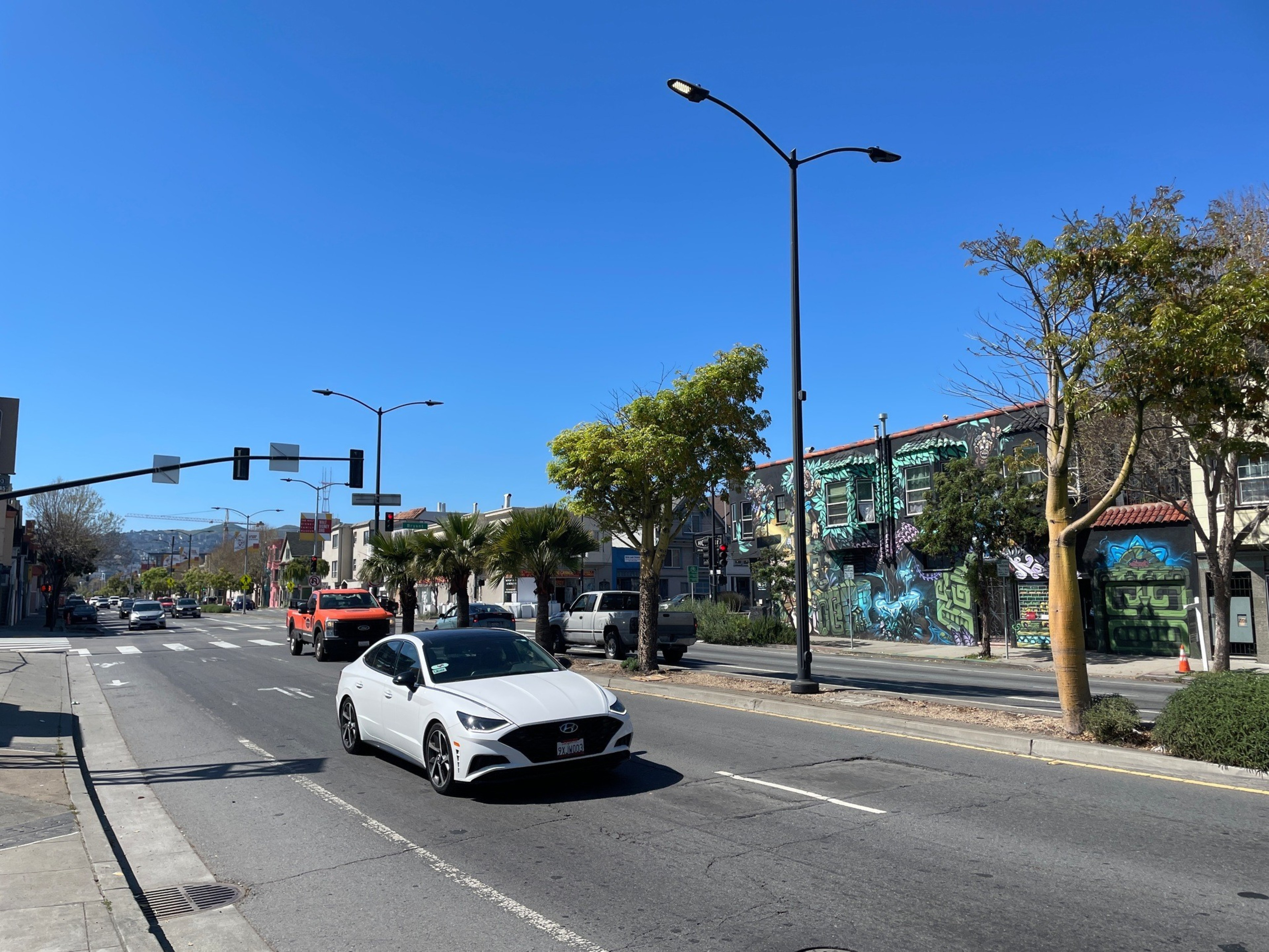 Cesar Chavez Street runs from the Dogpatch to Noe Valley, passing through the Mission near Bryant Street. | Source: Garrett Leahy/The Standard
While running back the name Army Street was appealing to some, others contended that the unpopular American military action in Iran might muddy that choice.
Enrique Gomez, 48, a salesperson at Cesar Chavez Auto Service — which he noted is named after the street, not the man — worried that no matter what the city chose, some people would be upset or confused by another renaming. He highlighted that any individual could one day become mired in controversy, as Chavez has, even decades after his death.
“It’s a catch-22,” he said.
Carolina Barrios, a native of Colombia, said she’d support having the street renamed to “Madre Tierra” — Mother Earth — to reflect the city’s commitment to clean energy and environmental justice.
David W., an Uber driver who lives on Cesar Chavez, suggested naming the street after Carlos Santana, the San Francisco music legend, before quickly pivoting to another idea: “Abolish ICE Boulevard.”
“That one would be cool as fuck,” the 30-year-old said. “You shouldn’t have a street named after a rapist.”
David Jimenez, an unhoused man resting against the wall of an Extra Space Storage on Cesar Chavez Street, pitched “Wonderland” or “Imperial,” before deciding that maybe the best option would be to name it after Amelia Velazquez, a friend of his ex-girlfriend.
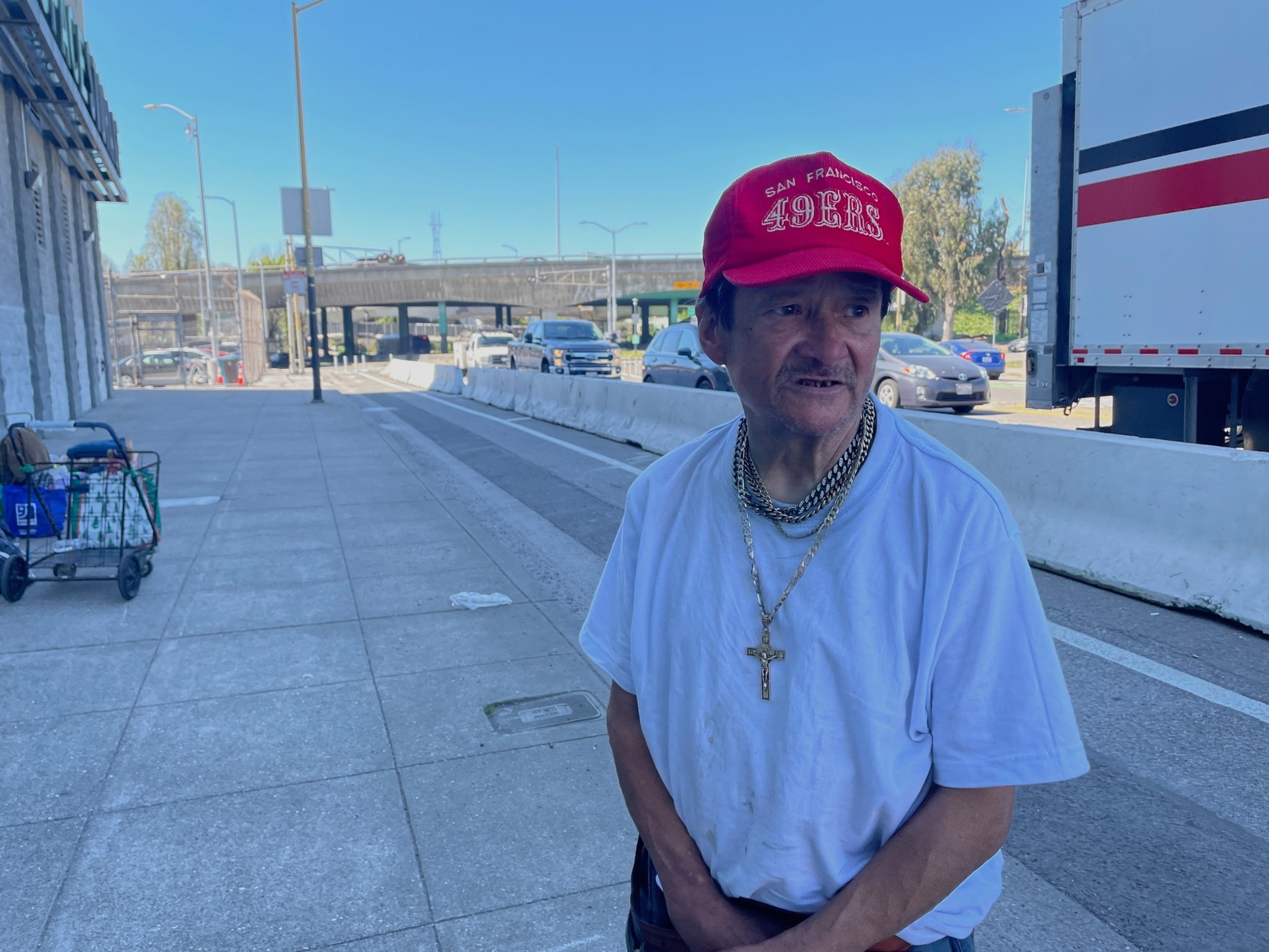 David Jimenez had ideas for what to rename Cesar Chavez Street. Some were better than others. | Source: Garrett Leahy/The Standard
What did Ms. Velazquez do to deserve having a major San Francisco street named after her? As far as we could get from Jimenez, she was, uh, nice.
“She was real good people,” he said.