
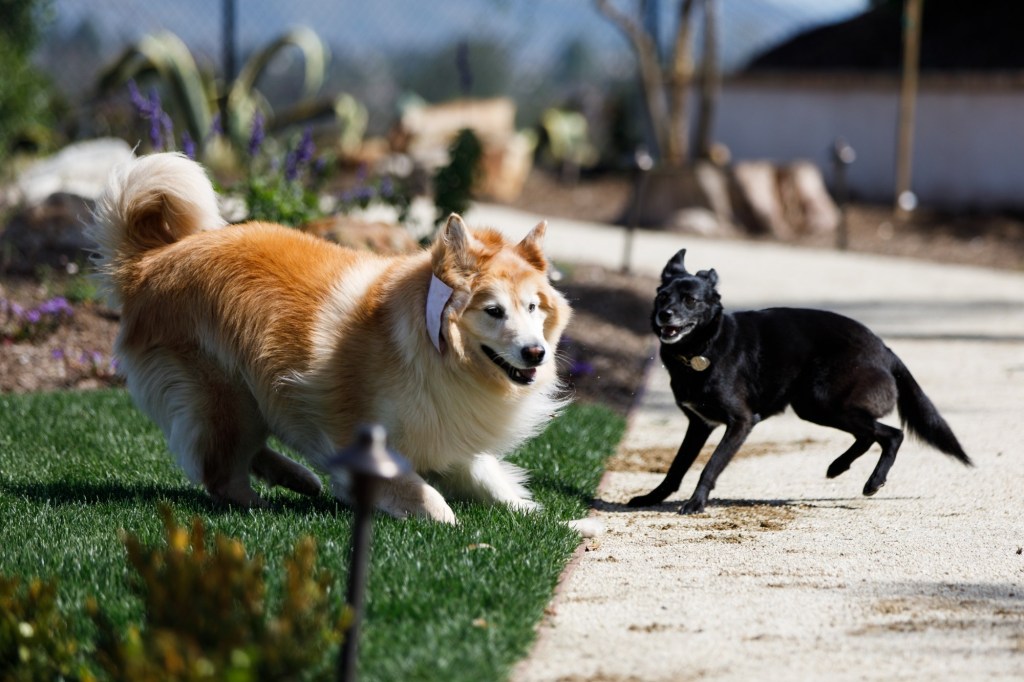
For The Union-Tribune
If you’re a dog owner with a yard, creating a landscape that satisfies your desires and aesthetics but also addresses your dog’s needs may seem like an oxymoron. You want a beautiful garden — maybe even a space to grow vegetables — and a place to relax, entertain family and friends, maybe a play area if you have young kids, perhaps have a swimming pool.
Your dog, of course, needs to run around, potty, maybe dig or chew on things as well as relax in the fresh air. And she or he definitely needs to be safely ensconced in the yard with no escape options.
“Just personally, I can tell you that I’m always thinking about ‘What do dogs need in that environment?’ ” said Gary Weitzman, president and CEO of the San Diego Humane Society. “And obviously, they don’t care so much about the aesthetics, but they very much care about behaving like dogs, and they’re generally trying to do normal behaviors and to communicate and, basically, to act like dogs. And that’s what people have to actually weave into their outdoor environments.”
They key word, he said, is “cohabitating.”
“They love to dig, they love to sniff, to pace and run,” Weitzman added. “And you’ll almost always find dogs will go the same route often, and that’s because that’s their runway. And factoring that in is a really good idea.”
When it comes to creating a dog-friendly landscape — or “petscape” — you might think about what you need in four buckets: dog safety and security, landscape protection, your aesthetics and comfort, and dog play.
Making it safe for dogs
One of the primary concerns thoughtful dog owners will invariably have is around plants and safety for their pets. A good first step is to consult the ASPCA’s comprehensive list of toxic and nontoxic plants on its website, at aspca.org/pet-care/aspca-poison-control/toxic-and-non-toxic-plants.
But it can be more complicated than just selecting “nontoxic” plants and removing “toxic” ones. Simply following a plant list is not a cut-and-dried solution. A plant labeled toxic may not cause death, but it can lead to damage — including neurological damage or liver, heart or kidney failure. And the source of toxicity can be confounding for a well-intentioned dog owner.
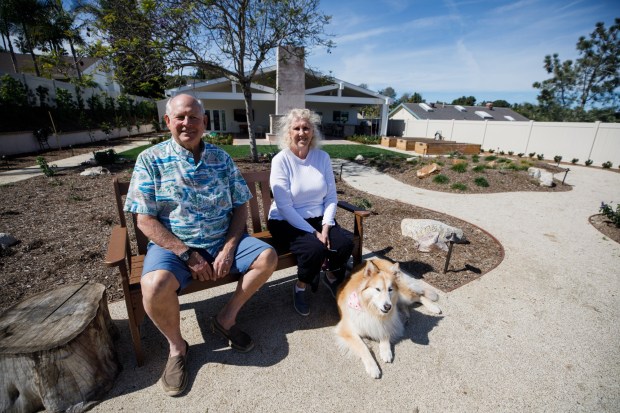 Steve and Beth Elliott, with their 4-year-old dog, Roxy, have play space for the canine and an area for gardening and entertaining. (Kristian Carreon / The San Diego Union-Tribune)
Some plants are entirely toxic while only the leaves, fruits or flowers of a plant cause problems. Some trees can be a source of problems. Macadamia trees aren’t dangerous themselves, but the nuts are toxic. So are the seeds that drop from sago palms. There are also just obvious dangers — like cactus needles you don’t want a curious puppy or dog with the zoomies to crash into.
And of course, like humans, any individual pet can have a bad reaction to a plant, even one not on a toxic list.
So, have that ASPCA list on you when plant shopping, but also consult your vet, nursery staff, dog trainer — anyone with expertise, so you can avoid harm as much as possible.
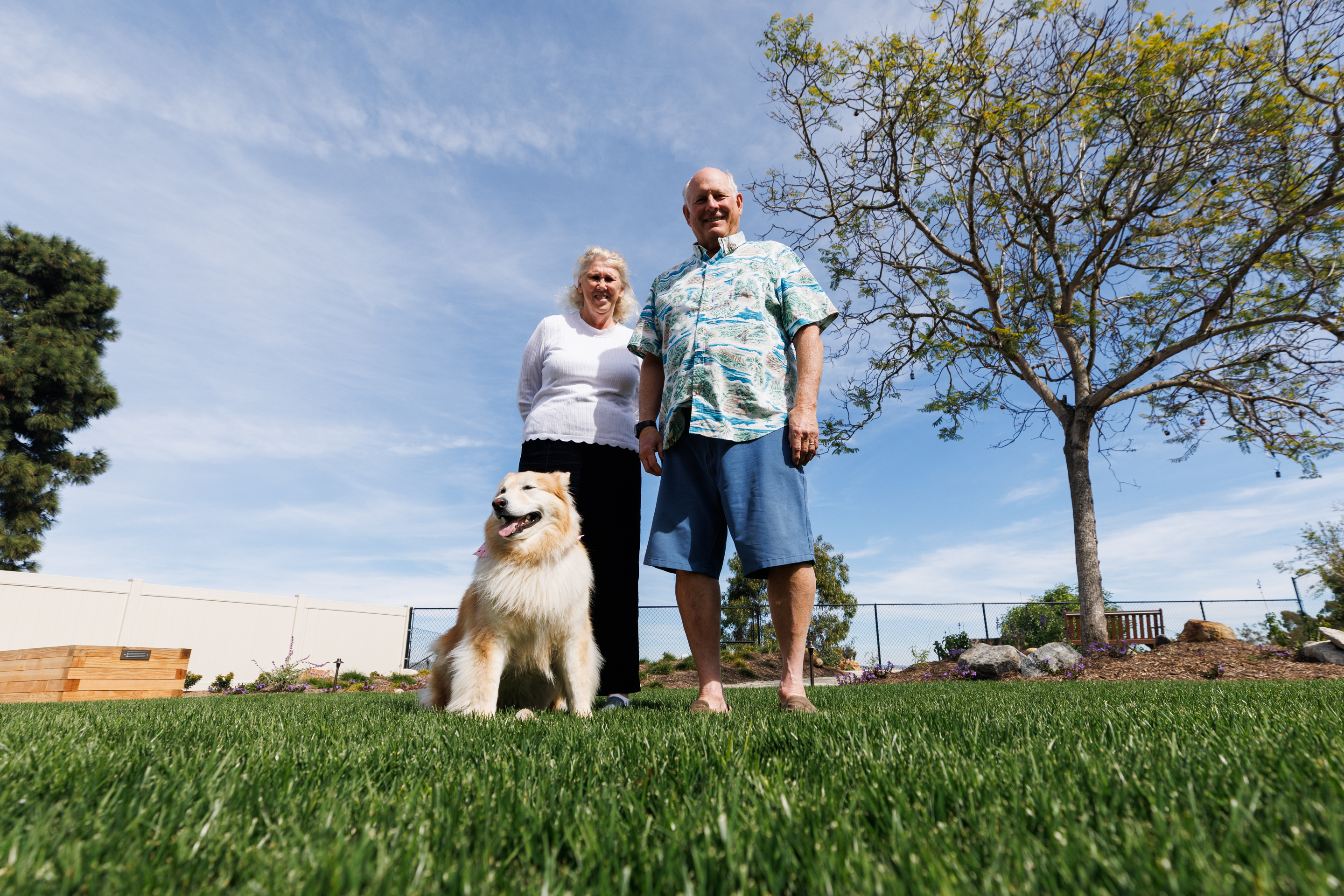
Beth and Steve Elliott of Encinitas wanted enough of a lawn for their dog to play and do her business. (Kristian Carreon / The San Diego Union-Tribune)
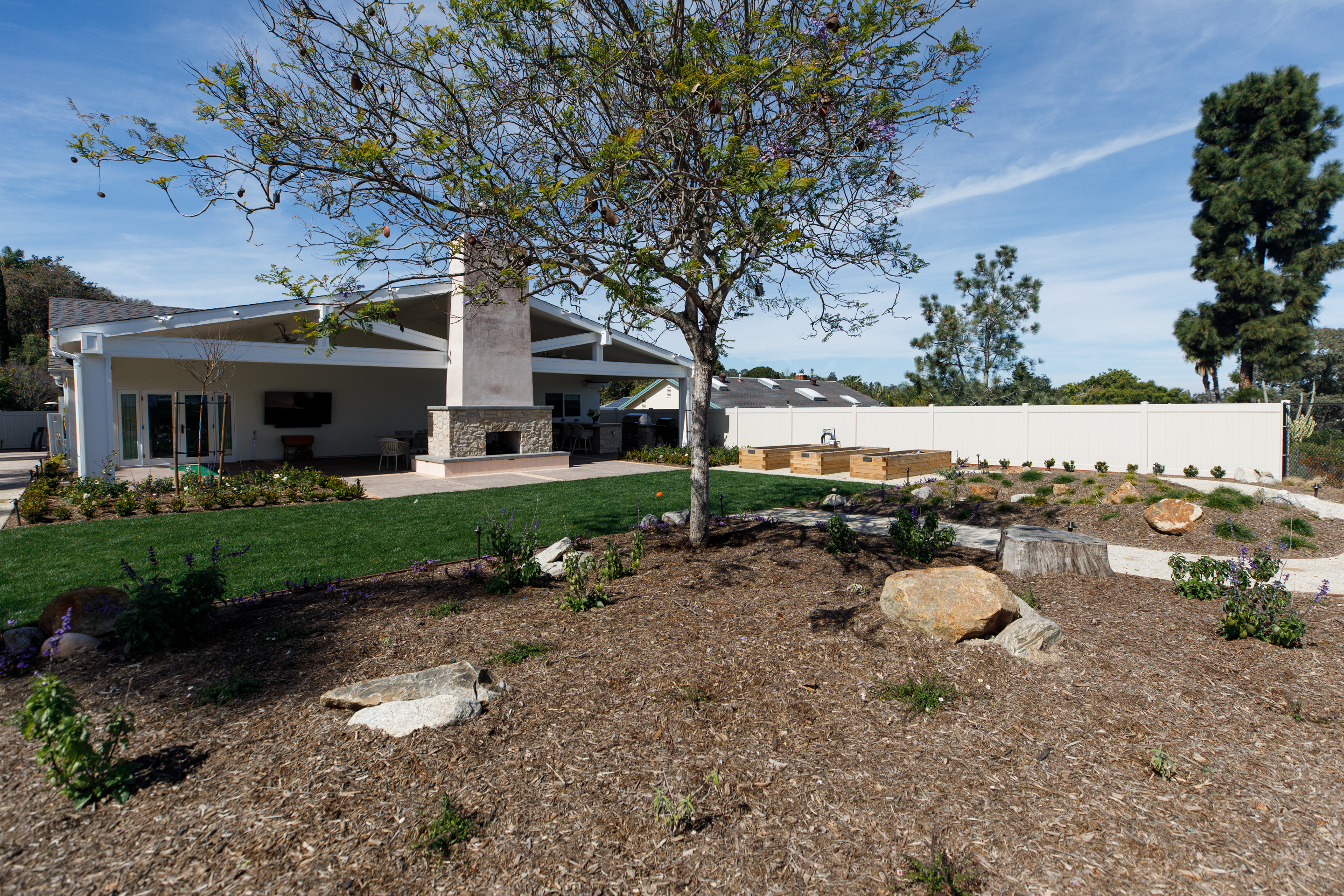
An overview of the Elliotts’ backyard. (Kristian Carreon / The San Diego Union-Tribune)
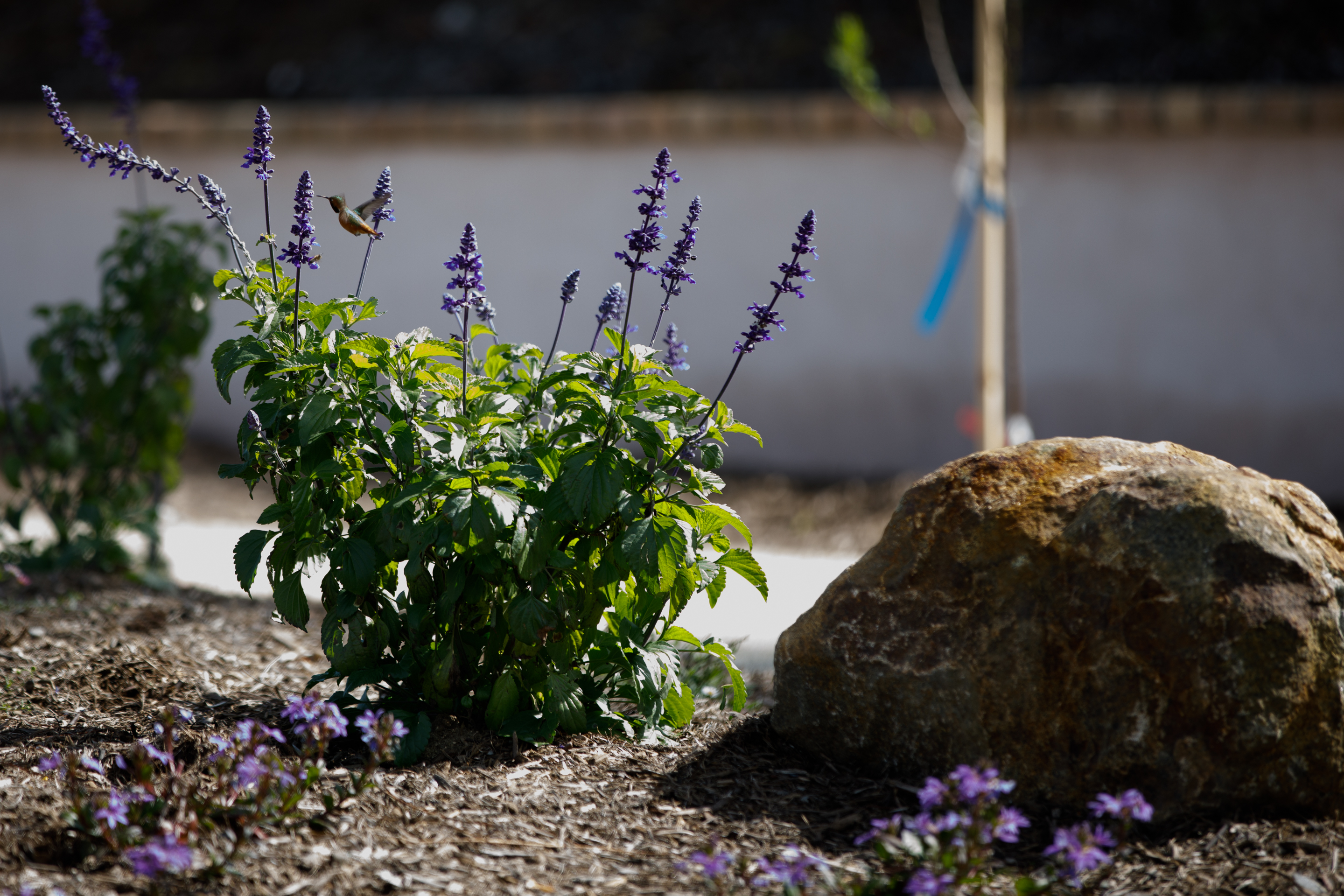
A hummingbird visits the blue spire of a sage plant on the property. (Kristian Carreon / The San Diego Union-Tribune)
Show Caption
1 of 3
Beth and Steve Elliott of Encinitas wanted enough of a lawn for their dog to play and do her business. (Kristian Carreon / The San Diego Union-Tribune)
Safety isn’t limited to plants, though. As one San Diego landscape architect explained, beyond toxic plants, there are predators like coyotes, bobcats and mountain lions. There are racoons, snakes, spiders, scorpions, tarantulas and bees. You can be at risk with some synthetic grasses, site amenities (pool, spa, fountain), some outdoor furniture (if ingested or if they get stuck in it), fencing, wood mulch or rock material, lighting or electrical items. The list is long, and it could contain almost anything.
But, the expert noted, it also depends on the dog. Do you have a dog that chews on anything and everything, including metal fencing and metal furniture, or is your dog indifferent to the joys of sinking his teeth into the leg of an Adirondack chaise lounge? Is your dog a puppy or older? Do they have vision or hearing issues? How big are they? What breed/s? Do they have a prey drive? The landscape decisions you make also depend on how well you know your dog’s behavior and capabilities.
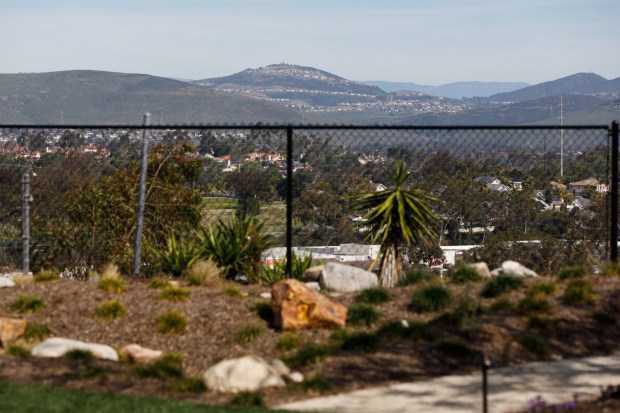 Sturdy fencing allows a panoramic view to the mountains, looking east, and helps keep Roxy safely in the backyard while limiting access to wildlife. (Kristian Carreon / The San Diego Union-Tribune)
Keeping the property safe
When Beth and Steve Elliott bought an Encinitas home in 2024 to be close to their two daughters and their families, they hired landscape architect Ari Tenenbaum and general contractor and landscape contractor Jeff Robbins, the co-founders and owners of Revolution Landscape. The Elliotts envisioned the backyard in particular as a potential dining and entertainment space, but what they found was dated and neglected. It was also a danger zone for Roxy, their husky/German shepherd.
The first thing addressed was fencing. The Elliotts trust Roxy to not run away, but squirrels are enticing, after all. And they have the safety of their visiting granddogs to consider as well. So, they now have a solid 5-foot-tall vinyl fence along the border with one next-door neighbor, and a metal fence along the back that allows them an unobstructed view east, toward the mountains.
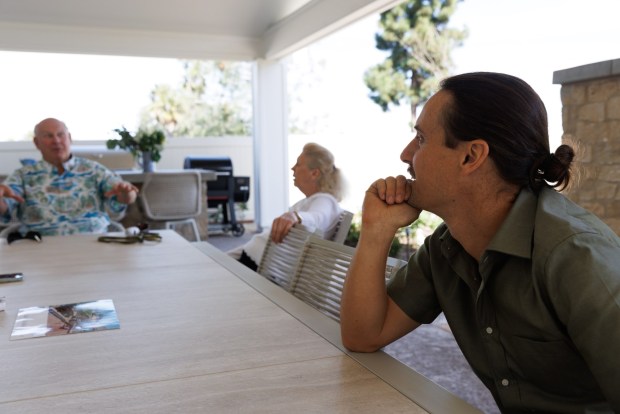 Landscape architect Ari Tenenbaum, right, speaks with his clients and homeowners Steve and Beth Elliott at their Encinitas home. (Kristian Carreon / The San Diego Union-Tribune)
Tenenbaum and Robbins used the initial pre-design conversations with the Elliotts to address the typical client preferences, and part of that always includes discussions about incorporating pet-friendly elements if a pet is part of the household.
“When we build landscapes for dog-loving families, we’re thinking about both ends of the leash,” said Robbins. “That means incorporating dog-friendly hardscape like naturalistic stamped concrete and stabilized decomposed granite pathways that can handle daily zoomies without getting torn up.”
Robbins and Tenenbaum were both adamant that artificial turf is a fail for a dog household. The turf gets hot in the heat of the day and urine and feces will create foul odors that won’t rinse away. Instead, they opt for grass, and Roxy has a just-big-enough little lawn for play and doing her business. And for Steve Elliott to chip golf balls.
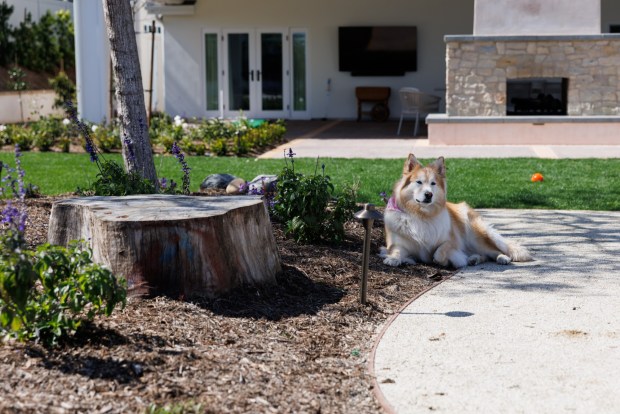 Four-year-old Roxy rests in the shade of a jacaranda tree in the Encinitas backyard. The tree was planted to replace a eucalyptus that the crew removed. (Kristian Carreon / The San Diego Union-Tribune)
“We focus on the ‘right size’ lawn for play,” explained Robbins, “selecting durable sod varieties that stand up to traffic without overwhelming the yard, and minimize water use.”
His pro tip? Use the hose to water doggy pee after they go, to prevent grass kill.
The landscape team removed a 75-foot eucalyptus tree and planted a jacaranda in one section to create shade for Roxy and her pals. Shade should be a priority for dogs. Roxy can also lounge on stamped concrete in the 1,000-square-foot covered patio.
“We currently have two large water bowls on the patio near the barbecue,” said Beth Elliott. “We also have toys and balls that stay outside.”
Roxy isn’t a fan of dog beds, but if your dog likes them, why not give them some creature comfort? And unless your dog has access to water inside thanks to a dog door, keep clean bowls of water out for them.
Accommodating human needs
Because the Elliotts want to plant vegetables, Robbins and Tenenbaum brought in a few raised beds that wouldn’t tempt Roxy. They learned that the city codes required a swale in the yard to prevent flooding, so rather than just dig the hole and install a French drain, they planted clumping Berkeley sedge, a resilient plant that can tolerate dogs (and grandchildren) racing in and out.
There are plenty of pollinator plants throughout the garden — such as groundcovers like Santa Barbara daisy and ‘Blue Wonder’ fan flower, butterfly bushes and Mexican sage. Littleleaf boxwood surrounds one planting area filled with iceberg roses. When mature, they’ll offer some protection from racing dogs.
With a slope going up the third side of the yard, Robbins built a retaining wall a few feet high that is endlessly entertaining for Roxy. The team also took advantage of the felled eucalyptus, placing the stumps throughout the yard as seating for people and pups. With the landscape project completed last December, the Elliotts now have a safe, low-maintenance landscape that is filled with attractions for humans and dogs.
Terri Maguire, maintenance manager with Van Slyke Landscape, also suggested being very careful with maintenance products and chemicals like fertilizers as well as traps and bait for what people consider pests.
“There are some breeds like bulldogs and shar peis that are very sensitive to them,” she said. “Some people have really bad gophers, but they choose to allow the gophers to eat up their yard basically because they’re afraid that their dog will get into the gopher bait or gopher traps.”
She also recommended organic mulch made from chipped trees as well as composted plant material. Avoid toxic cocoa mulch and colored mulches — essentially colored bark chips.
“It’s just shredded old construction wood, like plywood, which has chemicals in it,” she explained. “Organic mulch is going to improve your soils. It’s going to be better for your dog.”
If you have shaded or heat-tolerant plants that you’re concerned your dog might dig up, Maguire dismisses the notion of burying chicken wire under the soil (they’ll just dig that up and it’s hard to put back down) and instead advised placing chunky, heavy rocks around them. (It’s not advised for plants that risk burning because of added heat reflected from the rocks.)
“It’s really cool looking and the dogs can’t really move that stuff fast enough to get their digging on,” she said.
Worried about snakes? Maguire suggested installing snake fencing, as well as subterranean snake mesh that’s buried 6, 8, even 12 inches underground and up to 2 feet above ground as deterrent.
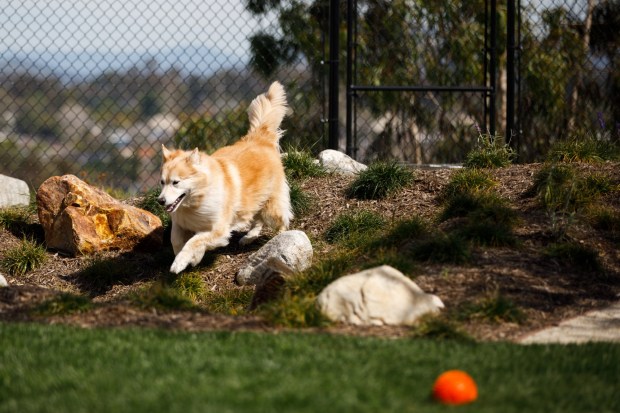 Roxy, a shepherd and husky mix, runs through the rainfall swale in the backyard. The clumps of Berkeley sedge are a resilient type of plant that can handle foot and paw traffic. (Kristian Carreon / The San Diego Union-Tribune)
Making it fun for dogs
If you have a dog or are adopting a dog and moving into a home with a yard, or you are redoing your landscape and want to make it more dog-friendly, here are some tips:
• “Define the project objectives and write your own narrative,” said Tenenbaum. What’s non-negotiable? Is this for an existing pet or a theoretical future one? Are there existing issues in the current landscape as a result of the dog(s)? Do you want/have a dog door? Do you want a separate dog area/run? What’s your target budget?
• If you already have a dog, observe their behavior to make better design decisions about fencing, planting and open spaces, as well as furnishings for the humans. Make creative choices that potentially mitigate specific behaviors so you won’t get frustrated by them. Maybe they could use a doggie sandbox for digging, a space for dog agility equipment that you can enjoy together that will burn off canine energy, a window in a wall so your canine security guard can fulfill their need to patrol, and paths they can run on.
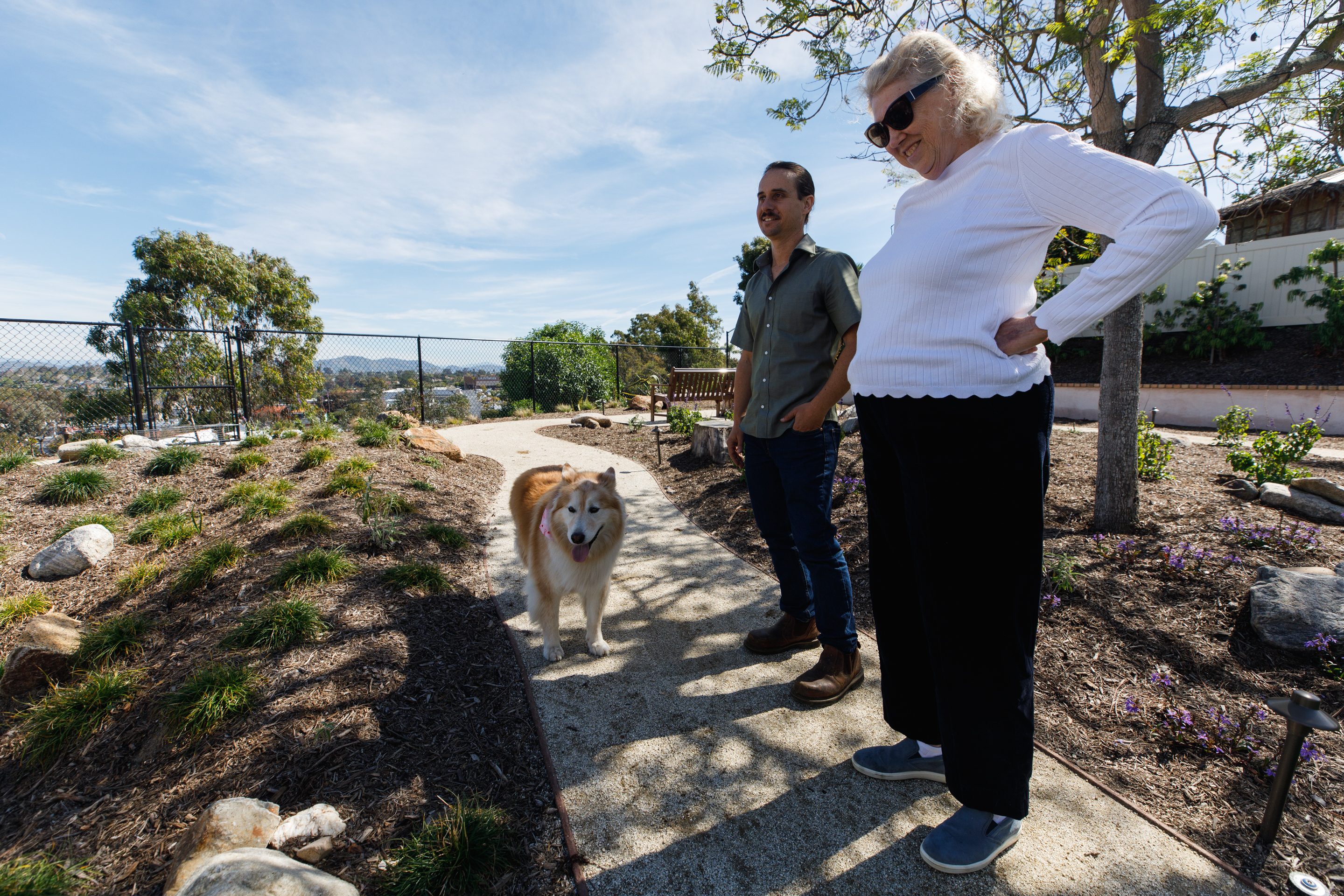
You can “write your own narrative” on a dog-friendly yard, said landscape architect Ari Tenenbaum, center, of Revolution Landscape, and tailor it to your needs. (Kristian Carreon / The San Diego Union-Tribune)
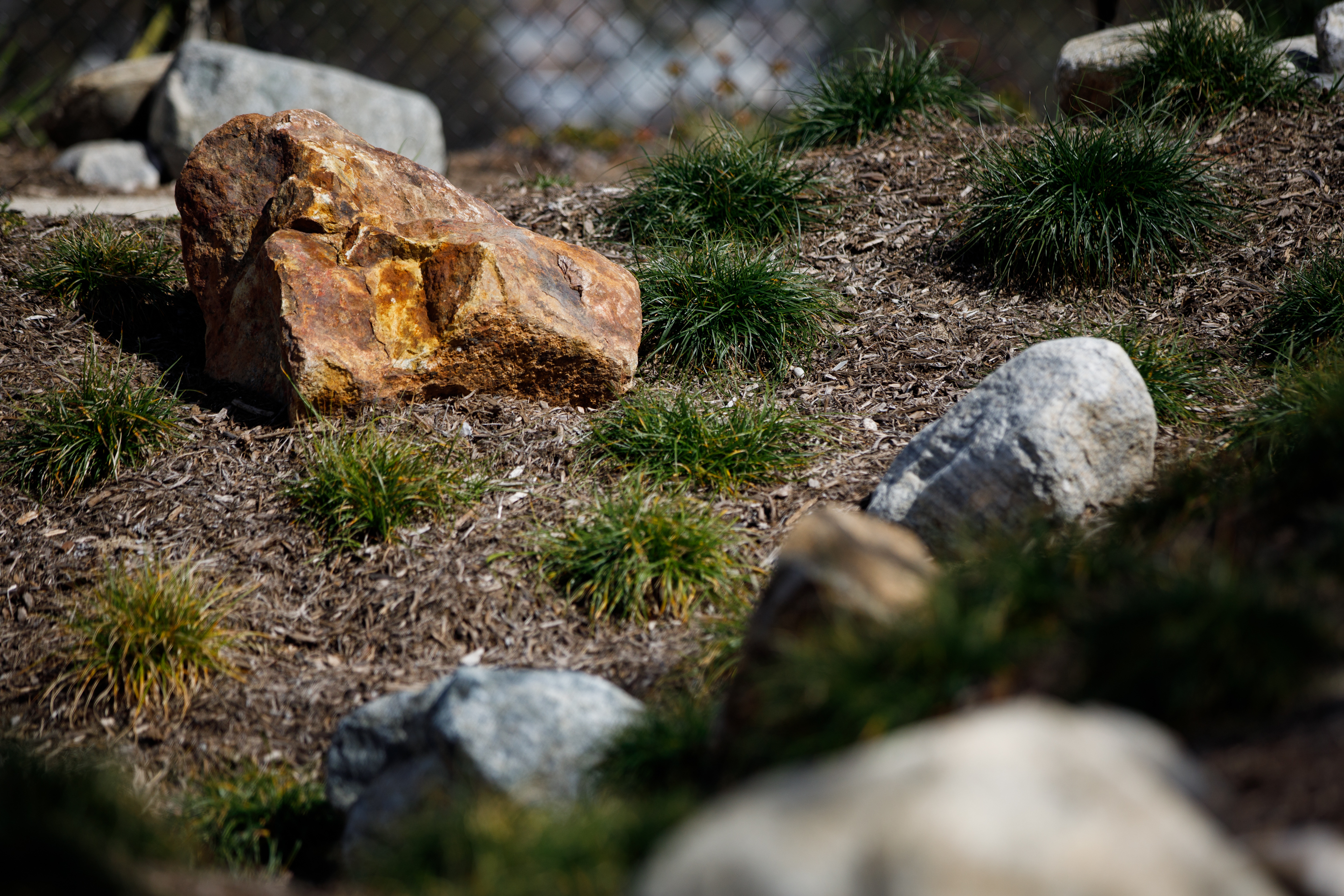
Boulders that were already on site were repurposed for display among clumps of Berkeley sedge in the Elliotts’ yard. (Kristian Carreon / The San Diego Union-Tribune)
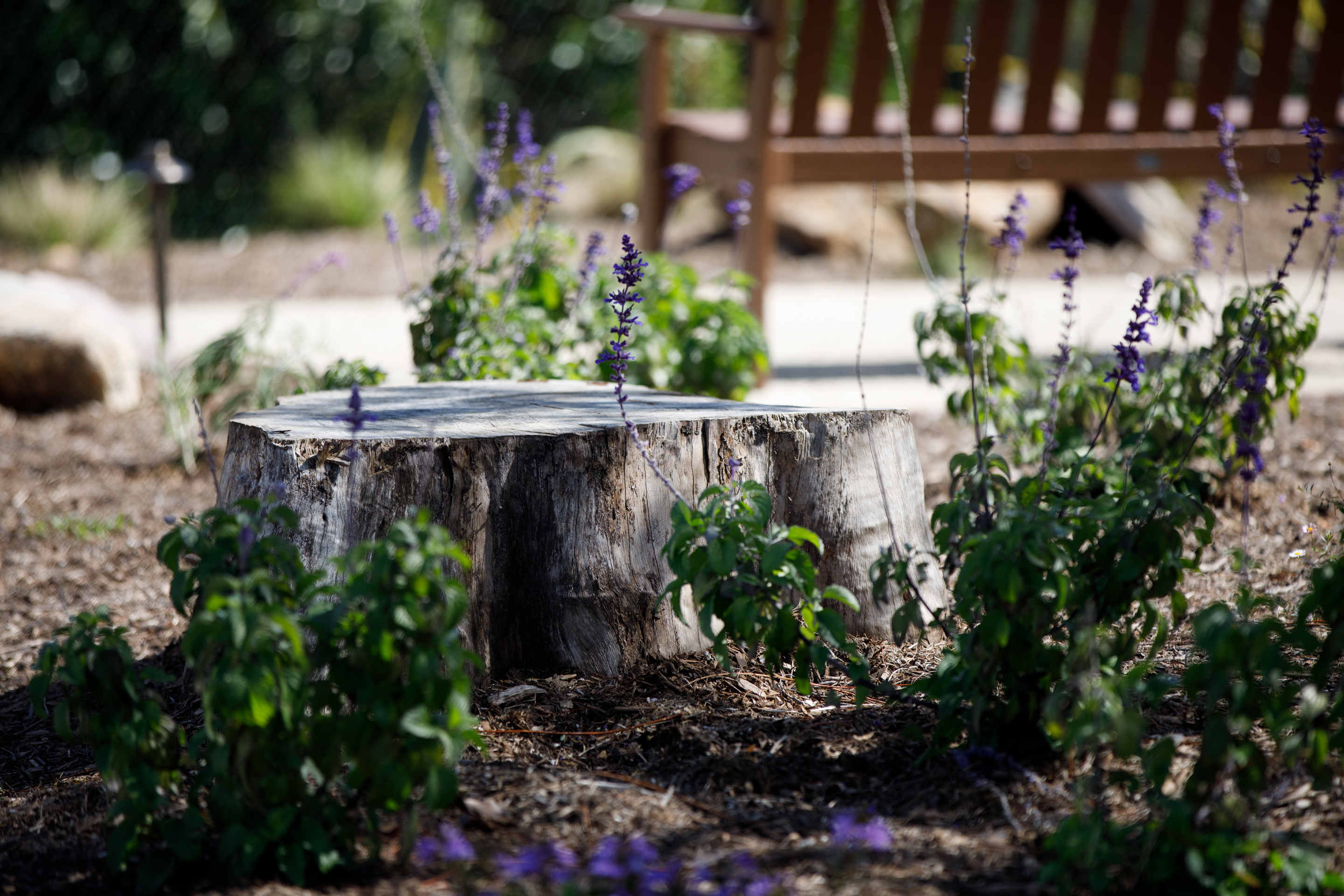
After the landscape team felled a eucalyptus tree and replaced it with a jacaranda for shade, they repurposed pieces of the eucalyptus stump around the yard for seating. (Kristian Carreon / The San Diego Union-Tribune)
Show Caption
1 of 3
You can “write your own narrative” on a dog-friendly yard, said landscape architect Ari Tenenbaum, center, of Revolution Landscape, and tailor it to your needs. (Kristian Carreon / The San Diego Union-Tribune)
• Create a “petio,” with cozy places to nap.
• If you have an in-ground pool, consider fencing it — like you would if you have small children — and teach your dog how to get out of the pool. No pool? How about getting a puppy pool for hot summer days — and supervise play. If you are considering a fountain, pay attention to its design and placement. Can a dog knock it over, wade in it or otherwise destroy it or hurt itself?
• Consider petscaping with native plants. The San Diego chapter of the California Native Plant Society has suggestions on its website, cnpssd.org/petscaping, for designing outdoor spaces for pets, people and wildlife. It even suggests specific ideas for dogs, like patrol paths, dig-friendly corners and various plants chosen for safety, resilience and availability.
• Learn about potential wildlife threats to your pet before leaving them unsupervised in your yard. Are there owls or hawks in the area that would be tempted by a small dog? Do you live near a canyon where snakes or coyotes are a danger, or where skunks can get in and spray your pup? Follow best practices in protecting your dogs — always supervise small dogs and puppies outside, install snake mesh or coyote rollers. Make sure your yard is well lit.
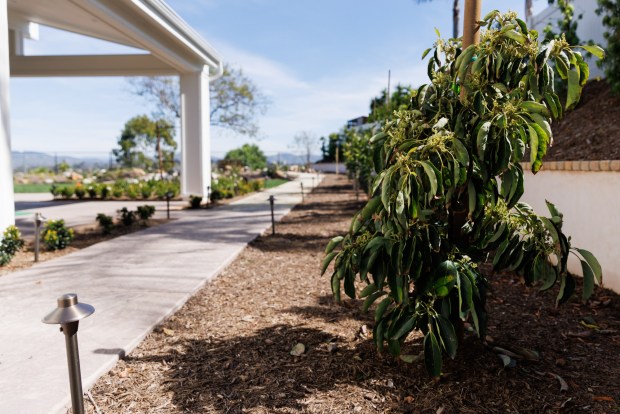 A young avocado tree, among other fruit trees, is planted in Steve and Beth Elliott’s backyard of their Encinitas home. (Kristian Carreon / The San Diego Union-Tribune)