
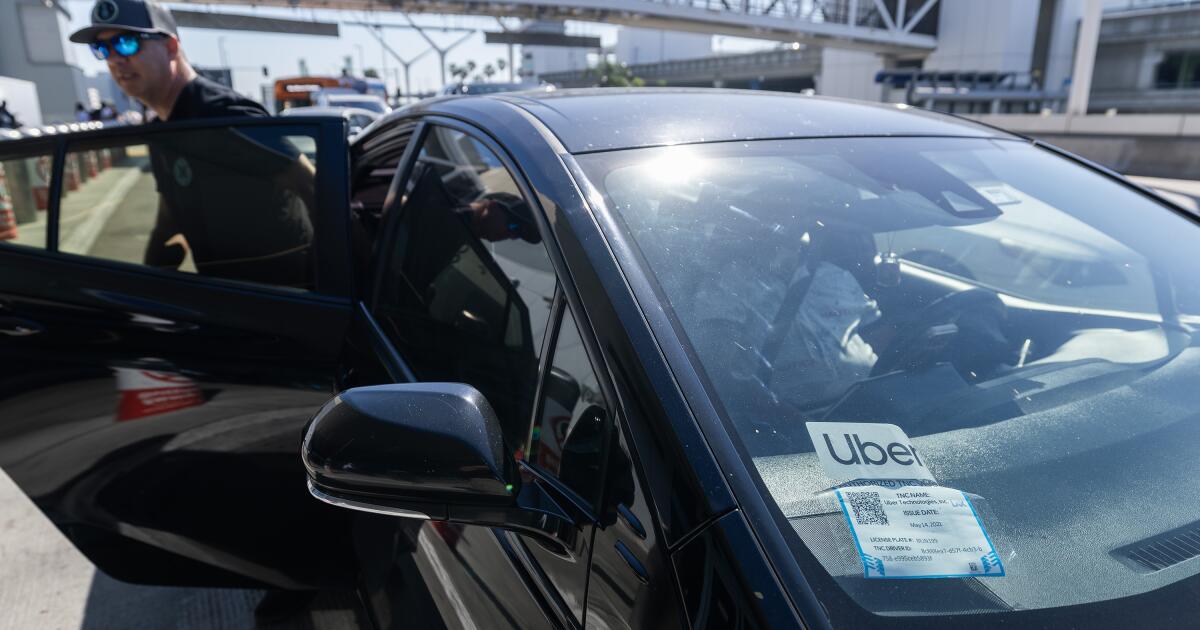
The board that runs the Los Angeles International Airport wants us to use public transit getting to and from LAX and cut back on taking those rideshare vehicles that tend to gum up the traffic flow around the airport.
To discourage us from hopping into rideshares, the panel approved a fee hike last week for those private transportation companies — businesses like Uber and Lyft — that gets added every time a passenger is picked up or dropped off at LAX as my colleague Salvador Hernandez reported.
Ideally, the main transportation option in the eyes of the airport board would be Skylink, Los Angeles’ automated people mover that connects the LAX transit center with the airport. The transit center links up with the region’s metro rail and bus lines. But the people mover, which was supposed to have been completed by 2024, still hasn’t opened.
Until it opens, we have other options.
As a public service, I tested the cost and convenience of taking those options over a rideshare vehicle.
I’ll get into the results of my highly unscientific test, but first let’s look at why the ridesharing increases are happening and what they cost.
The reasoning behind the increased fee
Airport officials said the rate increase, as well as Skylink, are part of a plan to ease LAX congestion.
The higher fees come as the board looks to modernize LAX ahead of several high-profile events including the World Cup this summer, the 2027 Super Bowl and 2028 Olympics.
With up to 100,000 cars going through LAX a day, the airport needed to find alternatives, said David Reich, deputy executive director for mobility strategy for Los Angeles World Airports.
What is the fee increase?
Uber and Lyft, as well as taxis and limousines, are required to get permits and operating agreements from LAX and pay a fee to access the airport property and pick up and drop off customers.
Uber and Lyft currently pay a fee of $4 to pick up passengers at the airport and nothing to drop them off.
The proposed access fees for all drop-off and pick-up services with private transportation, including hailed rides, would increase to $12 for the terminal area and $6 for the Skylink area.
Will consumers pay more?
Uber and Lyft opposed the rate hike, and a spokesperson for Uber said passengers can expect the rate hike to get added to the cost of their rides.
“A 140% fee hike will directly impact riders and reduce demand for drivers who rely on airport trips,” said Danielle Lam, head of local California policy for Uber.
Lyft added that LAX will become the nation’s most expensive airport for rideshare travelers.
But airport officials emphasized that access fees are assessed to the companies, not customers or drivers, and pointed out that LAX hadn’t increased its fees since Uber and Lyft began operating there in 2015.
“This is not a tax,” Los Angeles Airport Commissioner Vanessa Aramayo said. “This is not something that the airport is putting on passengers or travelers.”
When are the fees in effect?
The fee increase is not set to go into effect until Skylink opens this summer.
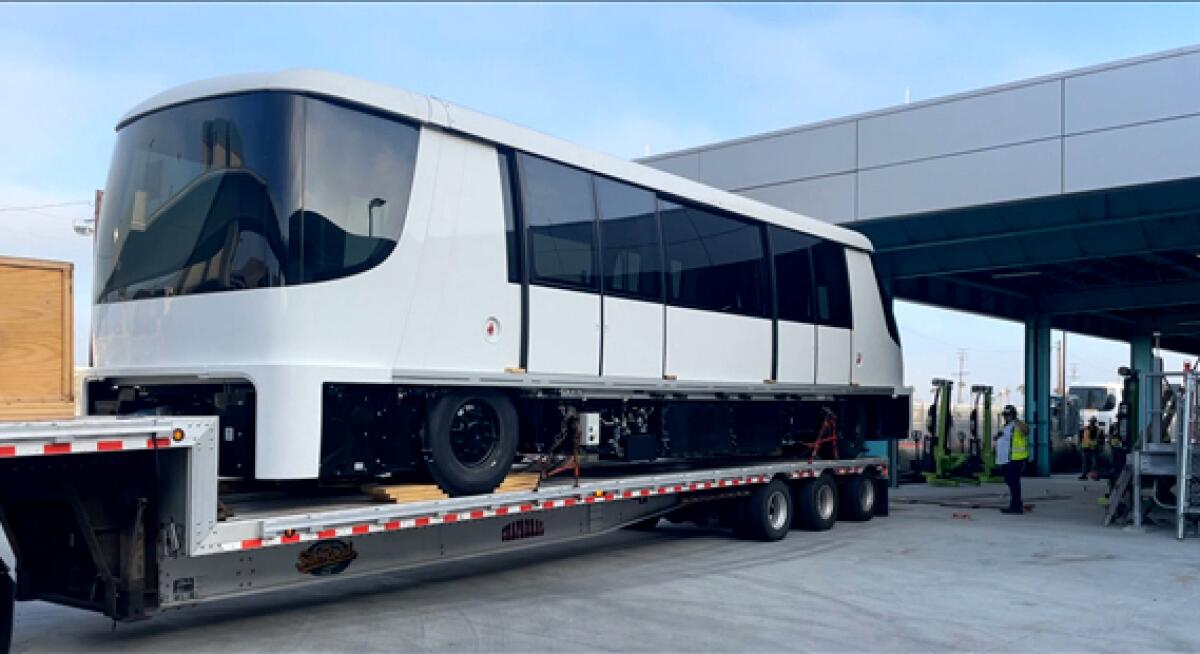
A People Mover train car at LAX.
(Los Angeles World Airports)
My results
I measured the cost and travel time from the Los Angeles Times to Terminal 1, a relatively short trip at 3.2 miles.
I took a Lyft to LAX the previous Thursday morning at 8:45 a.m. and the 10-minute,17-second ride cost $19.79. That was broken down into a base fee of $18.14, a California Driver Benefits Fee of 75 cents and a clean miles standard regulatory fee of 9 cents.
On Thursday, my journey to LAX at 9:12 a.m. consisted of a six-minute walk from The Times offices to the Metro C-Line’s Aviation and Imperial stop. That was followed by a seven-minute wait there, a four-minute metro ride to the LAX/Metro transit center, and a combined 10-minute wait and ride on the LAX shuttle to Terminal 1.
Combined, the trip lasted 27 minutes at a cost of $1.75.
The reverse trip, which I took at 11:01 a.m., took 35 minutes and again cost $1.75.
The result: The public transit alternative takes up to three times longer but saves about $18 per trip.
When I asked passengers at LAX for their thoughts on the fee hike, most had no opinion, didn’t know about the hike or declined to talk. The vast majority said they were infrequent travelers (visited two times or less per year) and were willing to eat the cost.
We’ll see if that changes when the price jump kicks in this summer.
You’re reading the Essential California newsletter
Sign up to start every day with California’s most important stories.
By continuing, you agree to our Terms of Service, which include arbitration and a class action waiver. You agree that we and our third-party vendors may collect and use your information, including through cookies, pixels and similar technologies, for the purposes set forth in our Privacy Policy such as personalizing your experience and ads.
The week’s biggest stories 
(Alex Brandon / Associated Press)
U.S.-Iran WarCrime, courts and policingIn MemoriamMedia and entertainment newsWhat else is going onMust readsOther meaty readsFor your downtime 
(Jenn Harris / Los Angeles Times )
Going outStaying inL.A. Timeless
A selection of the very best reads from The Times’ 143-year archive.
Have a great day, from the Essential California team
Jim Rainey, staff reporter
Hugo Martín, assistant editor, fast break desk
Kevinisha Walker, multiplatform editor
Andrew J. Campa, weekend writer
Karim Doumar, head of newsletters
How can we make this newsletter more useful? Send comments to essentialcalifornia@latimes.com. Check our top stories, topics and the latest articles on latimes.com.