
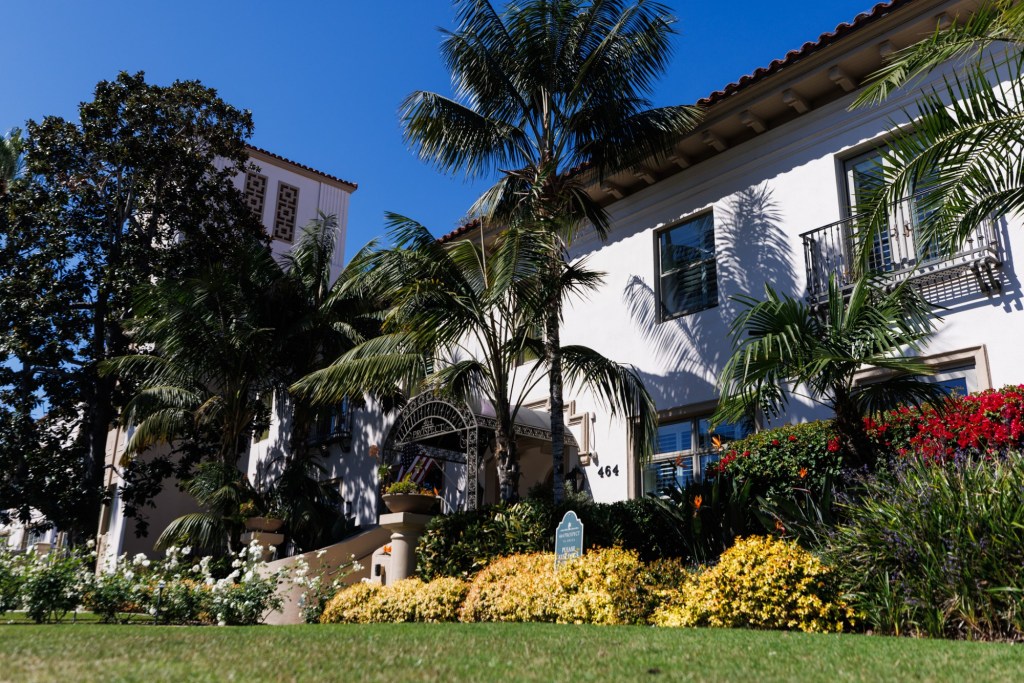
San Diego County property owners are saving an estimated $29 million a year via a decades-old tax incentive program for preserving historic properties, but the benefits are not shared equally and are mostly concentrated in wealthier neighborhoods, an analysis by The San Diego Union-Tribune found.
Under a state law called the Mills Act, San Diego County owners of historic properties who receive the incentive are getting, on average, a 71% discount on their property taxes — savings they’re expected to invest in maintenance and restoration.
In San Diego alone, owners saved an estimated $23.6 million in property taxes this year. Of that, the city government is losing out on about $4.2 million in potential tax revenue, a small fraction of its $2.2 billion general fund.
The Mills Act is a 1972 state law, authored by former state Sen. James Mills, that allows local governments to offer tax discounts to owners of historic properties. A voluntary program that requires an application to qualify, it’s the state’s primary incentive program for restoring and preserving historic buildings.
“Usually owning a historic building is a challenge from a financial standpoint, because they require a lot of maintenance and they require a lot of upgrades,” said David Marshall of Heritage Architecture, which helps local owners procure Mills Act designations. “To repurpose and retain a historic building … there need to be some forms of incentives, and Mills Act is really the primary one.”
San Diego has one of the largest Mills Act programs in the state with more than 1,600 properties, according to data requested and analyzed by the Union-Tribune from the county assessor. Its program far surpasses that of the city of Los Angeles, which has 947 Mills Act properties.
But relatively little data or analysis has been published about statewide Mills Act participation. San Diego, which launched its Mills Act program in 1995, does not regularly publish a list of properties participating in the program or where they are located.
The city also has not been tracking how much it misses out on in potential property tax revenue every year due to its decision to offer tax breaks under the Mills Act. It only tracks how much in tax breaks it approves for new Mills Act approvals; the city caps total new Mills Act tax breaks at $200,000 each year.
The Union-Tribune found which properties are getting the Mills Act benefit by requesting data from the county assessor, which uses a special state formula to generate a new assessed value for Mills Act-participating properties. The data compare the properties’ assessed values under Proposition 13 with their new assessed values under the Mills Act.
The city of San Diego says discounts on individual Mills Act properties range as high as 75% — but the Union-Tribune found some properties are getting discounts higher than that, based on county tax data.
For example, the Guild Hotel — located in the former Armed Services YMCA building at 500 West Broadway in downtown San Diego — gets a 97% property tax discount after factoring in the Mills Act, paying only about $22,000 in property taxes when it would normally be charged $718,400.
 The Guild Hotel, formerly the Armed Services YMCA, in downtown San Diego on Wednesday, March 18, 2026. The Mills Act, enacted in 1972, allows historic property owners to receive tax relief by maintaining and restoring the property. (Kristian Carreon / The San Diego Union-Tribune)
Eighteen years after the city last made significant changes to the program, officials are now pondering potential changes to make it more accessible to homes in low-income neighborhoods and to address staffing capacity concerns.
City officials say they don’t anticipate making any sweeping changes to their Mills Act program, nor making changes that would make it much more difficult to qualify. They have said their goal is to encourage development while preserving historic properties, through methods such as adaptive reuse of historic buildings.
The value of historic preservation
Historic preservation advocates say the Mills Act helps to save historic buildings from demolition and preserve the character of neighborhoods.
“San Diego has a strong character and a strong history, and we’re trying to hold on to that,” said Marshall.
Some advocates also argue that Mills Act designation is associated with higher property values not just for designated homes but also others nearby.
Andrew Narwold, a University of San Diego economics professor whose own home participates in the Mills Act program, estimated in a 2008 study that those higher property values result in more overall tax revenue, exceeding what the city loses to the tax breaks.
“From the research I’ve done, it’s not a cost to the city to do this,” he said.
Others, however, including advocates for building more housing, argue that neighborhoods with many Mills Act homes would still be high-value without the program.
Retired architect Paul Spears is the proud Mills Act owner of a 1920 Craftsman bungalow in North Park. The Craftsman bungalow style features handcraftsmanship and natural materials and colors; the houses have wide porches framed by columns that invite lounging.
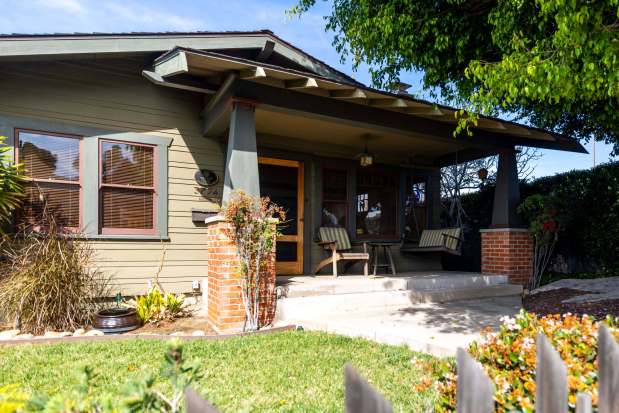 Paul Spears’ home on Tuesday, March 17, 2026, in San Diego. (Meg McLaughlin / The San Diego Union-Tribune)
Spears, a member of the North Park Historical Society, described the 1920s style as a response to the Industrial Revolution. He sees the Mills Act as a way to protect historic homes and help fend off newer housing development he believes lacks character.
“This actually saves neighborhoods and makes it better,” he said.
The Mills Act tax discounts aren’t meant to be a giveaway — the owner is supposed to use the money they save for maintaining and restoring the historic character of their property.
Owners forge a Mills Act contract with the city that outlines restoration and maintenance responsibilities as a condition of receiving the tax discount. That can mean replacing parts that have been altered since the property was first built to match its original architectural style.
In some cases, the Mills Act designation could actually end up costing property owners if the renovations they’re required to complete are so expensive that their tax discount doesn’t cover it.
Spears estimates he has spent $250,000 on renovations — including ones made to comply with his Mills Act contract and ensure the home’s elements match its original architectural style. He replaced his roof, scraped and repainted windows, redid the paving patterns out front and restored two porch columns, among other things.
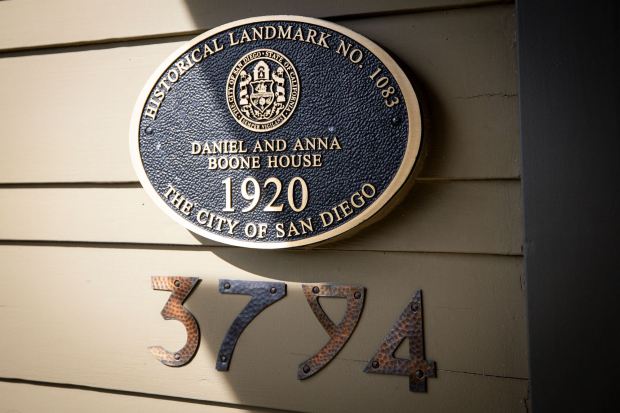 A plaque at the front of Paul Spears’ home designating it as historic on Tuesday, March 17, 2026, in San Diego. (Meg McLaughlin / The San Diego Union-Tribune)
Still, housing advocate Wesley Morgan, who has served on the board of YIMBY Democrats of San Diego, argued that high-income homeowners will spend money to maintain their property regardless of whether they’re getting a Mills Act discount.
“It’s a public subsidy going to already-wealthy homeowners,” Morgan said of the Mills Act.
Morgan doesn’t think the city should eliminate the Mills Act. Rather, he wants the city to distribute the incentives to people who would benefit from them more — a move that some preservation advocates are also calling for.
Barriers to entry
In the city of San Diego, the properties that take advantage of the Mills Act are mostly in wealthier neighborhoods, the Union-Tribune found.
In San Diego, 70% of Mills Act properties are in communities that have been designated “high-resource” or “highest-resource,” as defined by the California Tax Credit Allocation Committee — meaning they have high median incomes, educational attainment and other qualities associated with positive life outcomes.
Countywide, two-thirds of Mills Act properties are in such communities.
San Diego’s Mills Act properties are especially concentrated in areas like Mission Hills, La Jolla and North and South Park.
Other neighborhoods have none at all, including Barrio Logan, Clairemont, Linda Vista and essentially all of southeastern San Diego.
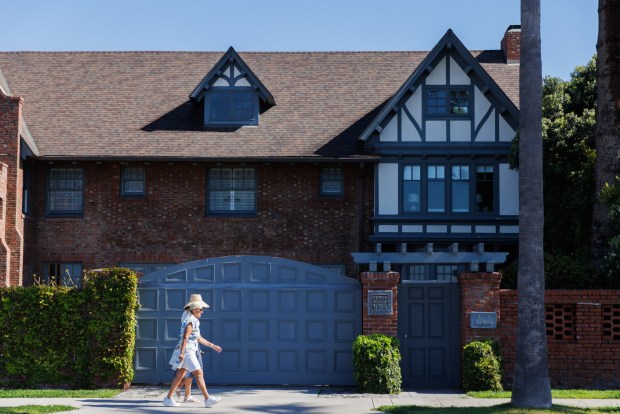 The Crown Manor home on 1015 Ocean Boulevard, as seen in Coronado on March 19, 2026. The Mills Act, enacted in 1972, allows historic property owners to receive tax relief by maintaining and restoring the property.
That may partly be a function of where older properties are located in the city, Marshall said.
City officials said lower-income families may simply not know about the program.
They also suggested lower-income families may not be participating if they’ve owned their home for generations and pay low enough taxes that they wouldn’t save much with the Mills Act.
Some homeowners still apply for the Mills Act even if they won’t receive a tax discount, though, because the designation helps boost the home’s value when they’re looking to sell.
Mills Act participants themselves note other reasons that can explain the inequity. For one, it’s not easy or cheap to get one’s home into San Diego’s Mills Act program.
In 2024, for the first time in nine years, the city raised the fees it charges for Mills Act applications and participation, in an effort to fully cover staff costs for running the program.
It now costs $1,334 to apply for the Mills Act — up from $471 in 2015. That’s on top of a $3,444 fee to apply for local historic designation, which is a prerequisite for the Mills Act.
City officials said they waive the fees to apply for the Mills Act and historic designation for low-income property owners enrolled in SDG&E’s CARE program, but they rarely get applications. And the city doesn’t say anywhere on its Mills Act webpage that it offers fee waivers.
Applying is also difficult.
Owners must compile a comprehensive, detailed research report about their property when seeking historic designation from the city.
Such reports are often more than 100 pages long and must include, among other things, a detailed architectural description, a full history of alterations and a plethora of records, including the original deed, water and sewer connection records, construction permits, at least four kinds of maps and details of previous owners and occupants.
That report also has to provide evidence for why the building should be deemed historic. San Diego Mills Act properties are granted historic designation primarily for their architectural style, rather than an association with a historical event, person or group.
Because the reports are complex, homeowners often hire consulting firms to write the research reports — which can cost $10,000 or more.
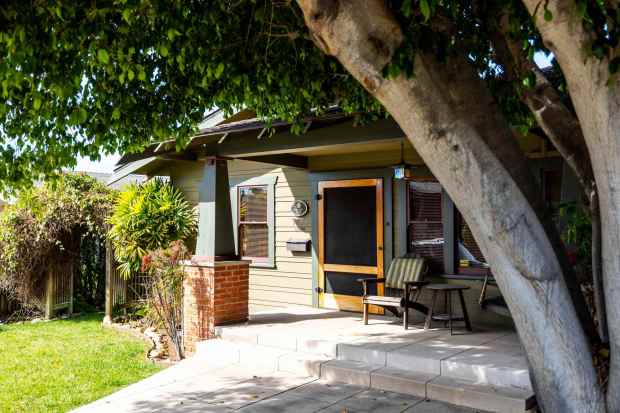 Paul Spears’ home on Tuesday, March 17, 2026, in San Diego. (Meg McLaughlin / The San Diego Union-Tribune)
It’s much easier for homeowners to qualify for the Mills Act program if they are located in an already city-designated historic district, and if the district recognizes their home as a resource that “contributes” to the district’s historic character.
But the city’s preservation department has stalled on naming new historic districts due to a staffing shortage, even as some districts are still in process. Current historic districts are in higher-income neighborhoods, including Mission Hills, Talmadge, Ocean Beach and North and South Park.
More historic homes may also not be participating in the Mills Act because they have been significantly altered.
Those homeowners could still apply, but not before first paying thousands to restore their property’s historic character to get historic designation. They would have to pay to do that before receiving Mills Act tax relief.
“The result is a system that favors wealthier individuals who can afford to restore homes without tax relief, while those who could most benefit from the program are left without options,” the local preservation group Save Our Heritage Organisation wrote last year in an article on its website.
The group’s executive director, Bruce Coons, said Mills Act designations could instead be conditioned on a property owner agreeing to make restorations, so that the owner could first get the Mills Act discount to help pay for the restorations.
“The Mills Act was set up to help you restore the houses. In San Diego, you pretty much have to be restored before you can get the Mills Act,” Coons said in an interview. “It makes it much harder.”
City officials said properties have to be intact or restored to a high enough degree to get historic designation, but not entirely.
As part of an initial set of historic preservation reforms approved by the City Council last month, the city is making grant funding available to low-income owners to maintain and restore their properties.
Staff writer David Garrick contributed to this report.