
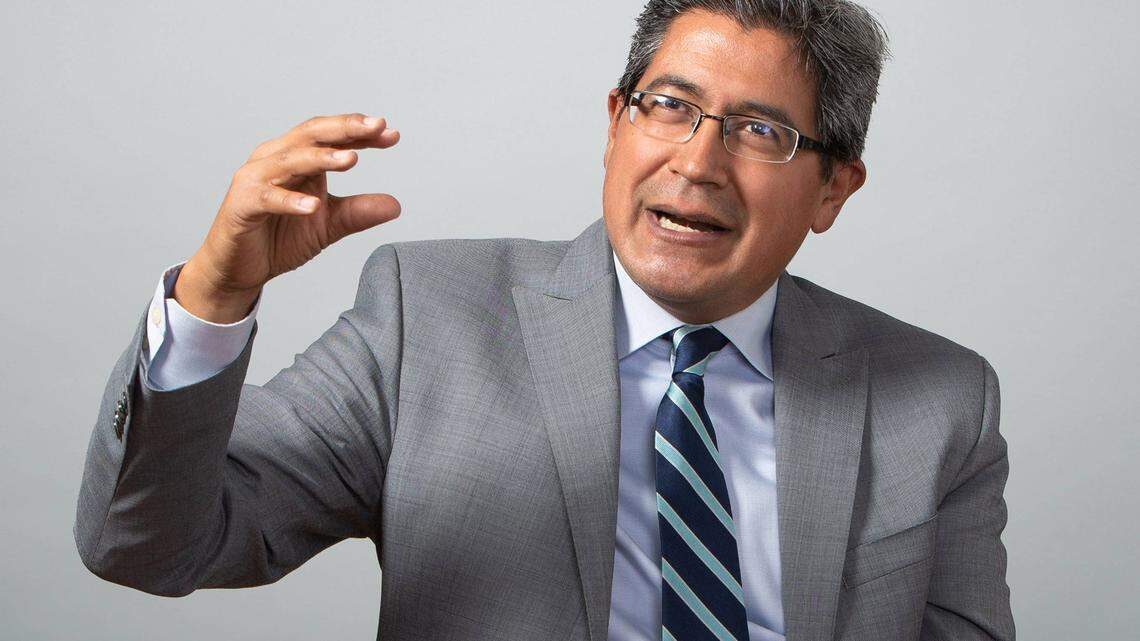
New York Times Bureau Chief Manny Fernandez graduated from Fresno State’s journalism program in 1997.
New York Times
One of the journalists who authored the bombshell New York Times investigation that exposed how civil rights leader Cesar Chavez allegedly groomed and abused children and raped women is a Fresno native.
New York Times California editor-at-large Manny Fernandez graduated from Fresno State’s journalism program in 1997, where he wrote for The Collegian student newspaper and left a lasting impression on his instructors and classmates.
Fernandez, 52, said growing up in Fresno gave him unique insights into the farmworker community.
“I understood this world very much and in a personal way,” he said in a phone interview with The Bee.
“It was important to me to work on this story because I’m investigating the very community I’m from,” Fernandez said in a video accompanying the investigation. “My grandparents started out as farmworkers here in the Central Valley of California.”
The investigation was co-reported by Sarah Hurtes, a New York Times reporter working on international investigations from Brussels.
Since the story’s publication, the reaction across California and the country has been swift and decisive, with plans to rename schools, holidays and streets bearing Chavez’s name underway.
“Obviously, I knew there would be big consequences. We didn’t know exactly what would happen. But it’s disturbing. It’s devastating. He was a hero for many people,” Fernandez said. “And I think that this tells us we need to know who our heroes are, whether they’re living or dead.”
A statue of Cesar Chavez at Fresno State was taken down Friday. Fresno City Council is moving forward with plans to rename Cesar Chavez Boulevard. During a Council discussion on Thursday, Councilmember Miguel Arias acknowledged the importance of journalism and truth telling.
“This is a reminder that journalism is essential to accountability in our system of democracy, and I want to thank the journalists for that. Although what they reported has been devastating to many of us, it was necessary and even when the truth is painful, we need it,” Arias said.
Fernandez was born and raised in Fresno, where he was “bit by the journalism bug” at a young age.
His writing career started in eighth grade, when he was editor of the Viking Times at Sacred Heart middle school. He then went on to write for his high school paper at San Joaquin Memorial High.
During the summer between his freshman and sophomore years of high school, he became an “unofficial Fresno Bee reporter” as part of a journalism mentorship program in which he spent time shadowing and interviewing staff reporters in the newsroom. He still remembers writing a feature story about “Ten Ways to Beat the Heat in Fresno.”
As a Fresno State student, Fernandez wrote and edited for The Collegian as well as for Insight, the department overseeing campus publications. He also contributed to La Voz de Aztlan, an ethnic supplement to The Collegian student newspaper born out of the Chicano activism of the 1960s. As a student, he also interned at The Madera Tribune and wrote about the local agriculture industry.
Lisa Bell, a communications professional at Fresno State, overlapped with Fernandez during their college journalism years. Bell said she was impressed with the depth of reporting, research and details in the Times investigation.
“When I saw Manny’s name in the byline as one of the project’s two reporters, it made sense. Even in college, Manny’s writing stood out,” Bell said. “Manny’s writing was always exemplary, and right out of the gate after earning his degree, he went on to do great work.”
After graduating, he worked as a reporter with The San Francisco Chronicle for three years before joining the staff of The Washington Post in the summer of 2000. A series he wrote in 1998 on homeless runaways for the San Francisco Chronicle was the newspaper’s Pulitzer Prize nominee for feature writing.
He joined the New York Times in 2005.
When asked in a 2021 interview with the nonprofit journalist organization CCNMA: Latino Journalists of California, how he balances his Latino identity with his role as a journalist, Fernandez said he searches for stories about the working class and voices that otherwise wouldn’t be in the New York Times.
“I’m looking to do stories that capture my own upbringing and the neighborhood where I was born and raised in Fresno,” he said.
Today, Fernandez is considered one of the most prominent journalists to emerge from the Fresno State journalism program.
Tom Uribes, a longtime public affairs and journalism professional and former board member of the Fresno State Chicano Alumni Club, met Manny Fernandez when he was a high school student. Uribes helped organize the Minority Journalism Workshop at Fresno State — a media training for high schoolers through the California Chicano News Media Association-Fresno Chapter and the university’s Chicano Journalism Student Association. Fernandez participated in one of these two-week student workshops designed to open doors for journalism careers for underrepresented ethnic minority students.
Uribes recalled that since a young age, Fernandez was “brilliant.”
“He was always one of the best,” Uribes said. “It’s just amazing to see that he’s flourished. He’s doing what we hoped he’d do.”
For future Valley journalists entering the industry during a difficult period of shrinking newsrooms, media distrust and the free press under attack, Fernandez’s advice is to stick with it.
“Journalism has been a powerful force in my life. And that force was honed and sharpened in Fresno and at Fresno State,” he said.
It’s also a force for good, he said.
“It’s hard to learn the truth, it’s hard to report out the truth, but in doing that, it is just a very rewarding, important job,” he said.
The Fresno Bee
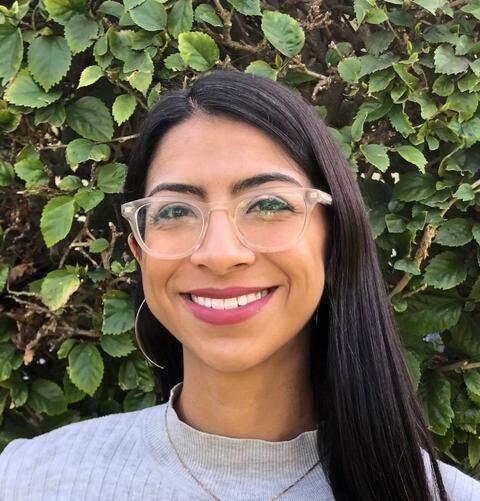
Melissa Montalvo is The Fresno Bee’s accountability reporter. Prior to this role, she covered Latino communities for The Fresno Bee as the part of the Central Valley News Collaborative. She also reported on labor, economy and poverty through newsroom partnerships between The Fresno Bee, Fresnoland and CalMatters as a Report for America Corps member.