
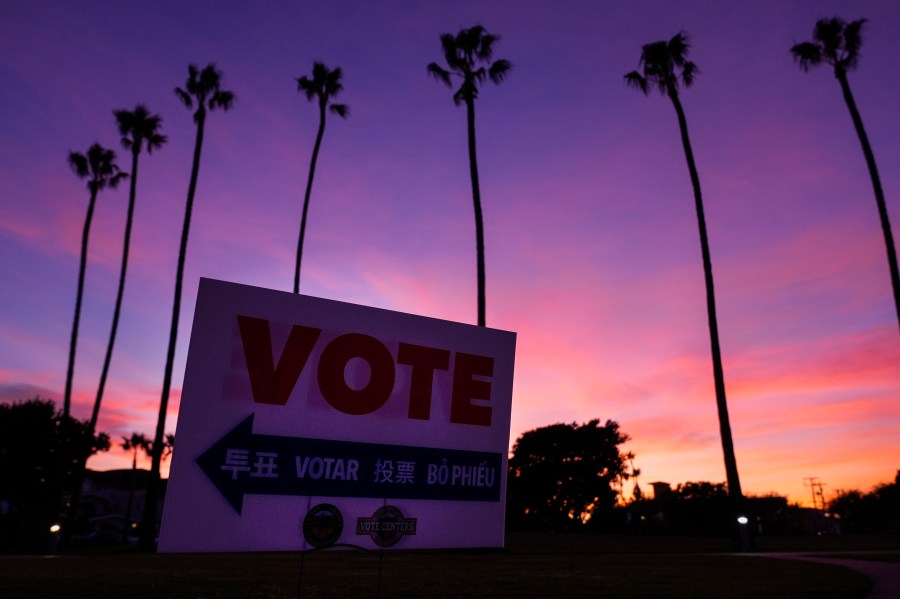
(FOX 5/KUSI) — As debates over election security and voter access continue nationwide, a new look at data compiled by Ballotpedia highlights that a number of states — including California — do not require voters to show identification when casting a ballot in person.
However, newly proposed federal legislation could change that.
Voter ID laws vary widely across the the country. While some states require strict photo identification, others have more flexible rules or no requirement at all.
Nationwide, states generally fall into three categories:
Strict voter ID states: Require ID to vote, with additional steps if voters don’t have one
Non-strict voter ID states: Request ID but allow alternatives if it’s not provided
No voter ID states: Do not require ID for most voters
Ballotpedia ‘s analysis shows that the following states — along with Washington, D.C — generally do not require an ID for in-person voting:
In these states, most voters can cats a ballot without showing identification, although first-time voters who register by mail may still be asked to provide ID under federal law, particularly the Help America Vote Act. It mandates that new registrants must provide either a driver’s license number or the last four digits of their Social security number at the time of registration.
Instead of requiring identification at the polls, these states typically use alternative safeguards. Election officials may verify a voter’s identity through personal information, such as name and address, and voter registration databases.
These processes are intended to confirm eligibility while maintaining access to the ballot.
The issue remains a major point of political debate. Supporters of voter ID laws argue they help prevent fraud and increase confidence in elections, while opponents say such requirements can create barriers for eligible voters who may not have easy access to identification.
Recent national discussions — including proposed federal legislation that would require proof of citizenship and identification — have further intensified the spotlight on how different states handle voting requirements.
RELATED: Would you need a passport, REAL ID to vote if SAVE Act passes?
This comes as President Donald Trump is pushing to pass the Safeguard American Voter Eligibility (SAVE) America Act. The bill would amend federal elections law to impose the proof of citizenship requirements, as well as require voters to present valid photo identification to cast a ballot in federal elections.
If passed, acceptable forms of ID would include state-issued driver’s licenses, valid U.S. passports, valid military IDs, and valid tribal IDs with a photo and expiration date. This change would impact voters in California who have not had to provide identification in previous elections.
As discussions around election laws continue nationwide, proposed policies like these remain a key part of the broader conversation about balancing ballot access with election security.
Copyright 2026 Nexstar Media, Inc. All rights reserved. This material may not be published, broadcast, rewritten, or redistributed.
For the latest news, weather, sports, and streaming video, head to FOX 5 San Diego & KUSI News.