
The Abridged version:
A small family business in Arden Arcade has emerged from a series of business and health challenges to develop even stronger bonds.
Changes in technology and fashion trends have upended dry cleaning businesses across the board, spawning creativity and resilience for survival.
As the business passed to the next generation, the human connectivity between family members and with customers strengthened.
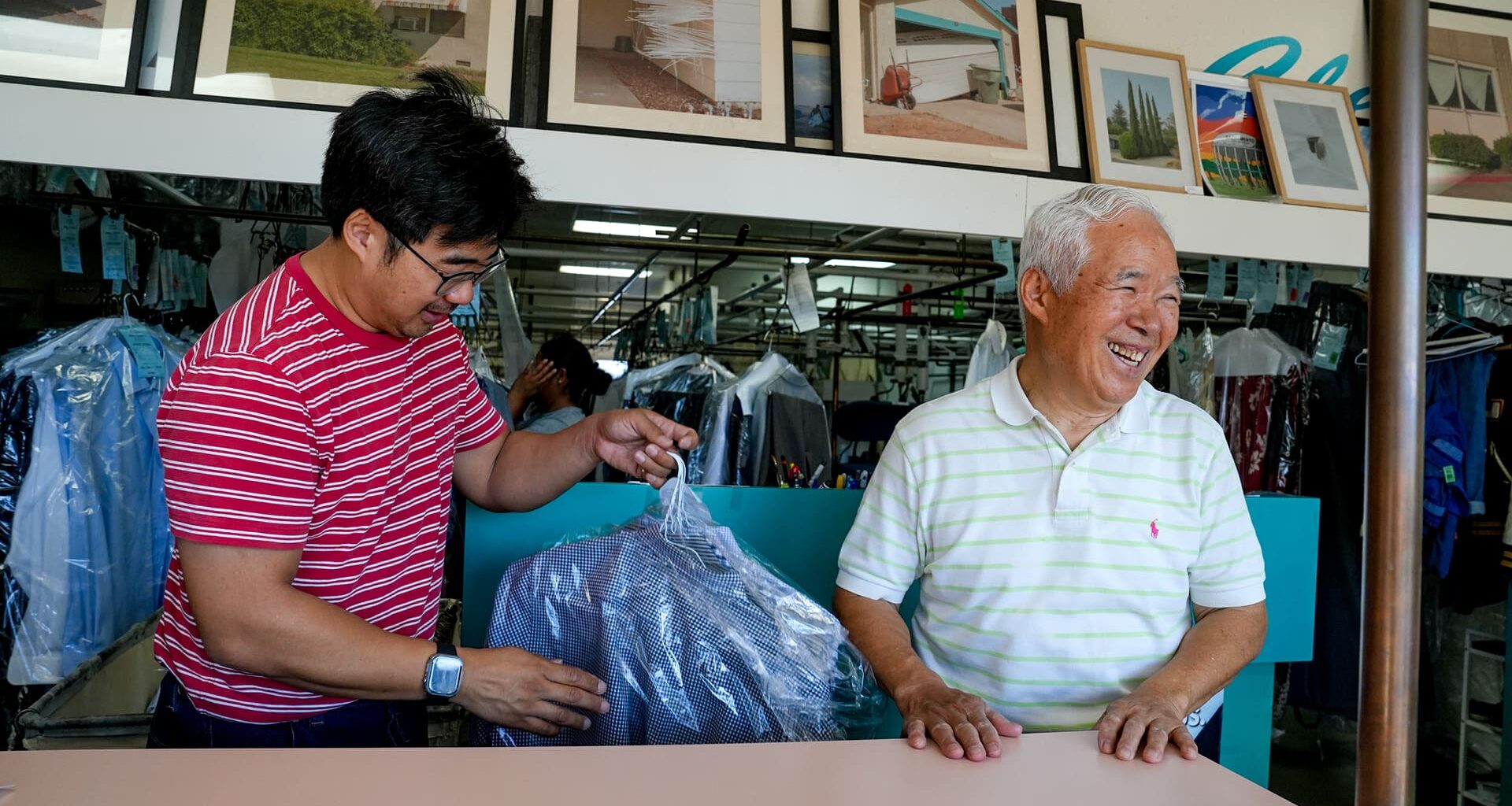
On a weekday morning at Vogue Cleaners in Arden Arcade, the air carries the low hum of compressors and the soft hiss of steam pressing into fabric. Shirts hang in neat rows on long metal racks. A few suits are there, but not as many as you might expect.
If you want to measure how American culture has shifted in the past two decades, you could do worse than standing inside a neighborhood dry cleaner and looking at what’s on the rack.
“Definitely less suits,” said Enoch Ku, who now runs Vogue Cleaners. “Offices became more relaxed — less formal.”
Twenty years ago, his father’s shop would process 100 to 200 dress shirts on a busy day. Today, Ku estimates that number has dropped by roughly half. Fewer ties. Fewer jackets. More chinos. More polyester. More fabrics that can be washed at home.
Sign Up for the Morning Newsletter
The Abridged morning newsletter lands in your inbox every weekday morning with the latest news from the Sacramento region.
The death of the suit didn’t happen overnight. Workplace dress codes softened gradually, then remote work accelerated the trend. If you wear a suit once a week, you clean it often. If you wear it once a month, you clean it far less.
But inside this modest storefront in Sacramento County, another story is unfolding — one that runs deeper than changing hemlines.
It’s a story about immigration, sacrifice, reinvention and the way small businesses adapt while still holding on to what matters.
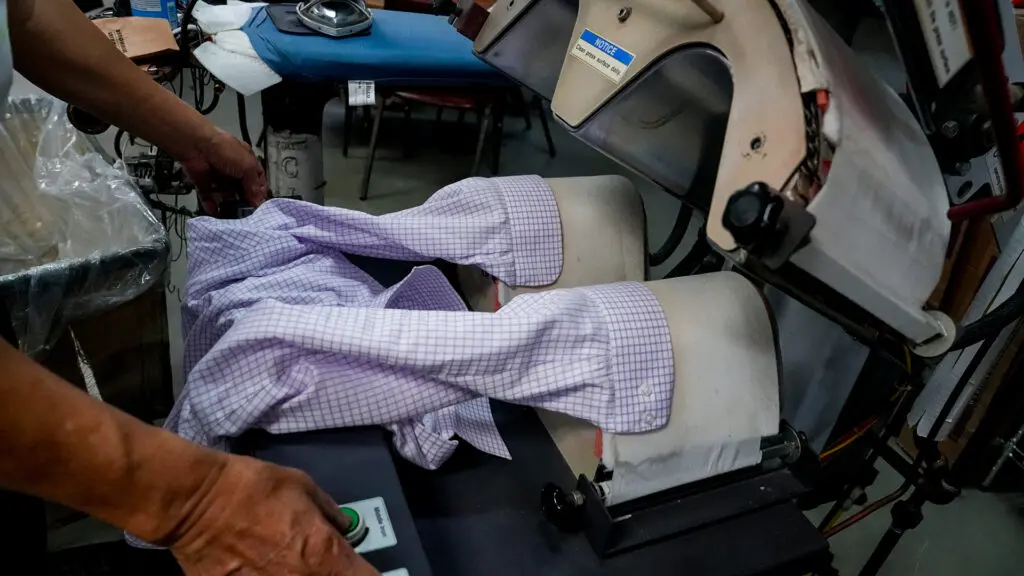 Ha Wan Ku works on a dress shirt at Vogue Cleaners on March 18, 2026. (Denis Akbari)
Starting over
In the summer of 1986, Ku’s father, Ha Wan Ku, bought Vogue Cleaners.
At the time, he was working in the San Jose area for Texas Instruments. When the company announced it was moving manufacturing to Texas, employees had a choice: relocate or take severance.
“He either moved or he started over,” Ku said. “And he chose to start over.”
Like many Korean immigrants in the 1980s, Ku’s father saw dry cleaning as stable. It required licensing and technical training, but it offered something more important: the ability to support a family.
“He took classes, got licensed and then went looking to buy a store,” Ku said.
Sacramento did not yet have a large Korean community. Before there was even a Korean market in town, Ku remembers his mother driving to San Jose to buy groceries and cultural staples, then hauling them back up Interstate 80.
Dry cleaning became more than a livelihood. It became the family’s foundation.
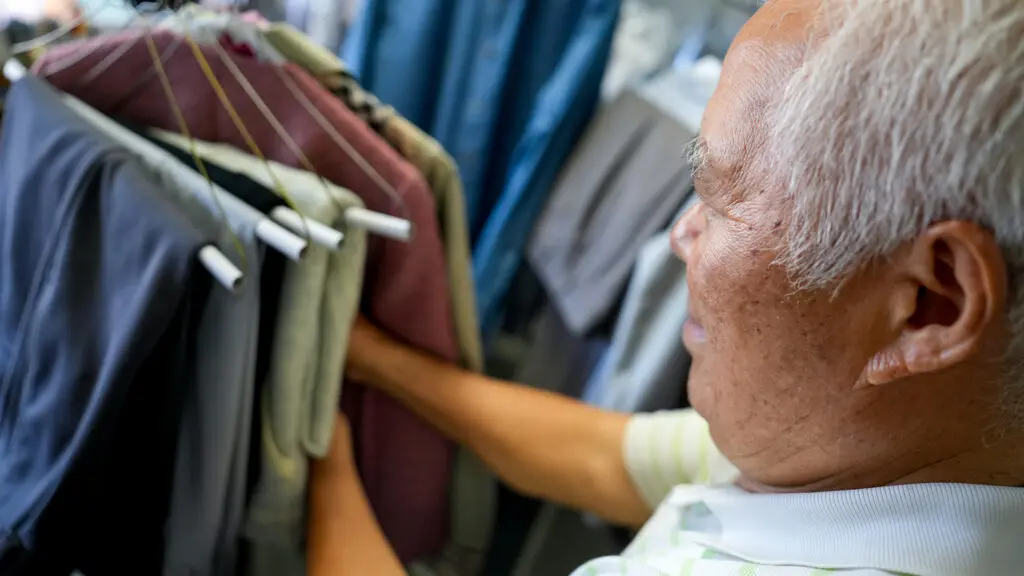 Ha Wan Ku at Vogue Cleaners on March 18, 2026. (Denis Akbari)
The cost of stability
The store demanded long hours — six days a week, often from early morning until evening. “My dad never got to see me play soccer or baseball,” Ku said. “He had no time.”
As a child, Ku spent afternoons in the shop. He remembers the roar of the air compressor, the heat of the steam press, the towering racks of clothes.
He had a small nap area in the back. By age 11 or 12 he was already helping customers, running credit cards through the old carbon-slide machines.
At the time, he didn’t imagine he would take over. “Oh no,” he said, laughing. “There was never anything said like, ‘You’re going to take over the business.’”
Education was the priority. His sisters pursued professional careers. Ku double-majored in history and religion at UCLA, later teaching English in Korea. He explored photography and acting, eventually joining the Screen Actors Guild.
The life he built seemed far removed from the steady rhythm of pressing shirts.
Then came April 2024.
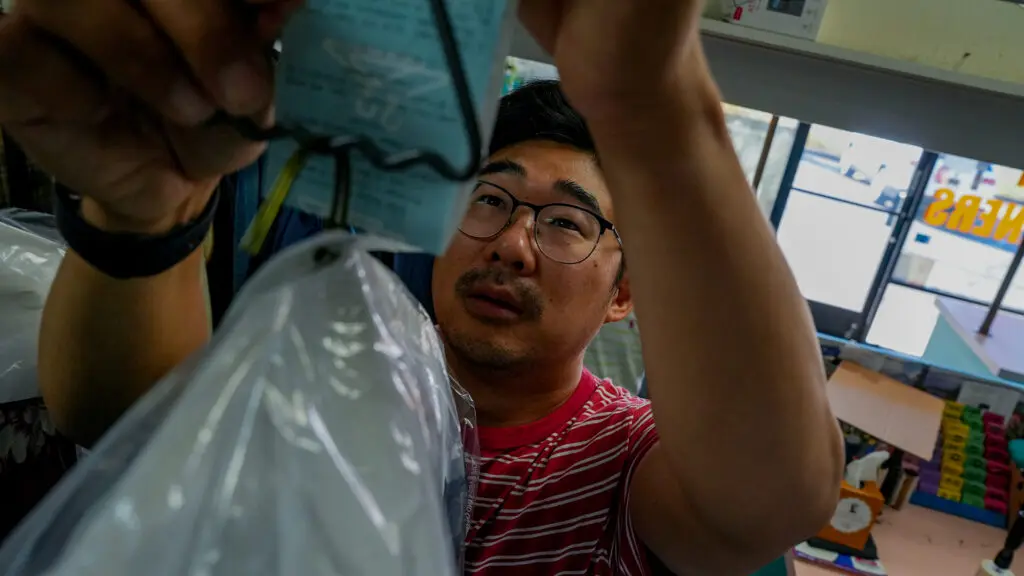 Enoch Ku working at Vogue Cleaners, his family business. (Denis Akbari)
The phone call
Ku received a call from his mother. His father was in the hospital with bleeding in his brain caused by a reaction to new medication.
“I thought I’d come up for a month,” he recalled. “Help out. Then go back.”
But recovery was slow. Retirement became unavoidable. At one point his father even placed the business on the market.
“I worried, if he sold it, he’d have nothing. And I was worried he would decline,” Ku said. The store, he realized, was more than a job. It was structure. Purpose. Community.
Ku made a decision. He and his wife moved back to Sacramento. Enoch Ku would take over the shop his father had built.
“I wasn’t expecting anything from him,” Ha Wan Ku said. “But when my son came to help, I was simply grateful and it warmed my heart. When a son does that, a father feels very thankful.”
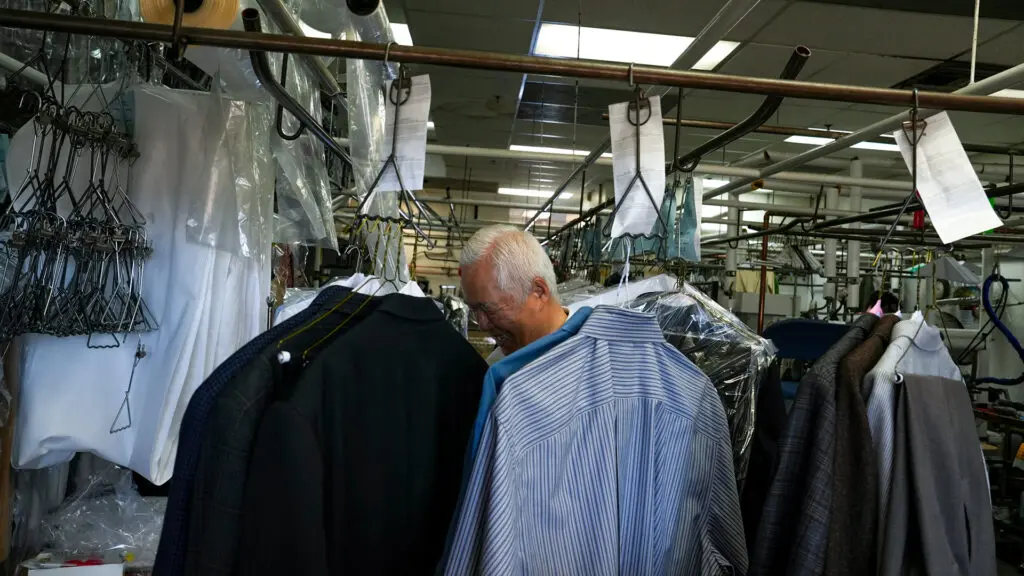 Ha Wan Ku, Vogue Cleaners owner, on March 18, 2026. (Denis Akbari)
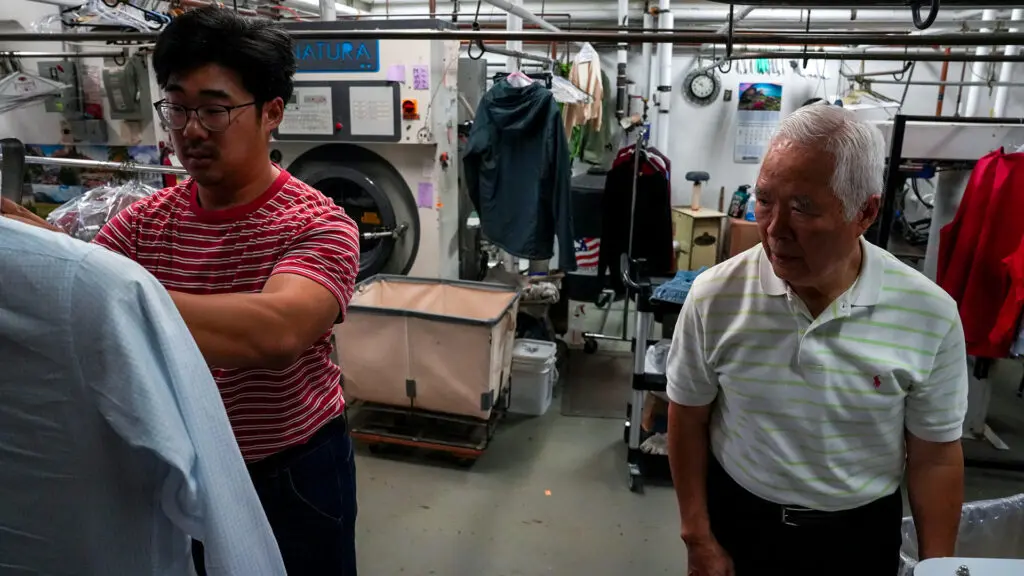 Enoch Ku and his father, Ha Wan Ku, working together at Vogue Cleaners, their family business. (Denis Akbari)
Reinvention begins
If the first generation builds stability, the second is building through clever adaptation and reinvention.
Dry cleaning, Enoch Ku said, is really an “umbrella term.” Something dirty comes in, something clean goes out — but the garments themselves keep evolving, as do the processes.
California began phasing out the solvent perchloroethylene, known as “perc,” in 2007, with a final deadline in 2023. Long before that, Ku’s father had already switched to a hydrocarbon system, anticipating environmental changes before many.
Fashion trends have been just as transformative, including the diminishing work suit and dress shirt.
“Dress shirts — that business is down,” said Toran Brown, owner of Rytina dry cleaners and president of the board of the national Dry Cleaning and Laundry Institute.
Brown’s family business stretches back to 1958, when his grandparents opened their shop after immigrating to the United States.
“It used to be almost two-thirds of the number of pieces for a traditional dry cleaner,” he says. “People would come in once a week with five or six shirts.”
That rhythm has largely disappeared. “People just don’t wear that anymore.”
The COVID-19 pandemic accelerated the shift dramatically. From 2020 through the following few years, Brown estimated the industry lost roughly a quarter of its businesses nationwide.
“That has not come back,” Brown said.
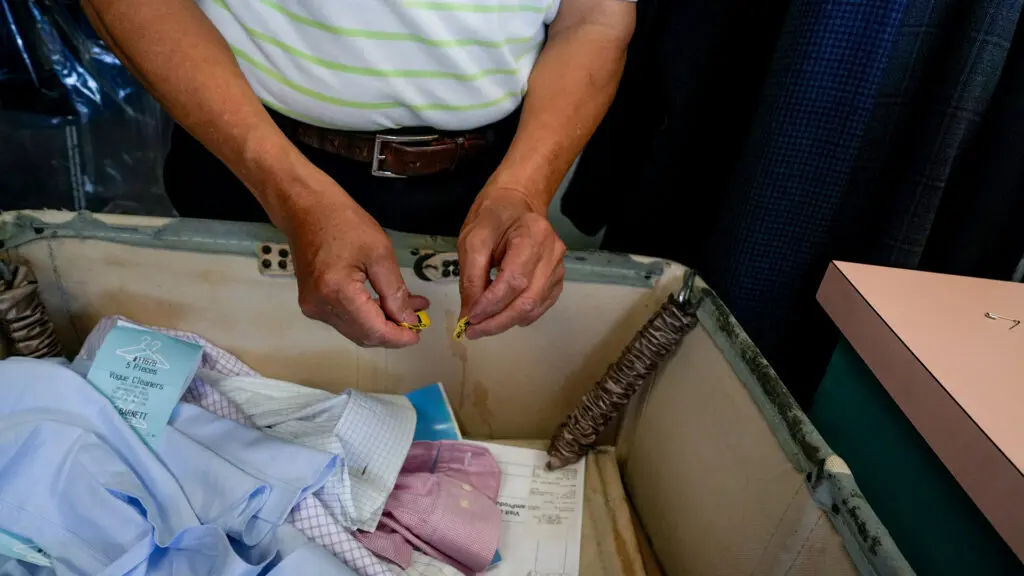 Ha Wan Ku at Vogue Cleaners on March 18, 2026. (Denis Akbari)
What customers bring in now
The racks inside Vogue Cleaners still fill up — just with different garments.
Instead of daily office attire, customers increasingly bring items tied to specific occasions —wedding dresses, vintage jackets, expensive casual wear.
“Younger people are investing in their wardrobe,” Ku said. “If they spent something expensive on it, they want to take care of it.”
And there’s another reason customers still walk through the door. Ironing.
“Sure, I can throw it in the washing machine,” Brown said. “Sure, I can throw it in the dryer. But I’m not sure I want to iron it.”
Professional garment care remains partly about chemistry and machinery — but also about craft. Knowing how to treat delicate fabrics. How to remove stains without damaging dyes. How to press a garment so it hangs just right.
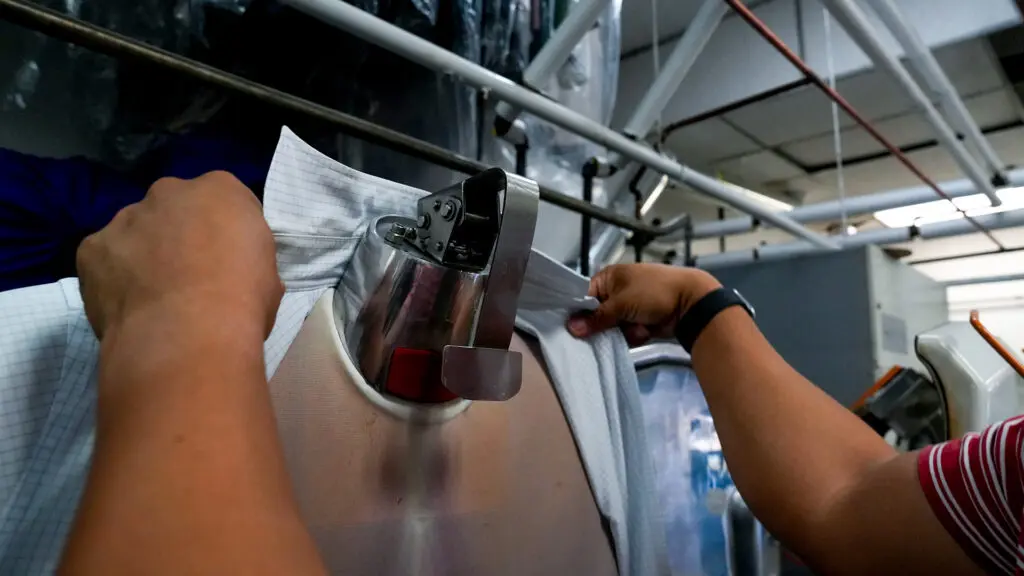 Enoch Ku working at Vogue Cleaners, his family business. (Denis Akbari)
Digital shift drives business
When Enoch Ku took over Vogue Cleaners, modernization came quickly.
“We switched to a new POS (point of sale) system,” he said. “Now customers get a text when their order is ready.”
His father had already embraced Yelp early, encouraging satisfied customers to leave reviews. The shop built a strong online reputation.
“When I ran the store, we only did a little advertising,” he said. “But now my son is running it and using social media to bring in many customers and more people come to the store.”
“The times have changed a lot, and it feels like things are gradually getting better compared to the past.” He attributes the change to having a younger person running the business.
Ku has expanded that digital presence while also introducing pickup-and-delivery service and wash-and-fold laundry.
“What we’re really giving customers is time,” he said.
Vogue has also expanded commercial accounts, which provide steady work that helps balance the decline in everyday dress shirts.
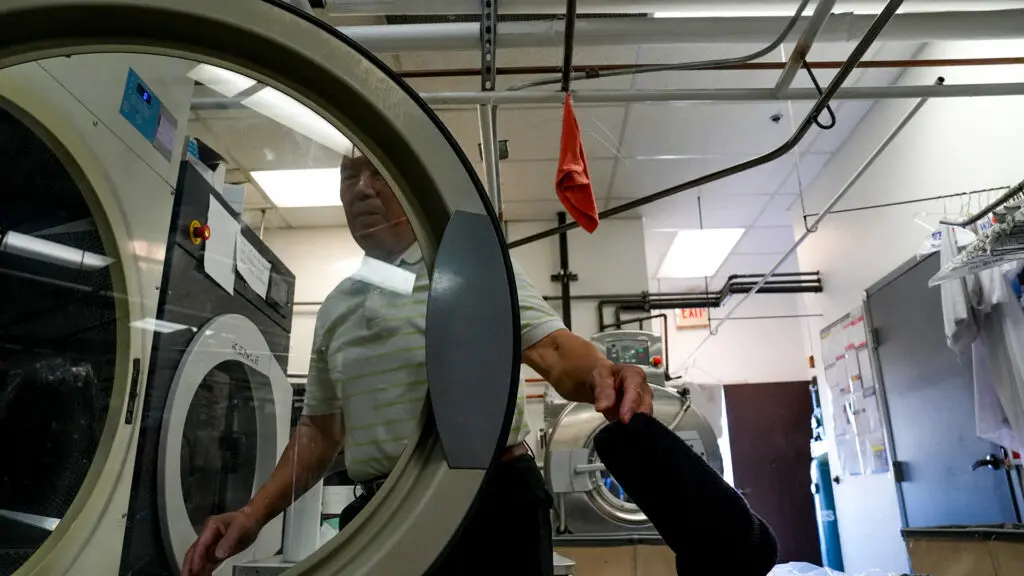 Ha Wan Ku at Vogue Cleaners on March 18, 2026. (Denis Akbari)
Family connection remains an advantage
For all the changes in fashion, chemistry and technology, one thing inside the shop remains constant: connection.
“Ours is a very relationship-driven business,” Brown said.
Customers don’t come because they’re obligated. They come because they trust the people behind the counter.
“You don’t trust companies,” he said. “You trust people.”
At Vogue Cleaners, that trust shows up in small moments.
Customers ask about Ha Wan Ku’s health. Retirees who no longer need dry cleaning still stop by to chat. When Enoch Ku remembers details from past conversations — a job interview, a sick parent, a child heading off to college — customers are often surprised.
“They’re like, ‘Whoa, you remember that?’” he said.
“Standing behind the counter year after year, you begin to see people differently. Their worries. Their celebrations. Their routines.” A dry cleaner becomes an accidental witness to the weekly rhythms of other people’s lives.
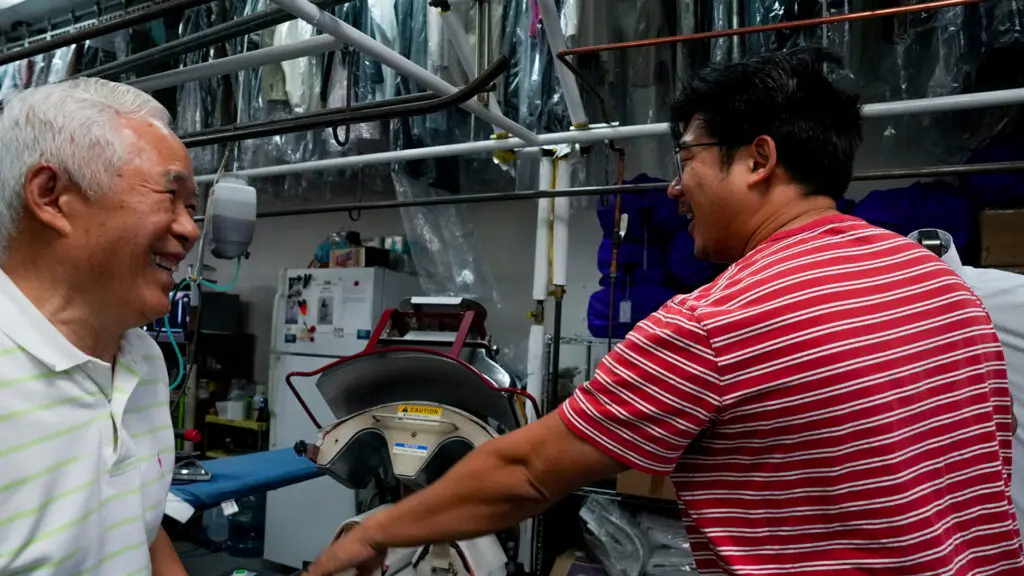 Ha Wan Ku and his son Enoch Ku working together at Vogue Cleaners, their family business. (Denis Akbari)
A different kind of inheritance
Growing up, Enoch Ku mostly saw the sacrifice — the long hours and missed soccer games.
Now he sees something else. “I’m beginning to see how many lives he’s touched,” he said. “Just by being a positive presence.”
Customers who found comfort after losing spouses. Regulars greeted by name for decades. A web of relationships built slowly, one pressed shirt at a time.
Dry cleaning may evolve technologically. Solvents change. Software tracks garments digitally. Fashion cycles rise and fall.
But the core of the work remains stubbornly physical.
Steam still rises from the presses. Stains still need patient hands. Fabric still needs care. And customers still walk through the door with something that matters to them.
Every morning at Vogue Cleaners, the compressor hums to life. Steam fills the room. Shirts move down the rack. For a few hours, a father and son still stand behind the same counter.
The suits may be fewer now. But the work — and the human connections it creates — remain.
“It’s a good thing to continue it with joy and add even more to what your dad built,” Ha Wan Ku said to his son. “Seeing that makes me proud and very happy.”
Smiling, he added, “You talk well with customers and build good relationships, so the customers are happy and that makes me happy too. I’m very proud of you.”
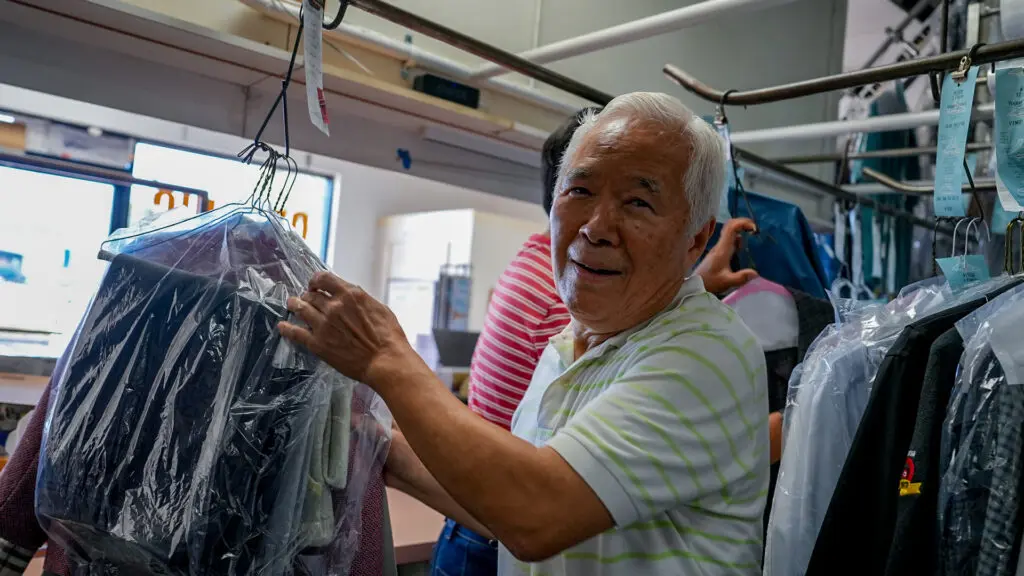 Ha Wan Ku at Vogue Cleaners. (Denis Akbari)
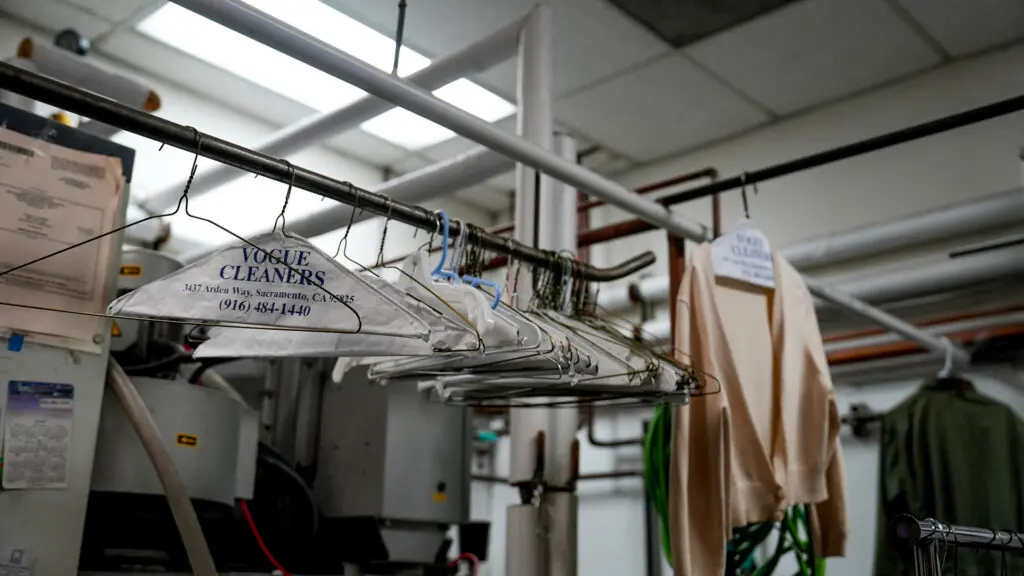 Vogue Cleaners in the Arden Arcade neighborhood of Sacramento. (Denis Akbari)
Daryl V. Rowland is a freelance writer in Sacramento.